

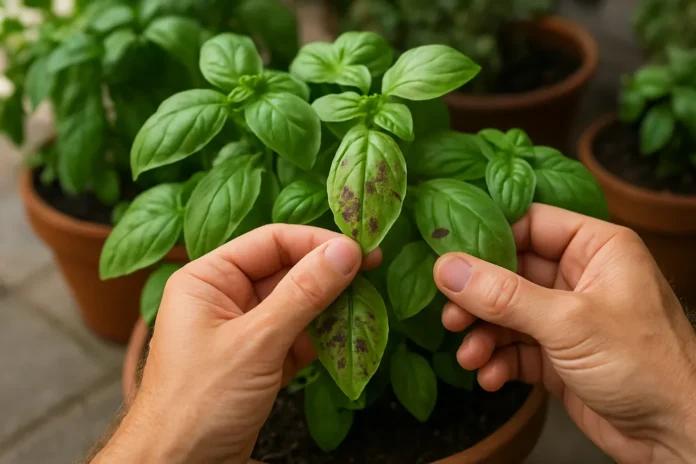
Basil leaves usually develop black spots from fungal or bacterial disease, cold injury, excess moisture, or stressed roots. The exact cause often shows up in the size, shape, and spread of the spots.
Seeing basil leaves with black spots can be frustrating, especially when the plant looked healthy just a few days earlier. Basil grows fast and tastes best when it is lush, tender, and actively putting on new leaves, so dark spotting is usually a sign that something in its environment has shifted.
In my experience, the cause is often easier to narrow down once you look at the pattern. A few water-soaked patches after a cold night point in a different direction than tiny specks spreading from leaf to leaf in humid weather. The good news is that many basil problems can be slowed or prevented once you know what you are dealing with.
Below, I will walk through the most common reasons basil develops black spots, how to tell one cause from another, and which fixes are actually worth trying before the whole plant declines.
What Black Spots on Basil Usually Mean
Black spotting on basil is not one single problem. It is a symptom that can come from disease, weather damage, poor watering practices, root stress, or simple physical injury. The key is to look at where the spots start, how quickly they spread, and whether the rest of the plant also looks stressed.
- Small dark lesions that expand during warm, humid weather often suggest a fungal or bacterial issue.
- Sudden blackened patches after a chilly night often point to cold damage.
- Leaves that spot, droop, and then yellow may indicate root stress from soggy soil.
- Spots limited to older or splashed leaves can be tied to irrigation habits and poor airflow.
- Dark marks with torn tissue may simply be bruising or pest-related feeding damage.
When I diagnose basil, I start by comparing the newest leaves to the oldest ones. If the newest growth still looks clean while the lower leaves are spotted, I usually suspect moisture, splash, or airflow problems before I assume the whole plant is infected.
Fungal Leaf Spot and Downy Mildew
Leaf Spot Diseases
Several fungal diseases can cause black or very dark brown spots on basil leaves. These spots may start small, then enlarge into irregular blotches with yellowing around them. In humid conditions, especially when leaves stay wet for hours, fungal spores spread quickly from one leaf to another.
Fungal leaf spot is more likely when basil is planted too closely, watered from overhead late in the day, or crowded in a container with poor air movement. Once the spotting becomes severe, affected leaves often curl, dry out, or fall off.
Downy Mildew on Basil
Downy mildew is one of the most common and destructive basil diseases. It often begins as yellowing between the veins on the upper side of the leaf, while the underside develops dark gray, purple, or blackish spore growth. As it advances, leaves turn brown to black, collapse, and the plant quickly loses vigor.
This disease loves humidity, wet foliage, and mild to warm temperatures. Sweet basil is especially susceptible, and outbreaks can move fast in late summer or in greenhouse-like patio conditions.
- Remove and discard heavily affected leaves right away.
- Water the soil, not the foliage.
- Thin surrounding plants or move containers for better airflow.
- Avoid harvesting and composting badly infected material if spores are active.
- If the plant is badly covered, replacing it is often more practical than trying to rescue it.
If you suspect downy mildew, do not judge recovery by damaged leaves. Watch the next flush of growth. Basil rarely makes old spotted leaves look better, so clean new growth is the real sign that conditions improved.
Bacterial Leaf Spot and Water-soaked Lesions
Bacterial leaf spot can also make basil leaves develop black patches. These often begin as small water-soaked dots or angular lesions that darken as the tissue dies. In severe cases, multiple spots merge together, leaving larger blackened sections of the leaf.
This problem spreads easily through splashing water, wet hands, contaminated tools, and crowded plants. It is especially common when basil is harvested frequently without letting foliage dry or when plants are handled during damp weather.
- Spots may look greasy or translucent before turning black.
- Edges can be sharply defined by leaf veins.
- Humidity and overhead watering make spread worse.
- New leaves may become infected if conditions stay wet.
There is no reliable home cure once a bacterial disease is established. The best approach is sanitation and prevention. Remove affected leaves, disinfect snips between plants, avoid splashing soil, and give each basil plant enough space to dry quickly after watering.
Cold Damage and Temperature Shock
Basil is a warm-season herb and reacts badly to cold. Even temperatures well above frost can injure leaves, especially when nights dip into the 40s or low 50s Fahrenheit. Cold-stressed basil often develops soft, dark, almost black blotches that appear suddenly rather than gradually.
This kind of damage is common when basil is set outside too early in spring, left outdoors during an unexpected cold snap, or placed near an air conditioning vent, chilly windowpane, or drafty door indoors. The tissue may first look limp and water-soaked, then turn black as cells collapse.
- Spots appear quickly after a cold night or temperature drop.
- Leaves may hang limp before darkening.
- Tender tips and exposed upper leaves are often hit hardest.
- The damage does not spread leaf to leaf like a disease does.
If the stems remain healthy and the roots are sound, basil can recover from mild cold injury. Prune off badly damaged leaves and keep the plant consistently warm. If blackening extends through stems and the plant turns mushy, recovery is much less likely.
Overwatering, Root Stress, and Poor Drainage
Wet soil does not always create black spots directly, but it often sets off the chain of problems that leads to them. Basil roots need oxygen. When potting mix stays soggy or garden soil drains poorly, roots weaken, nutrient uptake drops, and leaves become more vulnerable to spotting, yellowing, and collapse.
In containers, this happens when pots lack drainage holes, saucers stay full, or heavy soil mixes hold too much water. In garden beds, compacted soil and frequent shallow watering can keep the root zone too wet for too long.
Signs Root Stress May Be Involved
- Leaves show black or dark brown spotting along with drooping.
- Lower leaves yellow before dropping.
- Soil feels wet for days after watering.
- Growth slows and stems may soften at the base.
- The plant does not perk up even when conditions look otherwise fine.
If overwatering is the main issue, let the top layer of soil dry slightly before watering again and improve drainage right away. In severe cases, repotting into a faster-draining mix may save the plant if root rot has not progressed too far.
I see more basil decline from inconsistent container watering than from true drought. Gardeners often respond to a droopy plant by adding more water, but basil in saturated soil can droop in a way that looks a lot like thirst.
Leaf Wetness, Crowding, and Poor Airflow
Sometimes the core issue is not the pathogen or the watering amount by itself, but the amount of time basil leaves stay damp. When foliage remains wet overnight or sits pressed against neighboring plants, black spotting becomes much more likely because disease organisms thrive on slow-drying leaves.
This is especially common in dense container groupings, raised beds planted too tightly, and basil tucked into the center of a mixed herb pot. The plant may look lush at first, but the stagnant air creates ideal conditions for trouble.
- Space plants so leaves are not constantly touching.
- Harvest regularly to open up the canopy.
- Water early enough that any splashed foliage dries fast.
- Avoid placing pots where walls or railings trap humidity.
- Remove fallen leaves from the soil surface.
Improving airflow will not reverse existing damage, but it often slows further spread. This is one of the simplest changes that makes a real difference with basil.
Sun Stress, Fertilizer Issues, and Physical Damage
Not every black mark comes from disease. Basil leaves can also darken after sun scorch, fertilizer burn, bruising, or rough handling. These causes are usually more localized and less progressive than infectious problems.
Sun and Fertilizer Stress
If indoor-grown basil is moved suddenly into hot direct sun, leaves may bleach, scorch, then develop dry brown-black patches. Excess fertilizer can also burn leaf edges and roots, leading to darkened leaf tissue, especially when concentrated liquid feed is applied to dry soil.
Bruising and Handling Injury
Basil bruises easily. Harvesting, rubbing leaves, storm damage, or leaves pressed against stakes and pot rims can leave dark marks that later turn black. These spots usually stay in place and do not spread in the pattern you would expect from disease.
- Sun damage often appears on the most exposed leaves.
- Fertilizer burn may affect margins and tips first.
- Bruising follows contact points or torn tissue.
- These problems typically do not create fuzzy growth or widespread spotting on hidden leaves.
How to Tell Which Cause Is Most Likely
A quick diagnosis starts with the pattern, not the color alone. Black can mean dead tissue from many causes, so you need a few more clues before deciding what to do.
- Look at the oldest and newest leaves separately.
- Check whether the underside of the leaf has gray, purple, or black spore growth.
- Ask whether the weather recently turned cold, wet, or unusually humid.
- Feel the soil to see whether roots are staying too wet.
- Notice whether spots are isolated or clearly spreading from leaf to leaf.
- Inspect stems for collapse, soft rot, or blackening near the soil line.
If spotting is spreading in humid weather and multiple leaves are involved, disease is the stronger suspect. If the damage appeared overnight after cold exposure or rough handling, environmental injury is more likely.
What to Do Right Now to Save Your Basil
Once black spots appear, the goal is to stop the cause from worsening. Basil can outgrow mild damage if the roots and growing tips are still healthy, but it declines quickly when wet conditions or infection continue.
- Remove the worst affected leaves with clean snips.
- Water only at the base of the plant.
- Let the top of the soil dry slightly before watering again if it is soggy.
- Move containers to a brighter, warmer, better-ventilated spot.
- Increase spacing or prune lightly to improve airflow.
- Discard severely diseased plants if spotting is widespread and progressing fast.
Avoid the temptation to do everything at once with fertilizer, sprays, and major pruning. Basil responds best when the real stress factor is corrected first. If the plant pushes clean new growth within a week or two, you are on the right track.
Change one variable at a time when you can. If you prune hard, repot, fertilize, and move the plant on the same day, it becomes much harder to tell whether the basil is recovering or reacting to more stress.
How to Prevent Black Spots on Future Basil Plants
Prevention matters more with basil than treatment. Because the plant grows quickly and is often harvested young, it is usually easier to keep foliage dry and healthy than to reverse a serious spotting problem after it spreads.
- Plant basil only after nights are reliably warm.
- Use containers and soil mixes that drain well.
- Water deeply but do not keep soil constantly saturated.
- Aim water at the soil instead of the leaves.
- Give each plant enough room for air movement.
- Harvest regularly to keep growth open and vigorous.
- Clean pruners and avoid handling plants when leaves are wet.
- Choose resistant or more tolerant basil varieties when disease is common in your area.
I also like to keep basil in a spot where morning sun dries the plant quickly. That one detail alone often reduces disease pressure more than people expect.
FAQ
Can I Eat Basil Leaves with Black Spots?
It depends on the cause and severity. Slight bruising or minor physical damage is usually not a food safety issue, but leaves with obvious disease, rot, slimy tissue, or heavy spotting are best discarded.
Will Black Spots on Basil Go Away on Their Own?
No. Damaged leaf tissue will not turn green again. What you want to see is healthy new growth after you correct the underlying problem.
Does Overwatering Cause Black Spots on Basil Leaves?
It can contribute indirectly by stressing roots and encouraging fungal or bacterial problems. Soggy soil is one of the most common background issues behind basil decline.
Why Did My Basil Get Black Spots After One Cold Night?
Basil is very sensitive to low temperatures, and even a brief chill can damage leaf cells. The injured areas often look water-soaked first and then turn dark brown or black.
Should I Remove Spotted Basil Leaves?
Yes, especially if the spots are spreading or the leaves are badly damaged. Removing affected foliage improves airflow and reduces the amount of infected tissue left on the plant.
Can Basil Recover From Black Spots?
Yes, if the stems, crown, and roots are still healthy and the cause is corrected quickly. Recovery shows up as clean new leaves, not repaired old ones.
Is Basil Downy Mildew the Same as Leaf Spot?
Not exactly. Downy mildew is a specific disease that often causes yellowing and dark spore growth under leaves, while leaf spot is a broader term for several diseases that create dark lesions.
How Often Should I Water Basil to Prevent Spotting Problems?
Water when the top part of the soil begins to dry rather than on a rigid daily schedule. Basil likes even moisture, but it does not like constantly wet roots or leaves that stay damp for long periods.
Want healthier harvests and fewer basil problems? Read our guide to the best basil fertilizers, potting mixes, and disease-resistant varieties so you can grow fuller, cleaner plants faster.
