

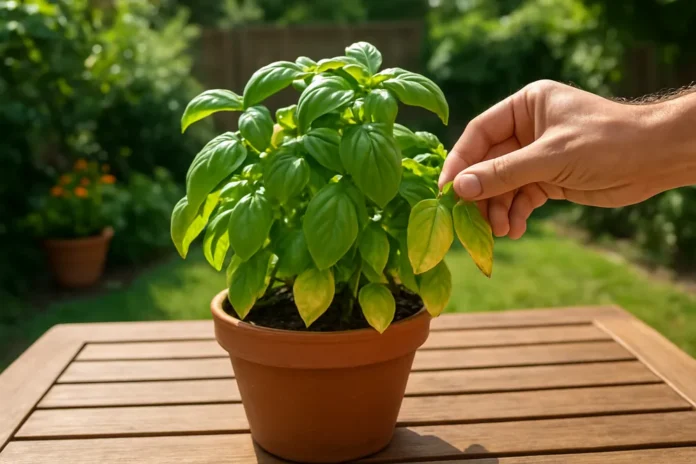
Basil leaves usually turn yellow because of overwatering, underwatering, low nutrients, weak light, cold stress, or disease. The exact cause often shows up in where the yellowing starts and what the leaves look like.
Basil is one of those herbs that looks lush and easy right up until it suddenly does not. If your basil leaves are turning yellow, the plant is telling you something is off with water, roots, feeding, light, temperature, or overall growing conditions.
The good news is that yellow basil is often fixable, especially if you catch it early. I usually start by looking at the pattern first: are the oldest leaves yellowing, are the veins staying green, are the leaves limp, or is the whole plant fading at once? Those clues narrow the problem down fast.
In most home gardens, the biggest culprits are soggy soil, inconsistent watering, nutrient shortages, and cool weather. Sometimes pests or disease are involved too, especially when yellow leaves come with spots, mushy stems, or a wilted plant that does not perk back up.
What Yellow Basil Leaves Usually Mean
Yellowing is not a disease by itself. It is a symptom. Basil naturally sheds an occasional older leaf, especially near the bottom of the plant, but widespread yellowing means the plant cannot support healthy green growth. That usually happens when roots are stressed, chlorophyll production is reduced, or the plant is struggling to move nutrients and water properly.
The most useful thing you can do is match the yellowing pattern to the likely cause. Bottom leaves turning yellow first often point to age, nutrition, or watering stress. Pale new growth can suggest nutrient issues or root trouble. Yellow leaves with black spots, fuzzy growth, or stem collapse often mean disease is involved.
- A few lower leaves yellowing while the rest looks healthy can be normal aging.
- Many leaves turning pale yellow at once often signals watering or root stress.
- Yellow leaves with limp stems commonly point to too much or too little water.
- Yellowing plus spots, mold, or leaf distortion raises concern for pests or disease.
When I diagnose basil, I do not look at just one leaf. I compare old leaves, new leaves, stems, and the soil surface together, because basil can show almost identical yellowing from very different problems.
Overwatering Is the Most Common Cause
If I had to guess one reason homegrown basil turns yellow, I would start with overwatering. Basil likes evenly moist soil, but it does not want to sit in wet soil day after day. When roots stay waterlogged, they cannot access oxygen, and the plant starts to lose vigor. Leaves often turn soft yellow before they eventually droop or drop.
This is especially common in containers without enough drainage, in heavy potting mixes, or when basil is watered on a fixed schedule instead of by need. A plant can look thirsty because the roots are damaged, which leads many gardeners to water even more and worsen the problem.
Signs Your Basil Is Getting Too Much Water
- Leaves turn yellow evenly rather than crisping at the edges first.
- Soil stays wet for a long time after watering.
- The plant looks droopy even though the soil is moist.
- Stems may feel soft near the base.
- There may be a sour smell coming from the potting mix.
To correct this, let the top inch of soil dry slightly before watering again. Make sure the container drains freely and never leave the pot sitting in a saucer full of water. If the mix is dense and soggy, repot into a lighter, well-draining potting mix. In garden beds, loosen soil and avoid watering if recent rain has already kept the root zone moist.
If a basil plant is yellow and droopy, I always touch the soil before doing anything else. Wet soil plus droopy leaves is a strong hint that the problem is excess water, not a lack of it.
Underwatering Can Also Make Basil Yellow
Although overwatering is more common, underwatering can turn basil yellow too. Basil grows fast and has tender foliage, so it reacts quickly when it gets too dry. Leaves may start to fade, curl, or develop dry yellow patches, especially during hot weather or when a container root ball dries out completely.
In containers, dry soil can pull away from the sides of the pot and stop absorbing water evenly. The top may seem wet after a quick watering, while the center of the root ball stays dry. That kind of inconsistency stresses basil and shows up as yellowing, wilting, and slowed growth.
How Underwatered Basil Usually Looks
- Leaves feel thin, limp, or papery.
- Yellowing may come with brown, crispy edges.
- The plant perks up quickly after a deep watering.
- Soil feels dry several inches down, not just at the surface.
The fix is a slow, deep watering that fully rehydrates the root zone. For potted basil, water until it runs from the drainage holes, then let excess drain away. After that, keep the soil evenly moist rather than swinging between bone dry and soggy. Mulch around garden basil to help regulate moisture in hot spells.
Nutrient Deficiencies Can Fade the Foliage
Basil is a leafy herb, so it needs enough nitrogen to stay richly green. When nutrients are low, especially in containers that have been watered repeatedly, leaves can turn pale yellow and growth becomes weak. Older leaves often yellow first because the plant moves available nutrients into newer growth.
Nitrogen is the most common deficiency, but magnesium and iron issues can also cause yellowing. Magnesium shortages often show up as yellowing between the veins on older leaves. Iron deficiency usually affects newer growth first, leaving the veins greener than the tissue around them.
When Low Fertility Is the Likely Problem
- Yellowing develops gradually instead of overnight.
- Growth is slow and stems stay thin.
- The plant has been in the same pot for a long time.
- You have not fertilized in weeks or months.
- The pot gets frequent watering, which can leach nutrients out.
Use a balanced liquid fertilizer at label rate or a diluted fish or seaweed-based feed if you prefer gentler inputs. For container basil, light regular feeding often works better than one heavy dose. In beds, side-dressing with compost can help, but if the plant is already pale and stalled, a faster-acting fertilizer usually gives quicker results.
I am cautious about overcorrecting with fertilizer. Basil responds well to a modest feeding, but too much nitrogen can push soft, lush growth that tastes weaker and becomes more inviting to pests.
Too Little Sunlight Weakens Color and Growth
Basil wants plenty of sun, usually at least six hours of direct light a day. In low light, the plant cannot photosynthesize efficiently, so leaves may fade from deep green to light green or yellowish green. Stems often stretch and lean, and the whole plant looks sparse rather than full.
Indoor basil is especially prone to this. A bright kitchen window may feel sunny to us but still be too dim for strong basil growth, especially in winter or in north-facing rooms. Outdoor basil can also be shaded by larger vegetables, railings, fences, or patio structures as the season progresses.
Clues That Light Is Part of the Problem
- Leaves are pale rather than blotchy.
- Stems are long, floppy, or stretched.
- The plant leans toward the nearest light source.
- New growth is small and weak.
Move container basil into a sunnier location if possible. Indoors, a quality grow light often makes a dramatic difference. If basil is planted in a bed that gets less light than expected, replacing it with a more shade-tolerant herb may be easier than trying to force it through the season.
Cold Nights and Temperature Swings Can Trigger Yellowing
Basil is a warm-season herb and it dislikes chilly conditions. When nights drop too low, especially below about 50 degrees Fahrenheit, basil may respond with yellow leaves, slowed growth, and an overall dull appearance. Sudden temperature swings can stress it even if daytime weather seems warm enough.
This often happens early in the season when basil is planted out too soon, or later in summer when nights begin to cool. A cold snap can damage roots and foliage enough that the plant stops taking up water and nutrients efficiently, which then shows up as yellowing.
- Yellowing appears after a cool night or cold rain.
- Leaves may look limp or slightly translucent.
- Growth stalls even though watering seems correct.
- The plant improves once weather turns consistently warm.
Protect basil from cool nights with row cover, cloches, or by moving containers indoors temporarily. If you are growing in pots, keeping basil where daytime warmth reflects off a wall or patio can help, as long as the plant still gets good airflow.
Root Crowding and Poor Drainage in Containers
Container basil often struggles because the root system outgrows the pot or because the potting mix breaks down and holds too much water. In both cases, the roots lose efficiency. You may see yellow leaves, slower growth, and a plant that wilts quickly even when you think you are watering correctly.
Many grocery store basil plants are especially vulnerable because several seedlings are packed tightly into one small container. They look full at first, but the crowding soon leads to competition for water, nutrients, light, and root space.
Signs Your Basil Needs More Room
- Roots circle the inside of the pot or grow out of drainage holes.
- The pot dries out unusually fast.
- The plant remains pale despite watering and feeding.
- Several stems are jammed together in one small container.
Repot into a slightly larger container with fresh potting mix and strong drainage. If you bought a crowded basil plant, separate or thin some of the stems so the remaining plants have enough space. That one step often changes yellow, struggling basil into healthy new growth within a couple of weeks.
Pests and Diseases That Cause Yellow Basil Leaves
When yellowing comes with spotting, distorted leaves, visible insects, fuzzy growth, or stem collapse, it is time to think beyond basic care. Basil can be affected by aphids, spider mites, fungal leaf spots, root rot, and downy mildew. Some are mild and manageable. Others move fast and are better handled by removing affected plants.
Common Pest and Disease Clues
- Aphids cluster on tender tips and the undersides of leaves, causing yellowing and curling.
- Spider mites create fine stippling, pale leaves, and sometimes webbing in hot, dry conditions.
- Downy mildew often shows as yellow patches on upper leaf surfaces with gray or dark fuzzy growth underneath.
- Leaf spot diseases can create yellow halos around brown or black lesions.
- Root rot is likely if stems darken at the base and roots look brown, mushy, or smell bad.
For pests, a firm spray of water or insecticidal soap can help, provided you cover leaf undersides. For fungal problems, improve airflow, avoid overhead watering, and remove infected leaves. If downy mildew or advanced root rot is present, heavily affected basil is often best discarded rather than babied along, especially if you have other basil nearby.
How to Tell Which Problem You Have
Because yellow leaves can come from several causes, diagnosis works best when you look at the whole setup instead of just the symptom. Start with soil moisture, then check light, recent weather, feeding history, and whether the plant is crowded or diseased.
- Feel the soil 1 to 2 inches down. Wet points toward overwatering or drainage trouble. Dry points toward underwatering.
- Look at which leaves yellowed first. Older lower leaves suggest age, low nutrients, or watering stress. New growth issues can suggest root or micronutrient problems.
- Inspect stems and roots. Soft dark stems or smelly roots point to rot.
- Check leaf surfaces and undersides for spots, fuzz, pests, or webbing.
- Think about recent conditions like cold nights, shade, repotting stress, or missed feedings.
Try to change only one major factor at a time when possible. If you water differently, do not also apply a strong fertilizer and move the plant on the same day unless the problem is obvious. New growth tells you whether the plant is recovering better than old damaged leaves do.
How to Help Basil Recover
Once you identify the likely cause, recovery usually comes down to restoring steady conditions. Basil bounces back best when it has warm temperatures, strong light, moist but well-drained soil, and moderate feeding. Old yellow leaves may not turn green again, so judge progress by healthy new leaves.
- Trim off badly yellow or diseased leaves to redirect energy into fresh growth.
- Water deeply only when the soil needs it, not by the calendar alone.
- Give basil full sun or supplemental grow light.
- Feed lightly if the plant has been in the same potting mix for a long time.
- Repot crowded plants or those sitting in exhausted, soggy mix.
- Protect basil from cold nights and prolonged cool, wet weather.
If the stem base is mushy, the roots are rotted, or the plant is severely diseased, replacement may be the better choice. Basil grows quickly from seed or starter plants, and sometimes starting fresh is more practical than trying to rescue a plant that has already collapsed.
How to Prevent Yellow Basil Leaves in the Future
Prevention is mostly about consistency. Basil does best when it avoids extremes. That means no chronically wet soil, no repeated drought stress, no long stretches in shade, and no exposure to chilly weather that it was never meant to handle.
- Plant basil only after nights are reliably warm.
- Use containers with drainage holes and a loose potting mix.
- Water based on soil feel, not habit.
- Harvest regularly to keep the plant branching and vigorous.
- Feed container basil lightly through the growing season.
- Space plants for airflow to reduce mildew and leaf diseases.
- Check undersides of leaves often so pest issues do not build unnoticed.
I have found that basil is happiest when it gets a little attention every few days rather than dramatic rescue measures every few weeks. A quick check of moisture, color, and new growth is usually enough to catch yellowing before it spreads.
FAQ
Can Yellow Basil Leaves Turn Green Again?
Usually no. Once a basil leaf has turned fully yellow, it rarely regains strong green color. Focus on correcting the cause and watching for healthy new growth.
Should I Remove Yellow Leaves From Basil?
Yes, if they are mostly yellow or clearly diseased. Removing them improves airflow, cleans up the plant, and helps you monitor whether new growth is recovering.
Why Are Only the Bottom Basil Leaves Turning Yellow?
Bottom leaves often yellow first from normal aging, inconsistent watering, or low nitrogen. If only a few lower leaves are affected and the top growth looks healthy, the issue may be minor.
How Often Should I Water Basil to Prevent Yellow Leaves?
There is no single schedule that fits every basil plant. Water when the top inch of soil starts to dry, then water thoroughly and let excess drain away.
Can Too Much Fertilizer Make Basil Yellow?
Yes. Excess fertilizer can burn roots, create salt buildup, and stress the plant enough to cause yellowing or brown leaf edges. It can also push weak, overly soft growth.
Why Is My Indoor Basil Turning Yellow Faster than Outdoor Basil?
Indoor basil often gets less light, poorer airflow, and more uneven watering. Those conditions make yellowing from low light, root stress, and pests more common.
Is Yellow Basil Still Safe to Eat?
Mildly yellow leaves from water or nutrient stress are not usually dangerous, but they may taste weak or off. Avoid eating basil with mold, heavy spotting, rot, or signs of pesticide treatment not labeled for edible herbs.
Want healthier basil and bigger harvests? Read our guide to growing basil in pots and our roundup of the best fertilizers for herbs so you can fix yellowing and keep new growth lush.
