

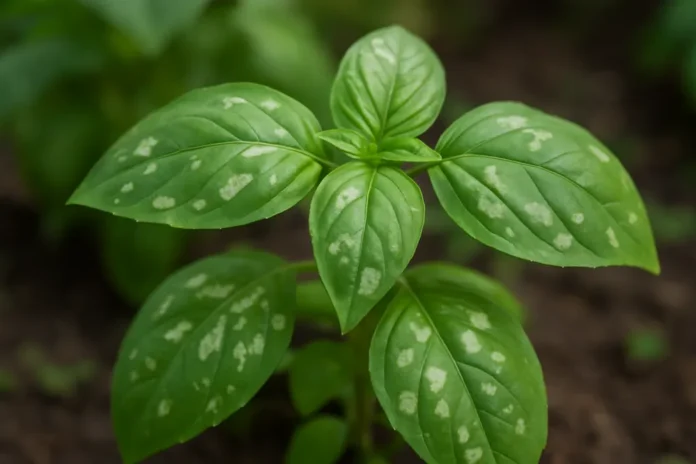
Basil leaves usually get white spots from sap-sucking pests, fungal problems, sunscald, edema, or dried residue on the leaf surface. The exact cause depends on whether the spots look powdery, bleached, stippled, raised, or easy to wipe off.
Seeing basil leaves with white spots can be frustrating, especially when the plant looked fine just a few days earlier. Basil grows fast and tends to show stress quickly, so those pale marks are often an early clue that something in the plant's environment, watering routine, or pest pressure has changed.
In my experience, white spotting on basil is usually easier to diagnose than gardeners expect. The biggest clue is not just the color, but the pattern of the white spots. Some marks look dusty and wipe a little. Some look like tiny pinpricks from insect feeding. Others are larger bleached patches caused by sun, water imbalance, or disease. Once you match the look of the spots to the likely cause, the fix gets much more straightforward.
This guide walks through the most common reasons basil leaves develop white spots, how to tell them apart, and what to do next so new growth comes in healthy.
What the White Spots Are Telling You
White spots are a symptom, not a single diagnosis. On basil, they generally fall into a few visual categories: powdery coating, tiny stippling, papery bleached patches, corky bumps, or residue sitting on the leaf surface. Looking closely at the affected leaves will usually tell you which direction to go.
- A powdery or dusty white film often points to powdery mildew.
- Tiny scattered pale dots or speckles often come from spider mites, thrips, or other sap-feeding pests.
- Large pale or almost white patches can be sunscald or physical stress.
- Raised white or tan blisters can be edema from inconsistent watering and humidity issues.
- Spots that wipe off easily may be hard water residue, spray residue, or dust.
When I diagnose basil, I compare older leaves and newer leaves before I do anything else. If the newest growth is clean but older leaves are spotted, I usually suspect past stress or residue. If the newest leaves are getting hit first, I start thinking pests or active disease.
Pests That Leave Pale Stippling and Speckled Leaves
Spider Mites
Spider mites are a very common reason basil leaves develop tiny white or yellowish specks. These pests feed by piercing the leaf and sucking out contents, which leaves behind a stippled, faded look. At first, the spots may look like fine dusting or pinpricks rather than round lesions. If the infestation grows, leaves can look dull, dry, and lightly bronzed.
Check the undersides of leaves for very fine webbing and tiny moving dots. Hot, dry conditions encourage spider mites, especially on basil growing in containers near heat-reflecting walls or on sunny patios.
Thrips
Thrips can also leave white or silvery patches on basil leaves. Their feeding often creates irregular pale scarring rather than perfectly even dots. You may also notice distorted new leaves, black specks of frass, or a scraped-looking surface.
Leafhoppers and Other Sap-feeders
Leafhoppers, whiteflies, and similar pests can create pale spotting too, though basil is less likely to be heavily damaged by some of them than by spider mites or thrips. If the plant is regularly brushed when watered, small pests may fly up from the foliage.
- Look under leaves with a hand lens if you have one.
- Tap a stem over white paper to spot tiny moving insects.
- Rinse foliage with a steady stream of water to knock pests down.
- Use insecticidal soap or neem only if the product label allows use on edible herbs and follow harvest intervals.
If you suspect pests, treat the whole plant, not just the worst leaves. I also like to isolate basil from nearby plants for a week because mites and thrips rarely stay put once conditions suit them.
Powdery Mildew and Other Fungal Problems
Powdery Mildew
Powdery mildew is one of the most recognizable causes of white spotting on basil. It begins as small pale areas or faint dusty patches, then develops into a clearer white coating on leaves, stems, or both. Unlike residue, it tends to spread over time and often returns after you touch or lightly wipe it.
Crowded plants, poor airflow, and humid conditions make powdery mildew more likely. Outdoor basil can get it late in the season, while indoor plants may develop it in still air even when the room does not seem especially damp.
Downy Mildew Confusion
Basil downy mildew usually causes yellowing first, with grayish growth on the undersides of leaves rather than obvious bright white spots on top. Still, gardeners sometimes mistake the upper-surface discoloration for a white spotting issue. If the top of the leaf is pale and angular but the underside has dark gray fuzz, downy mildew is a stronger suspect than powdery mildew.
- Remove badly affected leaves to reduce spread.
- Thin crowded stems so air moves through the plant.
- Water at soil level instead of wetting foliage late in the day.
- Avoid heavy nitrogen feeding that pushes soft, crowded growth.
- If using a fungicide, confirm it is labeled for edible basil and for the specific disease.
Fungal issues rarely disappear just because conditions improve for a day or two. The goal is to protect clean new growth. Damaged leaves may not recover their color even after the problem is under control.
Sunscald, Heat Stress, and Sudden Light Changes
Basil loves warmth and sun, but it can still get sunscald. This is especially common when a plant grown indoors or in partial shade is suddenly moved into intense afternoon sun. The result can be large pale, bleached, or papery spots that look almost white. These patches often appear on the uppermost or most exposed leaves rather than throughout the plant evenly.
Sunscald tends to create broader, flatter damage than pest stippling. The tissue may feel thin and dry, and the affected area usually does not rub off. Heat stress can make the damage worse by causing the plant to lose moisture faster than the roots can replace it.
- If you recently moved basil outdoors, harden it off gradually over several days.
- Protect container basil from harsh reflected heat on patios, concrete, or near walls.
- Water consistently during hot spells so leaves are not already stressed when strong sun hits them.
- Expect damaged patches to remain visible, but watch for healthy new leaves as the real sign of recovery.
Edema From Watering and Humidity Imbalance
Edema happens when roots take up water faster than leaves can release it. On basil, this can cause tiny pale blisters, raised bumps, or corky spots that may look white at first and later turn tan. It is most common in containers, indoor setups, or periods of cloudy, humid weather when transpiration slows down.
Unlike powdery mildew, edema is part of the leaf tissue, so it does not wipe off. Unlike pest damage, it often appears fairly evenly on leaves rather than in random feeding patterns. Overwatering, inconsistent watering, poor drainage, and low airflow all make it more likely.
- Let the top layer of potting mix dry slightly before watering again.
- Make sure containers drain freely and are not sitting in water.
- Use a potting mix that stays airy rather than dense and soggy.
- Increase airflow around indoor basil with wider spacing or a gentle fan nearby.
Edema is one of the easiest basil problems to misread because it can look dramatic without being infectious. If the spots are slightly raised and the plant has been staying wetter than usual, I correct the watering rhythm before I assume disease.
Mineral Residue, Spray Residue, and Harmless Surface Marks
Not every white spot means the plant is sick. Basil leaves can collect mineral deposits from hard water, fertilizer splash, foliar sprays, or even dust. These marks often show up as pale rings, crusty dots, or a chalky film on the surface.
A simple clue is whether the spotting wipes off with a damp cloth. If it does, you are probably dealing with residue rather than tissue damage. Some homemade sprays, especially if mixed too strong or applied in direct sun, can also leave white marks and cause minor leaf burn at the same time.
- Use room-temperature water and avoid splashing leaves with fertilizer mix.
- Do not apply soaps or oils in hot direct sun.
- Rinse leaves gently if you suspect residue buildup.
- Switch to watering at the base if overhead watering leaves repeated spotting.
Less Common Causes to Keep in Mind
A few less common issues can also create pale or white spotting on basil. Mechanical injury from rubbing leaves, cold shock from chilly nights, or chemical sensitivity from nearby lawn or garden products can all leave discolored patches. Nutrient problems usually cause more generalized yellowing or poor growth than distinct white spots, but severe imbalance can make foliage appear pale and blotchy.
If only one or two leaves are affected and the rest of the plant looks strong, think about recent events before assuming an ongoing problem. A sudden cold snap, a windy day that sandblasted tender leaves, or an accidental overspray can all leave cosmetic damage that does not continue spreading.
How to Tell Which Cause Is Most Likely
If you are stuck between a few possibilities, work from the appearance of the spots and where they show up on the plant. You do not need a lab test for most backyard basil problems.
- If the white material looks dusty or fuzzy and spreads, suspect powdery mildew.
- If the spots are tiny, numerous, and paired with webbing or insect activity, suspect pests.
- If the patches are broad, dry, and on the most exposed leaves, suspect sunscald.
- If the marks are raised and the soil has been staying wet, suspect edema.
- If the spots wipe off, suspect residue from water, sprays, or dust.
Also look at whether the problem is spreading. Active pests and disease usually worsen over time. Old sun damage and old residue do not keep expanding once conditions change.
What to Do Right Now to Help Basil Recover
Start with the least disruptive fixes first. Remove badly damaged leaves if they are heavily diseased or badly scorched, but do not strip the whole plant bare. Basil still needs enough foliage to keep growing. Then correct the growing conditions that match the most likely cause.
- Improve airflow around the plant by spacing it properly and thinning crowded stems.
- Water the soil evenly instead of letting basil swing from very dry to very wet.
- Inspect leaf undersides carefully for pests every few days.
- Give stressed plants morning sun and protection from the harshest afternoon heat if needed.
- Avoid unnecessary sprays until you know whether the problem is disease, pests, or residue.
After that, monitor the new growth. That is where recovery shows up first. White-spotted leaves usually stay spotted, so success means the plant starts producing healthy new foliage, not that old damage disappears.
How to Prevent White Spots on Basil in the Future
Basil stays cleanest when its basic needs are steady: warm temperatures, good airflow, consistent soil moisture, and enough sun without abrupt exposure changes. Prevention is mostly about reducing stress so pests and disease get fewer openings.
- Plant basil where air can move freely around the foliage.
- Water deeply but only when the top of the soil begins to dry.
- Use containers with strong drainage and fresh potting mix.
- Harvest regularly to keep plants open and productive.
- Check leaf undersides often, especially during hot dry weather.
- Acclimate indoor-started basil gradually before moving it into full outdoor sun.
- Keep overhead watering to a minimum if fungal disease has been a problem.
In my garden, basil problems are usually smallest when I catch them early and avoid overcorrecting. One careful change beats five random treatments every time.
FAQ
Can I Still Eat Basil Leaves with White Spots?
It depends on the cause. Leaves with minor sunscald or harmless residue may still be usable after washing, but basil with active mildew, heavy pest infestation, or unclear chemical residue is better discarded. Always avoid eating leaves treated with products that are not labeled for edible herbs.
Do White Spots on Basil Mean It Has Powdery Mildew?
Not always. Powdery mildew usually looks dusty or fuzzy and spreads across the leaf surface, but white spots can also come from pests, sunscald, edema, or dried residue. The texture and pattern matter more than color alone.
Will White Spots on Basil Leaves Go Away?
Usually no. Damaged leaves often stay marked, even after you fix the problem. What you want to see is clean, healthy new growth.
Why Does My Indoor Basil Get White Speckles?
Indoor basil often gets white speckles from spider mites, thrips, or edema. Dry indoor air, low airflow, and inconsistent watering make these issues more common.
Should I Remove Spotted Basil Leaves?
Remove leaves that are heavily diseased, badly infested, or mostly damaged, but do not strip the plant too hard all at once. Keeping enough healthy foliage helps basil recover faster.
Can Overwatering Cause White Spots on Basil?
Yes. Overwatering can contribute to edema, which creates pale raised blisters or corky spots, and it can also encourage fungal problems by keeping conditions too damp.
Why Did My Basil Get White Patches After Moving It Outside?
That is often sunscald. Basil that was grown indoors or in shade can bleach quickly when exposed to strong direct sun without a gradual hardening-off period.
Need the right fix fast? Check our guide to basil pest treatments and mildew-safe care products so you can protect new growth before the damage spreads.
