

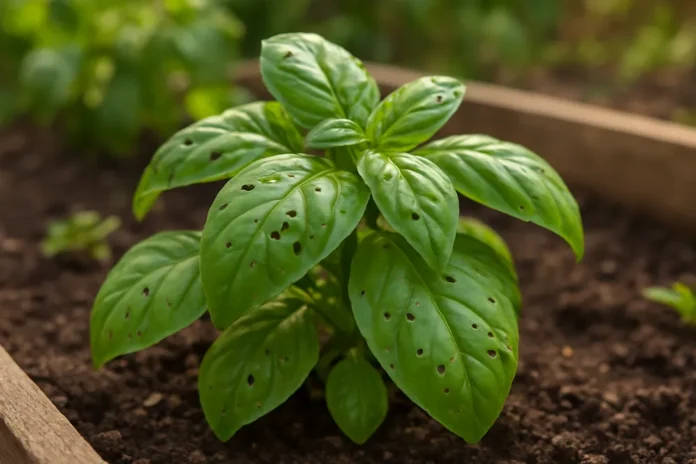
Basil leaves usually get holes from chewing pests like slugs, snails, Japanese beetles, caterpillars, or flea beetles. Less often, wind, rough handling, or older damage that expanded as the leaf grew can leave hole-like tears.
If your basil leaves have holes, the good news is that this symptom is usually easier to trace than yellowing or wilting. Holes almost always mean something physically damaged the leaf tissue, and in most home gardens that points to a chewing pest rather than a disease.
I usually start by looking at the shape of the damage and where it shows up. Clean round holes, ragged missing edges, tiny shot holes, or shredded leaves all suggest different culprits. With basil, timing matters too. Damage that appears overnight often comes from slugs, snails, or caterpillars, while daytime feeding can point to beetles.
The key is not just saving the leaves you already have, but protecting healthy new basil growth. Once you know what is eating or tearing the foliage, you can choose a simple fix instead of spraying blindly.
What Hole Damage on Basil Usually Means
When a basil leaf develops a true hole, part of the leaf blade has been removed or torn after it formed. That is different from yellow spots, black lesions, or fuzzy growth, which usually suggest disease or environmental stress. Holes are a physical symptom.
In most cases, the pattern of the hole tells you more than the hole itself. A few large bites along the edge often come from slugs, snails, or larger insects. Tiny scattered holes across many leaves often point to flea beetles. Ragged tearing on upper growth may come from beetles or caterpillars. If the leaf looks split rather than eaten, wind or handling may be to blame.
- Round to irregular holes in the middle of leaves often suggest insect feeding.
- Missing chunks along the margins often point to slugs, snails, caterpillars, or beetles.
- Tiny pinhole or shotgun-style damage usually fits flea beetles.
- Long tears or stretched openings can happen when damaged young leaves expand.
- Damage mostly on lower leaves often indicates ground-dwelling pests reaching up at night.
When I diagnose basil, I look at several leaves from different parts of the plant before deciding anything. One torn leaf can be accidental, but the same pattern repeated on new and old growth usually reveals the real culprit.
Chewing Pests That Commonly Cause Holes in Basil Leaves
Slugs and Snails
Slugs and snails are among the most common reasons basil leaves end up with ragged holes, especially in damp gardens, raised beds with mulch, and containers that stay moist. They usually feed at night or on cloudy, humid days. The damage often appears as irregular bites in the middle or along the edge of the leaf.
You may also notice a silvery slime trail on pots, soil, or foliage. Lower leaves often show the first damage because these pests crawl up from the soil surface. Dense basil plants that are watered late in the day can create the cool, wet shelter they like.
Japanese Beetles and Other Leaf-feeding Beetles
Beetles feed in daylight, so they are easier to catch in the act. Japanese beetles can chew holes between leaf veins and leave foliage looking lacy or ragged. Other beetles may simply take uneven bites from the leaf margins. If you see shiny metallic insects or active feeding during sunny hours, beetles are a strong suspect.
Basil is not always their favorite plant, but when populations are high they will sample plenty of edible herbs. Damage can show up fast during warm summer weather.
Caterpillars
Caterpillars leave larger, cleaner bites than flea beetles and often feed on tender newer leaves. Some hide under leaves or along stems during the day, so the insect may not be obvious at first glance. You might also find dark droppings, called frass, on leaves or nearby soil.
If holes seem to appear suddenly and get bigger each day, a caterpillar may be feeding steadily. Hand removal usually solves small infestations quickly.
Flea Beetles
Flea beetles create tiny, round holes that make leaves look peppered or shot through. The damage is often worst on younger plants and seedlings, which can become stunted if feeding is heavy. These small beetles jump when disturbed, so you may see little black or dark bronze insects spring away when you touch the plant.
On mature basil, flea beetle damage is often more cosmetic than fatal, but repeated feeding can reduce growth and make leaves less appealing for harvest.
Earwigs and Grasshoppers
Earwigs can chew irregular holes and notches, especially on tender herbs growing in moist, sheltered spots. Grasshoppers usually remove larger pieces of leaf tissue and are more common in hot, dry gardens. Their feeding tends to look bold and obvious rather than delicate.
Non-pest Reasons Basil Leaves Can Look Holey
Not every hole means something is actively eating your basil right now. A leaf can be damaged while still small and folded, then open later with a missing section that looks dramatic. Wind whipping leaves against cages, rough harvesting, pet traffic, hail, and even rubbing against other plants can all create tears or holes.
Sometimes the leaf tissue was weakened by earlier stress, then split as it expanded. This is more common when plants grow fast after a dry spell or after inconsistent watering. Basil leaves are tender, so mechanical damage shows up quickly.
- Wind can tear soft leaves, especially in exposed containers.
- Hail can punch sudden holes across many leaves at once.
- Rough picking or brushing past plants can leave jagged tears.
- Young leaves damaged before unfolding may later open with odd gaps.
- Crowded plants rubbing together can fray tender foliage.
If the damage is not increasing, I do not rush to treat it. Basil often grows fast enough that the best clue is whether new leaves come in clean over the next week.
How to Tell Which Culprit Is Damaging Your Basil
The fastest way to narrow this down is to match the damage pattern with the plant's growing conditions and the time of day. Basil that sits in damp mulch and gets chewed overnight suggests slugs or snails. Basil with tiny shot holes during hot weather suggests flea beetles. Ragged daytime feeding on exposed leaves may point to beetles or grasshoppers.
Clues From the Holes Themselves
- Irregular ragged holes with slime nearby: slugs or snails
- Tiny round holes scattered across the leaf: flea beetles
- Larger bites with droppings present: caterpillars
- Skeletonized or lacy leaves: Japanese beetles
- Long splits or torn openings with no active pests: wind or handling
Clues From Timing
Inspect basil early in the morning, again after sunset, and once in the middle of the day. Night checks are especially helpful for catching slugs, snails, earwigs, and caterpillars. Midday checks reveal beetles and grasshoppers. If you only look once, you can easily miss the actual feeder.
Clues From Plant Location
Container basil on a sunny patio is less likely to have slug issues than basil tucked into a moist vegetable bed. Seedlings and young transplants are more vulnerable to flea beetles. Plants near weedy borders or ornamental grasses are more likely to attract grasshoppers and other general feeders.
If I had to choose one diagnostic shortcut, it would be a flashlight inspection after dark. Basil pests that stay invisible all day often become obvious within two minutes at night.
What to Do for Basil Leaves with Holes
Once you know the likely cause, focus on protecting new growth rather than trying to repair old leaves. Existing holes will not heal, but basil rebounds well when the feeding stops and growing conditions stay warm and steady.
For Slugs and Snails
- Water in the morning so the soil surface dries before night.
- Reduce dense mulch right against the stem base.
- Hand-pick at dusk or after dark.
- Use iron phosphate slug bait if pressure is persistent and severe.
- Keep containers elevated and remove boards, stones, or debris that provide shelter.
For Beetles and Caterpillars
- Hand-pick visible insects into soapy water.
- Prune off heavily damaged leaves if the plant has enough healthy growth.
- Use lightweight row cover on young plants if beetle pressure is high.
- Check the undersides of leaves for hiding caterpillars.
- Avoid broad, unnecessary spraying on an herb you plan to eat often.
For Flea Beetles
- Protect seedlings and transplants with insect netting or row cover.
- Keep weeds down around basil beds since they can harbor beetles.
- Help plants grow quickly with steady moisture and good spacing.
- Accept minor damage on mature plants if growth remains strong.
For Wind or Physical Damage
Move containers to a slightly more sheltered spot, stake nearby plants that rub against basil, and harvest gently. If the newest leaves come in clean, no treatment is needed beyond preventing more tearing.
If you do use any garden product, make sure it is labeled for edible herbs and follow the harvest interval exactly. Basil is picked frequently, so this matters more than it does on ornamentals.
How to Prevent Future Holes in Basil Leaves
Healthy, fast-growing basil can tolerate a little cosmetic damage, but prevention makes harvesting much nicer. The goal is to reduce pest shelter, catch problems early, and keep plants growing vigorously enough to replace damaged leaves.
- Give basil full sun and good airflow so leaves dry quickly.
- Water at the base in the morning instead of wetting foliage late in the day.
- Space plants generously to reduce dense, damp hiding places.
- Inspect leaves weekly, including undersides and lower growth.
- Harvest regularly to keep plants branching and producing fresh leaves.
- Keep weeds, plant debris, and heavy clutter away from the base of the plant.
- Use row cover on young plants during peak pest periods if needed.
I also like to harvest often rather than letting basil become overgrown and crowded. A compact, branching plant is easier to inspect and less inviting to hidden feeders than a tall, tangled one with shaded lower leaves.
When Hole Damage Is Serious Enough to Worry About
A few holes in basil leaves are mostly a quality issue, not a plant health crisis. Basil can keep producing well if the roots are healthy and enough leaf area remains. What matters is whether the damage is spreading faster than the plant can replace it.
Take more urgent action if seedlings are being stripped, if the newest leaves are emerging heavily chewed, or if you see repeated overnight loss of foliage. Young plants have less reserve and can stall quickly under constant feeding.
- Worry less when damage is light and new growth looks clean.
- Worry more when the plant is losing leaves daily.
- Act quickly when seedlings or fresh transplants are affected.
- Investigate further if holes are paired with yellowing, black spots, or collapse, since more than one problem may be present.
FAQ
Can I Still Eat Basil Leaves with Holes?
Usually yes, as long as the leaf is otherwise healthy and you wash it well. Trim away badly damaged parts, and avoid eating leaves that are slimy, moldy, or contaminated with pest droppings.
Do Aphids Cause Holes in Basil Leaves?
No, aphids are sucking pests, so they do not chew holes. They cause curling, sticky residue, and distorted growth rather than missing pieces of leaf tissue.
Why Do My Basil Leaves Have Tiny Little Holes All Over Them?
Tiny scattered holes often point to flea beetles. They create a shot-hole pattern, especially on younger basil plants and in warm weather.
Will Damaged Basil Leaves Repair Themselves?
No, existing holes will not fill back in. What you want to watch is whether new leaves emerge clean after you correct the problem.
Are Slugs More Likely to Damage Basil in Pots or in the Ground?
They are usually more common in damp in-ground beds with mulch and hiding spots, but potted basil can still be hit if containers stay moist and sit near sheltered areas.
Should I Spray Basil for Leaf Holes?
Not automatically. It is better to identify the cause first because many cases are solved with hand-picking, watering changes, barriers, or simple cleanup rather than spraying an edible herb.
Can Disease Make Basil Leaves Look Like They Have Holes?
Sometimes damaged tissue can die and fall out, but true holes on basil are much more often caused by chewing or tearing. Disease usually brings spotting, yellowing, browning, or fuzzy growth along with other symptoms.
Need the right fix fast? See our guide to basil pests and best herb-safe treatments so you can stop leaf damage and get your plants back to producing clean, flavorful harvests.
