

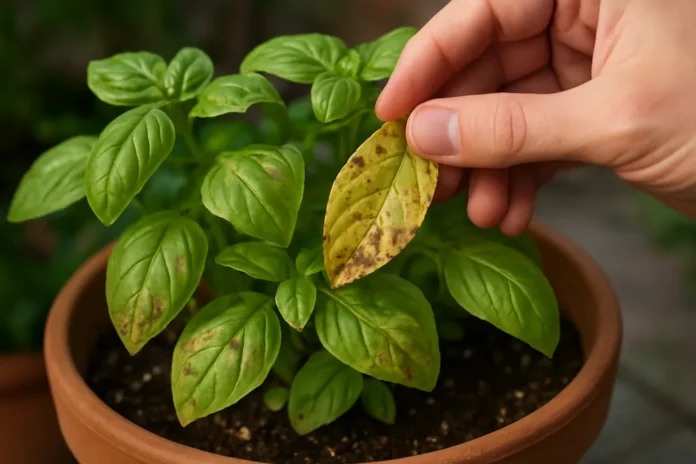
Basil leaves usually become discolored because of water stress, temperature swings, nutrient imbalance, pests, or disease. Yellowing, browning, spotting, and pale leaves each tend to point to a different problem.
When basil leaves start looking pale, yellow, brown, spotted, or blotchy, the plant is telling you something is off. Basil grows fast and responds quickly to stress, which is helpful once you know how to read the clues.
In my garden, basil is one of the easiest herbs to diagnose because the leaf color pattern usually narrows the problem down fast. A whole plant turning light green suggests something very different from black spots, crispy edges, or leaves with bleached patches. If you match the discoloration to the growing conditions, you can usually correct the issue before the plant declines much further.
The good news is that many causes of discolored basil leaves are fixable. Watering habits, soil drainage, temperature, feeding, insect pressure, and common diseases all affect leaf color, and basil often improves quickly once the root cause is addressed.
What the Color Change Is Telling You
Before you try to fix basil, look closely at the exact kind of discoloration. Basil does not yellow, brown, or spot for all the same reasons. The pattern matters just as much as the color.
- Uniform pale green or yellow leaves often point to overwatering, nitrogen shortage, or roots staying too wet.
- Yellow leaves near the bottom first are commonly linked to aging leaves, excess moisture, or mild nutrient deficiency.
- Brown crispy edges or tips often show up with drought stress, hot wind, or fertilizer burn.
- Bleached white or tan patches usually suggest sun scorch, especially after a plant is moved into stronger light.
- Black or dark brown spots can signal fungal or bacterial disease, especially in humid weather.
- Mottled, stippled, or speckled leaves are often caused by sap-sucking pests like spider mites, aphids, or thrips.
- Purplish darkening can happen after cold nights or stress that slows nutrient uptake.
When I troubleshoot basil, I look at both old and new leaves before anything else. If the newest growth is affected first, I lean toward environmental stress or micronutrient trouble, but if the oldest leaves fade first, watering and root issues move higher on my list.
Watering Problems Are the Most Common Cause
Overwatering and Soggy Soil
Basil likes steady moisture, but it does not like sitting in wet soil. When roots stay waterlogged, they struggle to take up oxygen and nutrients. The leaves may turn light green, then yellow, and the plant can look limp even though the soil is wet. In containers, this often happens when the pot has poor drainage or the saucer stays full.
Overwatered basil may also develop brown patches if root stress progresses toward rot. The leaves can feel soft rather than crisp, and lower leaves usually show damage first.
Underwatering and Drought Stress
Dry basil usually shows browning on leaf tips and edges first. Leaves may curl, feel papery, and droop during the hottest part of the day. If the plant repeatedly dries out between waterings, the color can become dull and uneven, with yellowing followed by crispy brown sections.
- Check soil moisture a couple of inches down instead of watering on a fixed schedule.
- Use pots with drainage holes and empty standing water from saucers.
- Water deeply enough that the whole root zone is moistened, then let the top layer dry slightly before watering again.
- Mulch garden basil lightly to help even out moisture swings.
If basil looks wilted and discolored, do not assume it needs more water just because the leaves droop. I always feel the soil first because overwatered basil and underwatered basil can both look limp, but the fix is completely different.
Light and Temperature Stress Can Bleach or Darken Leaves
Sunscald After a Move Into Stronger Light
Basil loves sun, but sudden exposure to stronger direct light can scorch leaves that were raised indoors, in a greenhouse, or in shade. This often appears as pale, bleached, tan, or whitish patches on the upper leaf surface. The tissue may later turn dry and brittle.
This is especially common when young transplants go straight from a windowsill to full afternoon sun. The damaged leaves usually do not recover their normal green color, but new growth should look healthy once the plant adjusts.
Too Little Light
Basil grown in insufficient light often becomes pale overall. The stems may stretch, the leaves stay smaller than normal, and the color looks washed out rather than richly green. Indoors, this is a common reason basil never quite looks vigorous.
Cold Nights and Temperature Swings
Basil is very sensitive to cold. Night temperatures below about 50 degrees Fahrenheit can trigger darkening, purpling, dull leaves, and general stress. In severe cases, the foliage may develop blackened areas that resemble disease at first glance. Cold wet soil makes the problem worse because basil roots slow down and nutrient uptake drops.
- Harden off indoor basil gradually before placing it in full sun.
- Give outdoor basil at least 6 to 8 hours of sun once established.
- Protect plants from chilly nights early and late in the season.
- Avoid planting basil outdoors until soil and nighttime temperatures are reliably warm.
Nutrient Deficiencies and Fertilizer Mistakes
Basil is not the hungriest plant in the garden, but it does need enough nutrition to keep producing soft green growth. In poor soil or exhausted potting mix, leaves can become pale, yellowish, or smaller than expected. If you have been growing basil in the same container for a while, a nutrient issue becomes more likely.
Nitrogen Deficiency
A lack of nitrogen usually causes older leaves to yellow first while newer leaves stay somewhat greener. The whole plant may look thin, weak, and less lush. This is common in containers where frequent watering has leached nutrients out of the potting mix.
Micronutrient Problems
If newer leaves are pale while the veins stay a little greener, basil may be struggling with nutrient uptake rather than a total lack of fertilizer. This can happen when soil pH is off, roots are stressed, or the potting mix has become compacted and poorly drained.
Fertilizer Burn
Too much fertilizer can discolor basil just as easily as too little. Excess salts often cause brown leaf tips, scorched edges, or a sudden wilted look after feeding. This is especially common with concentrated liquid fertilizer used too often or granular fertilizer applied heavily in containers.
- Feed container basil lightly but regularly during active growth.
- Use a balanced fertilizer at a modest rate rather than pushing lots of lush growth.
- Flush container soil with plain water if you suspect fertilizer salt buildup.
- Refresh tired potting mix when roots fill the pot or growth slows despite good care.
Pests That Cause Spotting, Stippling, and Distortion
Several small pests can make basil leaves look faded, flecked, or dirty before you notice the insects themselves. Because these pests suck plant juices, they often cause discoloration in tiny patterns rather than broad even yellowing.
Aphids
Aphids cluster on tender stems and new growth. Leaves may curl, pucker, or yellow unevenly. You may also notice sticky honeydew on the plant, which can lead to sooty mold and a dark grimy look.
Spider Mites
Spider mites are a major cause of pale stippling on basil, especially in hot, dry conditions. Leaves may look dusty, speckled, or bronze over time. Fine webbing may appear on the undersides if the infestation gets worse.
Thrips and Whiteflies
Thrips scrape leaf surfaces and leave silvery or patchy discoloration. Whiteflies weaken plants and cause yellowing, especially when populations build up in crowded beds or greenhouses.
- Check the undersides of leaves where pests often hide first.
- Rinse minor infestations off with a firm spray of water.
- Remove heavily damaged leaves if they are not worth saving.
- Use insecticidal soap or neem carefully on edible herbs, following label directions.
- Improve airflow and avoid overcrowding, which encourages pest buildup.
Tiny speckles spread across many leaves usually make me suspect pests before disease. Diseases tend to create larger lesions or clearer spot patterns, while mites and thrips often leave that sandblasted, faded look that is easy to miss at first.
Diseases That Turn Basil Leaves Yellow, Black, or Blotchy
Basil is vulnerable to several diseases, especially in humid weather or where plants stay wet for long periods. Disease-related discoloration often shows up as spots, dark lesions, yellowing between veins, or rapid collapse of foliage.
Downy Mildew
Downy mildew is one of the most common serious basil problems. It often starts as yellowing between the veins on the upper leaf surface. If you flip the leaf over, you may see grayish or purplish fuzzy growth underneath, especially in humid conditions. Leaves eventually turn brown or black and drop.
This disease spreads quickly when leaves stay wet and airflow is poor. Sweet basil is especially susceptible, though some newer varieties have better resistance.
Bacterial Leaf Spot
Bacterial leaf spot usually appears as dark brown to black spots, sometimes with a water-soaked look. Spots can enlarge and merge, making leaves appear blotchy and damaged. Splashing water, crowding, and infected seed or transplants can all contribute.
Fungal Leaf Spots and Root Diseases
Fungal issues can create tan, brown, or dark spots with defined edges. Root diseases, on the other hand, often cause general yellowing and wilting because the roots cannot support healthy growth. If the soil smells sour or roots are brown and mushy, root rot is a strong possibility.
- Water the soil, not the leaves, whenever possible.
- Space basil so air can move through the foliage.
- Harvest regularly to keep plants open and less crowded.
- Remove infected leaves promptly and do not compost badly diseased material.
- Rotate planting spots if basil has had recurring disease problems.
Container Problems and Root Stress
A lot of basil discoloration starts below the soil line. In pots, roots run out of space, potting mix breaks down, and drainage changes over time. When basil is rootbound or sitting in old compacted mix, leaves can yellow, droop, or lose their rich color even if you are watering regularly.
If you slide the root ball out and see a dense circle of roots with very little soil left, the plant likely needs a larger pot or fresh mix. If roots are dark, slimy, or foul-smelling, focus on drainage and root health instead.
- Repot basil when roots fill the container and water runs straight through too quickly.
- Choose a pot large enough to buffer moisture swings.
- Use a light, well-draining potting mix rather than dense garden soil in containers.
- Do not let nursery pots sit inside decorative outer pots filled with trapped water.
How to Tell Which Cause Is Most Likely
If you are not sure what caused the discoloration, work through the most likely categories in a simple order. Start with growing conditions before assuming disease. Basil reacts so quickly to watering, temperature, and root problems that these are often the real issue.
- Look at the pattern. Is the problem uniform, spotted, patchy, edge-burned, or speckled?
- Check the soil. Is it soggy, bone dry, compacted, or smelling sour?
- Inspect the undersides of leaves for insects, webbing, or sticky residue.
- Think about recent weather. Did the plant face a cold snap, intense heat, or sudden strong sun?
- Review feeding. Has the basil gone a long time without nutrients, or was fertilizer recently overapplied?
- Examine the roots if the plant is in a pot and not improving.
The fastest diagnosis often comes from combining the leaf pattern with one recent change in care or weather. Basil that yellowed after days of rain tells a different story than basil that bleached after being moved onto a sunny patio.
I try to change only one major variable at a time with basil. If you repot, fertilize, move it into more sun, and change watering all at once, you lose the chance to learn what actually solved the problem.
Can Discolored Basil Recover
Sometimes. Mild yellowing from watering stress or nutrient shortage can improve, especially in newer leaves after conditions are corrected. Sunburned, heavily spotted, blackened, or crispy tissue usually does not turn green again, but the plant can still recover by producing healthy new growth.
If only a few leaves are damaged and the stems still look vigorous, recovery is very likely. If the crown is collapsing, the roots are rotting, or downy mildew has spread through most of the plant, replacement may be more practical than trying to save it.
- Prune off badly damaged leaves so you can monitor fresh growth more easily.
- Harvest healthy tips to encourage branching once the plant stabilizes.
- Do not expect scarred or scorched leaves to regain normal color.
- Judge progress by the appearance of new leaves over the next one to two weeks.
How to Prevent Basil Leaf Discoloration in the Future
Healthy basil grows best with warmth, sun, even moisture, good drainage, and regular harvesting. Most discoloration problems become much less common when the plant is not dealing with constant stress.
- Plant basil in warm weather and keep it out of cold soil.
- Provide full sun after gradually acclimating transplants.
- Water deeply but do not keep the roots constantly wet.
- Use fertile, well-drained soil or fresh potting mix.
- Space plants generously to improve airflow and reduce disease pressure.
- Inspect leaves often so pests and disease are caught early.
- Pinch and harvest regularly to keep plants bushy and open.
Basil is quick to reward better care. Once the roots, light, and moisture are right, you will usually see cleaner, greener new growth fairly fast.
FAQ
Why Are My Basil Leaves Turning Yellow but Not Brown?
Yellow basil leaves without much browning are often caused by overwatering, poor drainage, or a mild nutrient deficiency. If the yellowing starts on older lower leaves, root stress or low nitrogen is especially likely.
Why Do My Basil Leaves Have White or Pale Patches?
White, tan, or bleached patches usually come from sunscald after a sudden move into stronger sunlight. Pests like thrips can also leave pale scarring, but sun damage tends to appear in broader exposed areas.
Can I Eat Basil Leaves That Are Discolored?
Mildly yellowed leaves from stress are usually not dangerous, but they may taste poor. Avoid eating basil with obvious disease, rot, heavy pest infestation, black slimy spots, or anything that looks moldy or decayed.
Why Are the Undersides of My Basil Leaves Gray or Purple?
Grayish or purplish growth on the undersides of yellowing basil leaves is a classic sign of downy mildew. This is especially common in humid conditions with poor airflow.
Should I Remove Discolored Basil Leaves?
Yes, if the leaves are badly damaged, diseased, or no longer useful. Removing them helps the plant direct energy into healthier growth and makes it easier to watch for new symptoms.
Why Is My Indoor Basil Pale and Weak-looking?
Indoor basil often becomes pale from insufficient light. A small pot, depleted potting mix, or inconsistent watering can add to the problem, but weak light is one of the most common reasons.
How Fast Will Basil Recover After I Fix the Problem?
Basil can respond quickly, often showing healthier new growth within a week or two. Damaged leaves usually stay damaged, so the real sign of recovery is how the new leaves look.
Want healthier, more productive basil all season? Read our guide to growing basil successfully and compare the best fertilizers, potting mixes, and pest treatments for lush green growth.
