

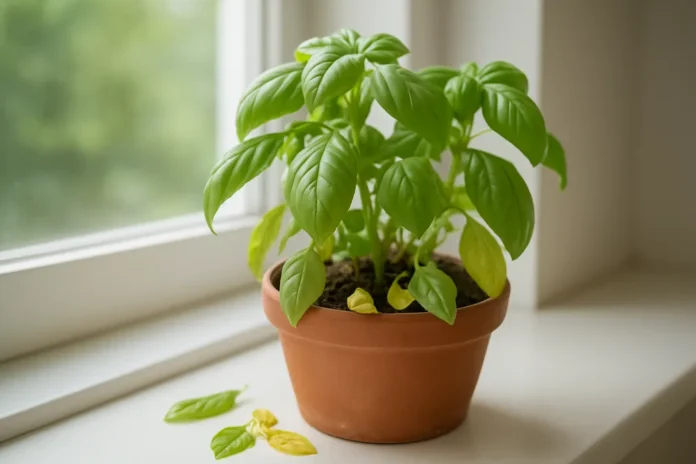
Basil leaves usually fall off when the plant is stressed by watering problems, cold temperatures, low light, pests, or disease. Basil is fast to react when growing conditions slip, so leaf drop is often a sign that something in its environment changed.
Few herbs are more frustrating to lose than basil with dropping leaves. One day it looks lush and full, and the next you find healthy-looking leaves on the soil, the windowsill, or the kitchen counter. Because basil grows quickly and has tender stems, it responds fast to stress, which means leaf drop often shows up before you notice bigger problems.
In my experience, basil rarely drops leaves for no reason. The cause is usually a watering issue, chilly weather, poor light, root stress, or a pest or disease problem starting to build. The good news is that basil also recovers fairly quickly when you catch the problem early, especially if the stems are still green and the new growth looks promising.
If your basil leaves are falling off, focus on the pattern. Are the oldest leaves dropping first, or is the whole plant shedding? Are leaves yellowing before they fall, turning black, or dropping while still green? Those clues usually point you toward the real cause much faster than guessing.
What Basil Leaf Drop Usually Looks Like
Leaf drop in basil can look a few different ways. Sometimes the lowest leaves yellow and fall first, which often points to age, low light, or watering trouble. Sometimes leaves stay green but detach easily after a cold night, a move outdoors, or a rough transplant. In more serious cases, leaves wilt, discolor, and drop along with soft stems or blackened spots, which suggests disease or rot.
- Yellow leaves dropping from the bottom up often suggest overwatering, low light, or natural aging.
- Crispy leaves dropping after wilting usually point to underwatering or hot, dry stress.
- Green leaves falling suddenly can happen after cold exposure, transplant shock, or abrupt environmental change.
- Spotted, blackened, or mushy leaves dropping off may signal fungal or bacterial disease.
- Leaves dropping with distorted new growth often raise suspicion for pests like aphids, whiteflies, or spider mites.
When I diagnose basil, I pay more attention to new growth versus old growth than to one damaged leaf. If the center of the plant is still pushing clean, healthy leaves, recovery is usually straightforward. If the newest leaves are weak, spotted, or collapsing, I start looking much harder at roots, cold damage, or disease.
Watering Stress Is the Most Common Cause
Overwatering and Soggy Soil
Basil likes evenly moist soil, but it does not like sitting in wet potting mix for long stretches. When roots stay waterlogged, they struggle to take up oxygen. The first symptoms may look like thirst even though the soil is wet: drooping leaves, yellowing, and leaves dropping off with very little touch. If the problem continues, stems may soften near the base and the plant can develop root rot.
Container basil is especially prone to this if it is planted in a pot without drainage holes or tucked inside a decorative cachepot that traps runoff. Outdoors, heavy soil and frequent rain can create the same problem.
Underwatering and Repeated Dry-outs
On the other side, basil also drops leaves when it gets too dry too often. If the soil pulls away from the edges of the pot, the plant wilts hard in afternoon heat, or the leaves feel thin and papery before they fall, drought stress is a likely cause. Basil can bounce back from an occasional dry spell, but repeated cycles of wilting and recovery weaken it and lead to leaf drop.
- Water when the top inch of soil feels dry, not on a rigid calendar.
- Use containers with drainage holes and empty saucers if water sits for long periods.
- In hot weather, potted basil may need water much more often than basil in the ground.
- Aim for evenly moist soil, not constantly soaked and not bone dry.
If you are not sure whether basil is too wet or too dry, feel deeper than the surface. I like to check a finger's depth down or lift the pot to judge its weight. A dry top with a heavy pot often means the root zone is still wet.
Cold Temperatures Can Make Basil Shed Leaves Fast
Basil is a warm-season herb and one of the first plants to complain when temperatures dip. Even conditions that do not qualify as a frost can stress it. Nights in the low 50s can trigger drooping, pale patches, blackened edges, and sudden leaf drop, especially on young plants or supermarket basil that has been growing in protected conditions.
This is one reason basil often struggles after being moved outdoors too early in spring or left near an air conditioner, drafty window, or cool porch. Cold damage does not always kill the whole plant, but it can cause leaves to detach quickly because the tissue has been chilled.
- Keep basil above about 55 degrees Fahrenheit when possible.
- Avoid placing indoor basil against cold glass at night.
- Do not move basil outdoors until both days and nights are reliably warm.
- Bring container basil inside before cool evening temperatures arrive in fall.
Low Light and Crowded Growth Weaken the Plant
Basil needs plenty of light to keep full, leafy growth. In dim indoor conditions, it often gets leggy, stretches toward the window, and starts dropping lower leaves that no longer receive enough energy. The plant may stay alive for a while, but it becomes thin and sparse instead of bushy.
Crowding makes this worse. Grocery store basil pots are often packed with many seedlings in one container. They look lush at first, but the crowded roots and overlapping leaves compete for water, air, and light. As that stress builds, leaf drop becomes more common.
- Give indoor basil the brightest window you have, ideally with several hours of direct sun.
- Supplement with a grow light if natural light is weak.
- Thin or divide overcrowded basil so plants have room to branch.
- Pinch basil regularly to encourage bushier top growth and better light distribution.
Transplant Shock and Root Problems Are Easy to Miss
If your basil started dropping leaves soon after repotting, bringing it home, or planting it in the garden, transplant shock may be behind it. Basil has tender roots and can react dramatically to disturbance. A root ball that was torn apart, planted too deeply, or shifted from a humid greenhouse to bright sun and wind can shed leaves while it adjusts.
Rootbound basil can also drop leaves. When roots circle densely inside a small pot, water may run straight through without soaking the root ball well, or the plant may dry out much faster than expected. In severe cases, the top growth starts failing because the root system cannot support it.
Signs the Roots Are Involved
- Leaf drop started soon after repotting or planting out.
- The plant wilts quickly even when you water regularly.
- Roots are circling tightly around the pot when you slide the plant out.
- The base of the stem looks stressed but not obviously diseased.
- The plant stopped growing after the move and has not resumed.
I see this a lot with store-bought basil. It often goes from perfect greenhouse conditions to a dry kitchen windowsill in a day. That abrupt shift alone can cause leaf loss, even if you did not do anything wrong.
Pests Can Trigger Yellowing, Curling, and Leaf Drop
Soft-bodied pests feed on basil's tender leaves and stems, draining the plant and stressing new growth. Aphids, whiteflies, and spider mites are the most common troublemakers. When infestations build, leaves may curl, yellow, look stippled, feel sticky, or fall prematurely.
Indoor basil is especially vulnerable because air circulation is lower and natural predators are absent. Spider mites tend to show up in hot, dry indoor air, while aphids and whiteflies often arrive on newly purchased plants or from nearby houseplants.
- Check the undersides of leaves for clusters of tiny insects.
- Look for sticky residue, fine webbing, or pale speckling on foliage.
- Rinse the plant gently and remove heavily infested leaves.
- Use insecticidal soap or neem products labeled for edible herbs if needed.
- Isolate affected plants so pests do not spread.
Disease Becomes More Likely when Basil Stays Wet and Crowded
Basil can also lose leaves because of fungal or bacterial diseases, especially when humidity is high, leaves stay wet, and airflow is poor. Downy mildew, bacterial leaf spot, and root or stem rots are all possible culprits. These problems usually cause more than simple leaf drop. You may also see spotting, gray or dark growth, black stems, mushiness, or leaves that yellow in irregular patches before falling.
Downy mildew is particularly notorious on basil. It often starts with yellowing between the veins and may show a grayish growth on leaf undersides. Infected leaves decline quickly, and the plant can defoliate fast in humid conditions.
- Water the soil, not the leaves, whenever possible.
- Space plants well so air moves through them.
- Remove infected leaves promptly and discard them.
- Avoid harvesting or handling wet basil more than necessary.
- If the plant has widespread stem rot or heavy disease, replacement is often more practical than treatment.
Natural Aging and Flowering Can Also Cause Leaf Loss
Not every dropped basil leaf means something is seriously wrong. Older leaves near the bottom of the plant naturally age and fall over time, especially if upper growth is dense and shading them out. Basil also changes its priorities once it starts flowering. Energy shifts toward blooms and seed production, and leaves may become smaller, tougher, or more likely to drop.
If only a few lower leaves are falling and the rest of the plant looks vigorous, this may just be routine turnover. Pinching flower buds early and harvesting regularly can keep the plant producing leafy growth longer.
How to Tell Which Cause Is Most Likely
The fastest way to solve basil leaf drop is to match the symptom pattern to the likely trigger instead of trying several fixes at once. Start by looking at leaf color, stem condition, soil moisture, and any recent changes in location or weather.
- If the soil is soggy and leaves are yellowing, suspect overwatering or root stress.
- If the plant is limp, dry, and crispy, suspect underwatering or heat stress.
- If leaves dropped after a chilly night or draft, suspect cold damage.
- If the plant is leggy and losing lower leaves indoors, suspect low light.
- If leaves are sticky, speckled, curled, or webbed, suspect pests.
- If leaves are spotted, blackened, or stems are mushy, suspect disease.
Change one major factor at a time and judge recovery by the new leaves, not the damaged ones. Fallen or yellowed basil leaves do not rebound, so success shows up as healthy fresh growth over the next week or two.
How to Help Basil Recover
Once you identify the likely cause, the recovery plan is usually simple. Adjust watering so the soil stays evenly moist, move the plant into stronger light, protect it from cold, improve airflow, and remove badly damaged leaves. If roots are crowded, repot into a slightly larger container with fresh, well-draining mix. If disease is severe, it may be better to start over with a healthy plant rather than fight a losing battle.
Basil can recover surprisingly well if stems remain green and the crown is healthy. Do not overfertilize a stressed plant in an attempt to speed it up. Too much fertilizer can add another layer of stress, especially in containers. A steady environment and a little patience usually work better than aggressive intervention.
- Trim off leaves that are fully dead, mushy, or heavily diseased.
- Keep the plant in warm temperatures and bright light while it recovers.
- Avoid soaking the foliage late in the day.
- Harvest lightly until strong new growth returns.
- Pinch growing tips after recovery to encourage bushier regrowth.
FAQ
Can Basil Recover After Dropping a Lot of Leaves?
Yes, if the stems are still green and the roots are mostly healthy, basil can regrow quickly. Recovery is best when the cause is corrected early and the plant still has active new growth.
Why Are My Basil Leaves Falling Off but Still Green?
Green leaf drop often points to sudden stress rather than slow decline. Cold exposure, transplant shock, abrupt environmental changes, or rough handling are common causes.
Should I Remove Yellow Basil Leaves?
Yes. Removing yellow leaves improves airflow, reduces disease pressure, and helps you monitor whether new growth is improving. Just avoid stripping too much healthy foliage at once.
How Often Should I Water Basil to Prevent Leaf Drop?
Water when the top inch of soil feels dry, then water thoroughly so excess drains away. The exact schedule changes with pot size, temperature, sun, and whether the plant is indoors or outdoors.
Do Basil Leaves Fall Off After Flowering?
They can. Once basil starts flowering, the plant shifts energy away from leafy growth, and older leaves may drop more readily. Pinching flower buds helps extend leaf production.
Can Too Much Sun Make Basil Drop Leaves?
Basil loves sun, but intense heat combined with dry soil can cause wilting and leaf drop. Usually the problem is not sunlight alone, but sun plus drought or hot wind.
Is It Safe to Eat Basil After Some Leaves Have Fallen Off?
It depends on the cause. Basil that dropped leaves from minor watering stress is often fine to use, but basil with obvious disease, rot, or pesticide residue should not be eaten.
Still troubleshooting a struggling herb garden? Read our basil care guide and top-rated grow light and potting mix recommendations to get fuller, healthier plants faster.
