

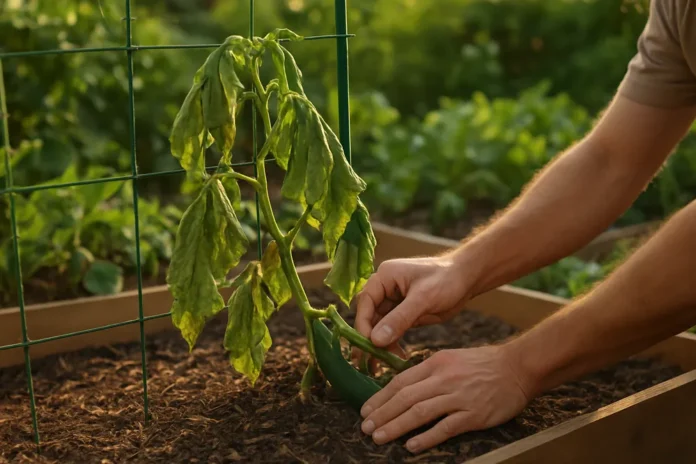
Cucumber plants usually wilt because of water stress, heat, root trouble, pests, or disease. Sometimes the plant perks back up in cooler weather, but persistent wilting often points to a more serious root or vascular problem.
A wilting cucumber plant can look dramatic fast. One day the leaves are broad and lively, and the next they hang limp as if the whole plant has given up. In my garden, cucumber plant wilting usually comes down to a short list of suspects: uneven watering, hot weather, root damage, insect pressure, or a disease blocking the plant's ability to move water.
The tricky part is that several very different problems can produce the same droopy look. A plant that wilts only in the afternoon heat needs a different response than one that stays limp all morning, develops yellow leaves, or suddenly collapses vine by vine. The pattern matters more than the wilt alone.
If you look closely at the soil, stems, leaves, and timing, you can usually narrow it down without much guesswork. Below, I will walk through the most common causes, how to tell them apart, and when a wilted cucumber can still recover.
What Wilting Really Means in Cucumbers
Wilting means the plant is losing more water than it can take up and move through its tissues. Cucumber leaves have a high water demand, so they tend to droop quickly when something interrupts that flow. The interruption might be temporary, like midday heat, or serious, like root rot or bacterial wilt.
Start by noticing when the plant wilts. If it sags during the hottest part of the day but looks normal again by evening or early morning, heat stress is a likely contributor. If it stays wilted overnight, the problem is more likely to be poor soil moisture, root injury, stem damage, or disease.
- Temporary afternoon wilting often points to heat stress or dry soil.
- All-day wilting suggests a more persistent water uptake problem.
- Wilting on just one vine or one side of the plant often hints at stem injury, borer activity, or a vascular disease.
- Wilting with yellowing, spotting, or mushy stems usually means the issue is more than simple thirst.
When I diagnose cucumbers, I look at the newest leaves and the oldest leaves separately. If everything is equally limp, I think water movement problem first. If older leaves are fading first while the tips still look decent, I pay more attention to roots and nutrition.
Underwatering and Uneven Moisture
The most common cause of wilting is still simple water shortage. Cucumbers grow fast, have large leaves, and pull a lot of moisture from the soil, especially when they are flowering and setting fruit. If the soil dries too much between waterings, the leaves lose turgor and the whole plant droops.
Sometimes the issue is not that you never water, but that you water inconsistently. A deep soak followed by several dry days can stress cucumbers just as much as chronic neglect. Shallow daily sprinkling can also cause problems because it keeps only the top inch moist while the deeper root zone stays too dry.
Signs the Plant Is Too Dry
- Soil feels dry 2 to 3 inches down
- Leaves droop but improve after a thorough watering
- Fruit may become misshapen, bitter, or stop enlarging
- Leaf edges may turn crisp if the stress continues
Cucumbers generally do best with evenly moist soil, not a repeated feast-or-famine cycle. Mulch helps a lot here by slowing evaporation and keeping roots cooler. In raised beds or containers, the soil can dry much faster than gardeners expect, especially in windy weather.
Overwatering and Soggy Roots
Wilted leaves do not always mean the plant needs more water. If the soil stays saturated, roots can run short on oxygen and begin to decay. Once roots are damaged, they cannot absorb water properly, so the leaves wilt even though the ground is wet.
This is especially common in heavy clay soil, low spots, beds without good drainage, and containers with poor drainage holes. Overwatered cucumbers may also yellow, stall out, or develop a dull, lifeless look instead of the sharp collapse you see with drought stress.
Clues That Wet Soil Is the Problem
- Soil remains wet for days after watering or rain
- Leaves wilt while the soil still feels damp or soggy
- Lower leaves begin yellowing
- Growth slows and stems near the base may soften
If the plant is wilted and the soil is wet, resist the urge to add more water. I wait, improve airflow, and let the root zone breathe before deciding whether the plant can rebound.
Heat Stress and Midday Collapse
Cucumbers can wilt in intense sun even when the soil is reasonably moist. On very hot afternoons, the leaves may lose water faster than the roots can replace it. That creates a temporary slump, particularly during heat waves, in reflected heat near fences or walls, or when black containers heat up the root zone.
This kind of wilting is often reversible. The plant may look rough at 3 p.m. and mostly fine again by sunset. If it repeatedly bounces back, you are probably looking at heat stress rather than a fatal disease.
- Wilting peaks in late afternoon
- Leaves recover in the evening or by next morning
- Soil is not bone dry
- No obvious stem rot, insect damage, or yellow collapse is present
Mulch, steady watering, and avoiding root disturbance are the best supports during hot periods. In extreme heat, even healthy cucumbers can look dramatically limp for a few hours.
Transplant Shock and Root Disturbance
Cucumbers dislike rough handling around the roots. If a newly planted cucumber wilts soon after transplanting, transplant shock is a strong possibility. Roots may have been broken, exposed to drying air, circling tightly in the pot, or planted into soil that is much hotter, colder, or drier than the root ball.
Established plants can also wilt after cultivation, staking, weeding, or animal activity damages the root system. Even a small break in the crown area can reduce water movement enough to make the leaves droop.
When Root Disturbance Is Likely
- Wilting began right after transplanting
- The plant was recently weeded or cultivated nearby
- The stem base looks nicked or bent
- Roots may have been confined in a pot too long before planting
Mild transplant shock usually improves as the roots settle in. Severe root damage can lead to persistent wilt, little new growth, and eventual collapse.
Cucumber Beetles and Bacterial Wilt
One of the most frustrating causes of cucumber wilt is bacterial wilt, a disease spread by cucumber beetles. The bacteria move through the plant's vascular system and block water transport. That means the plant can look thirsty even when the soil moisture is fine.
This problem often starts with one leaf or one runner wilting, then spreads until the entire plant collapses. Unlike heat wilt, bacterial wilt does not reliably improve overnight. You may also notice cucumber beetle feeding on leaves and flowers earlier in the season.
Common Symptoms of Bacterial Wilt
- A single vine wilts first, then more of the plant follows
- Wilting persists even when the soil is moist
- Leaves may stay green at first but hang limp
- Striped or spotted cucumber beetles have been active on the plant
Gardeners sometimes use the stem-string test for confirmation, cutting a wilted stem and gently separating the cut surfaces to see whether a sticky thread forms. It is not perfect, but it can support a diagnosis. Unfortunately, once bacterial wilt takes hold, recovery is unlikely.
If only one runner on a larger cucumber is wilting while the rest still looks decent, I do not assume watering is the issue. That uneven pattern makes me think about a blocked stem or bacterial wilt much faster than drought.
Fungal Diseases and Crown Rot
Several fungal and fungal-like diseases can cause cucumbers to wilt by attacking roots, crowns, or lower stems. Fusarium, Pythium, Phytophthora, and other rot problems are more likely in poorly drained soil, long wet spells, or gardens where cucurbits are planted in the same place year after year.
These diseases often produce a slower decline than sudden drought wilt. The plant may look off color, fail to grow normally, or wilt during warm periods before staying collapsed all the time. At the crown, you may find browning, soft tissue, constriction, or a water-soaked look near the soil line.
Symptoms That Suggest Rot or Vascular Disease
- Base of the stem looks dark, pinched, soft, or cracked
- Leaves yellow before or along with wilting
- The plant does not bounce back after cooler temperatures
- Roots appear brown instead of white and healthy
Once crown or root rot is advanced, saving the plant is difficult. The better long-term strategy is prevention through drainage improvement, crop rotation, and avoiding constant leaf and soil splash around the base.
Squash Vine Borer and Stem Injury
Squash vine borers are more notorious on squash than on cucumbers, but stem injury of any kind can create a wilted cucumber. Chewed stems, accidental cuts, animal damage, or collapse at the base can interrupt water flow just like a disease can.
If the plant is suddenly wilting despite good moisture, inspect the lower stem carefully. Look for holes, frass, splits, scars, or a stem that has been squeezed by ties or damaged by tools. A healthy root system cannot help much if the stem's plumbing is broken above it.
- Sudden wilt on an otherwise healthy plant
- Damage concentrated near the soil line or lower stem
- Localized collapse rather than uniform yellowing first
- Visible chewing, boring, or mechanical injury
Pests That Weaken Roots and Leaves
Not every pest causes direct wilting, but enough feeding pressure can push cucumbers into a droopy state. Aphids, spider mites, and whiteflies sap plant vigor, especially in hot, dry weather. Root-feeding pests, though less obvious, can interfere with water uptake more directly.
Heavy mite damage tends to come with stippling, bronzing, and fine webbing. Aphids cluster on tender growth and may leave sticky honeydew. These pests are more likely to cause general decline than an overnight collapse, but they can absolutely contribute to chronic wilt.
Container Problems and Restricted Roots
Cucumbers grown in containers wilt more easily than those in the ground because the root zone is limited and dries quickly. Small pots heat up fast, lose moisture rapidly, and leave little room for roots to buffer against weather swings.
A rootbound plant can also struggle to take up water evenly. Water may run down the sides of a dry pot, leaving the center root ball underhydrated. In other cases, the mix stays soggy because drainage is poor, creating the opposite problem.
Why Container Cucumbers Wilt so Often
- Small soil volume dries out quickly
- Dark containers overheat in direct sun
- Roots may become crowded and stressed
- Potting mix can become unevenly wet or dry
If you grow cucumbers in pots, size matters. Larger containers with quality potting mix, mulch, and consistent watering are much more forgiving.
How to Tell if Your Cucumber Can Recover
A wilted cucumber can often recover if the cause is temporary stress and the roots and stem are still healthy. Water stress, transplant shock, and heat wilt are the most recoverable problems. Bacterial wilt, advanced root rot, and severe crown damage are the least recoverable.
- Recovery is likely if the plant perks up after temperatures drop or after moisture is corrected.
- Recovery is possible if only a few leaves are affected and new growth still looks healthy.
- Recovery is unlikely if the plant stays limp around the clock for several days.
- Recovery is unlikely if the stem base is rotting or the whole plant is collapsing vine by vine with no rebound.
Judge progress by the newest growth, not the oldest damaged leaves. On cucumbers, old leaves may never look perfect again, but fresh, firm new growth tells me the plant is back on track.
What to Do for a Wilted Cucumber Plant
Once you have a sense of the cause, respond in a way that matches the symptom pattern. Throwing extra water at every wilted plant is where many gardeners make things worse.
Best Next Steps for Common Causes
- Check soil moisture a few inches down before watering. If it is dry, water deeply and evenly.
- If the soil is soggy, pause watering and improve drainage or airflow around the plant.
- Inspect the base of the stem for rot, cracks, chewing, or collapse.
- Look for cucumber beetles, aphids, spider mites, or other visible pests.
- Notice whether the plant recovers by evening. That helps separate heat stress from a more serious issue.
- Remove badly diseased plants if bacterial wilt or severe rot is likely, so problems do not linger in the bed.
For future prevention, keep cucumbers mulched, watered consistently, and rotated away from last year's cucurbit bed when possible. Healthy roots, steady moisture, and good sanitation solve more cucumber problems than fancy treatments do.
How to Prevent Cucumber Wilting Next Season
Prevention starts before the plant ever goes in the ground. Cucumbers want warm soil, rich organic matter, consistent moisture, and enough spacing for airflow. They do poorly when crowded, repeatedly stressed, or grown in a disease-prone spot.
- Plant in well-drained soil enriched with compost
- Use mulch to hold moisture and cool the root zone
- Water deeply and consistently instead of shallowly and often
- Avoid damaging roots while weeding or cultivating
- Scout early for cucumber beetles and other pests
- Rotate cucumbers and related crops to reduce disease buildup
- Choose resistant varieties when bacterial or fungal problems are common in your area
I have found that the healthiest cucumber patch is usually the one that never swings too far in any direction. Not too wet, not too dry, not too crowded, and not ignored during the first signs of pest pressure.
FAQ
Why Does My Cucumber Plant Wilt During the Day but Recover at Night?
That pattern usually points to heat stress or temporary moisture strain rather than a fatal disease. The plant is losing water faster than it can replace it during the hottest hours, then recovering when temperatures drop.
Can Overwatering Make Cucumber Leaves Wilt?
Yes. Soggy soil deprives roots of oxygen and can lead to root rot, which prevents the plant from taking up water properly even though the soil is wet.
How Do I Know if My Cucumber Has Bacterial Wilt?
Bacterial wilt often causes one vine or section to wilt first, then the rest of the plant follows. The wilt does not improve much with watering, and cucumber beetles are often present.
Will a Wilted Cucumber Plant Come Back?
It can, if the cause is drought, heat stress, or mild transplant shock. Recovery is much less likely if the plant has bacterial wilt, severe crown rot, or major stem damage.
Should I Water a Wilted Cucumber Right Away?
Only if the soil is actually dry below the surface. If the ground is already wet, adding more water can worsen root problems and prolong the wilt.
Why Is Only One Cucumber Vine Wilting?
A single wilted runner often suggests a localized problem such as stem injury, a blocked vascular pathway, or bacterial wilt starting in one part of the plant.
Do Cucumbers in Pots Wilt More Easily than Garden Cucumbers?
Yes. Container-grown cucumbers have less soil around their roots, so they dry out and overheat faster, and they are more sensitive to uneven watering.
Need the right fix fast? Read our guide to the best cucumber pest controls, fungicides, and watering tools so you can stop wilt before it ruins your harvest.
