

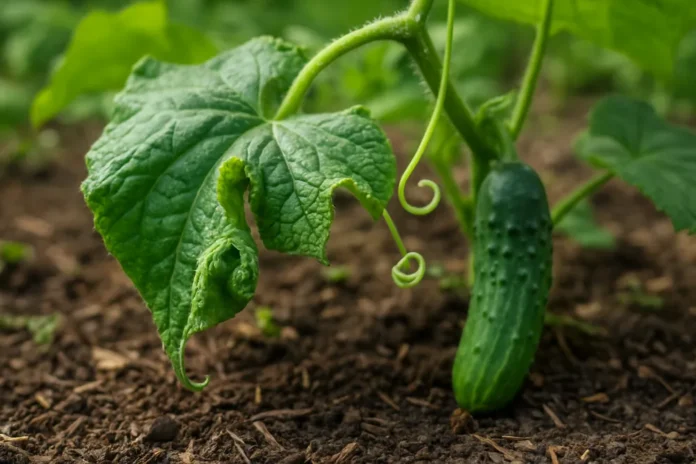
Cucumber leaves usually curl because the plant is under stress from uneven watering, pests, disease, heat, or chemical exposure. The exact cause depends on whether the curling appears with yellowing, spots, distortion, or visible insects.
Seeing cucumber leaves curling can be frustrating because it is one of those symptoms that can mean several very different problems. Sometimes the plant is simply reacting to hot, dry weather or inconsistent watering. Other times the curling is an early warning sign of sap-sucking pests, root stress, or a disease that is starting to spread through the plant.
When I troubleshoot curling cucumber leaves, I do not look at the curl alone. I look at the age of the affected leaves, whether the edges roll up or down, whether the plant is still growing well, and whether there are extra clues like sticky residue, yellow patches, mottling, or misshapen new growth. Those details usually narrow the problem down quickly.
The good news is that many cases of curled cucumber leaves are fixable if you catch them early. Below are the most common causes, how to tell them apart, and what to do next to help your cucumbers recover.
What Curling Leaves Usually Mean on Cucumber Plants
Leaf curling is a stress response. A cucumber plant may curl its leaves to reduce moisture loss, react to damaged roots, or respond to toxins injected by insects and pathogens. In practical terms, the curl itself is not the disease. It is the plant showing that something is interfering with normal growth.
Start by noticing which leaves are affected first. Older lower leaves often curl from watering problems, nutrient issues, or normal stress. Newer upper leaves that come in twisted, cupped, or narrow point more strongly toward pests, viral disease, or herbicide exposure. If the whole plant looks wilted by afternoon and better by evening, heat and moisture stress move higher on the suspect list.
When I see curling only on a few older leaves while the new growth looks strong, I usually suspect stress rather than disease. But when the newest leaves are puckered or distorted right out of the center of the plant, I pay much closer attention to aphids, mosaic viruses, or spray drift.
Watering Stress Is One of the Most Common Causes
Underwatering and Dry Soil
Cucumbers have large leaves and a fast growth rate, so they lose a lot of water in hot weather. When the soil gets too dry, leaves may curl inward or downward to conserve moisture. You may also notice drooping, crispy edges, slower growth, and fruit that develops poorly or tastes bitter.
This often happens when plants are watered lightly and often instead of deeply, or when containers dry out faster than expected. Raised beds can also swing from moist to dry very quickly during summer heat.
Overwatering and Waterlogged Roots
Too much water can cause curling too. When roots sit in soggy soil, they cannot take up oxygen properly. The plant then struggles to move water and nutrients, which can lead to curled leaves, yellowing, limp growth, and a general tired look even though the soil is wet.
- Underwatered cucumbers often have dry soil several inches down and may perk up after a deep watering.
- Overwatered cucumbers often sit in consistently wet soil and may show yellow leaves along with curling.
- Poor drainage, compacted soil, and heavy mulch piled against the stem can make overwatering symptoms worse.
The fix is consistency. Most in-ground cucumber plants do best with deep watering that moistens the root zone, followed by enough time for the top layer to begin drying before the next irrigation. Mulch helps steady soil moisture, especially during hot spells.
Heat, Wind, and Transplant Shock Can Temporarily Curl Leaves
Cucumber leaves are tender and can react quickly to harsh weather. During intense heat, dry wind, or sudden exposure to full sun after transplanting, leaves may cup, curl, or wrinkle even if no pest or disease is present. This is especially common with young plants that have not fully settled in.
If the plant otherwise looks healthy and new growth improves after a few days of steadier conditions, this kind of curling is usually temporary. Giving transplants a short hardening-off period, watering before a heat wave, and using mulch can reduce stress.
If a cucumber was planted out recently, I do not rush to feed it just because the leaves curl a bit. Extra fertilizer on a stressed transplant can make matters worse. I focus first on steady moisture and a few days of recovery.
Pests Often Cause Curling by Feeding on Tender Growth
Aphids
Aphids are one of the top reasons cucumber leaves curl, especially on new growth. These small soft-bodied insects cluster on leaf undersides and stems, sucking sap from the plant. Their feeding causes leaves to pucker, cup, or twist. You may also see sticky honeydew or sooty mold developing on nearby foliage.
A strong blast of water can knock off light infestations. Heavier infestations may need insecticidal soap or neem, making sure to coat the undersides of leaves. Avoid spraying during the hottest part of the day.
Spider Mites
Spider mites are tiny and easy to miss, but they can cause leaf curling along with stippling, bronzing, and a dusty look. Fine webbing may appear when populations build. Hot, dry weather favors mites, so they often show up during midsummer stress.
Increasing humidity around the plant is not practical in most vegetable gardens, so the main response is rinsing foliage, removing badly damaged leaves, and using labeled miticidal or soap products if needed.
Whiteflies and Thrips
Whiteflies and thrips also feed by piercing plant tissue. Whiteflies often flutter up when the plant is disturbed. Thrips are harder to see but can leave silvery scars and distorted new leaves. Both can weaken cucumbers and contribute to curling, especially when plants are already stressed by heat.
- Check the undersides of curled leaves for clusters of insects, shed skins, or sticky residue.
- Look for fine stippling, bronzing, or webbing if you suspect spider mites.
- Inspect the newest leaves first, because pests often target tender growth.
Diseases Can Curl Cucumber Leaves, Especially Viruses and Mildews
Cucumber Mosaic Virus and Other Viral Diseases
Viruses are a more serious cause of curling. Cucumber mosaic virus, zucchini yellow mosaic virus, and similar diseases can make leaves curl, pucker, become mottled, and grow in distorted shapes. Plants may look stunted, and fruit can become misshapen, bumpy, or discolored.
Aphids commonly spread viral diseases, which is one reason early aphid control matters. Unfortunately, once a cucumber plant has a virus, there is no cure. Infected plants usually need to be removed to limit spread, especially if distortion is worsening and fruit quality is poor.
Powdery Mildew
Powdery mildew usually starts as white powdery patches on the leaves, but as infection progresses, leaves can yellow, curl, and decline. It is common later in the season when foliage is dense and airflow is poor.
Pruning for airflow, watering the soil instead of wetting leaves late in the day, and using labeled fungicides can help slow the spread. Severely infected leaves often do not recover, but protecting newer growth can keep the plant productive longer.
Downy Mildew and Bacterial Problems
Downy mildew and some bacterial infections can also cause leaf distortion, though they more often show up first as angular yellow spots, water-soaked lesions, or rapidly collapsing foliage. If curling comes with distinct spotting rather than general stress symptoms, disease becomes more likely.
Viral curling usually looks different from simple drought stress. Stress leaves often curl but keep a mostly normal shape, while virus-affected leaves tend to come in oddly narrow, puckered, or uneven from the start.
Herbicide Drift and Chemical Injury Can Twist Leaves Fast
Cucumbers are very sensitive to herbicides. Drift from lawn weed killers, nearby field sprays, or even compost and manure contaminated with persistent herbicides can cause dramatic curling, cupping, strapping, and twisted growth. The newest leaves are usually hit hardest.
This type of damage often appears suddenly after a spraying event, even if the cucumber bed was not directly treated. The leaves may look warped rather than simply rolled. Growth can stall, and fruits may form abnormally if exposure was severe.
- Symptoms often appear on multiple broadleaf plants at the same time.
- New growth is commonly more distorted than older foliage.
- There may be no insects, no spotting, and no obvious watering issue.
There is no direct treatment beyond supportive care. Mild exposure may allow the plant to outgrow some injury, but severe contamination can ruin the crop. Avoid spraying broadleaf herbicides anywhere near cucumbers, especially on warm or breezy days.
Nutrient Imbalances and Root Problems Can Also Play a Role
Cucumber leaves do not usually curl from nutrient deficiency alone, but nutrition can contribute when plants are already stressed. Low potassium, irregular feeding in containers, high salt buildup from fertilizer, or damaged roots can all interfere with normal leaf development.
Root issues are especially likely if the plant was recently cultivated around, chewed by pests below ground, or planted in compacted soil. When roots cannot function well, leaves may curl, yellow, or remain undersized because the top growth is no longer being supported properly.
If you suspect fertilizer salt buildup in containers, flush the pot thoroughly and let excess water drain away. In garden beds, focus on compost-rich soil and moderate feeding rather than repeated heavy doses of quick fertilizer.
How to Tell Which Cause Is Most Likely
Because several problems can produce similar curling, it helps to match the symptom pattern with the rest of the plant's condition. Look at where the damage started, how fast it appeared, and whether the plant is otherwise growing, flowering, and setting fruit normally.
- Curling with dry soil, midday wilt, and crisp edges suggests underwatering or heat stress.
- Curling with wet soil, yellow leaves, and sluggish growth points toward overwatering or root stress.
- Curling with sticky residue, visible insects, stippling, or webbing suggests pests.
- Curling with mottling, puckering, and misshapen new leaves raises concern for viral disease.
- Sudden twisted growth after nearby spraying strongly suggests herbicide injury.
- Curling with white powder, angular spots, or spreading lesions points toward foliar disease.
If only one or two older leaves are mildly curled, the problem may be minor. If the newest growth keeps emerging distorted, or the plant declines quickly, treat the issue as more urgent.
What to Do to Help Curled Cucumber Leaves Recover
The best response depends on the cause, but in many cases the recovery plan starts with reducing stress. Keep soil moisture even, water deeply at the base, and mulch to protect the roots from temperature swings. Remove heavily diseased leaves when appropriate, but avoid stripping too much foliage at once.
- Check soil moisture before changing your watering routine.
- Inspect the undersides of leaves for aphids, mites, whiteflies, and eggs.
- Look closely at new growth for distortion, mottling, or twisting.
- Think back to recent weather, transplanting, feeding, or nearby spraying.
- Treat the most likely cause and give the plant several days to respond.
Do not expect badly curled leaves to flatten back out perfectly. The real sign of improvement is healthy new growth. If new leaves look normal after you correct the underlying problem, the plant is on the mend.
I try to change only one major variable at a time. If you water differently, fertilize, and spray all in the same day, it becomes much harder to tell what actually helped and what may have added stress.
How to Prevent Leaf Curling in Future Cucumber Crops
Prevention is mostly about steady growing conditions and early observation. Cucumbers are vigorous plants, but they are not especially forgiving when soil moisture swings wildly or pests go unnoticed for too long.
- Water consistently and mulch around plants to hold even moisture.
- Plant in well-drained soil enriched with compost.
- Give vines enough spacing for airflow and easier inspection.
- Check leaf undersides often, especially during hot weather.
- Control aphids early to reduce direct damage and virus spread.
- Avoid herbicide use near vegetable beds.
- Choose disease-resistant varieties when available.
- Rotate cucumbers and other cucurbits to a different area each season if disease has been a problem.
A few minutes of inspection each week can save a crop. I have found that cucumber problems are much easier to manage when caught at the first curled or discolored leaf rather than after the whole vine starts to struggle.
FAQ
Can Cucumber Leaves Uncurl After the Problem Is Fixed?
Sometimes mildly stressed leaves improve a little, but badly curled leaves often stay distorted. The better sign is that new leaves start growing normally again.
Should I Cut Off Curled Cucumber Leaves?
Only remove leaves that are badly damaged, heavily diseased, or full of pests. If a curled leaf is still mostly green, it can still help feed the plant.
Do Aphids Always Mean My Cucumber Has a Virus?
No. Aphids can cause curling by feeding alone, but they can also spread viruses. Many aphid problems are manageable if you catch them early and the plant has not developed mottled or distorted viral symptoms.
Why Are Only the New Cucumber Leaves Curling?
Curling in new growth often points to aphids, thrips, viral disease, or herbicide exposure. Those problems affect tender developing tissue more than older leaves.
Can Too Much Fertilizer Make Cucumber Leaves Curl?
Yes, especially in containers or if strong fertilizer is applied too often. Salt buildup and root stress can interfere with water uptake and lead to curling, yellowing, or burned edges.
Is Leaf Curling From Heat Always Serious?
Not always. During extreme heat, cucumbers may temporarily curl or droop as a protective response. If the plant recovers in cooler hours and new growth stays normal, the issue is often short term.
What Does Herbicide Damage Look Like on Cucumbers?
It usually causes twisted, cupped, or strap-like new leaves and sudden distorted growth. Symptoms often show up quickly after nearby weed killer use, even without direct spraying on the plant.
Need the right fix fast? Check our cucumber care guides and trusted pest and disease treatment picks so you can stop leaf curling before it cuts into your harvest.
