

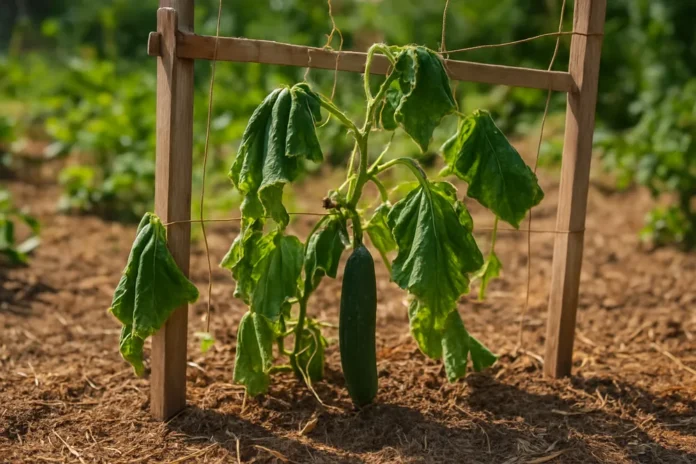
Cucumber leaves usually droop because the plant is stressed by heat, inconsistent watering, root damage, pests, or disease. Temporary afternoon wilting can be normal, but drooping that lasts into the evening usually signals a problem.
Few vegetables look as dramatic as cucumbers when they are unhappy. One day the vines seem full and vigorous, and the next the leaves are hanging limp enough to make you think the whole plant is done for. In my garden, cucumber leaves drooping is one of those symptoms that can mean something minor, or something serious, depending on when it happens and how the rest of the plant looks.
The tricky part is that cucumbers are fast-growing, thirsty, and sensitive to stress. A plant can wilt from afternoon heat, bounce back by sunset, and be perfectly fine. Another plant can droop from root rot, bacterial wilt, or vine borer damage and keep getting worse no matter how much water you give it. The key is learning how to read the pattern instead of reacting to the droop alone.
If your cucumber plant looks limp, start by noticing the timing, the soil moisture, and whether the whole plant or only part of it is affected. That usually tells you whether you are dealing with a simple watering issue or a deeper pest or disease problem.
When Drooping Is Normal and when It Is Not
Cucumbers often droop during the hottest part of the day, especially in midsummer. Their large leaves lose water quickly, and even healthy plants can look tired by midafternoon. If the leaves perk back up in the evening or early morning, that is usually temporary heat wilt rather than a true health crisis.
Persistent drooping is different. If leaves stay limp overnight, collapse in the morning, turn yellow, or feel soft and lifeless for more than a day, the plant is under real stress. That stress can come from too little water, too much water, damaged roots, pest feeding, or disease clogging the plant's internal water flow.
- Usually normal: leaves droop in afternoon heat but recover by sunset
- More concerning: drooping continues into the evening or next morning
- Serious warning sign: one vine or the entire plant suddenly wilts and does not recover
- Extra concern: drooping comes with yellowing, stem damage, holes, or spotted leaves
When I am diagnosing cucumbers, I pay more attention to when the plant wilts than how dramatic it looks. A plant that recovers each evening is often coping with weather, while a plant that wakes up wilted usually has a root, stem, or disease problem.
Underwatering and Dry Soil
The most common reason cucumber leaves droop is simple lack of water. Cucumbers grow quickly, set a lot of tender foliage, and need consistent moisture to keep their cells firm. If the soil gets too dry, the leaves lose pressure and sag.
This often happens during hot weather, in raised beds, in containers, or when vines have started producing fruit. A plant that was fine last week may suddenly need much more water once it gets larger. Sandy soil also dries out fast, which makes drooping more likely between waterings.
Signs the Plant Is Too Dry
- Soil feels dry 1 to 2 inches below the surface
- Leaves droop evenly across the whole plant
- Older leaves may yellow or crisp at the edges
- Fruit may look misshapen or taste bitter
- Plant perks up fairly quickly after deep watering
If underwatering is the cause, the fix is not a quick splash every day. Cucumbers do better with deep, thorough watering that moistens the root zone. In most garden beds, that means watering long enough for moisture to soak several inches down, then letting the top inch begin to dry before watering again. Mulch helps a lot by slowing evaporation and keeping roots cooler.
Overwatering and Soggy Roots
It surprises many gardeners, but too much water can make cucumber leaves droop just as much as drought can. Roots need oxygen as well as moisture. In saturated soil, roots cannot breathe well, and they may start to rot. Once roots are damaged, the plant cannot move water properly, so the leaves wilt even though the ground is wet.
This is common in heavy clay soil, low spots with poor drainage, containers without enough drainage holes, or gardens watered too often on an automatic schedule. If the soil stays constantly soaked, the plant can look limp, pale, and slow-growing.
Clues That Overwatering Is the Issue
- Soil feels wet or muddy well below the surface
- Leaves droop but do not improve after watering
- Foliage may yellow, especially lower leaves
- Growth slows and stems may look weak
- Roots may smell sour or look brown instead of white
If you are unsure whether the problem is too dry or too wet, dig a small test hole near the plant rather than guessing from the surface. I have seen many gardeners water again because the top looks dry, while the root zone underneath is still soaked.
To correct overwatering, let the soil dry slightly before watering again and improve drainage if possible. In beds, that may mean adding compost over time and avoiding foot traffic that compacts the soil. In containers, make sure excess water can drain freely.
Heat Stress and Intense Sun
Cucumbers love warmth, but there is a difference between warm growing weather and punishing summer heat. During stretches of very hot sun, especially when temperatures push into the 90s, leaves may droop simply because the plant is losing water faster than the roots can replace it.
This type of wilting is often worst in the afternoon and can happen even when the soil is reasonably moist. Young transplants, recently pruned plants, and cucumbers growing against reflective walls or on black fabric are especially prone to this kind of stress.
Help the plant by keeping moisture even, mulching the soil, and avoiding shallow watering. In extreme heat, temporary shade cloth during the hottest hours can reduce stress. Just remember that heat wilt should improve as temperatures drop. If it does not, look deeper.
Root Damage After Transplanting or Cultivation
Cucumber roots are not fond of disturbance. If your plant started drooping soon after transplanting, the roots may have been damaged or simply shocked by the move. Disturbed roots temporarily struggle to supply enough water to the leaves, so the plant wilts even in decent soil.
Root injury can also happen later if you hoe too close to the stem, pull weeds roughly, or compact the soil around the plant. Sometimes one vine droops first because that side of the root system took the hit.
What Transplant or Root Stress Looks Like
- Drooping begins shortly after planting or weeding
- Leaves may wilt without obvious spots or insect damage
- Growth pauses for several days
- Plant gradually recovers if roots reestablish well
Give stressed plants steady moisture, avoid fertilizing heavily right away, and keep the root area undisturbed. Most mild transplant wilt improves on its own once roots settle in.
Pests That Cause Cucumber Plants to Wilt
Several garden pests can make cucumber leaves droop, either by feeding directly on the plant or by spreading disease. The most important ones to watch are cucumber beetles, squash vine borers in some regions, aphids, and spider mites.
Cucumber Beetles and Bacterial Wilt
Striped and spotted cucumber beetles chew leaves and flowers, but their bigger threat is bacterial wilt. They spread the bacteria as they feed. A plant with bacterial wilt may start with one leaf or one runner drooping, then the whole vine wilts and never recovers. Watering does not fix it because the plant's internal water pathways are blocked.
Squash Vine Borer Damage
Squash vine borers are more common on squash than cucumbers, but they can still attack cucurbit stems in some gardens. If a stem is bored into near the base, the vine can suddenly wilt because water can no longer move upward. You may see a hole, sawdust-like frass, or a stem that looks chewed.
Aphids and Spider Mites
Aphids and spider mites suck plant juices. A small population usually does not cause major wilting, but heavy infestations can weaken plants enough that leaves curl, droop, and lose vigor. Aphids gather on stems and leaf undersides, while spider mites often leave fine webbing and a dusty, stippled look on leaves.
- Check undersides of leaves for clusters of insects
- Inspect stems near the base for holes or frass
- Look for chewing damage from beetles
- Watch for a single vine wilting before the whole plant follows
Controlling pests early matters more than rescuing a badly damaged plant later. Hand-picking beetles, using row covers early in the season, spraying aphids with water, and keeping plants vigorous can all reduce stress.
Diseases That Lead to Drooping Leaves
If moisture seems right and no obvious pest damage appears, disease becomes more likely. Cucumbers are prone to several diseases that interfere with water movement or weaken roots and stems enough to cause drooping.
Bacterial Wilt
Bacterial wilt is one of the most serious causes of cucumber collapse. It is spread by cucumber beetles and often shows up as sudden wilting of individual leaves or runners, followed by the entire plant. Leaves may stay green at first, which can fool gardeners into thinking the plant only needs water.
Fusarium and Other Root Rots
Soilborne fungi can attack cucumber roots and lower stems, especially in poorly drained soil or where cucurbits are grown repeatedly. Infected plants often wilt slowly, yellow from the bottom upward, and fail to recover after watering.
Downy Mildew and Foliar Stress
Leaf diseases like downy mildew do not usually cause classic whole-plant wilt first, but severe infection can weaken the plant enough that foliage droops. If leaves show angular yellow patches, browning, or rapid decline along with wilting, disease pressure may be contributing.
One pattern I have learned not to ignore is a cucumber that stays green but wilts anyway. When color looks fairly normal yet the vine keeps collapsing, I suspect blocked water flow from bacterial wilt or stem damage more than a simple nutrient issue.
Unfortunately, diseased cucumbers often do not fully recover. Removing badly infected plants can protect nearby healthy ones, especially when bacterial wilt is involved.
Container Problems and Crowded Growing Conditions
Cucumbers grown in pots can droop faster than those in the ground because containers heat up and dry out quickly. At the same time, poorly drained potting mix can stay too wet if the container is oversized, heavy, or lacks drainage.
Crowding also contributes. When vines are packed tightly with little airflow, leaves stay hotter, humidity rises, and disease spreads more easily. Roots competing in a small space can also leave the whole planting stressed and limp.
- Use a large container with good drainage
- Water deeply until excess drains out
- Avoid letting pots bake dry in full afternoon heat
- Train or trellis vines to improve airflow
- Do not pack too many plants into one container or small hill
How to Tell Which Cause Is Most Likely
The fastest way to diagnose drooping cucumber leaves is to match the wilt pattern with the plant's other symptoms. Timing, soil feel, and whether the whole plant or only one section is affected will usually point you in the right direction.
- If the plant droops only during hot afternoons and rebounds at night, heat stress is most likely.
- If the soil is dry several inches down and the whole plant perks up after deep watering, underwatering is the likely cause.
- If the soil is wet and the plant still wilts, overwatering or root disease is more likely.
- If one vine suddenly collapses while the rest still looks decent, inspect for stem damage, borers, or bacterial wilt.
- If drooping comes with beetles, holes, yellow spots, webbing, or sticky leaves, pests or disease are likely involved.
Try not to stack multiple fixes at once. If you water heavily, fertilize, spray, and prune on the same day, you make it much harder to tell what helped and what added more stress.
What to Do Right Now to Help Drooping Cucumbers
Start with the simplest check: test the soil moisture near the roots. If it is dry, water deeply. If it is wet, hold off on more water and focus on drainage and root health. Then inspect stems and leaf undersides for insects or damage.
- Water deeply only if the root zone is dry
- Mulch around plants to keep soil cooler and more even in moisture
- Provide temporary afternoon shade during extreme heat
- Remove badly diseased plants if they are clearly collapsing from wilt disease
- Control cucumber beetles and other pests early
- Avoid disturbing roots with deep cultivation near the stem
If the plant recovers within a day after correcting moisture, the issue was probably environmental. If it continues to decline despite proper care, disease or major root damage becomes much more likely.
How to Prevent Drooping in Future Cucumber Crops
Prevention is mostly about consistency. Cucumbers are less forgiving than some vegetables when their moisture swings wildly or when pests are allowed to build early in the season.
- Water deeply and consistently rather than lightly and often
- Add mulch once the soil has warmed
- Plant in well-drained soil enriched with compost
- Rotate cucurbits to reduce soilborne disease pressure
- Use trellises or spacing that improves airflow
- Protect young plants from cucumber beetles with row covers when practical
- Inspect plants often so you catch wilt, insects, and disease early
I have had my healthiest cucumber seasons when I kept the watering steady, mulched early, and checked plants every couple of days instead of waiting for obvious stress. With cucumbers, small problems become large ones fast.
FAQ
Should I Water Cucumbers Every Day if the Leaves Are Drooping?
Not automatically. Check the soil first. If the root zone is dry, water deeply. If it is still wet, daily watering can make the problem worse by suffocating roots.
Can Cucumber Leaves Droop From Heat Even when the Soil Is Moist?
Yes. In very hot weather, cucumbers can wilt temporarily because the leaves lose water faster than the roots can replace it. If they recover in the evening, heat stress is the likely cause.
Why Is Only One Cucumber Vine Drooping?
A single drooping vine often points to localized damage such as a stem injury, root disturbance, borer feeding, or early bacterial wilt. Whole-plant drooping is more often tied to watering or broader root issues.
Will Drooping Cucumber Leaves Recover After Watering?
If dryness caused the wilt, they often recover within hours to a day after a deep watering. If they stay limp, look for overwatering, root rot, stem damage, or disease.
Can Overwatering Make Cucumber Leaves Wilt?
Yes. Soggy soil deprives roots of oxygen and can lead to root rot. Once roots are damaged, the plant wilts even though there is plenty of water in the soil.
How Do I Know if My Cucumber Has Bacterial Wilt?
Bacterial wilt often causes sudden, lasting wilt that does not improve with watering. It is commonly spread by cucumber beetles, and the plant may stay green at first while the vines collapse.
Do Cucumbers in Containers Droop More Easily?
Yes. Container cucumbers can dry out quickly in hot weather, and they also suffer if drainage is poor. Pot size, drainage holes, and steady watering all matter more in containers.
Still trying to save stressed cucumbers? Read our guide to the best cucumber pest controls and watering tools so you can fix wilt faster and keep vines producing longer.
