

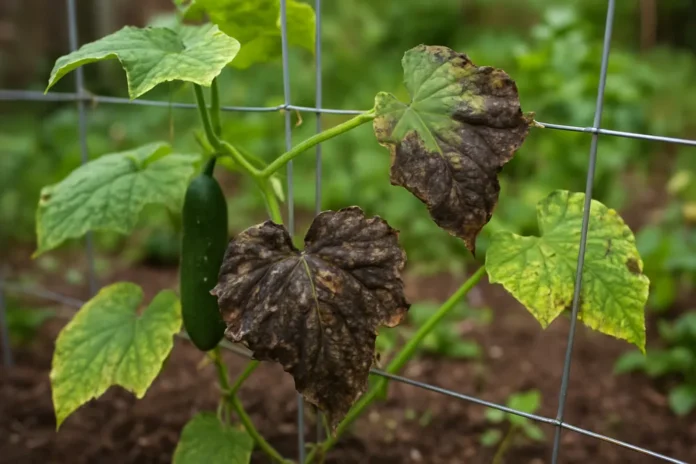
Cucumber leaves usually turn black because the tissue has died from disease, cold damage, severe stress, or a serious pest problem. Blackening is often the final stage after spotting, wilting, water-soaking, or yellowing.
When I see cucumber leaves turning black, I treat it as a sign that the plant has moved past mild stress and into real tissue damage. Cucumbers are fast-growing and productive, but their leaves are tender. Once something starts killing that foliage, the color can shift from green to dark brown, purple-black, or fully black surprisingly quickly.
The tricky part is that black leaves are not one single problem. In some gardens, the cause is a leaf disease that began as small spots. In others, it is cold injury after a chilly night, sunscald on stressed plants, root trouble from soggy soil, or feeding damage that allowed infection to set in. The pattern on the plant matters a lot.
If your cucumber leaves turning black problem seems sudden, start by looking at which leaves are affected, whether the blackening is dry or mushy, and whether stems, fruit, or leaf undersides show other clues. That usually narrows the cause much faster than guessing based on color alone.
What Black Cucumber Leaves Usually Mean
Black leaf tissue on cucumbers usually means that part of the leaf is dead or dying. Healthy cucumber foliage can yellow, pale, or wilt from many common problems, but blackening tends to show up when damage is more advanced. Sometimes the leaf goes black in patches around spots or edges. Sometimes the whole leaf collapses and darkens.
Before the leaves turned black, there was often an earlier stage you may have missed: water-soaked spots, tan lesions, yellow halos, scorched margins, limp foliage after a cold night, or a gray fuzzy coating from a fungal issue. By the time the tissue is black, that leaf usually will not recover. The goal is to save the rest of the plant and stop the spread.
- Dry, crisp black patches often point to scorch, blight, or dead tissue after spotting.
- Soft, wet, dark tissue leans more toward rot, bacterial problems, or severe cold injury.
- Black leaf edges can suggest stress from cold, drought, fertilizer burn, or salt buildup.
- Black spots with yellow areas around them commonly fit fungal or bacterial leaf diseases.
When I diagnose cucumbers, I look at both old and new leaves before deciding anything. If only the oldest leaves are blackening while fresh growth still looks strong, I think stress or a leaf disease first. If the newest leaves are collapsing too, I start worrying about root trouble, cold damage, or a fast-moving infection.
Leaf Diseases That Can Make Cucumber Leaves Turn Black
Angular Leaf Spot and Bacterial Infections
Angular leaf spot is one of the classic cucumber problems that can eventually create dark, dead areas. It often starts as water-soaked lesions limited by the leaf veins, which gives the spots an angular shape. As those spots age, they can dry out, tear, and leave the leaf looking ragged, brown-black, or blackened around the damaged tissue.
Bacterial issues are especially common when leaves stay wet for long periods and plants are crowded. Splashing water spreads them easily. If the blackening is patchy, follows earlier wet-looking spots, and seems worse after rainy or humid weather, bacterial leaf disease is high on the list.
Anthracnose and Other Fungal Blights
Anthracnose can produce tan to brown leaf spots that enlarge and turn very dark as tissue dies. Other fungal blights can do something similar, especially once leaves are badly infected. What starts as a few lesions can merge into larger blackened areas, making leaves look burned or shriveled.
On cucumbers, fungal leaf diseases often show up first on older or lower leaves where airflow is poor and splash from the soil is most common. The center of the plant may stay damp longer than you realize, especially if vines are tangled or planted too close together.
Downy Mildew in Advanced Stages
Downy mildew usually begins with yellow angular patches on the upper surface of leaves. On the underside, you may notice a dark gray or purplish growth in humid weather. As the disease progresses, those patches dry out and die, and the leaf can become dark brown to nearly black. Many gardeners think the blackening appeared overnight, but the yellow stage often came first.
- Remove heavily infected leaves if the plant still has enough healthy foliage to keep growing.
- Avoid overhead watering, especially late in the day.
- Space plants well or prune lightly to improve airflow around vines.
- Do not compost badly diseased cucumber foliage unless your compost pile gets truly hot.
- Rotate cucurbits to a different bed next season when disease has been a major issue.
Cold Damage and Weather Stress
Cucumbers hate cold. Even temperatures well above a hard freeze can injure them, especially if plants were just transplanted or the weather swung from warm days to chilly nights. Cold-damaged cucumber leaves often look water-soaked at first, then turn limp, dark, and finally black as the cells collapse.
This kind of damage can happen after one rough night in spring or early fall. Wind can make it worse. So can wet soil, because chilled roots struggle to support the leaves. If the blackening appeared all at once after a temperature dip, weather injury is very likely.
- Blackened leaves after a cold snap are usually dead and will not green up again.
- New growth may still recover if stems and crown tissue remain healthy.
- Young transplants are more vulnerable than established vines.
- Cucumbers often stall for several days after cold stress even if they survive.
If a cold night is coming, I would protect cucumbers before sunset rather than after dark. Floating row cover, hoops, or even temporary fabric covers work better when they trap daytime warmth in the soil instead of trying to rescue already chilled plants.
Watering Problems, Root Stress, and Black Leaf Edges
Improper watering does not always turn cucumber leaves black by itself, but it sets the stage. Drought stress can cause leaves to scorch at the edges, and those margins may become dark brown to black. On the other side, waterlogged soil suffocates roots, causing wilting, yellowing, and eventual dark collapse of leaf tissue.
Cucumbers need steady moisture, not constant wetness. In heavy soil or containers without enough drainage, roots can start to rot. When roots cannot move water well, leaves may wilt even though the soil is wet. Then patches of tissue die and darken. Gardeners sometimes respond by watering more, which pushes the problem further.
Clues That Point to Root-related Stress
- Leaves wilt in wet soil rather than perking up after irrigation.
- Blackening appears with yellowing, stunting, or poor fruit set.
- Plants in low spots, raised beds with poor drainage, or dense clay decline first.
- Container cucumbers smell sour or stay soggy for days after watering.
If root stress is the real issue, spraying leaves will not solve it. The plant needs more even moisture, better drainage, and time to produce healthy new growth if the roots are not too far gone.
Pests and Feeding Damage That Lead to Blackening
Pests usually do not create solid black leaves on their own, but they can weaken the plant enough that tissue dies or disease enters through feeding wounds. Cucumber beetles, aphids, spider mites, and squash bugs are the usual suspects. Heavy infestations cause stippling, yellowing, curling, and stress, which can eventually lead to dark necrotic patches.
Spider mites are especially sneaky in hot, dry weather. Leaves first look speckled or dusty, then bronzed, then dried out. In severe cases, the dying areas can look nearly black. Squash bugs and cucumber beetles also increase the odds of disease problems by stressing the plant and moving pathogens around the garden.
How to Tell if Pests Are Part of the Problem
- Check leaf undersides for insects, eggs, fine webbing, or shed skins.
- Look for tiny pale speckles before leaves darken.
- Inspect stems and leaf joints where squash bugs like to hide.
- Notice whether nearby cucurbits show similar feeding damage.
If pests are active, deal with them quickly. A stressed cucumber can go downhill fast in heat, and blackened leaves often appear once the plant can no longer support damaged foliage.
Chemical Burn, Fertilizer Injury, and Sun Scorch
Sometimes the problem is not disease at all. Strong sprays, insecticidal soaps used in hot sun, herbicide drift, and overdone fertilizers can all burn cucumber leaves. The damaged spots may start bleached, bronze, or water-soaked and then turn dark brown or black as the tissue dies.
Fertilizer injury is common in containers and raised beds where nutrients build up faster. If a strong liquid feed or granular fertilizer was applied right before the blackening began, leaf burn becomes more likely. Herbicide drift can also distort leaves, cup them, and create dark dead patches, especially when weed killer was used nearby on a windy day.
- Damage often appears shortly after a spray, feeding, or nearby chemical use.
- The pattern may affect the side of the plant facing the exposure source.
- Leaf tissue can look scorched between veins or along margins.
- New growth may emerge normally if the exposure was brief and roots remain healthy.
How to Figure Out the Exact Cause on Your Plant
Good diagnosis comes from pattern, timing, and texture. Instead of focusing only on the black color, compare several leaves and think about what happened in the week before symptoms appeared. One rainstorm, one cold night, one pesticide spray, or one stretch of soggy weather can explain a lot.
Questions That Help Narrow It Down
- Did the problem start after cold weather or a sudden temperature drop?
- Are the dark areas dry and crispy, or soft and wet?
- Did you notice yellow spots, halos, or water-soaked lesions first?
- Are only lower leaves affected, or is the whole plant involved?
- Has the soil stayed too wet, or has the plant gone through repeated wilting?
- Were any sprays, fertilizers, or weed killers used recently?
- Do you see insects, webbing, or feeding scars on leaf undersides?
If lower older leaves are spotted and blackening while upper growth still looks decent, disease is likely. If the whole plant turned limp and dark after a chilly night, think cold injury. If leaves are black at the edges after a fertilizer push or drought, that points more toward burn or stress.
I do not judge a cucumber by the ugliest leaf. I judge it by the newest growth. If fresh leaves continue to emerge clean and green, the plant often has a path back. If the new growth is already spotting, twisting, or blackening, the problem is still active.
What to Do Right Now
Once cucumber leaves have turned fully black, they will not recover. Your next step is to reduce stress, remove obvious sources of spread, and help the plant put energy into healthy new leaves. The exact fix depends on the cause, but a few actions are useful in most situations.
- Prune off badly blackened leaves with clean snips, especially if they are soft, diseased, or touching healthy foliage.
- Water at the soil line instead of overhead to keep leaves dry.
- Let soggy soil begin to dry to a normal evenly moist level before watering again.
- Protect plants from cold nights with row cover or temporary fabric if the weather is marginal.
- Stop any recent spray or fertilizer routine that may be burning the leaves.
- Inspect carefully for mites, beetles, aphids, or squash bugs and treat only if they are present.
- Keep vines supported and spaced so air can move through the canopy.
If a plant is more black than green, especially from disease or rot, replacement may be more practical than rescue. Cucumbers grow fast enough that starting over is sometimes the best use of the season, particularly early or midseason.
How to Prevent Black Leaves on Future Cucumber Crops
Prevention matters more with cucumbers than heroic treatment. Once leaf problems become severe, yields drop fast because the plant loses the foliage it needs to feed developing fruit. A few cultural habits make a big difference.
- Plant after the soil has warmed and nights are reliably mild.
- Use mulch to reduce soil splash that spreads disease onto leaves.
- Water deeply and consistently rather than lightly every day.
- Give vines room or trellis them to improve airflow and leaf drying.
- Rotate cucumbers and other cucurbits away from last year's bed.
- Remove spent vines promptly at the end of the season.
- Avoid handling wet plants, which can spread disease from leaf to leaf.
- Choose disease-resistant varieties when possible in areas with recurring mildew or bacterial issues.
In my own garden, the biggest difference came from two simple changes: watering early at the base of the plants and keeping the vines off wet soil. Those habits do not prevent every problem, but they cut down dramatically on the leaf diseases that often end in blackened foliage.
FAQ
Can Black Cucumber Leaves Turn Green Again?
No. Blackened leaf tissue is dead and will not recover. Focus on whether the plant is still producing healthy new growth.
Should I Remove Black Leaves From My Cucumber Plant?
Yes, if the leaves are heavily damaged, diseased, mushy, or blocking airflow. Use clean pruners and avoid removing so much foliage that the plant is left weak and exposed.
Are Black Cucumber Leaves a Sign of Overwatering?
They can be, especially when roots stay waterlogged and leaf tissue begins to collapse. Overwatering is more likely if the plant wilts in wet soil and the dark areas appear with yellowing or stunting.
Can Cold Weather Make Cucumber Leaves Turn Black?
Yes. Cucumbers are very sensitive to cold, and chilled leaves can become water-soaked, limp, and eventually black after exposure to low temperatures.
Is Black Leaf Spot on Cucumbers a Disease?
Often it is. Bacterial infections, anthracnose, downy mildew in advanced stages, and other blights can all produce dark dead patches that look black.
Will Cucumbers Still Produce After Losing Some Blackened Leaves?
Often yes, if the roots and growing tips are still healthy and enough green foliage remains. Production usually drops when the plant loses a large portion of its leaf surface.
Can Fertilizer Burn Make Cucumber Leaves Look Black?
Yes. Excess fertilizer or concentrated foliar products can scorch leaf edges or patches, which may darken to brown-black as the tissue dies.
Need the right fix fast? Read our guide to the best cucumber disease treatments and pest controls so you can protect new growth and save more of your harvest.
