

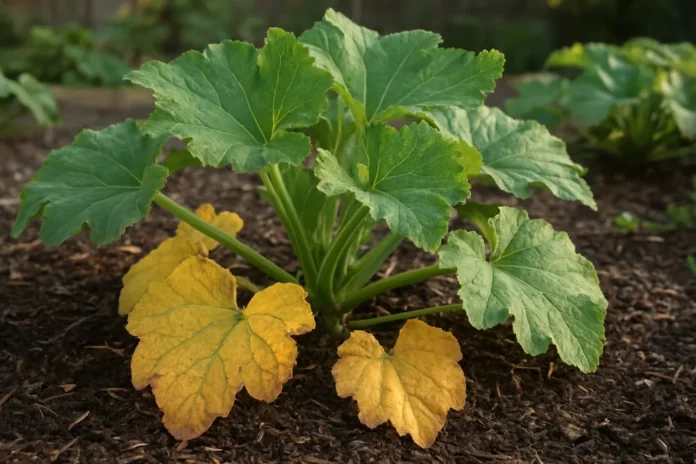
Zucchini leaves usually turn yellow because of watering stress, nutrient shortages, pests, disease, or simple leaf aging. The cause often depends on whether the whole plant is pale, older leaves are yellowing first, or the leaves also have spots, wilting, or damage.
It is frustrating to walk out to the garden and see zucchini leaves turning yellow when the plant looked perfectly healthy just a few days earlier. Sometimes the problem is minor, like an older leaf reaching the end of its life. Other times, yellowing is your zucchini's early warning sign that something is off with water, roots, nutrition, or pests.
When I troubleshoot zucchini, I do not start by guessing. I look at the pattern first. Are only the oldest leaves yellow? Is the whole plant pale? Are there yellow spots between veins, crispy edges, wilt, holes, or powdery growth? Those details matter because zucchini can yellow for very different reasons, and the right fix depends on matching the symptom pattern to the cause.
The good news is that many yellow-leaf problems can be corrected if you catch them early. Below are the most common reasons zucchini leaves lose their healthy green color, how to tell them apart, and what to do next.
What Yellow Leaves Mean on Zucchini
Yellowing, also called chlorosis, means the leaf is losing chlorophyll. In practical terms, your plant is struggling to keep that leaf fully productive. That can happen because the leaf is old, the roots are stressed, nutrients are not moving properly, or disease is disrupting the plant's normal functions.
Not every yellow leaf is an emergency. Zucchini plants are heavy feeders with big leaves, fast growth, and a tendency to put energy into new foliage and fruit. As the plant matures, a few lower leaves may naturally fade and die back. The bigger concern is when yellowing spreads quickly, shows up on lots of leaves at once, or comes with wilting, spotting, stunting, or poor fruit production.
- A few older bottom leaves yellowing slowly often points to normal aging.
- Whole-plant paling usually suggests a water or nutrient issue.
- Yellow leaves with spots, mildew, or distorted growth often suggest pests or disease.
- Yellowing after heat swings, transplanting, or soggy weather can point to root stress.
Natural Aging of Older Leaves
One of the simplest explanations is also one of the most common. Older zucchini leaves, especially the large ones near the base of the plant, naturally yellow and decline as the plant grows. If the rest of the plant looks vigorous and the new growth is green, this is usually not a serious problem.
These aging leaves often turn uniformly yellow, then brown and dry out. They may also become more prone to powdery mildew or minor spotting simply because they are older and shaded. Removing a few spent leaves can improve airflow and help you keep an eye on the crown of the plant.
When I am deciding whether yellowing is normal, I compare old leaves to the newest ones in the center of the plant. If the new growth is strong, upright, and deep green, I usually worry a lot less than when the fresh leaves are pale too.
Watering Problems and Root Stress
Overwatering and Poor Drainage
Zucchini likes consistent moisture, but it does not like sitting in soggy soil. When roots stay too wet, they struggle to take up oxygen and nutrients. That often leads to yellow leaves, droopy growth, and a plant that seems stalled even though the soil is wet.
Leaves may look limp and yellow at the same time, which can confuse gardeners because wilt is often associated with dryness. If your bed drains poorly, if you water every day out of habit, or if the plant is in a low spot after heavy rain, excess moisture may be the real issue.
Underwatering and Drought Stress
Dry soil can also trigger yellow leaves. Zucchini plants grow so quickly that they use a lot of water, especially in hot weather and when they are producing fruit. If the roots repeatedly dry out, older leaves may yellow first, edges may crisp, and the plant can wilt during the day.
A plant that perks up at night but keeps developing yellow, tired-looking leaves often has inconsistent moisture. Repeated swings between bone dry and soaking wet stress the roots just as much as chronic overwatering.
- Water deeply rather than lightly and frequently.
- Aim for evenly moist soil, not muddy soil.
- Mulch around the plant to reduce evaporation and moderate soil temperature.
- If drainage is poor, consider mounding the soil or growing in a raised bed.
I like to push a finger a couple of inches into the soil before watering zucchini. If the surface is dry but the root zone still feels damp, I wait. That simple habit prevents a lot of accidental overwatering.
Nutrient Deficiencies and Feeding Imbalances
Because zucchini is a fast-growing, heavy-feeding crop, nutrient shortages can show up quickly. Yellow leaves are especially common when nitrogen is low, but magnesium, iron, and general fertility problems can also be involved. The pattern of yellowing gives useful clues.
Nitrogen Deficiency
A nitrogen-hungry zucchini often looks pale overall, with older leaves turning yellow first because the plant moves nitrogen into new growth. Growth may slow, stems stay thinner than expected, and fruiting can be weaker. This is common in tired garden beds, sandy soil, or containers that have not been fed regularly.
Magnesium or Iron Issues
If you notice yellowing between green veins, you may be looking at an interveinal deficiency. Magnesium shortages often show up on older leaves first, while iron issues tend to affect newer leaves. Sometimes the nutrients are present in the soil, but the roots cannot access them well because the soil is too wet, compacted, or has an unfavorable pH.
Too Much Fertilizer
It is also possible to create yellowing by overfeeding. Excess fertilizer salts can burn roots and interfere with water uptake, which can lead to yellow or scorched leaves. If yellowing started soon after a strong fertilizer application, especially in a container, that timing matters.
- Feed zucchini with a balanced vegetable fertilizer if the plant is pale and underperforming.
- Use compost to improve long-term fertility and moisture balance.
- Avoid repeated high-dose feeding, especially when the soil is already moist.
- If a deficiency pattern persists, a soil test is the fastest way to stop guessing.
Pests That Cause Yellowing
Squash Bugs
Squash bugs are a classic zucchini problem. These sap-feeding insects weaken leaves, causing speckling, yellowing, and eventual browning. Heavy infestations make plants look tired and stressed fast. You may find bronze egg clusters on leaf undersides, grayish nymphs, or flat brown bugs hiding around the crown.
Aphids and Spider Mites
Aphids cluster on tender growth and suck plant juices, which can lead to yellowing, curling, and sticky residue called honeydew. Spider mites are harder to spot but often cause fine stippling that makes leaves look faded or yellowed. In hot, dry weather, spider mites can build quickly.
Squash Vine Borers
Vine borers are better known for causing sudden wilt, but severe crown damage can also lead to yellowing as the plant loses its ability to move water and nutrients. If leaves are yellowing and the plant is collapsing, inspect the base of the stem for holes or sawdust-like frass.
- Check the undersides of leaves for eggs, insects, or webbing.
- Rinse small aphid colonies off with water or use insecticidal soap if needed.
- Hand-pick squash bugs and remove egg clusters early.
- Keep weeds down and inspect plants often during hot weather.
If yellowing shows up in a mottled, patchy way rather than as one even color change, I start hunting for pests. Feeding damage rarely looks as uniform as a simple nutrient shortage.
Diseases That Turn Zucchini Leaves Yellow
Powdery Mildew
Powdery mildew is one of the most common late-season zucchini problems. It starts as white, powdery patches on leaves, but affected leaves often yellow and decline as the disease spreads. Older leaves tend to be hit first, especially when plants are crowded and airflow is poor.
Downy Mildew and Leaf Spot Diseases
Downy mildew can cause angular yellow patches that later brown out, often with grayish growth on the undersides of leaves. Other fungal and bacterial leaf spots can also cause yellow halos around brown lesions. If the yellowing is tied to distinct spots or shapes, disease becomes more likely.
Viral Infections
Viruses such as cucumber mosaic virus or zucchini yellow mosaic virus can cause yellow mottling, distorted leaves, stunting, and misshapen fruit. These infections are often spread by aphids or carried in from nearby host plants. Viral symptoms tend to look irregular and often include both discoloration and deformity.
Unfortunately, diseases are not always fixable in the same way a watering or feeding issue is. Good sanitation, removing badly affected leaves, spacing plants well, watering at soil level, and controlling pest vectors all help limit spread.
Environmental Stress and Weather Swings
Zucchini grows best when conditions are warm and steady. Cold nights, heat waves, transplant shock, wind, and compacted soil can all stress the plant enough to produce yellowing leaves. Sometimes this yellowing is temporary and the plant outgrows it once conditions improve.
Cold soil in particular slows root function, so the plant may show deficiency-like yellowing even when nutrients are technically present. Heat stress can do something similar by increasing water demand faster than the roots can keep up. If your plant yellowed after a sudden shift in weather, timing can be a big clue.
- Wait to plant until soil has warmed well in spring.
- Protect young plants from cold snaps with row cover if needed.
- Use mulch once the soil is warm to stabilize moisture and temperature.
- Avoid disturbing roots when weeding or cultivating near the crown.
How to Tell Which Cause You Are Dealing With
When several causes seem possible, narrow it down by looking at location, timing, and symptoms together. Garden diagnosis is usually less about one perfect clue and more about a pattern that fits.
- Older lower leaves yellowing first with healthy new growth: often normal aging or mild nitrogen deficiency.
- Whole plant pale and slow-growing: often nutrition, root stress, or chronically wet soil.
- Yellow leaves with wilt in wet soil: likely overwatering, drainage trouble, or root damage.
- Yellowing with dry, crispy edges and afternoon droop: often underwatering or heat stress.
- Yellow mottling, curling, holes, or speckling: often pests or viral issues.
- Yellow leaves with white coating or spotted lesions: often fungal disease.
The more carefully you observe before reacting, the better your results tend to be. If you treat for pests when the real issue is soggy roots, or dump fertilizer on a diseased plant, you can make the problem worse instead of better.
How to Fix Yellow Zucchini Leaves
Start with the simplest corrections first. Adjust watering, inspect for pests, remove clearly dead or diseased leaves, and support the plant with steady care. Many zucchini plants rebound well if the crown and new growth are still healthy.
- Check soil moisture before watering again.
- Inspect leaf tops, undersides, and the crown for insects, eggs, mildew, or lesions.
- Trim off yellow leaves that are fully spent or badly infected, but do not strip the plant bare.
- Feed lightly with a balanced fertilizer or compost if the plant looks generally pale and hungry.
- Improve airflow by spacing plants properly and removing nearby weeds.
- Water at the base of the plant rather than overhead to reduce leaf disease.
Change one thing at a time when possible. If you water differently, fertilize heavily, prune hard, and spray all in the same day, it becomes much harder to tell what actually helped or hurt.
How to Prevent Yellow Leaves in Future Plantings
Prevention is mostly about reducing stress. Healthy zucchini grows fast, so small problems can become obvious quickly. Good soil preparation, even watering, regular scouting, and wide spacing do a lot to keep leaves greener for longer.
- Plant in fertile, well-drained soil enriched with compost.
- Give each plant enough space for strong airflow.
- Water deeply and consistently, especially during fruit set.
- Mulch to keep roots cooler and moisture more even.
- Inspect plants weekly for squash bugs, aphids, and mildew.
- Rotate crops so squash is not planted in the same spot year after year.
I have found that the healthiest zucchini patches are usually the least complicated ones. Rich soil, steady watering, and frequent observation solve far more problems than constant rescue treatments.
FAQ
Should I Remove Yellow Leaves From My Zucchini Plant?
Yes, if the leaves are mostly yellow, damaged, or diseased, you can remove them to improve airflow and reduce stress on the plant. Leave healthy green leaves in place because zucchini needs plenty of foliage to fuel growth and fruiting.
Can Yellow Zucchini Leaves Turn Green Again?
Sometimes mildly stressed leaves improve a bit if the cause is corrected early, especially after watering or feeding issues are fixed. Fully yellow leaves usually do not return to deep green, so focus on healthy new growth as your sign of recovery.
Do Yellow Leaves Always Mean My Zucchini Is Dying?
No. A few yellow bottom leaves are often normal, especially on mature plants. It becomes more serious when many leaves yellow at once or when yellowing comes with wilt, spots, pests, or stunted growth.
Why Are Only the Bottom Leaves on My Zucchini Turning Yellow?
That often points to natural aging or a mild nutrient shortage, especially nitrogen. If the upper growth is green and vigorous, the plant may simply be shedding older leaves.
Can Too Much Rain Make Zucchini Leaves Yellow?
Yes. Extended wet weather can waterlog the soil, reduce oxygen around the roots, and encourage disease, all of which can lead to yellowing leaves.
What Deficiency Causes Zucchini Leaves to Turn Yellow?
Nitrogen deficiency is one of the most common causes of general yellowing, especially on older leaves. Magnesium or iron deficiencies can also cause yellowing, often with green veins still visible.
How Often Should I Water Zucchini to Prevent Yellow Leaves?
There is no perfect schedule because soil type, heat, and rainfall all matter. In general, zucchini does best with deep watering when the top couple of inches of soil are drying, rather than frequent shallow watering.
Want healthier plants and bigger harvests? Read our guide to the best fertilizers and pest control options for zucchini so you can fix yellow leaves faster and keep vines productive.
