

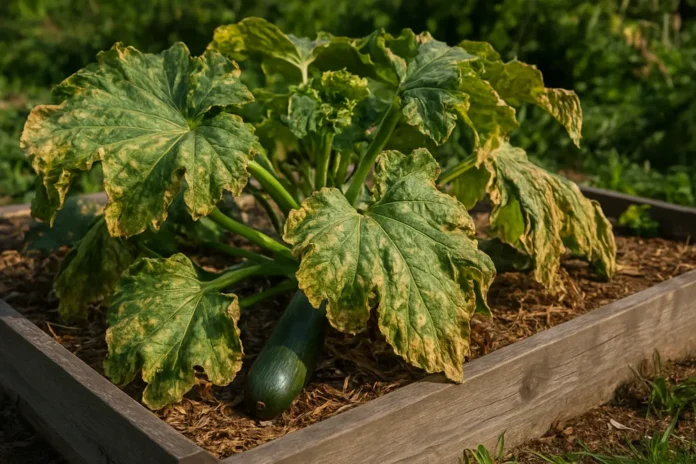
Zucchini leaves usually wilt because of heat, inconsistent watering, root stress, or stem-boring pests. Sometimes the leaves recover by evening, but persistent wilting often points to a problem below the soil line or inside the stem.
Few garden plants look more dramatic than zucchini leaves wilting in the middle of the day. Those big, soft leaves lose firmness fast, and it is easy to assume the plant is about to collapse. In many cases, though, zucchini wilts for reasons that range from completely normal to genuinely urgent.
What matters most is when the wilting happens, how long it lasts, and what else you see on the plant. A zucchini that droops in afternoon heat but perks back up by sunset is telling a different story than one that stays limp all day, has a damaged stem, or suddenly falls over despite moist soil.
When I troubleshoot wilting squash, I start with the simplest explanation and work toward the more serious ones. That usually means looking at heat, watering, roots, and stem pests before blaming disease. Once you know the pattern, the right fix becomes much easier.
When Wilt Is Normal and When It Is a Warning Sign
Zucchini plants have huge leaves that lose water quickly on hot, bright days. Even healthy plants may droop in late afternoon because they are transpiring faster than the roots can replace moisture. This temporary wilt often looks alarming, but the leaves usually firm back up in the evening or by early morning.
Trouble starts when the plant stays limp overnight, wilts day after day, or collapses suddenly while the soil is still moist. Persistent wilting means the roots are not taking up enough water, the stem is damaged, or disease is interfering with the plant's internal water flow.
- Usually normal: leaves droop during the hottest part of the day and recover after temperatures cool
- Potential problem: leaves stay wilted in the morning
- Urgent problem: the whole plant suddenly collapses or a single vine wilts while the rest looks fine
- Warning sign: wilting comes with yellowing, stem holes, mushy roots, or soft stem tissue
I do not judge a zucchini by its midday posture alone. I look at it again around dusk and then the next morning, because that timing often tells me more than the wilt itself.
Heat Stress and Temporary Afternoon Droop
Hot weather is one of the most common reasons zucchini leaves wilt. Large leaves act like solar panels, and in full summer sun they can lose water rapidly. If your plant looks limp from midafternoon through early evening but recovers later, heat is the most likely cause.
This kind of wilt is more common in raised beds, containers, sandy soil, and windy spots. Young plants with smaller root systems are especially vulnerable. A sudden hot spell can make a previously healthy plant droop for a few days until it adjusts.
- Leaves wilt most during the hottest hours
- Soil may still be slightly moist below the surface
- Plant recovers in the evening or overnight
- No stem damage or major leaf spotting is present
To help with heat stress, water deeply in the morning, mulch the root zone, and avoid shallow daily sprinkles that only wet the surface. A 2 to 3 inch mulch layer can keep roots cooler and reduce evaporation. In extreme heat, even healthy zucchini may still droop temporarily, but consistent moisture helps shorten the recovery time.
Underwatering and Dry Soil
If the soil is dry several inches down, your zucchini may simply not be getting enough water. Wilting from drought often starts as mild droop, then becomes more severe as leaves lose more moisture than the roots can absorb. You may also notice dull-looking foliage, dry leaf edges, smaller fruit, or blossoms dropping before fruit sets.
Zucchini generally does better with deep, infrequent watering than with frequent shallow watering. A light daily sprinkle encourages surface roots and leaves the deeper soil dry. That makes plants more vulnerable during hot weather.
- Top few inches of soil feel dry and dusty
- Leaves remain limp into the evening
- Plant may perk up noticeably after a deep watering
- Fruit can become misshapen during prolonged drought stress
Aim to moisten the soil deeply so roots grow down rather than staying near the surface. In most garden beds, that means watering thoroughly and then letting the top layer dry slightly before watering again. The exact schedule depends on heat, rainfall, and soil type, but the goal is even moisture rather than constant wetness or repeated drought.
Overwatering, Poor Drainage, and Root Stress
Wilted leaves do not always mean the plant needs more water. Zucchini can also wilt when the soil stays too wet. Saturated soil pushes out oxygen, and roots begin to struggle or rot. When that happens, the plant cannot take up water properly, even though plenty is sitting around the roots.
Overwatered zucchini often look wilted and weak at the same time. Leaves may yellow, growth may slow, and the soil may stay soggy for long periods. In heavy clay or low spots, standing moisture can trigger root problems quickly after rainy weather.
- Soil feels wet or sticky below the surface for days
- Wilting does not improve after watering
- Lower leaves may yellow along with drooping
- Plant growth stalls or new leaves stay small
If wilted zucchini are growing in heavy soil, I pause watering before I add more. A lot of gardeners accidentally treat every wilt like drought, when the real issue is roots sitting in airless soil.
Improve drainage by watering less often, adding compost over time, and planting future squash in mounded rows or raised beds if your soil stays wet. If roots are already badly damaged, recovery may be limited, but correcting the moisture problem gives the plant its best chance.
Squash Vine Borers and Stem Damage
If a zucchini plant suddenly wilts despite moist soil, squash vine borer is one of the first things to consider. The larvae tunnel into the stem near the base and feed inside it. That disrupts water movement, so the plant wilts even though the roots may still be in decent shape.
A classic sign is a small hole at the lower stem with sawdust-like frass that looks like moist orange or tan crumbs. Sometimes only one side of the plant wilts at first. As damage spreads, the whole plant can collapse.
- Sudden wilting with soil that is not dry
- Hole or split near the base of the main stem
- Frass around the entry point
- Stem may feel soft or hollow in one area
If you catch it early, you may be able to slit the stem carefully, remove the larva, and mound moist soil over the damaged section so the plant can root along the vine. Keep the plant well watered while it recovers. Row covers early in the season and regular stem inspections help prevent this problem in future plantings.
When only one vine or one side of a zucchini suddenly droops, I look at the lower stem before I do anything else. That one-sided collapse is often the clue that sends me straight to vine borer damage.
Bacterial Wilt and Other Diseases
Disease is a less common cause of zucchini wilting than simple moisture problems, but it does happen. Bacterial wilt, which is spread by cucumber beetles, can cause leaves and vines to droop because the water-conducting tissues become blocked. Once symptoms are advanced, affected plants usually do not recover.
Root rots and crown rots can also cause persistent wilt, especially in poorly drained soil. In those cases, the base of the plant may look brown, soft, or sunken. Fungal diseases often develop after long wet periods, overwatering, or soil that never dries properly.
Some foliar diseases like powdery mildew do not directly cause sudden wilting at first, but a heavily infected plant can weaken over time and struggle in heat. If your zucchini is both diseased and drought-stressed, the symptoms can overlap.
- Wilt persists even when soil moisture seems adequate
- Cucumber beetles have been active in the garden
- Stems or crown tissue look discolored, soft, or collapsed
- The plant declines steadily rather than bouncing back after watering
Remove and discard severely diseased plants rather than composting them if you suspect a serious wilt disease or crown rot. Clean up plant debris, rotate crops, and manage cucumber beetles early to reduce future problems.
Transplant Shock, Root Disturbance, and Container Problems
Newly transplanted zucchini can wilt simply because the roots have not settled in yet. Squash dislike root disturbance, and a plant that was moved on a hot or windy day may droop for several days. This is especially common if transplants were root-bound, planted too shallowly, or not watered in thoroughly.
Container-grown zucchini also wilt faster than in-ground plants because the soil volume is limited and dries out quickly. At the same time, containers without enough drainage can stay soggy and damage roots. That means potted zucchini can swing between too dry and too wet much faster than garden-bed plants.
- Wilting started soon after transplanting
- Weather turned hot, sunny, or windy after planting
- Roots may be crowded if the plant came from a small pot
- Container soil dries out much faster than surrounding beds
Give transplants a few days of consistent moisture, light shade during extreme heat, and minimal disturbance. For containers, use a large pot, check moisture often, and make sure excess water drains freely. Healthy new growth is the best sign that the plant is recovering.
How to Diagnose the Cause Quickly
The fastest way to solve wilt is to work through the clues in order. Instead of watering automatically, look at the timing, the soil, and the stem. Zucchini symptoms tend to make more sense once you compare those three pieces together.
- Check the plant early in the morning. If it is still wilted, the issue is more than temporary afternoon heat.
- Feel the soil 2 to 4 inches down. Dry soil points toward underwatering, while soggy soil suggests root stress or rot.
- Inspect the base of the stem for holes, frass, splits, or soft tissue that could indicate vine borers or crown problems.
- Look for yellowing, beetle activity, or disease symptoms on leaves and stems.
- Think about recent changes such as heavy rain, a heat wave, transplanting, or a missed watering.
If the plant recovers overnight and the soil is reasonably moist, simple heat stress is the likely answer. If the plant stays down and the stem looks damaged, shift your attention away from watering and toward pests or disease.
What to Do Next for Recovery
The right response depends on the cause, but a few basic steps help most zucchini plants recover from mild stress. First, correct the moisture issue without overreacting. That means deep watering for drought, or holding off and improving drainage for soggy soil. Then reduce additional stress by mulching, keeping weeds down, and avoiding unnecessary root disturbance.
If vine borers are the problem, act quickly while some stem tissue is still functional. If disease has already advanced through the crown or water-conducting tissues, removal is often more practical than trying to save the plant. When recovery is possible, judge improvement by the firmness of new growth and the plant's behavior in the morning, not just by how it looks at noon.
- Water deeply if soil is truly dry
- Let wet soil dry slightly if drainage is poor
- Mulch to stabilize root-zone moisture
- Inspect stems regularly for borer damage
- Remove badly diseased plants to protect nearby cucurbits
- Avoid fertilizing a severely stressed plant until it begins to recover
A wilted leaf does not always mean a doomed plant. Zucchini can bounce back surprisingly well when the cause is caught early, especially if the issue is heat or short-term watering stress rather than a stem-boring pest or advanced disease.
FAQ
Why Do My Zucchini Leaves Wilt During the Day but Recover at Night?
That pattern usually points to heat stress rather than a serious disease. Large zucchini leaves lose water quickly in hot sun, then firm back up once temperatures drop.
Should I Water Wilted Zucchini Right Away?
Not automatically. Check the soil first, because wilt can come from dry roots or from roots sitting in overly wet soil.
Can Zucchini Recover From Squash Vine Borer Damage?
Sometimes, especially if you catch it early. Removing the larva and covering part of the vine with soil can help the plant form new roots and keep growing.
What Does Overwatered Zucchini Look Like?
It often looks limp, weak, and sometimes yellow at the same time. The soil usually stays wet for too long, and the plant does not perk up after more watering.
Do Zucchini Plants Wilt After Transplanting?
Yes, they can. Transplant shock is common if roots were disturbed, the weather is hot or windy, or the plant was not watered in well.
Can Cucumber Beetles Cause Zucchini Wilt?
Yes. They can spread bacterial wilt, which interferes with water movement inside the plant and leads to persistent drooping.
How Often Should Zucchini Be Watered to Prevent Wilting?
There is no single schedule that fits every garden, but zucchini prefers deep, even watering rather than frequent shallow sprinkles. Weather, soil type, and mulch all affect how often that is needed.
Want the best products for stopping squash pests and keeping zucchini healthy? Check out our recommended vine borer treatments, row covers, and watering tools before your next plant starts drooping.
