

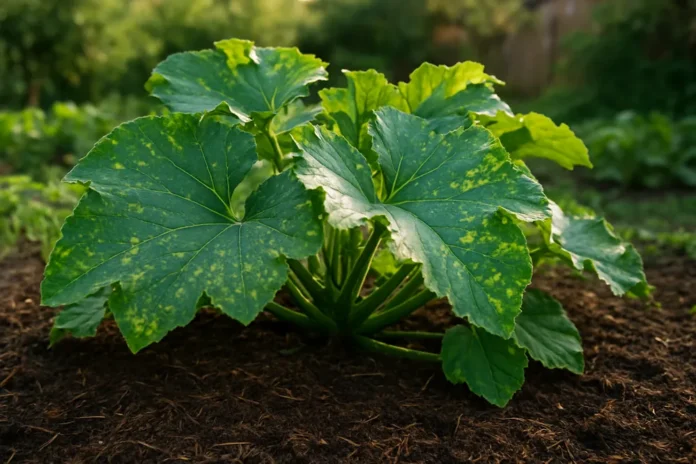
Zucchini leaves usually get yellow spots from fungal disease, sap-sucking pests, or stress such as uneven watering and nutrient imbalance. The spot pattern often tells you whether the problem is mild or something that can spread quickly.
Seeing zucchini leaves with yellow spots can be unsettling, especially when the plants seemed fine just a few days earlier. In my garden, this symptom can mean anything from a minor watering issue to a fast-moving disease, so I never assume all yellow spotting is the same.
The good news is that zucchini tends to show useful clues. The shape of the spots, whether they stay between the veins or turn brown, and whether you also see insects, mildew, or leaf curl can help narrow the cause quickly. If you catch the issue early, you can often keep the plant producing even if the older leaves never look perfect again.
Below, I will walk through the most common reasons zucchini leaves have yellow spots, how to tell them apart, and which problems are worth acting on right away.
What the Yellow Spotting Pattern Can Tell You
Before treating anything, look closely at the pattern. Zucchini leaves are naturally mottled in some varieties, so not every pale marking is a problem. Healthy variegation usually looks even and symmetrical, almost like the leaf was painted that way. Trouble spots usually look irregular, expand over time, or come with other symptoms such as browning, fuzz, holes, wilting, or leaf distortion.
- Small yellow speckles scattered across the leaf often suggest spider mites or other sap-feeding pests.
- Angular yellow patches that follow the veins can point to downy mildew.
- Round yellow spots that later develop a white coating often show up with powdery mildew.
- General yellowing with a few blotches can come from watering stress or a nutrient problem.
- Mottled yellow and green leaves with twisting or misshapen growth raise concern for a mosaic virus.
When I am diagnosing zucchini, I compare a brand-new leaf, a middle-aged leaf, and one of the oldest leaves. If only the oldest leaves are affected, I lean toward stress or age. If new growth is also spotted or distorted, I start thinking disease or virus much sooner.
Common Causes of Yellow Spots on Zucchini Leaves
Downy Mildew
Downy mildew is one of the more serious causes of yellow spotting on zucchini. It often starts as angular yellow patches on the upper leaf surface, with the shape limited by the leaf veins. As it progresses, the undersides of the leaves may develop a grayish or purplish fuzz, especially in humid weather. The affected tissue eventually turns brown and crispy, and the plant can decline quickly.
This disease is most common when nights are humid, leaves stay wet for long periods, and air circulation is poor. It tends to spread faster in crowded beds or during stretches of damp weather.
Powdery Mildew
Powdery mildew usually gets noticed for its white dusty coating, but yellow spots can show up first or appear around infected areas. Older leaves are often hit first. On zucchini, the leaf may start with pale yellow blotches, then develop the familiar white powder on top. Over time, leaves dry out, lose vigor, and stop feeding the plant well.
Unlike many fungal problems, powdery mildew does not need free water on the leaf surface to spread. Warm days, cooler nights, and dense foliage are often enough to encourage it.
Spider Mites
Spider mites cause very fine yellow stippling, almost like someone flicked pale paint across the leaf. This damage happens because the mites pierce plant cells and suck out their contents. Severe infestations make leaves look dusty, bronzed, or faded. Fine webbing may appear on the undersides of leaves or between stems when the population is high.
Hot, dry conditions favor spider mites, which is why they often flare up in midsummer. They are easy to miss at first because the individual mites are tiny.
Nutrient Imbalance or Poor Nutrient Uptake
Yellow spotting is not the classic sign of a nutrient deficiency, but uneven yellowing can happen when zucchini struggles to take up nutrients. Magnesium deficiency can cause yellowing between veins, while a general nitrogen shortage causes older leaves to fade overall. Sometimes the issue is not a lack of fertilizer but roots stressed by soggy soil, compacted ground, or inconsistent moisture.
If the spotting looks soft-edged and the whole plant seems a bit pale rather than sharply diseased, nutrition and root health deserve a closer look.
Water Stress and Root Stress
Zucchini grows fast and uses a lot of water, but it dislikes extremes. If the soil swings from bone dry to saturated, leaves can develop yellow patches, scorch around the edges, or droop during the heat of the day. Constantly wet soil can also weaken roots and make leaves yellow in blotches because the plant is not taking up nutrients efficiently.
This is especially common in containers, raised beds that dry out quickly, or heavy clay soil that holds too much water after rain.
Mosaic Viruses
Viruses such as cucumber mosaic virus or zucchini yellow mosaic virus can create mottled yellow and green leaves, spotting, puckering, and distorted growth. Fruit may become misshapen, bumpy, or mottled too. Viral symptoms often look less like neat spots and more like an irregular patchwork across the leaf.
These viruses are commonly spread by aphids and other vectors. Unfortunately, viral infections do not have a cure once the plant is infected.
Natural Leaf Aging and Varietal Markings
Some zucchini varieties naturally have silvery or pale mottling on their leaves, and older leaves often get more blemished as the season goes on. If the plant is still growing strongly, flowering, and setting fruit, a few yellowed or spotted older leaves may be completely normal.
How to Tell Which Problem You Are Dealing With
Because several issues can produce yellow spots, a quick visual check is often more useful than guessing based on color alone. Focus on the newest growth, the oldest leaves, and both the top and bottom of the foliage.
- If the spots are angular and bounded by veins, suspect downy mildew.
- If the spots are powdery or dusty white as they age, suspect powdery mildew.
- If the leaf has fine yellow stippling and maybe webbing underneath, suspect spider mites.
- If the whole plant looks pale, stressed, or unevenly yellow, think about water and roots first.
- If leaves are mottled, twisted, and deformed, a mosaic virus is more likely.
- If the marks are evenly silver or pale on many leaves from the start, they may be normal varietal variegation.
I like to check leaves early in the morning. Mildew growth and mite webbing are often easier to spot before the day gets hot and the plant starts wilting a little from normal afternoon stress.
A hand lens helps, but you can also tap a leaf over white paper. If tiny moving specks fall off, mites may be involved. For disease, the undersides of leaves are often the giveaway, especially with downy mildew.
What to Do for Each Likely Cause
If It Looks Like Downy Mildew
Remove the worst infected leaves if the plant still has plenty of healthy foliage left. Avoid wetting the leaves during watering, and improve airflow by keeping nearby weeds down and giving the plant space. Fungicides labeled for cucurbits may help slow spread if applied early, but badly infected plants often decline despite treatment.
Do not compost heavily infected foliage unless your compost pile gets reliably hot. Spores can persist and reinfect the area.
If It Looks Like Powdery Mildew
Trim off badly affected leaves, especially older ones that are mostly spent. Keep the plant watered consistently at the base and avoid excess nitrogen, which can push lush, susceptible growth. Organic and conventional fungicides labeled for powdery mildew can help protect newer leaves when used promptly.
With powdery mildew, success is often about slowing it down rather than making every leaf look perfect again. New growth is the part to protect.
If It Looks Like Spider Mites
Rinse the undersides of leaves with a firm spray of water to knock the mites back, then repeat regularly if needed. Insecticidal soap or horticultural oil can work well when they reach the undersides where mites feed. Try to treat in the cooler part of the day and follow label directions carefully, since zucchini leaves can be sensitive in hot weather.
Also reduce plant stress. Dry, dusty plants are far more inviting to mites than evenly watered plants growing in good conditions.
If It Looks Like a Nutrient or Watering Problem
Aim for steady moisture, not extremes. Zucchini usually does best with deep watering that keeps the root zone evenly moist without leaving the soil saturated. A layer of mulch helps keep moisture stable and reduces splash from soil onto leaves. If the plant has not been fed in a while, a balanced vegetable fertilizer may help, but avoid overfeeding just because the leaves are yellow.
If you suspect poor drainage, improve it for future plantings or move container-grown plants into a better-draining mix. Root stress often mimics deficiency even when fertilizer is present.
If It Looks Like a Mosaic Virus
There is no cure for a viral zucchini plant. If the leaves are heavily mottled and distorted, and the fruit quality is declining, removing the plant is usually the cleanest option. This helps reduce the chance of aphids moving from an infected plant to a healthier one nearby.
When a zucchini has a virus, I usually see the plant lose its normal momentum. It is not just cosmetic spotting. New leaves come in small, twisted, or oddly colored, and the plant never quite grows out of it the way a stressed plant sometimes can.
When Yellow Spots Are Serious and when They Are Mostly Cosmetic
Not every spotted zucchini plant is doomed. If the oldest leaves are blemished but the center of the plant is still pushing healthy green growth and fruit is setting well, the issue may be manageable. Zucchini often keeps producing even after some leaf damage, especially later in the season.
The more urgent cases are the ones where symptoms are spreading quickly, showing up on new leaves, or affecting fruit quality. Rapid browning, fuzzy growth under leaves, widespread stippling with webbing, or distorted new growth all deserve quicker action.
- Usually less urgent: a few older leaves with mild spotting, slight pale mottling on a naturally variegated variety, or minor stress after weather swings.
- More urgent: spotting that spreads across the plant in a few days, fungal growth on leaves, severe mite damage, or mosaic-like distortion in new growth.
How to Prevent Yellow Spots on Future Zucchini Plants
Prevention matters because zucchini grows so fast that foliage problems can snowball before you notice them. A few basic habits go a long way toward avoiding the most common causes of yellow spots.
- Plant zucchini where it gets full sun and good air circulation.
- Water the soil, not the leaves, and keep moisture consistent.
- Mulch to reduce soil splash and moderate moisture swings.
- Space plants generously so leaves dry faster after dew or rain.
- Check the undersides of leaves weekly for mites, aphids, and early disease signs.
- Remove badly infected foliage promptly instead of letting it sit in the bed.
- Rotate cucurbit crops when possible rather than planting squash in the same spot every year.
- Avoid overdoing high-nitrogen fertilizer, which can encourage tender, disease-prone growth.
I have found that gardeners often focus on fertilizer first, but spacing and leaf dryness usually matter more for spotting problems on zucchini. Big, crowded squash leaves create their own damp little climate, and that is where disease gets comfortable.
A Simple Way to Think Through the Problem
If you feel stuck, simplify the diagnosis. Start by asking whether the spotting is crisp and patterned, dusty and fungal, tiny and speckled, or mixed with twisting and deformation. Then ask whether the newest growth looks healthy. Those two observations will eliminate most wrong guesses.
In many home gardens, the most common causes are powdery mildew, downy mildew, spider mites, and uneven growing conditions. True nutrient deficiency is possible, but it is often secondary to root stress. Viral disease is less common than people fear, but when it shows up, it tends to affect the whole plant's shape and vigor, not just the color of one leaf.
FAQ
Can Yellow Spotted Zucchini Leaves Turn Green Again?
Usually no. Damaged leaf tissue rarely returns to normal, especially if disease or mites caused the spotting. Judge recovery by whether new leaves grow in healthy and the plant keeps producing.
Should I Cut Off Zucchini Leaves with Yellow Spots?
Remove leaves that are heavily diseased, badly infested, or mostly spent, but do not strip the plant too aggressively. Zucchini still needs enough healthy foliage to support fruit growth.
Are Yellow Spots on Zucchini Leaves Always a Disease?
No. Some zucchini varieties have natural silvery mottling, and water stress or nutrient uptake issues can also create pale or yellow patches. The pattern and any extra symptoms matter more than the color alone.
What Is the Difference Between Powdery Mildew and Downy Mildew on Zucchini?
Powdery mildew usually shows a white powdery coating on the upper leaf surface. Downy mildew often starts as angular yellow patches and may produce gray or purplish growth on the undersides of leaves.
Can I Still Eat Zucchini From a Plant with Yellow Spotted Leaves?
In most cases, yes, if the fruit itself is sound and not rotting or badly distorted. The leaf problem does not automatically make the fruit unsafe, though virus-infected plants may produce poor-quality fruit.
Do Spider Mites Cause Yellow Spots on Zucchini?
Yes. Spider mites often cause fine yellow stippling across the leaves, and severe infestations can make foliage look bronzed or dusty. Webbing underneath the leaves is a common clue.
Can Overwatering Cause Yellow Spots on Zucchini Leaves?
Yes. Overwatering can stress roots, reduce oxygen in the soil, and interfere with nutrient uptake, which may lead to yellow blotches or general yellowing. Soggy soil often causes a plant to look both pale and weak.
Need the right fix fast? Read our guide to the best fungicides, insecticidal soaps, and zucchini care products so you can treat yellow-spotted leaves before the problem spreads.
