

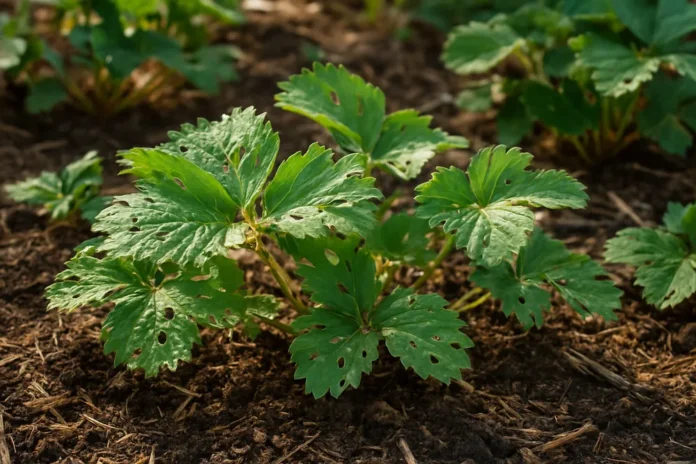
Strawberry leaves usually get holes because something is chewing them, most often slugs, beetles, caterpillars, or earwigs. Less often, the tissue dies first from disease or weather stress and then tears away, leaving a hole-like symptom.
If you walk out to your patch and notice strawberry leaves with holes, the good news is that this symptom is often easier to solve than yellowing or wilting. In most cases, holes mean a chewing pest has been feeding at night or when you were not looking. The pattern of damage matters a lot, because ragged edges, tiny shot holes, and larger missing chunks can point to very different culprits.
I do not automatically panic when I see a few damaged leaves on strawberries. Healthy plants can tolerate some nibbling, especially once they are growing strongly in spring. What matters is whether the damage is light and scattered or getting worse fast, and whether you are also seeing slime trails, insects, webbing, spots, or fruit damage along with those holes.
The trick is to look at where the holes appear, what the leaf edges look like, and when the damage shows up. Once you match the pattern to the likely cause, you can usually protect the plants without overcomplicating the fix.
What Hole Patterns on Strawberry Leaves Usually Mean
Not all leaf holes mean the same thing. Before treating anything, it helps to slow down and look closely at several leaves, not just one. New leaves, older leaves, the undersides, and nearby mulch can all tell part of the story.
- Small, fairly neat holes scattered through the leaf blade often suggest beetles or other small chewing insects.
- Large ragged holes and chewed leaf edges often point to slugs, snails, earwigs, or caterpillars.
- Tiny pinprick damage that later expands can come from very early feeding or from leaf tissue that died and dropped out.
- Holes combined with brown or purple spots can indicate a disease issue rather than straightforward chewing.
- Damage concentrated on tender new growth often suggests an active pest problem happening right now.
- Damage mainly on older outer leaves may be less urgent if new growth looks clean and vigorous.
When I diagnose strawberries, I always compare the newest center leaves with the oldest outer ones. If only the older leaves look tattered but the crown is pushing clean new growth, the problem is often lighter than it first appears.
Chewing Pests Are the Most Common Cause
Slugs and Snails
Slugs and snails are some of the most common reasons strawberry leaves develop ragged holes. They love cool, damp conditions and often hide under mulch, boards, dense groundcover, or the strawberry canopy during the day. Their feeding usually leaves irregular holes and chewed edges rather than tidy circular damage.
You are more likely to see this problem in spring, after rain, or in heavily mulched beds that stay moist for long stretches. They also feed on ripening fruit, so leaf holes sometimes show up before you notice berries getting gouged.
- Irregular holes with rough edges
- Missing sections along leaf margins
- Silvery slime trails on leaves, mulch, pots, or edging
- Worse damage after wet weather or overhead irrigation
Beetles
Several kinds of beetles can feed on strawberry foliage. Flea beetles make tiny shot holes, while other small leaf-feeding beetles create more noticeable chewing across the blade. In some regions, adult root weevils also notch leaf edges, producing a scalloped appearance.
Beetle damage often looks cleaner than slug damage. Instead of broad shredded patches, you may see repeated little bites or peppered holes across many leaves.
- Small holes scattered across the leaf
- Repeated notches around edges
- Damage appearing on many leaves at once
- Visible insects during the day or when foliage is disturbed
Caterpillars and Other Larvae
Caterpillars chew larger holes than flea beetles and can strip sections of soft leaves surprisingly fast. Sometimes they hide in folded leaves or low in the center of the plant. If webbing or frass, which looks like small dark droppings, is present, larvae move higher on the suspect list.
The feeding may begin as shallow scraping on tender tissue and turn into obvious holes as the leaf expands. That can make the damage seem to appear overnight.
Earwigs
Earwigs are opportunistic feeders that sometimes chew strawberry leaves, especially in dense, damp beds. They tend to feed at night and hide during the day under pots, mulch, stones, or old plant debris. Their damage can resemble slug injury, though slime trails will be absent.
When Disease or Stress Creates Hole-like Damage
Sometimes the leaf tissue is not eaten first. Instead, it becomes damaged by disease or environmental stress, dies, and then dries or tears away. That leaves a hole that looks like pest feeding from a distance.
Leaf Spot and Blight Issues
Strawberries can develop fungal leaf diseases that create spots with dead centers. As those dead patches dry out, the center can crack or fall away. This is less common than simple chewing, but it does happen, especially during humid weather or when plants stay wet for long periods.
If you see holes surrounded by a purple, tan, reddish, or brown border, think beyond insects. The hole may be the final stage of a spot that started as discolored tissue.
Wind, Hail, and Physical Tearing
Strong wind, sandblasting, hail, or leaves rubbing against cages, edging, or netting can tear strawberry foliage. This kind of damage is often more random and may affect exposed leaves more than sheltered ones. Torn areas can widen into holes as the leaf grows.
Old Damage Revealed as Leaves Expand
Very young leaves are soft and folded when they emerge. If they are nicked early by insects, dryness, or rough handling, the damage may not look like much at first. Once the leaf opens fully, those tiny injuries become visible holes. That is one reason strawberries can seem fine one day and suddenly tattered the next.
How to Tell Which Culprit You Are Dealing With
A quick inspection usually narrows it down. You do not need lab-level diagnosis. You just need a few careful observations at the right time of day.
- Check the leaf edges. Smooth repeated notches often suggest beetles or weevils, while ragged chewing points more toward slugs, snails, or caterpillars.
- Look for a border around the hole. Dark or purple margins may mean the tissue died before it fell out.
- Inspect at dusk or after dark with a flashlight. Night feeders are easy to miss in daylight.
- Lift mulch and look under boards, pots, or dense foliage for slugs, snails, earwigs, or hiding larvae.
- Search the undersides of leaves for eggs, small caterpillars, or beetles resting out of sight.
- Notice whether fruit is also damaged. Slugs, earwigs, and some caterpillars often move from foliage to berries.
If the cause is not obvious, place a piece of cardboard or a folded newspaper near the plants overnight. By morning, slugs, earwigs, and other hiding pests often collect under it, which gives you a much clearer answer than guessing from leaf damage alone.
What to Do for Each Likely Cause
If Slugs or Snails Are to Blame
Reduce the damp hiding spots that let them build up around the patch. Thin heavy mulch away from the crowns, water early in the day instead of evening, and remove boards, weeds, or dense debris where they shelter. Hand-picking at dusk can make a real dent in a small bed.
If pressure is high, slug baits labeled for edible gardens can help when used according to label directions. I prefer using them as part of a cleanup approach, not as the only solution.
If Beetles Are Chewing the Leaves
Start by checking whether the damage is mostly cosmetic or increasing quickly. Many strawberry plants can outgrow light beetle feeding. Remove nearby weeds that may host pests, keep the bed tidy, and inspect often. Insect netting or row covers can help exclude some beetles if used before populations build.
For root weevil type edge-notching, the foliage damage alone may not be the biggest problem. The larvae in soil can be more serious because they feed belowground. If plants are also weak or collapsing, look beyond the leaves.
If Caterpillars or Larvae Are Present
Hand-remove any larvae you find and destroy heavily infested leaves if the plant still has enough healthy foliage. On food crops, targeted products labeled for caterpillars can be effective, but they work best on small larvae and only when the label includes strawberries.
If Earwigs Are Doing the Damage
Reduce hiding places, especially soggy mulch mats and clutter right at soil level. Simple traps made from rolled newspaper or shallow containers can help monitor and reduce numbers. Because earwigs also eat some other pests, I usually avoid overreacting unless damage is obvious and ongoing.
If Disease Is Involved
Remove badly spotted leaves, improve airflow, avoid overhead watering when possible, and keep fruit and foliage from sitting on wet soil. Sanitation matters here. Clean up old infected leaves at the end of the season so spores are less likely to linger.
I try not to spray first and ask questions later on strawberries. Holes from chewing pests and holes from dead leaf tissue can look similar at a glance, but the wrong treatment wastes time and can disrupt helpful insects without solving the actual problem.
When to Worry and when a Few Holes Are Not a Big Deal
A few holes on older strawberry leaves usually are not an emergency. Established plants can still flower and fruit well with some cosmetic damage. The concern rises when the newest leaves are being hit hard, entire plants are thinning out, or fruit is being damaged along with the foliage.
- Treat it as minor if only a handful of leaves are affected and new growth looks healthy.
- Pay closer attention if damage spreads quickly over several days.
- Act faster if you also see berries being chewed, crowns weakening, or whole plants losing vigor.
- Consider disease more seriously if the leaves show distinct spotting, discoloration, or lesions before holes form.
In my garden, I focus less on perfect leaves and more on plant momentum. If the patch is putting on fresh green growth and forming flowers well, I monitor first and intervene more lightly. If the damage is outrunning the plant's ability to replace leaves, that is when I step in more aggressively.
How to Prevent Holes in Strawberry Leaves Next Season
Prevention is mostly about making the bed less inviting to pests and less favorable to leaf disease. A clean, airy planting tends to have fewer surprises.
- Space plants so leaves dry quickly after rain or watering.
- Use mulch thoughtfully, keeping it from piling tightly against crowns.
- Water in the morning so foliage and soil surface are less wet overnight.
- Remove weeds, old leaves, and debris that give pests places to hide.
- Check plants regularly in spring when tender new leaves emerge.
- Rotate or refresh beds when old strawberry plantings become crowded and hard to manage.
- Harvest ripe fruit promptly so pests are not encouraged to stick around.
- Use row covers early if chewing insects are a recurring seasonal problem in your area.
Good prevention does not mean a sterile bed. It means reducing the conditions that let one problem get out of balance. Strawberries grown in sun, with decent airflow and steady care, usually bounce back well from modest leaf damage.
FAQ
Will Strawberry Plants Recover From Holes in the Leaves?
Yes, most will recover if the crown is healthy and new growth is still coming in. Existing holes will not heal, but the plant can replace damaged foliage once the cause is under control.
Do Slugs Eat Strawberry Leaves and Fruit?
Yes. Slugs commonly chew ragged holes in leaves and can also gouge ripe berries, especially in cool, damp beds with lots of mulch or debris.
Can I Still Eat Strawberries From Plants with Holey Leaves?
Usually yes, as long as the fruit itself is sound and not moldy or chewed. Wash harvested berries well and discard any fruit with soft rot, slime, or obvious pest damage.
What Insect Makes Tiny Holes in Strawberry Leaves?
Small beetles, including flea beetles in some gardens, are common causes of tiny shot holes. Early feeding from small larvae can also create small holes that enlarge as leaves expand.
Why Do the Holes Show Up Mostly on Older Leaves?
Older leaves have simply been exposed longer, so they collect more feeding damage over time. It can also mean the main problem happened earlier and the plant's newer growth is now coming in healthier.
Are Holes in Strawberry Leaves Always Caused by Bugs?
No. Fungal leaf spots, wind damage, hail, and old injuries on unfolding leaves can all create holes or torn areas that look like insect feeding.
Should I Remove Damaged Strawberry Leaves?
Remove leaves that are heavily chewed, badly spotted, or lying wet against the soil, but do not strip the plant bare. Keep enough healthy foliage to support growth and fruiting.
Need the right fix fast? Read our guide to the best strawberry pest controls and bed care products so you can protect leaves, flowers, and fruit before damage spreads.
