

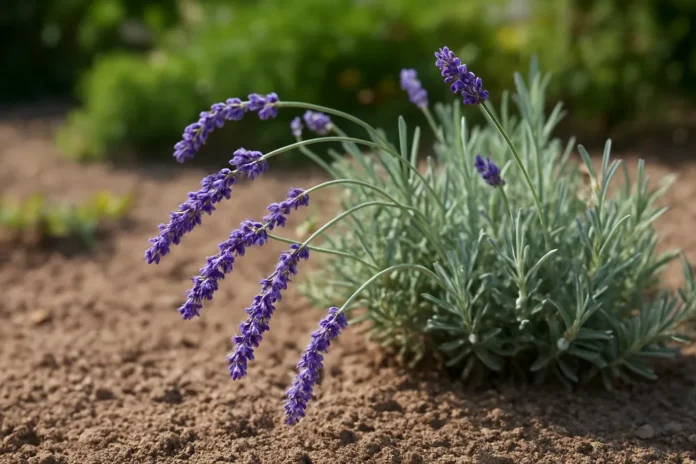
Lavender usually droops because its roots are stressed, most often from overwatering, soggy soil, or poor drainage. It can also slump from transplant shock, extreme heat, root damage, or disease.
When I see lavender drooping, I do not assume it needs more water right away. Lavender is one of those plants that often looks wilted for the opposite reason home gardeners expect, especially when it is growing in heavy soil or a pot that stays damp too long.
Healthy lavender should look upright, silvery to green depending on the variety, and slightly springy rather than limp. If stems are bending, foliage is sagging, or the whole plant seems to collapse outward, the cause is usually tied to root stress, heat, watering habits, or a site that stays too wet. The good news is that once you narrow down the pattern, drooping lavender is often fixable.
I like to diagnose lavender by looking at the whole situation instead of just the leaves. Recent rain, container drainage, soil texture, planting depth, and whether the plant is newly planted all tell the story faster than the droop alone.
What Drooping Lavender Usually Means
Drooping is a stress signal, not a single diagnosis. Lavender can droop when roots cannot take up water properly, when the crown stays too wet, when foliage loses moisture faster than roots can replace it, or when the plant is recovering from disturbance. That is why two droopy plants may need completely different fixes.
Start by noticing how the plant is drooping. A whole plant that is soft and sagging after frequent watering often points to excess moisture. A plant that droops mainly in intense afternoon heat but perks back up later may be reacting to temporary heat stress. One or two stems that suddenly flop while the rest looks normal can suggest stem damage, localized rot, or root injury.
- Whole plant limp and soil wet: overwatering or poor drainage
- Whole plant limp and soil bone dry: underwatering, especially in containers or new plantings
- Droops in hot sun, improves by evening: heat stress or recent transplant shock
- Lower stems dark, mushy, or weak: crown rot or root rot
- One side collapsing: root damage, stem breakage, or uneven irrigation
- Drooping with yellowing leaves: chronic root stress, usually from too much moisture
When I diagnose lavender, I pay more attention to the base of the plant than the tips. If the crown looks dark, buried, or constantly damp, I start thinking root trouble even if the top looks like simple thirst.
Overwatering Is the Most Common Cause
In most home gardens, drooping lavender is caused by too much water rather than too little. Lavender evolved for lean, fast-draining conditions. When soil stays wet, oxygen around the roots drops, roots weaken, and the plant can no longer support its top growth properly. The result often looks like wilting, but adding more water makes it worse.
This is especially common when lavender is planted in clay soil, watered on the same schedule as thirstier flowers, or grown in decorative pots without strong drainage. A drooping plant in damp soil is telling you the root zone is under strain.
Signs the Plant Is Getting Too Much Water
- Soil feels moist or soggy several inches down
- Leaves look limp but not crisp
- Foliage may yellow, especially near the base
- Growth slows even during warm weather
- Plant smells sour or musty near the crown
- Pot feels heavy long after watering or rain
If this sounds like your plant, stop watering until the soil dries to an appropriate depth. For in-ground lavender, that means the top several inches should dry between deep waterings once the plant is established. For containers, never let the pot sit in a saucer full of water.
Poor Drainage and Root Rot Can Make Lavender Collapse
Sometimes the real problem is not how often you water but where the water goes. Lavender roots hate sitting in dense, slow-draining soil. If excess moisture lingers around the root ball, fungal root problems can start, and drooping is often one of the first visible symptoms.
Root rot usually develops when wet soil and warm temperatures combine for too long. The plant may first look dull, then start to droop, then show browning or dieback from the base upward. By the time the top looks seriously wilted, part of the root system may already be damaged.
Clues That Drainage Is the Deeper Issue
- Water puddles around the plant after rain
- The planting area stays wetter than nearby beds
- Lavender was planted low in a basin or depression
- The crown is buried under mulch or soil
- Roots or lower stems look black, brown, or mushy
- The plant declines even though you reduced watering
If the crown is already soft or rotting, recovery becomes harder. Small plants may be salvageable if you lift and replant them into a sharply drained mix or a raised bed, trimming off clearly rotted roots if there are enough healthy roots left. If the entire base is mushy, replacement is usually the more realistic path.
I never bury lavender crowns under mulch the way I would with tomatoes or hydrangeas. Keep mulch pulled back a few inches so air can reach the base and moisture does not sit against the stems.
Underwatering and Drought Stress Still Happen
Although overwatering gets most of the blame, lavender can droop from genuine thirst. This is more likely with new transplants, plants in pots, lavender tucked under eaves where rain never reaches, or plants growing in sandy soil during a long hot spell.
A dry-stressed lavender usually looks lighter, thinner, or slightly gray and brittle compared with one that is waterlogged. The stems may feel less plump, and the soil will be dry well below the surface. In a container, the pot may feel surprisingly light.
How Drought Droop Looks Different
- Soil is dry several inches deep
- Leaves may curl or feel crisp rather than soft
- Plant droops fastest in hot wind or late afternoon sun
- New transplants struggle first because roots are not widespread yet
- The plant often improves noticeably after a thorough watering
If drought is the issue, water deeply instead of sprinkling lightly every day. Frequent shallow watering keeps roots near the surface and makes lavender more vulnerable to future stress. Established plants prefer less frequent but thorough watering in dry periods.
Heat Stress and Intense Sun Can Cause Temporary Wilting
Lavender loves full sun, but even sun-loving plants can droop during extreme heat, especially if they were recently planted or moved from a sheltered spot. In very hot regions, reflected heat from walls, stone, or dark containers can push a plant beyond what its root system can support for part of the day.
This kind of droop often follows a clear pattern. The plant looks stressed in late afternoon, then improves overnight or by the next morning. That is different from overwatering-related wilt, which tends to linger regardless of temperature.
When Heat Is the Main Factor
- Drooping appears during the hottest hours
- Soil may be only moderately dry, not soaked
- Plant recovers when temperatures drop
- New transplants are more affected than established clumps
- Dark plastic pots or west-facing walls intensify the problem
Do not overreact by soaking lavender every time it droops in heat. If the plant rebounds by morning, the problem may be temporary heat load rather than serious dehydration. In containers, moving the plant where roots stay cooler can help. In the ground, make sure the plant has enough time to establish before the hottest part of summer.
Transplant Shock Often Makes New Lavender Flop
A newly planted lavender can droop simply because its roots have not yet connected with the surrounding soil. Even if you planted it correctly, transplanting disturbs fine roots and temporarily reduces the plant's ability to balance water uptake with water loss from the foliage.
Transplant shock is most common when lavender is planted during hot weather, moved while blooming, or set out from a nursery pot into soil with a much different texture. The plant may lean, droop, or look tired for a week or two before it starts to settle in.
- Drooping starts soon after planting or moving
- The root ball may dry faster than the surrounding soil
- Top growth looks stressed but not rotten
- There is little or no yellowing at first
- The plant may recover gradually if conditions stay stable
What helps most is consistency. Keep the root ball lightly but evenly moist while it establishes, without making the area soggy. Avoid heavy fertilizing right after transplanting, since that can push top growth before roots are ready.
With new lavender, I judge progress by the newest growth, not the oldest stems. If the center starts holding itself upright and fresh tips look firm, the plant is usually recovering even if a few older stems stay floppy for a while.
Pot Problems Can Stress Lavender Fast
Lavender in containers can swing between too wet and too dry much faster than lavender in the ground. A pot that is too large, too decorative, or filled with moisture-retentive potting soil often keeps roots wetter than lavender likes. On the other hand, a small terra-cotta pot in full sun can dry out quickly in midsummer.
If your potted lavender is drooping, inspect the drainage holes first. Then think about the potting mix, container size, and how often the plant gets watered compared with nearby annuals or herbs.
Container Issues That Trigger Drooping
- No drainage hole or blocked drainage hole
- Water-retentive potting mix with lots of peat
- Oversized pot that stays wet in the center
- Small pot that dries out within a day
- Saucers that hold runoff under the container
- Crowded roots circling tightly inside the pot
A gritty, fast-draining mix works better for lavender than a rich moisture-holding blend. If roots are badly circling or the mix stays wet too long, repotting into a slightly larger container with better drainage can make a dramatic difference.
Pruning Damage, Pest Problems, and Disease Are Less Common but Possible
Not every drooping lavender is suffering from water issues. Mechanical damage, pruning mistakes, stem borers, or fungal disease can also make stems flop. These problems are less common in most home landscapes, but they are worth checking if soil moisture seems normal.
Lavender responds poorly to being cut deep into old woody stems that have little active growth. A harsh prune can leave parts of the plant unable to push strong new shoots, and those weakened sections may sag or die back. Similarly, if a single stem suddenly droops while others stay firm, inspect it for cracking, rot, or insect entry holes.
- Drooping limited to one branch suggests breakage or localized disease
- Blackened stems may indicate rot
- Hollow or damaged stems can point to insect injury
- Severe pruning into old wood can leave sparse, weak regrowth
- Dense growth with poor airflow can increase disease pressure
Remove clearly damaged or diseased stems with clean pruners, cutting back to healthy tissue. If the center is heavily woody and declining, replacement is often easier than trying to reshape an old, badly stressed plant.
How to Figure Out the Real Cause Quickly
The fastest way to solve drooping lavender is to match the symptom to the growing conditions instead of guessing. You do not need a lab test to separate most common causes.
- Check the soil several inches down, not just the surface.
- Inspect the crown where stems meet the soil for darkening, softness, or mulch piled too high.
- Look at timing. Did the droop start after heavy rain, a heat wave, transplanting, or pruning?
- Compare old and new growth to see whether the plant is actively declining or just temporarily stressed.
- For potted lavender, lift the container. A very heavy pot often signals too much retained moisture, while a very light pot may be extremely dry.
Once you know whether the roots are too wet, too dry, damaged, or simply adjusting, the fix becomes much more straightforward.
How to Help Drooping Lavender Recover
Recovery depends on the cause, but the basic goal is always the same: restore healthy root function. Lavender rebounds best when conditions are corrected early, before crown rot or major root loss sets in.
- If soil is wet, stop watering and improve drainage around the plant.
- If soil is dry, water deeply and let excess drain away fully.
- Pull mulch and wet debris back from the crown.
- Trim only obviously dead or rotted stems, not healthy green growth.
- Avoid fertilizer until the plant starts showing stable new growth.
- For containers, repot into a gritty, fast-draining mix if the current pot stays soggy.
- For severe root rot, replace the plant and correct the site before replanting.
Do not try five fixes at once. Lavender often needs a little time after conditions improve. Watch the center of the plant and the newest tips for signs of firmer growth and better posture.
How to Prevent Lavender From Drooping Again
Prevention comes down to matching lavender with the dry, sunny, airy conditions it prefers. Many recurring droop problems disappear once the plant is moved or the soil is improved.
- Plant lavender in full sun with excellent drainage.
- Use raised beds or mounded soil in clay-heavy gardens.
- Water new plants regularly while they establish, then reduce frequency.
- Let the soil dry between waterings for established plants.
- Choose containers with generous drainage holes.
- Use a fast-draining potting mix rather than rich moisture-retentive soil.
- Prune lightly after flowering or in the proper season for your variety without cutting deep into bare wood.
- Keep plants spaced for airflow and avoid crowding them with thirsty companions.
In my experience, the gardeners who struggle least with lavender are the ones who resist treating it like a cottage flower that wants pampering. It usually performs best when the soil is lean, the roots can breathe, and watering stays deliberate rather than frequent.
FAQ
Can Drooping Lavender Recover?
Yes, if the roots are still alive and the crown is not badly rotted. Lavender often recovers from temporary drought, transplant shock, or mild overwatering once conditions improve.
Should I Water Drooping Lavender Right Away?
Not automatically. Check the soil first, because lavender frequently droops from excess moisture, and watering a soggy plant can worsen the problem.
Why Is My Lavender Drooping After Planting?
Newly planted lavender often droops from transplant shock, uneven moisture in the root ball, or hot weather before the roots spread into surrounding soil.
Does Lavender Droop in Hot Weather Even when It Has Enough Water?
Yes. During extreme afternoon heat, lavender can temporarily wilt or sag, especially in containers or near reflective surfaces, then recover when temperatures drop.
Can Too Much Mulch Make Lavender Droop?
Yes. Thick mulch against the crown traps moisture around the base, which can encourage rot and root stress that show up as drooping stems.
Why Is My Potted Lavender Drooping More than Garden Lavender?
Container plants experience faster swings in moisture and temperature. Poor drainage, a soggy mix, a tiny pot, or roots packed too tightly can all trigger drooping.
Should I Prune Drooping Lavender?
Only remove stems that are clearly dead, broken, or diseased. Heavy pruning on an already stressed lavender can slow recovery, especially if you cut into old woody growth.
Want the best fix for weak or struggling lavender? Read our guide to the best soil mixes, containers, and watering tools for healthier lavender plants.
