

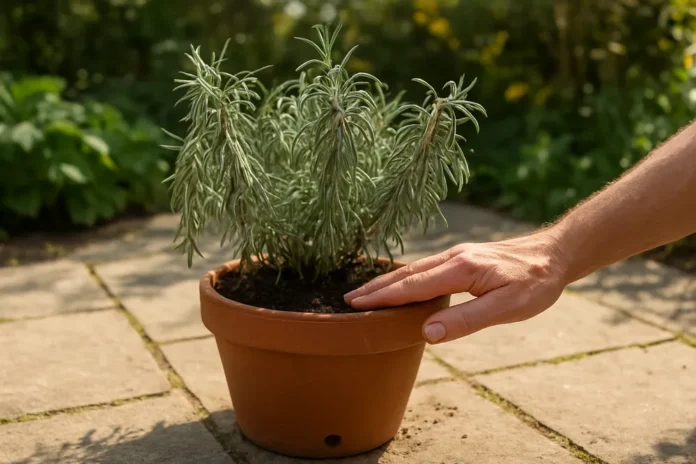
Drooping rosemary is most often caused by too much water, poor drainage, or root stress. It can also droop from severe dryness, transplant shock, extreme weather, or declining roots.
Rosemary is one of those herbs that usually looks confident and upright, so when it starts leaning, sagging, or going limp, it gets my attention fast. A drooping rosemary plant is almost always reacting to stress around its roots, water, or environment, even if the needles still look green.
The tricky part is that rosemary can droop from opposite problems. Soil that stays soggy can make it collapse, but soil that has gone bone dry can do the same. Add in transplant shock, poor airflow, winter injury, and rootbound containers, and the symptom can feel confusing at first.
When I troubleshoot rosemary drooping, I start by looking at the whole pattern: how wet the pot feels, whether the stems are soft or woody, if the foliage is dull or yellowing, and whether the plant recently moved indoors or into the garden. Once you match the droop to the likely cause, the fix is usually straightforward.
What Drooping Looks Like on Rosemary
Drooping rosemary does not always look dramatic. Sometimes the branch tips bend downward first. In other cases, the whole plant looks slack, open, and less rigid than usual. A healthy rosemary has a firm, springy structure. When it is stressed, the stems lose that held-up posture.
Pay attention to whether the foliage is still green and aromatic or whether it is turning yellow, brown, or gray. Green but limp often points to temporary water stress or transplant shock. Yellowing with droop often suggests drainage trouble or roots staying too wet. Crispy brown tips can indicate drought, winter burn, or heat stress.
- Branch tips bending while older stems stay fairly firm
- The entire plant looking loose, floppy, or collapsed
- Needles feeling soft instead of resilient
- Droop paired with yellowing, browning, or leaf drop
- A container plant that wilts but the soil feels wet
Overwatering and Poor Drainage Are the Most Common Causes
If I had to bet on one cause of drooping rosemary, I would start with excess moisture. Rosemary comes from dry, sharply drained conditions. In regular potting soil, heavy clay, or a decorative pot without drainage, the roots can sit wet far too long. Once oxygen is pushed out of the root zone, the plant struggles to support its top growth and begins to droop.
This is why drooping rosemary often fools gardeners into watering even more. The plant looks thirsty, but the actual problem is that stressed roots can no longer move water properly. The soil may feel cool, dense, and damp several inches down, and the lower foliage may start yellowing before turning brown.
- Soil stays damp for many days after watering
- The pot feels heavy long after a soak
- Yellowing needles appear along with limp growth
- Stems near the base may darken or soften
- There is a sour or swampy smell in the container
When rosemary droops and the soil is wet, I do not assume the plant needs a drink just because the top looks wilted. With this herb, a thirsty look in wet soil usually means the roots are struggling, not that the plant wants more water.
In the ground, poor drainage can come from compacted clay, low spots, or mulch piled too thickly around the crown. In pots, the usual culprits are oversized containers, saucers that stay full, or mixes that hold too much peat and not enough grit. A pot that is too large can stay wet longer than rosemary can tolerate.
Underwatering Can Also Make Rosemary Go Limp
Although rosemary hates soggy roots, it is not a cactus. Container plants, especially those on hot patios or in terracotta pots, can dry out quickly in summer. If the root ball becomes very dry, the stems may lose firmness and droop noticeably. The needles can look dull, slightly curled, or brittle at the tips.
Underwatering is more likely when the pot feels very light, the soil has pulled away from the container edges, or water runs straight through without soaking in. Outdoor rosemary in sandy soil can also droop during long hot stretches if it is newly planted and has not rooted deeply yet.
- The pot is unusually light when lifted
- Soil is dry several inches down
- Needles look gray-green, curled, or crisp at the ends
- Branches perk up after a thorough soak
- The plant sits in strong sun, wind, or reflected heat
A deeply dry root ball can become water repellent, so a quick splash is often not enough. The plant may continue drooping until the root zone actually rehydrates. This is especially common with neglected potted rosemary.
Root Rot and Damaged Roots Cause Persistent Drooping
If your rosemary has been drooping for a while and is not responding to normal watering adjustments, root damage may be the real issue. Root rot often develops after repeated overwatering or chronically wet soil. Once roots decay, the plant cannot take up enough moisture or nutrients, even when water is present.
You may notice a combination of droop, yellowing, stem dieback, and foliage loss. In serious cases, lower stems become dark and the crown weakens. If you slide a potted plant out and see black, mushy, or sparse roots instead of pale, firm ones, the root system has been compromised.
Root damage can also come from physical disturbance. Rosemary dislikes rough handling. If a recently repotted plant had a lot of roots broken or loosened, it may droop while it tries to reestablish itself.
Transplant Shock After Repotting or Planting Out
Rosemary often sulks after being moved. A plant that looked fine at the nursery or on the windowsill can droop after repotting, after going outdoors in spring, or after being planted into the garden. Even if the roots are healthy, the change in light, temperature, wind, and moisture can temporarily overwhelm it.
Transplant shock usually shows up as drooping without immediate severe yellowing or mushiness. The stems may still be firm at the base, but the plant looks tired and slightly limp for several days to a couple of weeks. This is more common when a rosemary goes from protected indoor conditions to full outdoor sun too quickly.
I have better luck hardening rosemary off gradually than moving it from shade or indoors straight into intense sun and wind. Even a tough Mediterranean herb can droop hard when the environmental shift is sudden.
Repotting into a much larger pot can also cause stress because the new soil stays wet longer around a root ball that is still relatively small. In that situation, transplant shock and overwatering often overlap.
Heat, Cold, and Weather Stress Can Make Stems Sag
Extreme weather can cause rosemary to droop even when watering is generally correct. In very hot spells, especially with drying wind and reflected heat from concrete or brick, rosemary may temporarily lose turgor during the afternoon. Newly planted shrubs and container plants are most vulnerable.
Cold damage can look different. After a harsh freeze, stems may droop, discolor, and later turn brittle or brown. Winter wet combined with cold is especially hard on rosemary, because saturated roots in chilly soil are slower to recover and more likely to rot.
- Afternoon wilt that improves in the evening during heat waves
- Sudden droop after a late frost or cold snap
- Brown or blackened tips following freezing weather
- Wind-exposed plants drying faster than sheltered ones
Indoor rosemary can also droop if it is placed near a heat vent, in very dry forced air, or in low winter light. The plant may not be able to balance moisture loss through the foliage with what the roots can supply.
Container Problems That Lead to Drooping Rosemary
A lot of rosemary problems come down to container setup rather than the plant itself. This herb wants a pot with drainage holes, fast-draining mix, and enough air around the root zone. If one of those is off, drooping often follows.
- A decorative cachepot that traps runoff around the nursery pot
- No drainage hole at the bottom
- Dense potting mix that stays soggy
- A rootbound plant that dries out too fast
- An oversized container that holds moisture too long
- Compacted soil from age and repeated watering
Rootbound rosemary can droop too, though it behaves differently from an overwatered plant. The roots fill the container so densely that water rushes through or dries too fast, and the plant wilts soon after watering. You may see circling roots or a root mass that holds the pot's shape when removed.
If a potted rosemary droops every few days no matter how carefully you water, I check whether the root ball has become either too tight or too stale. Old, compacted potting mix can behave badly in both directions, turning soggy in the center and dry at the edges.
Pests and Disease Are Less Common but Still Possible
Rosemary is not the most pest-prone herb, but stressed plants can attract trouble. Indoors or in crowded conditions, spider mites, aphids, and whiteflies may weaken the foliage and contribute to drooping. The effect is usually gradual rather than sudden.
Look for fine webbing, sticky residue, distorted new growth, or clusters of insects on tender tips. Fungal problems are more likely when humidity is high, airflow is poor, and foliage stays damp. While disease usually comes with discoloration or dieback, a badly stressed plant may sag first.
- Spider mites causing stippling and fine webbing
- Aphids clustering on soft new growth
- Whiteflies fluttering when the plant is disturbed
- Fungal decline in plants kept crowded and too wet
How to Tell Which Cause Is Most Likely
The fastest way to diagnose drooping rosemary is to compare the plant's posture with the moisture condition around its roots. A rosemary in wet soil and a rosemary in dry soil can both look limp, but the surrounding clues are usually different.
- Wet soil plus droop plus yellowing usually points to overwatering or poor drainage.
- Dry soil plus a very light pot usually points to underwatering.
- Droop after repotting or moving outdoors often suggests transplant shock.
- Sudden droop after frost or heat extremes points to weather stress.
- Persistent droop with stem darkening or root odor suggests root rot.
- Gradual weakening with visible insects points to pests.
Also look at whether the problem is happening on the whole plant or only on one side. If one side droops after a cold night, weather injury may be involved. If the entire plant is limp and the pot is heavy, root stress is more likely.
What to Do to Help Rosemary Recover
Recovery depends on the cause, but the general goal is to stabilize the root zone and avoid piling on extra stress. Rosemary can rebound surprisingly well if you catch the issue before the crown and major roots are badly damaged.
If the Soil Is Too Wet
Let the soil dry down before watering again. Empty any saucer or outer pot that is holding water. Move container plants into brighter light and better airflow if possible. If the mix is heavy or the pot lacks drainage, repot into a fast-draining blend and trim away obviously rotten roots.
If the Plant Is Too Dry
Water deeply so the entire root ball is moistened, not just the surface. If the soil has become hydrophobic, soak the pot long enough for the root zone to rehydrate fully, then let excess water drain away. After that, water only when the soil has dried appropriately.
If Transplant Shock Is the Issue
Keep conditions steady while the plant adjusts. Avoid heavy pruning, frequent moving, or repeated watering just because the plant looks unhappy. Give it bright light, moderate moisture, and time to settle.
If Roots Are Damaged
Remove the plant from its pot and inspect the roots. Trim black, mushy sections with clean pruners and repot into fresh, gritty mix in a container that is only slightly larger than the root system. Do not fertilize immediately, since damaged roots are easily burned.
If Weather Stress Is to Blame
Protect the plant from the next round of stress. In heat, give new transplants temporary relief from brutal afternoon exposure. In winter, improve drainage and shelter potted plants from severe cold and wind. Prune dead tissue only after you can clearly tell what is alive.
How to Prevent Rosemary From Drooping Again
Prevention is mostly about matching rosemary's Mediterranean preferences. This herb wants sun, lean soil, and roots that dry somewhat between waterings. It is much easier to keep upright when its growing conditions are naturally sharp draining.
- Use containers with drainage holes only
- Choose a gritty, fast-draining potting mix
- Water thoroughly, then let the upper soil dry before watering again
- Avoid oversized pots that stay wet too long
- Plant in raised beds or mounded soil if your garden is heavy clay
- Give the plant full sun and good airflow
- Harden off indoor plants gradually before moving them outside
- Check the root ball yearly for crowding or decayed roots
I also try not to overpamper rosemary. Rich, constantly moist conditions may sound generous, but they usually create weak growth and root trouble. This is one herb that rewards a lighter touch.
FAQ
Can Rosemary Recover After Drooping?
Yes, rosemary often recovers if the cause is caught early. Plants stressed by temporary dryness, mild transplant shock, or a short period of excess watering can bounce back once conditions improve. Recovery is less likely if the crown and roots have rotted extensively.
Should I Water Drooping Rosemary Right Away?
Not automatically. First consider whether the soil is actually dry or already wet. Rosemary can droop from drought, but it also droops when waterlogged roots are failing, so adding water blindly can make the problem worse.
Why Is My Rosemary Drooping Even Though the Soil Is Wet?
Wet soil plus drooping usually points to poor drainage, overwatering, or root rot. The roots may not be getting enough oxygen, so the plant cannot move water normally through its stems and foliage.
Does Rosemary Droop After Repotting?
Yes, it can. Repotting disturbs the roots and changes the moisture pattern around them. Rosemary may droop for several days after repotting, especially if it was moved into a much larger pot or handled roughly.
Can Too Much Sun Make Rosemary Droop?
Established rosemary loves sun, but intense heat and drying wind can still cause temporary droop, especially in containers or newly planted specimens. If the plant perks up later in the day, heat stress may be contributing.
Why Is My Indoor Rosemary Drooping?
Indoor rosemary often droops from low light, stale air, overwatering, or very dry air near heaters. Containers indoors also dry differently than outdoor pots, so roots may stay wet longer than expected.
Should I Prune Drooping Rosemary?
Only lightly, and not until you know the cause. If the plant is stressed from roots or transplant shock, heavy pruning can make recovery harder. Remove clearly dead or rotten stems, but wait on shaping cuts until the plant is stable again.
What Kind of Soil Helps Prevent Rosemary From Drooping?
Rosemary does best in fast-draining soil that does not stay soggy. In containers, a gritty mix with good airflow around the roots is ideal. In the garden, raised beds or amended planting areas help if native soil is heavy.
Want to keep your herb garden healthy year-round? Read our guide to the best potting mixes, containers, and watering tools for rosemary and other Mediterranean herbs.
