

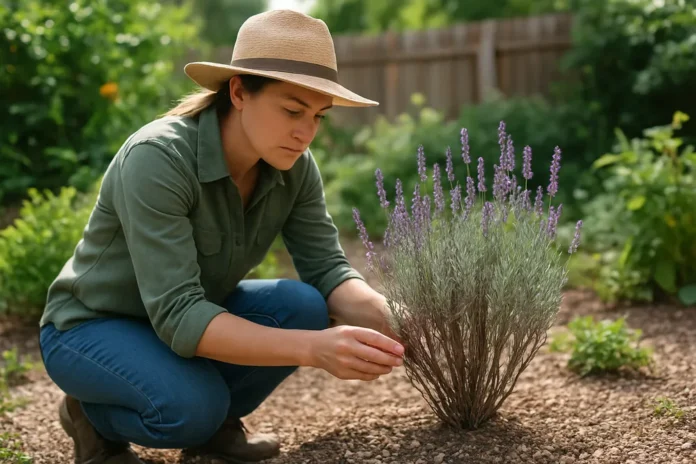
Lavender usually turns brown because its roots or stems are staying too wet, especially in heavy soil or humid conditions. It can also brown from winter injury, aging woody growth, or fungal disease.
Seeing lavender turning brown can be frustrating, especially because lavender is supposed to look tough, silver-green, and almost effortless. In my experience, though, lavender declines quickly when its growing conditions drift away from what this Mediterranean plant likes best: full sun, lean soil, and excellent drainage.
The good news is that brown patches do not always mean the plant is dying. Sometimes you are looking at normal aging on the lower stems. Other times the problem is as simple as soggy soil after a wet spell. The key is to notice where the browning starts, whether the foliage feels dry or mushy, and how the soil behaves after watering.
If your lavender is browning at the base, in the center, or across whole stems, there is usually a specific reason behind it. Once you match the symptom pattern to the cause, it becomes much easier to decide whether to prune, improve drainage, treat disease, or replace the plant with one better suited to the site.
What the Browning Pattern Can Tell You
Before you do anything, look closely at where the brown color appears. Lavender gives useful clues. Brown, crispy tips after winter often suggest cold or wind injury. Brown stems at the crown or base usually point to excess moisture or rot. A sparse brown center with greener outer growth often means the plant is getting old and woody.
- Browning at the base or crown often signals wet soil, poor drainage, or root rot.
- Brown leaves and stems in the center of the plant can be normal aging, especially on older lavender shrubs.
- Crispy brown outer growth after a freeze is commonly winter burn.
- Sudden browning on one side or whole stems collapsing may indicate stem disease or root failure.
- Brown patches paired with gray fuzz, blackened stems, or a sour smell usually suggest a fungal problem.
When I diagnose lavender, I pay more attention to the base of the plant than the top. The flowers and upper foliage can look decent for a while even when the crown is already failing from wet soil.
Too Much Moisture Is the Most Common Cause
If I had to pick the single most common reason lavender turns brown, it would be excess moisture. Lavender hates sitting in damp soil. In clay ground, low spots, containers without good drainage, or rainy humid climates, roots stay wet too long and begin to weaken. Once the roots struggle, the top growth starts browning, often from the bottom upward.
Overwatering does not always mean you water too often with a hose. It can also mean the soil holds water longer than lavender can tolerate. A gardener may water only once a week and still have an overwatering problem if the planting area drains poorly.
Signs Moisture Is the Problem
- Lower stems turn brown first
- The plant looks dull, floppy, or partly wilted even though the soil is wet
- Leaves may gray out, then brown and drop
- Stems near the crown feel soft instead of dry and firm
- The soil stays cool and damp for several days after watering or rain
If this sounds like your plant, stop watering until the soil dries well. Pull back mulch from the crown, since mulch can trap extra moisture right where lavender is most vulnerable. For long-term success, replanting into a raised bed, mound, gravelly mix, or sunnier spot is often more effective than trying to baby a struggling plant in soggy ground.
Poor Drainage and Root Rot Can Kill Lavender Fast
When browning is severe and the plant seems to decline all at once, root rot is a strong possibility. Root rot is less a separate issue than the result of consistently wet conditions. Fungi and water molds attack stressed roots, and the plant can no longer take up water properly even though the soil is moist.
This can be confusing because a rotting lavender may look drought-stressed. The foliage browns and dries, but adding more water only makes the problem worse. If you gently tug the plant and it feels loose at the crown, or if roots look dark instead of pale and healthy, rot is likely underway.
What to Do if Root Rot Has Started
- Stop watering immediately unless the plant is in a very fast-draining potting mix.
- Inspect the crown and roots if you can do so without destroying the entire plant.
- Prune off dead top growth to reduce stress, but do not cut into old leafless wood unless it is clearly dead.
- Improve drainage with coarse mineral material, a raised planting area, or a faster-draining container mix.
- Replace badly rotted plants rather than trying to rescue a fully collapsing specimen.
If a lavender has gone brown from the crown outward, I usually replace it instead of trying heroic fixes. Healthy lavender rebounds well from dryness, but it rarely recovers once the base has stayed wet long enough to rot.
Woody Aging and a Brown Center May Be Normal
Not every brown area means disease. Lavender naturally becomes woody with age, especially if it has not been pruned regularly. The lower interior stems turn brown and hard, while new foliage stays greener on the outer edges. This is very common in older plants and does not always signal a health emergency.
A mature lavender with a brown, twiggy center but healthy green tips can often keep growing for years. The problem is that old woody plants become more brittle, less full, and harder to shape. If they were allowed to get leggy, there may be too little leafy growth left to prune them back hard.
How to Handle Woody Lavender
- Trim lightly after flowering to keep the plant compact
- Avoid cutting deep into thick, bare brown wood unless you know there are live buds lower down
- Shape plants every year so green growth stays closer to the base
- Replace very old, split, or hollow-centered plants that no longer flush out well
I think of woody browning as a maintenance issue more than a crisis. If the outer growth is healthy and fragrant, the plant is still functioning. The goal is to keep it from getting so overgrown that all the active growth ends up only at the tips.
Winter Damage and Cold Stress Can Leave Stems Brown
Lavender often comes through winter looking rougher than gardeners expect. In colder parts of the U.S., or after freeze-thaw swings, stems can dry out, crack, or turn brown. This is especially common when cold weather combines with winter wet, which stresses roots and top growth at the same time.
Tender French and Spanish lavenders are more likely to suffer winter damage than English lavender. If your plant browned after a harsh winter, the variety matters. Sometimes the outer stems die back while the base survives and pushes new growth in spring.
Clues It Is Winter Injury
- Browning appears after a cold snap or by late winter
- Tips and exposed sides are hit harder than sheltered areas
- Stems feel dry and brittle rather than soft
- New green growth may emerge lower down once the weather warms
Wait until you see fresh spring growth before pruning heavily. Dead wood can be removed once it is obvious what survived. Pruning too early may expose the plant to even more damage or lead you to cut away wood that was slow, but still alive.
Fungal Diseases Can Cause Browning, Blackening, or Dieback
Lavender does not suffer from as many leaf problems as some garden plants, but fungal disease can absolutely cause browning, especially in humid areas or crowded plantings with poor airflow. The main pattern to watch for is stems or sections suddenly dying back rather than the whole plant aging evenly.
You may see blackened stems, fuzzy gray growth, spotted foliage, or branch tips that brown and dry up while nearby sections still look normal. Overhead watering, dense mulch against the crown, and shade all make fungal issues more likely.
Common Disease-friendly Conditions
- Humid weather with little air movement
- Plants spaced too closely together
- Frequent overhead watering
- Shady sites that stay damp into the afternoon
- Dead foliage trapped inside the plant
Prune out affected stems back to healthy tissue, sanitize pruners between cuts, and avoid wetting the foliage. If disease keeps recurring, the site may simply be too damp or shaded for lavender to thrive. In many home gardens, improving sun and airflow does more good than applying any spray.
Too Little Sun Weakens Lavender Over Time
Lavender needs strong sun to stay compact, dry quickly, and resist rot. In partial shade, the plant stretches, opens up, and often starts looking thin and brown in the middle. Shadier conditions also keep the soil cooler and slower to dry, which compounds moisture problems.
A lavender in morning shade and afternoon sun may still do fairly well, but a plant getting only a few hours of direct light usually declines. The browning may not be immediate. Instead, you see gradual thinning, fewer blooms, and a plant that never really dries out after rain.
I have seen many lavenders blamed on watering when the real issue was weak light. In a bright, open spot, lavender forgives a lot. In shade, even careful watering can still leave it struggling.
Soil That Is Too Rich Can Lead to Weak, Unhappy Plants
Gardeners often assume every plant wants compost-rich, moisture-retentive soil, but lavender is not one of them. Rich soil can produce soft, lush growth that is more vulnerable to rot, flopping, and winter damage. If your lavender was planted in heavily amended beds meant for vegetables or thirsty perennials, that can contribute to browning problems later.
Lavender generally performs better in lean, gritty soil than in fertile, dark, moisture-holding mixes. Fertilizer is rarely the answer for a browning plant unless a clear deficiency is present, which is uncommon compared with drainage issues.
- Skip heavy feeding
- Avoid thick layers of compost around the crown
- Use mineral, fast-draining amendments rather than water-holding organic matter if drainage is the issue
- Keep mulch light and away from the stem base
Container Lavender Can Brown for Different Reasons
Potted lavender often browns from the same core problem as in-ground plants, which is trapped moisture, but containers add a few twists. Decorative pots without enough drainage holes, oversized containers that stay wet too long, and saucers full of water can all damage roots.
At the same time, container lavender can dry out faster in hot weather than plants in the ground. That means pot-grown plants may brown from root stress in either direction. The difference is that underwatered lavender usually feels dry, dusty, and lightweight in the pot, while overwatered lavender sits in a heavy, damp mix.
Best Practices for Potted Lavender
- Use a pot with generous drainage holes
- Choose a gritty potting mix that does not stay soggy
- Empty saucers after watering
- Water deeply, then let the mix dry well before watering again
- Do not let the crown stay buried under damp organic mulch
How to Decide Whether Your Lavender Can Be Saved
Lavender can recover if there is still healthy green growth, the base remains firm, and the roots are not extensively rotted. Plants with only minor winter dieback, a bit of woody browning, or short-term water stress often bounce back once conditions improve. But if most of the crown is brown, mushy, split, or dead, recovery is much less likely.
A simple check is to inspect several stems. Scratch the outer bark lightly with your fingernail. Green underneath suggests live tissue. Tan and brittle throughout usually means that section is dead. Do this in multiple places, because one dead branch does not always mean the whole plant is gone.
A Good Candidate for Recovery Usually Has
- Green shoots near the base or along the stems
- Firm, not mushy, crown tissue
- Drying soil between waterings
- Only partial browning rather than total collapse
If your plant fails most of those checks, replacement may be the better use of time. Sometimes the smartest lavender fix is to start over in a sunnier, sharper-draining location with a variety proven hardy in your region.
How to Prevent Lavender From Turning Brown Again
Prevention comes down to matching the plant to the site. Lavender is far easier to keep healthy when you lean into what it wants instead of trying to make it adapt to damp, rich, shaded conditions. Once established in the right place, it is one of the easiest shrubs in the garden.
- Plant in full sun
- Use fast-draining soil or raised beds if your ground is heavy
- Water deeply but infrequently, especially after establishment
- Keep mulch away from the crown
- Prune lightly each year after flowering to limit woody growth
- Choose cold-hardy lavender types if you garden in a colder region
- Give plants good spacing for airflow
When lavender is sited well, browning is usually brief and fixable. When it is planted where water lingers, the same problem tends to repeat year after year no matter how carefully you prune or feed it.
FAQ
Can Brown Lavender Turn Green Again?
Brown tissue will not turn green again. What you are hoping for is new green growth from still-living parts of the plant. If stems are dry but alive underneath, the plant may push fresh growth after conditions improve.
Should I Cut Off the Brown Parts of My Lavender?
Yes, remove clearly dead, brittle, or diseased growth, but avoid cutting deep into thick bare wood unless you know it is still viable. Lavender often responds poorly to severe pruning into old wood.
How Often Should I Water Lavender?
Established lavender usually prefers deep, infrequent watering rather than constant moisture. Exact timing depends on your soil, heat, and rainfall, but the soil should dry noticeably between waterings.
Why Is My Lavender Brown at the Bottom but Green on Top?
That often points to excess moisture around the crown or natural woody aging at the base. If the lower stems are soft or blackening, suspect wet soil. If they are hard and dry, aging may be the bigger factor.
Is My Lavender Dead After Winter?
Not necessarily. Many lavender plants look rough in late winter and early spring. Wait for warmer weather, then scratch-test stems and watch for new shoots before deciding the plant is dead.
Can Lavender Recover From Root Rot?
Mild cases may improve if drainage is corrected quickly, but severe root rot is hard to reverse. Once the crown and roots have extensively decayed, replacement is usually the better option.
Does Lavender Need Fertilizer if It Is Turning Brown?
Usually no. Browning is far more often caused by moisture, drainage, winter damage, or disease than by nutrient deficiency. Feeding a stressed lavender in wet soil can make matters worse.
Need help choosing the right fix for struggling lavender? Read our guide to the best soil mixes, pruning tools, and drainage solutions so you can rescue healthy plants and avoid repeat losses.
