

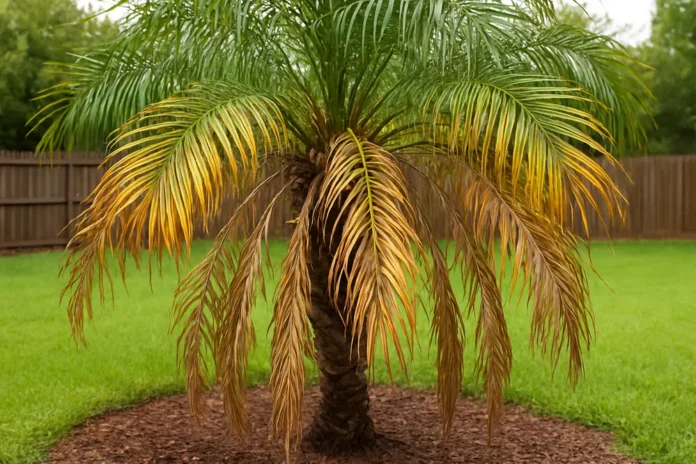
Palm trees usually decline because of watering problems, cold injury, poor drainage, nutrient deficiencies, pests, or root damage. Many palms look like they are dying when stress has damaged the fronds and growing point.
When a palm starts browning, collapsing, or dropping fronds fast, it can feel like the whole plant is slipping away overnight. In reality, a palm tree dying is usually the result of one or two ongoing stressors that have been building for weeks or months.
Palms are a little different from broadleaf trees and shrubs. They grow from a central point, and once that growing point is badly damaged, recovery becomes much harder. I have also found that palms are often misdiagnosed because old fronds naturally age out while newer fronds may be showing the real warning signs.
If your palm looks rough, do not assume the cause is always lack of water. Yellowing palm fronds, mushy roots, trunk issues, fertilizer problems, winter cold, and even lawn care damage can all make a palm look near death.
What a Truly Declining Palm Looks Like
A palm that is actually dying usually shows more than cosmetic browning on the oldest, lowest fronds. The more serious warning signs are a spear leaf that will not open, a center spear that pulls out easily, sudden collapse after cold weather, trunk softening, or widespread yellowing and browning that moves into newer growth.
- Lower fronds yellowing one at a time while new growth stays healthy often means normal aging.
- New fronds emerging small, pale, twisted, or burnt at the tips usually point to stress or deficiency.
- A foul smell near the crown or roots can suggest rot.
- A palm leaning more than usual, rocking in the soil, or failing to anchor well may have root loss.
- A center spear that is brown, soft, or easily removed is one of the most serious signs.
When I assess a palm, I look at the newest growth first, not the oldest fronds. Older fronds naturally decline, but damage in the center of the plant tells me the problem is active and potentially urgent.
The Most Common Reasons a Palm Tree Starts Dying
Watering Problems and Poor Drainage
Too much or too little water can both make a palm fail, but overwatering is often the more dangerous problem. Palms need moisture around the root zone, yet they do not like sitting in heavy, airless soil for long periods. In containers or compacted ground, constantly wet soil can suffocate roots and invite fungal rot. Underwatering tends to cause crisp browning, drooping, and slow growth, while overwatering often brings yellowing, blackened roots, softness, and a generally stagnant look.
Cold Damage and Winter Injury
Many palms sold in the U.S. are planted outside their ideal climate range. A cold snap can damage leaves, the crown, or the trunk even if the palm looked fine right after the freeze. Several days later, fronds may bronze, bleach, or collapse. If the growing point was hit, the center spear may die back or pull loose.
Nutrient Deficiencies
Palms are especially prone to shortages of potassium, magnesium, manganese, and sometimes iron. Deficiencies are common in sandy soils, alkaline ground, and lawns where turf fertilizer is used instead of a palm-specific formula. Potassium deficiency often shows as yellow or orange spotting and necrosis on older fronds. Magnesium deficiency can create yellow bands along the edges of older leaves. Manganese deficiency, sometimes called frizzle top, damages new leaves and can be severe enough to kill the palm.
Root Damage From Planting Depth, Compaction, or Injury
Palms hate being planted too deeply. Soil piled against the trunk can trap moisture and stress the root flare area. Construction, digging, repeated foot traffic, and mowing close to the base can also reduce root health. Once roots are compromised, the canopy usually starts to thin and discolor.
Pests and Disease
Spider mites, scale, palm aphids, and mealybugs can weaken indoor and outdoor palms, especially stressed ones. In some regions, more serious issues like Ganoderma butt rot, lethal bronzing, bud rot, and palm weevils can kill palms outright. Disease is more likely when a palm has already been stressed by water, weather, or poor nutrition.
Natural Frond Aging Mistaken for Decline
Every palm drops old leaves eventually. If only the bottom ring of fronds is yellowing or browning while the center remains green and active, your palm may not be dying at all. This is one of the most common false alarms, especially with queen palms, majesty palms, areca palms, and indoor parlor palms.
How to Tell Which Problem Your Palm Has
Diagnosis gets easier when you stop looking at the whole palm as one symptom and start reading the pattern. Where the damage begins, how fast it spread, and what the soil feels like can tell you a lot.
- If the soil stays soggy for days and the fronds are yellowing from the crown outward, suspect drainage or root rot.
- If the browning appeared after a freeze or winter wind, cold injury is likely.
- If the newest leaves are distorted, weak, or frizzled, suspect a micronutrient deficiency or crown damage.
- If fronds are stippled, sticky, or covered in bumps or webbing, pests are probably involved.
- If only the oldest lower fronds are affected and new growth looks normal, aging may be the main explanation.
- If the trunk base is decaying, mushrooms appear nearby, or the palm wobbles, root or butt rot becomes much more likely.
For indoor palms, I pay close attention to light and humidity too. A palm kept in a dark corner, near a heat vent, or in a pot without proper drainage can decline surprisingly fast. Indoor palms often suffer from a combination of low light, dry air, mineral buildup from tap water, and inconsistent watering.
Do not judge recovery by the old fronds. I always watch the next one or two leaves that emerge, because new growth is the best indicator that the root system and crown are still functioning.
Signs Your Palm May Still Be Salvageable
A rough-looking palm is not automatically a lost cause. Many recover if the central growing point is still alive and the root system has enough strength to support new leaves.
- The center spear is firm and green.
- New growth is still emerging, even if slowly.
- The trunk feels solid rather than soft or hollow.
- Roots are tan or white and firm instead of black and mushy.
- Damage is mostly limited to older fronds.
Palms can look ugly for a long time after stress, especially after winter burn or transplant shock. I have seen palms sit nearly unchanged for weeks and then push healthy new growth once temperatures warmed and the root zone stabilized. The key is whether the plant still has a living center.
What Makes Recovery Unlikely
Some symptoms point to severe damage that palms struggle to recover from. Unlike branching trees, palms do not replace a dead crown with new side shoots in most cases.
- The center spear pulls out and smells rotten.
- The crown is fully collapsed or dry and hollow.
- The trunk has extensive soft rot or visible conks from fungal disease.
- There is no sign of new growth over a long warm growing period.
- Most of the root mass is dead or detached.
If your palm has a confirmed trunk rot or lethal disease, removal is often the safer choice. In landscapes, waiting too long can create a falling hazard or expose nearby palms to additional disease pressure.
How Gardeners Accidentally Make a Struggling Palm Worse
I see the same rescue mistakes all the time. A stressed palm makes people want to do more, but too many changes at once usually increase the damage.
- Watering every day without checking soil moisture
- Adding fertilizer to a palm with root rot or drought stress
- Pruning off too many green fronds, which removes energy the plant still needs
- Covering the base with extra mulch or soil against the trunk
- Using lawn weed killers or string trimmers too close to the palm
- Repotting an already stressed indoor palm at the wrong time
One habit that has saved me a lot of palms is changing only one major variable at a time. If you increase water, fertilize, repot, and prune all in the same week, you will not know which action helped and which one pushed the plant further downhill.
The Best Fixes for Each Likely Cause
If the Issue Is Underwatering
Water deeply enough to moisten the full root zone, then let the top layer begin to dry before watering again. Outdoor palms need deeper, less frequent irrigation than many people expect. Container palms need a pot with strong drainage and should not be allowed to become bone dry over and over.
If the Issue Is Overwatering or Root Rot
Reduce watering frequency and address the drainage problem first. For potted palms, empty saucers and consider a faster-draining mix if the soil stays soggy too long. In the ground, redirect irrigation, break up compaction where possible, and avoid piling mulch around the trunk. Severely rotted roots may not recover even after conditions improve, but better drainage gives the palm its best chance.
If the Issue Is Cold Damage
Wait until warm weather returns before removing badly damaged fronds unless they are fully collapsed or hazardous. The damaged leaves still offer some protection to the crown. Once active growth resumes, you will be able to see whether the center survived.
If the Issue Is Nutrient Deficiency
Use a fertilizer specifically formulated for palms, with the right balance of potassium, magnesium, and micronutrients. Deficiencies take time to correct, and old fronds usually will not turn green again. The improvement shows up in the newer leaves first.
If the Issue Is Pests
Treat only after confirming the pest. Spider mites respond to thorough washing and appropriate miticides or insecticidal soaps, while scale and mealybugs often need repeated treatment. A palm already in poor light or bad watering conditions will keep attracting pests until the underlying stress is fixed.
If the Issue Is Disease
Disease management depends on the exact problem. Some fungal issues can be slowed with sanitation and fungicides, but others cannot be cured. If the crown or trunk is seriously infected, a local arborist or extension office is the best source for region-specific advice, especially in Florida, California, the Gulf Coast, and other palm-heavy regions.
How Long Palm Recovery Usually Takes
Palms are not fast to forgive stress. Even after you correct the main problem, visible recovery may take several weeks indoors and several months outdoors. Cold-damaged landscape palms often look terrible well into spring. Nutrient-deficient palms usually improve gradually over a season rather than in a few days.
The right benchmark is not how green the old canopy looks today. It is whether the next leaves emerge larger, cleaner, and more normal than the last ones. If each new frond improves, your palm is moving in the right direction.
How to Keep a Palm From Declining Again
- Match the palm species to your climate and winter lows.
- Plant in well-drained soil and avoid setting the trunk too deep.
- Water deeply but not constantly, especially during establishment.
- Use palm-appropriate fertilizer rather than general lawn fertilizer.
- Leave healthy green fronds on the plant as long as possible.
- Protect cold-sensitive palms before freezes, not after the damage is done.
- Inspect regularly for scale, mites, trunk injury, and spear problems.
- Keep mulch a few inches away from the trunk base.
The healthiest palms are usually the ones getting consistent care, not heroic rescue efforts. Once watering, feeding, and site conditions are right, palms become much easier to read and much less likely to slide into serious decline.
FAQ
Can a Brown Palm Tree Turn Green Again?
Brown tissue will not turn green again. What you want to watch for is healthy new growth from the center, because that is how a recovering palm shows improvement.
Should I Cut Off All the Brown Fronds on a Dying Palm?
No. Remove fully dead fronds, but avoid stripping a struggling palm too hard. Partly green fronds still help the plant make energy and can protect the crown after cold or heat stress.
How Do I Know if My Palm Has Root Rot?
Common clues include constantly wet soil, yellowing or collapsing fronds, a sour smell, and roots that look black, mushy, or slough off their outer layer easily.
Why Is the Center Spear on My Palm Not Opening?
A stuck or damaged spear can be caused by cold injury, nutrient deficiency, bud rot, drought stress, or physical damage to the crown. It is a more serious symptom than browning on older outer fronds.
Can Overwatering Kill a Palm Tree?
Yes. Repeated overwatering can suffocate roots and lead to rot, especially in heavy soil or containers without strong drainage.
Do Indoor Palm Trees Die From Low Humidity Alone?
Usually not from humidity alone. Most indoor palms decline from a mix of low light, dry air, watering mistakes, and pest pressure rather than one single factor.
Will Palm Fertilizer Fix a Dying Palm Right Away?
No. Fertilizer helps only when a nutrient shortage is part of the problem, and it works gradually. It cannot quickly reverse root rot, cold damage, or a dead crown.
Still not sure what is wrong with your palm? Read our palm care and treatment guides to choose the right fertilizer, watering setup, and pest control before the damage spreads.
