

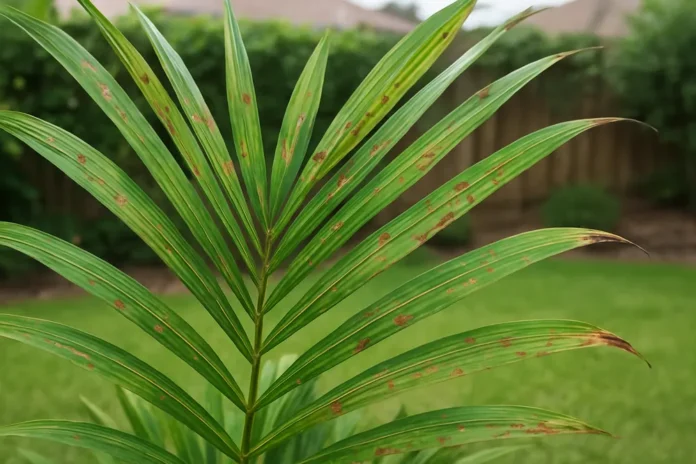
Palm tree leaves usually develop brown spots because of watering stress, fungal leaf spot, salt buildup, sun scorch, pests, or cold injury. The exact cause depends on the spot pattern and the palm’s growing conditions.
Brown spotting on a palm can be frustrating because several problems create a similar look at first glance. I have seen gardeners assume disease right away, only to find the real issue was inconsistent watering, fertilizer burn, or a cold snap that hit tender growth. On palm tree leaves with brown spots, the pattern matters as much as the color.
Some spots stay small and scattered, while others grow into larger dead patches with yellow halos or ragged edges. Indoor palms often react to dry air, overwatering, and salt buildup, while outdoor palms are more likely to show fungal spotting, sun stress, nutrient imbalance, or weather injury. The good news is that palms usually give a few clues if you know where to look.
Below, I will walk through the most common causes, how to tell them apart, and what usually helps a palm recover. In many cases, the fix is less about cutting off damaged leaves and more about correcting the condition that caused the spotting in the first place.
What Brown Spots on Palm Leaves Usually Mean
Brown spots are a symptom, not a diagnosis. On palms, they can come from too much water, too little water, root stress, fungal or bacterial leaf spot, mineral salt accumulation, direct sun on shade-grown foliage, pest feeding, or cold damage. Older fronds often show damage first, but when new growth is spotted too, I pay closer attention because that can point to an active problem affecting the whole plant.
- Small round brown spots with yellow borders often suggest leaf spot disease.
- Dry crispy spotting near tips and edges often points to underwatering, low humidity, or salt burn.
- Soft dark patches that expand can suggest overwatering or rot-related stress.
- Bleached tan or brown patches on the sunniest side often indicate sun scorch.
- Bronzed speckling or tiny dots with webbing or residue can be linked to pests.
When I am diagnosing a palm, I compare several fronds before I do anything else. If the oldest leaves are affected but the newest spear looks clean, I usually suspect a care issue rather than a fast-moving disease.
Watering Problems Are One of the Biggest Causes
Overwatering and Soggy Roots
Palms dislike sitting in constantly wet soil, especially indoors or in containers with poor drainage. When roots stay waterlogged, they cannot pull oxygen properly, and leaves may develop dark brown spots, yellowing, or a dull unhealthy look. Sometimes the spotting begins on lower fronds, and sometimes the whole leaf starts to look blotchy.
If the soil stays wet for days, smells sour, or the pot feels heavy all the time, excess moisture may be the trigger. Outdoor palms planted in clay or low spots can show the same symptoms after heavy rain or overzealous irrigation.
Underwatering and Dry Stress
Too little water can also create brown spotting, especially when dry soil is followed by strong sun or hot wind. The tissue dries out faster than the plant can replace it, so you get crisp brown freckles, patches, or edge burn. This is common on potted palms that dry quickly in warm rooms, patios, or bright windows.
- Check whether the soil is staying soggy or turning bone dry between waterings.
- Make sure containers have open drainage holes and do not sit in saucers full of water.
- Water thoroughly, then let the top layer dry slightly before watering again for most common houseplant palms.
- For landscape palms, water deeply enough to reach the root zone rather than giving frequent shallow sprinklings.
If a palm has been stressed for a while, judge recovery by the next leaves, not the damaged ones already on the plant. Brown spots do not turn green again, so the real sign of success is cleaner new growth.
Fungal Leaf Spot Can Create Distinct Spotting Patterns
Leaf spot diseases are common on palms grown in humid conditions, crowded plantings, or places where foliage stays wet for long stretches. These infections often begin as small yellow, tan, reddish-brown, or dark brown spots that gradually enlarge. Some spots have a darker rim or a faint yellow halo around them.
Unlike simple dryness, disease spots usually look more defined and scattered across the blade instead of just burning the tips and edges. Severe infections can cause large dead areas or make a frond look tattered as the tissue dies and cracks.
- Watering overhead late in the day
- Poor air circulation around the palm
- Crowded foliage that stays damp
- Old infected fronds left on or under the plant
- Warm, humid weather
Mild cases often improve when the foliage is kept drier and badly affected fronds are pruned off with clean tools. If spotting continues to spread quickly, a palm-safe fungicide labeled for leaf spot may be needed, especially on valuable landscape palms or in persistently humid climates.
Salt Buildup and Fertilizer Burn Can Mimic Disease
Palms are sensitive to excess salts from fertilizer and hard tap water, particularly in pots. When salts build up in the soil, roots struggle to absorb water correctly, and leaves can respond with brown tips, scattered necrotic spots, or larger dry patches. Gardeners often mistake this for a pest or fungal issue because the leaf damage can appear speckled.
This problem is more likely if you fertilize frequently, use too much at once, or water with mineral-heavy water and rarely flush the pot. A white crust on the soil surface or around the pot rim is a classic clue.
- Pause fertilizer if the palm is already stressed.
- Flush container soil with plenty of water to help wash out accumulated salts.
- Switch to a palm-specific fertilizer and apply at label rates only.
- Use rainwater or filtered water for sensitive indoor palms when possible.
For outdoor palms, overfertilizing can burn roots and cause leaf spotting too. Slow-release palm fertilizers are usually safer than strong quick-feed products, especially in hot weather.
Sun Scorch and Heat Stress Damage Leaf Tissue
Not every palm wants full intense sun all day, especially if it was grown in shade and suddenly moved outside. A palm that is not acclimated can develop tan to brown spots or bleached patches where sunlight hits hardest. The damage often shows on the uppermost or outward-facing leaves first.
This is especially common when indoor palms are moved onto a sunny patio in spring, or when newly planted palms lose the protection of nearby trees or structures. Heat reflecting off walls, concrete, or windows can make the problem worse.
- Brown patches are concentrated on the sunniest side of the plant.
- The damaged tissue may look pale, bleached, then papery brown.
- New spots appear after a move to brighter conditions or during a heat wave.
If sun scorch is the issue, move potted palms into bright indirect light or give temporary afternoon shade outdoors. When planting landscape palms, match the species to the site. Some thrive in full sun once established, while others keep a better appearance with filtered light.
Pests Can Leave Speckles, Scars, and Brown Marks
Spider mites, scale, and thrips are all capable of causing brown or bronzed spotting on palm leaves. Their feeding damages the surface cells, leaving fine stippling, rust-colored flecks, or irregular discolored patches. Indoors, spider mites are especially common on palms kept in warm, dry air.
Scale insects may look like small bumps attached to stems or leaf surfaces, while mites are tiny and easier to detect by the faint webbing they leave behind. Thrips can create silvery scarring that later turns brown.
- Look under leaves and along the leaf stems for insects, sticky residue, or webbing.
- Wipe a suspicious area with a damp cloth to see whether pests or residue come off.
- Isolate indoor palms if pests are present so the problem does not spread.
- Use insecticidal soap, horticultural oil, or another product labeled for the specific pest and palm.
Fine, even stippling across many leaflets usually makes me think pests before nutrients. Nutrient issues tend to affect the leaf in broader patterns, while sap-feeding insects often leave lots of tiny marks close together.
Cold Damage and Weather Injury Are Easy to Overlook
Palms that are marginal for your climate can show brown spotting after chilly nights, frost, dry winter wind, or abrupt temperature swings. Cold-injured tissue may first look water-soaked or dull, then turn tan or brown in irregular spots over the following days.
Even hardy palms can show cosmetic spotting after a harsh winter event. Tender species are much more likely to develop widespread browning, especially on exposed fronds. Indoor palms placed near drafty windows, exterior doors, or air-conditioning vents can show similar stress spotting.
- Spots appeared after a frost, cold rain, or sudden temperature drop.
- Damage is worse on exposed outer fronds than on sheltered inner growth.
- The palm sits near a cold draft, heater vent, or air conditioner indoors.
Once the weather improves, wait to see whether the central spear and new fronds emerge normally. If the growing point stays healthy, the palm can often outgrow cosmetic leaf damage.
Nutrient Deficiencies Can Contribute to Spotting and Browning
Palms are famous for showing nutrient issues, especially deficiencies of potassium, magnesium, manganese, or nitrogen. These problems do not always create neat round spots, but they can cause speckling, tip necrosis, orange or yellow mottling, and dead patches that homeowners describe as brown spots.
Outdoor landscape palms growing in sandy soils are especially prone to nutrient deficiencies because minerals wash through quickly. Container palms can also suffer if they have been in the same exhausted potting mix for too long.
- Potassium deficiency often shows as yellowing with orange or brown spotting on older leaves.
- Magnesium deficiency often creates broad yellow bands with greener centers.
- Manganese deficiency affects newer growth and can become serious quickly.
- General underfeeding can weaken a palm and make other leaf problems more visible.
The safest fix is usually a quality palm fertilizer formulated with the right minor nutrients rather than guessing with single-element products. If a large landscape palm is declining badly, a local extension service or soil test can help narrow things down.
How to Figure Out the Most Likely Cause on Your Palm
You do not need a lab test for every brown spot, but you do need to slow down and look at the whole plant. The palm's location, recent weather, watering routine, and the exact shape of the spots usually point you in the right direction.
- Check whether the spots are mostly on old leaves, new leaves, or all over.
- Feel the soil several inches down to judge whether it is chronically wet or too dry.
- Inspect both sides of the leaves for pests, webbing, bumps, or sticky residue.
- Think about recent changes such as repotting, fertilizing, moving into stronger sun, or a cold snap.
- Notice whether the spots are crisp and dry, soft and dark, or ringed with yellow.
If the center spear is firm and the newest growth looks decent, the issue is often manageable. If the spear is loose, the crown smells rotten, or new leaves are emerging badly deformed, the palm may have a more serious root or bud problem that needs faster action.
What to Do Next and What Not to Do
Once you identify the likely cause, correct the growing condition before doing heavy pruning. Removing every imperfect leaf can weaken the plant, especially if the palm already has limited healthy foliage. I usually remove only fronds that are mostly brown, clearly diseased, or badly infested.
- Correct watering first if soil moisture is clearly off.
- Improve airflow and keep leaves drier if disease seems likely.
- Flush or repot if salt buildup is obvious in a container palm.
- Treat confirmed pests with a labeled product and repeat as directed.
- Protect from harsh sun or cold while the palm recovers.
Avoid stacking several treatments at once unless the problem is obvious. Overwatering, fertilizing, pruning hard, and spraying multiple products in the same week can make a stressed palm look even worse. Most palms recover slowly, so give changes a little time and watch the new growth.
FAQ
Should I Cut Off Palm Leaves with Brown Spots?
Only remove leaves that are mostly brown, badly diseased, or heavily pest-damaged. If a frond is still largely green, it is still helping the palm produce energy.
Can Brown Spots on Palm Leaves Go Away?
No. Damaged leaf tissue stays damaged. What you are looking for is healthy new growth after the cause has been corrected.
Are Brown Spots on Indoor Palms Usually From Low Humidity?
Low humidity can contribute, especially along with underwatering or spider mites, but it is not the only reason. Indoor palms also commonly develop spotting from overwatering, salt buildup, and pests.
Do Fungal Brown Spots Spread to Other Plants?
Some leaf spot diseases can spread under humid conditions, especially when plants are crowded and leaves stay wet. Good airflow, careful watering, and removing badly infected foliage help reduce that risk.
Why Does My Palm Have Brown Spots After Repotting?
Repotting can stress roots and briefly disrupt water uptake, which may show up as spotting or browning. It can also happen if the new mix stays too wet or if the plant was moved into much brighter light at the same time.
Can Tap Water Cause Brown Spots on Palms?
Yes, especially over time in pots. Hard water and repeated fertilizer use can leave excess salts in the soil, which may lead to tip burn and scattered brown spotting.
Are Brown Spots a Sign My Palm Is Dying?
Not necessarily. Many palms recover well once the underlying issue is fixed. The biggest warning signs are a rotting crown, a loose center spear, or steadily worsening damage on new growth.
Need help choosing the right fungicide, palm fertilizer, or pest treatment? Read our palm care product guide to compare the best fixes and protect your plant faster.
