

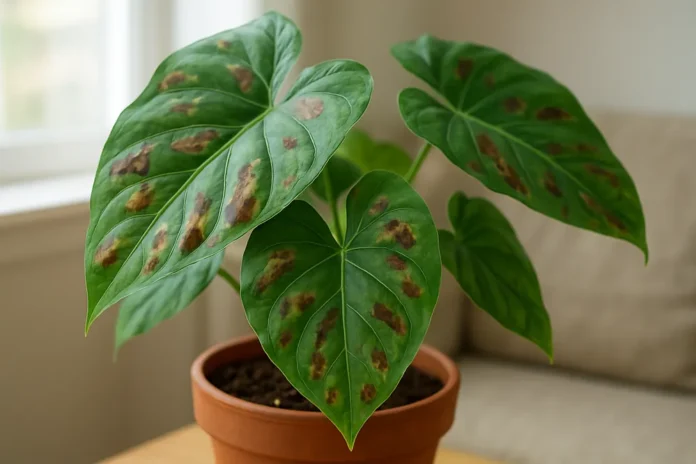
Alocasia brown spots are most often caused by watering stress, low humidity, direct sun, pests, fungal leaf spot, or salt buildup in the soil. The size, color, and placement of the spots usually point to the main cause.
When an alocasia with brown spots shows up in the house, it can feel like the plant is declining all at once. In reality, those marks usually come from a few very specific problems, and the pattern on the leaf often tells the story before the plant does anything else.
I treat brown spotting on alocasia as a symptom, not a diagnosis. Sometimes the issue is as simple as inconsistent watering or dry air. Other times it is direct sun, a pest problem, or a fungal leaf issue that took hold after the leaves stayed wet too long. The good news is that brown spots on alocasia leaves are often manageable if you respond early and stop the stress that caused them.
What Brown Spots Usually Mean on Alocasia
Alocasia leaves spot for a handful of common reasons, and the look of the damage matters. Dry, crispy patches often suggest sun scorch, dry air, or underwatering. Darker brown spots with yellow halos can point to bacterial or fungal leaf spot. Tiny speckles or stippling may be tied to spider mites or thrips. If the spots appear after a fertilizer push or repeated watering with hard tap water, salt buildup is also a real possibility.
- Large tan or brown patches on the most exposed leaves often come from too much direct sun.
- Brown edges and papery spots can signal low humidity or uneven watering.
- Dark, wet-looking lesions may suggest leaf spot disease.
- Fine spotting with silvery scarring can mean thrips or spider mites.
- Scattered brown patches after feeding can be linked to fertilizer burn or mineral buildup.
When I diagnose alocasia, I compare the newest leaf to the oldest damaged one before I do anything else. If only older leaves are spotting, I usually suspect a past care issue. If the newest growth is emerging marked or distorted, I look much harder at pests, root stress, or active disease.
Watering Problems Are the Most Common Cause
Overwatering and Soggy Roots
Alocasia likes evenly moist soil, but it does not like to sit in heavy, airless mix. If the roots stay wet too long, they begin to struggle for oxygen, and the leaves respond with yellowing, brown patches, and a generally tired look. The spots may start soft and dark before drying out. In more severe cases, stems can soften and the plant may collapse quickly.
Overwatering does not always mean watering too often. It can also mean the potting mix holds too much water, the pot has poor drainage, or the plant is in a container that is too large for its root system. Cool indoor conditions slow drying as well, which makes a routine that worked in summer suddenly risky in winter.
Underwatering and Erratic Moisture
If the soil swings from bone dry to soaked, alocasia leaves can develop crisp brown areas, especially along the edges and tips. The plant is sensitive to stress, and repeated drying can leave visible spotting even if you water thoroughly afterward. Underwatered plants may also curl slightly or droop before the brown damage spreads.
- Check whether the soil is staying soggy for days at a time.
- Look for a sour smell, mushy roots, or drooping despite wet soil.
- Notice whether brown areas feel dry and crisp or soft and water-soaked.
- Think about recent changes in pot size, season, room temperature, or watering routine.
I get better results with alocasia when I judge moisture by the root zone, not the calendar. If the top inch is just starting to dry but the pot still feels slightly heavy, that is often the sweet spot for watering again.
Low Humidity and Dry Indoor Air Can Leave Brown Patches
Alocasia is famous for wanting more humidity than the average room provides. When the air is very dry, especially during winter heating season, the leaves can develop brown edges, spots near the margins, and a brittle texture. This is especially common on thin, tender new leaves that unfurl in less than ideal conditions.
Dry air alone does not always create dramatic circular spots, but it weakens the leaf and makes other issues show up faster. A plant sitting near a heat vent, radiator, drafty window, or strong fan often spots more heavily than one across the room with the same watering schedule.
- Browning is often worse on leaf tips and outer edges.
- New leaves may tear or unfurl poorly.
- Damage tends to be worse in winter or in air-conditioned rooms.
- The plant may otherwise look healthy if humidity is the only issue.
Too Much Direct Sun Can Scorch Alocasia Leaves
Alocasia likes bright light, but harsh direct sun can burn the leaves surprisingly fast. Sun scorch usually shows up as pale, tan, or medium-brown patches on the side of the plant facing the light source. The affected areas may look bleached at first, then turn dry and papery.
This often happens after moving the plant closer to a south or west window, setting it outdoors without a hardening-off period, or letting summer sun hit the leaves through glass. One scorched leaf does not mean the plant is doomed, but repeated exposure can weaken it and reduce new growth.
- Spots are usually larger and more irregular than disease spots.
- Damage is concentrated on the brightest side of the plant.
- The affected tissue feels dry, thin, and crisp.
- New spots appear soon after a lighting change.
Pests Can Cause Speckled or Patchy Brown Damage
Spider Mites
Spider mites are a frequent alocasia problem, especially in dry homes. They pierce the leaf tissue and feed on sap, which leaves fine pale stippling that can later bronze or brown over. Heavy infestations may create a dusty, tired look across the whole leaf, and fine webbing may appear under leaves or where stems meet.
Thrips
Thrips cause silvery scarring, small brown spots, and distorted new growth. On alocasia, they can be frustrating because they often hide along the midrib, in the folds of unfurling leaves, or near the petiole. Their feeding damage can look random at first, but it usually spreads if untreated.
Other Sap-sucking Pests
Scale, aphids, and mealybugs are less likely to create classic spotting than mites or thrips, but they still stress the plant and can lead to browning. A sticky residue, visible insects, or deformed growth is often your clue that pests are part of the picture.
If the spots seem random and the plant’s newest leaf looks worse than the last one, I always inspect for thrips with a flashlight. Pest damage often shows up before you can easily see the insects, especially on dark alocasia leaves.
Fungal and Bacterial Leaf Spot Are Possible
Not every brown spot is a care mistake. Alocasia can develop fungal or bacterial leaf spot, especially when air circulation is poor, leaves stay wet, humidity is high without airflow, or infected foliage is left in place too long. These spots often start small and dark, then expand. A yellow halo around a brown center is a common warning sign.
Bacterial spots can look water-soaked or greasy at first. Fungal spots may stay more defined and dry as they age. Either way, once a leaf is marked, the damaged tissue will not return to green. The goal is to stop new spotting from appearing on fresh growth.
- Circular dark spots with yellow halos are often disease related.
- Spots may enlarge after misting or overhead watering.
- Crowded plants and stagnant air increase the risk.
- Leaves with many lesions are often best removed and discarded.
Fertilizer Burn and Mineral Buildup Can Mimic Other Problems
Alocasia responds well to feeding during active growth, but it does not appreciate a heavy hand. Excess fertilizer salts can burn roots and lead to brown tips, edge necrosis, or scattered dry spots. Hard tap water can do something similar over time, especially if white crust forms on the soil or pot rim.
This type of damage can be confusing because it overlaps with underwatering and low humidity symptoms. The difference is often in the timeline. If spotting increases soon after feeding, or if the plant is watered regularly but still develops dry brown areas, salt buildup becomes more likely.
- Leaf tips and margins burn first in many cases.
- A white residue on soil or pot edges suggests salt accumulation.
- Recently fertilized plants are more vulnerable.
- Roots may look dry and damaged rather than mushy.
How to Tell Which Cause Is Most Likely
Start with the pattern, then connect it to recent conditions. Brown spots from light stress are usually on exposed leaves. Watering stress affects the plant more broadly and often comes with yellowing, drooping, or edge crisping. Pest damage tends to be speckled, irregular, and concentrated on newer growth or the undersides of leaves. Disease spots are more defined and may have a yellow border.
Also think about timing. A plant that spotted right after a move probably reacted to light, temperature, or humidity. A plant that has slowly worsened in the same spot may have root problems, salt buildup, or pests building in the background.
- Check the newest leaf and the oldest damaged leaf side by side.
- Inspect leaf undersides, petioles, and unfurling leaves for pests.
- Feel the soil and consider how long it stays wet after watering.
- Look at where the spots sit relative to the window or grow light.
- Note whether the tissue is crisp, soft, greasy, speckled, or haloed.
How to Fix Brown Spots on Alocasia
The damaged parts of the leaf will not heal, so the fix is about preventing new spots. Adjust care based on the likely cause rather than trying several treatments at once. When too many variables change together, it becomes hard to know what actually helped.
- Move the plant into bright, indirect light if it is getting hot direct sun.
- Water when the top portion of the mix is starting to dry, not when the pot is fully dry or still soggy.
- Repot into an airy mix if the soil is dense and slow draining.
- Raise humidity modestly with a humidifier or by grouping plants, especially in very dry rooms.
- Inspect thoroughly for spider mites and thrips, and treat promptly if you find signs of either.
- Remove badly infected or badly damaged leaves with clean scissors.
- Pause fertilizer for a few weeks if salt buildup is suspected, then resume lightly during active growth.
- Avoid wetting the leaves late in the day if disease is a concern.
If root rot seems likely, slide the root ball out and inspect it. Healthy roots are firm and light colored. Rotting roots are often dark, mushy, or hollow. Trim away dead roots, refresh the mix, and replant in a pot with strong drainage. If pests are the issue, consistency matters more than intensity. Repeated treatment cycles work better than a single aggressive cleanup.
I try to judge recovery by the next leaf, not the current one. Alocasia often keeps old scars for the life of that leaf, so success looks like cleaner new growth rather than a prettier damaged leaf.
When to Cut Damaged Leaves and when to Leave Them
A leaf with a few brown spots can still help the plant photosynthesize, so you do not need to remove every imperfect leaf. I usually leave lightly damaged foliage in place unless it is actively diseased, heavily infested with pests, or more than half gone. If a leaf is mostly brown, limp, or covered in expanding lesions, it is better to prune it off cleanly.
Always use sanitized scissors or pruners, especially if fungal or bacterial spotting is suspected. Cut near the base of the petiole without tearing the crown. Clean tools between cuts if you are removing multiple leaves.
How to Prevent Brown Spots From Coming Back
Prevention comes down to stability. Alocasia handles bright, warm, humid conditions much better when moisture, airflow, and light stay relatively consistent. Big swings are what usually trigger cosmetic damage.
- Use a chunky, well-draining potting mix that still holds some moisture.
- Keep the plant in bright indirect light rather than harsh midday sun.
- Water thoroughly, then let the upper layer of soil begin to dry before watering again.
- Aim for moderate to higher humidity without keeping the leaves constantly wet.
- Check for pests regularly, especially under leaves and in new growth.
- Flush the pot occasionally if you use fertilizer or mineral-heavy tap water.
- Keep air moving gently around the plant to reduce disease pressure.
If your alocasia has a history of spotting every winter, the fix is often environmental rather than dramatic. A little more humidity, steadier watering, and protection from cold drafts can make a bigger difference than adding more fertilizer or repotting too often.
FAQ
Should I Cut Off Alocasia Leaves with Brown Spots?
Only if the leaf is heavily damaged, diseased, or pest-ridden. A leaf with a few spots can still feed the plant, so it is fine to leave it until new growth replaces it.
Can Brown Spots on Alocasia Go Away?
No, the damaged tissue will not turn green again. The goal is to stop new spots from forming on future leaves.
Do Brown Spots Mean My Alocasia Is Overwatered?
Not always. Overwatering is common, but brown spots can also come from dry air, sunburn, pests, disease, or fertilizer salts.
What Do Fungal Spots on Alocasia Look Like?
They are often dark brown to black, fairly defined, and may have a yellow halo. They can spread when leaves stay wet and air circulation is poor.
Can Tap Water Cause Brown Spots on Alocasia?
Yes, over time hard tap water or water with a lot of dissolved minerals can contribute to salt buildup and leaf browning, especially at the tips and edges.
Why Does My New Alocasia Leaf Already Have Brown Spots?
New leaves that emerge spotted often point to stress during development, such as low humidity, pest feeding, root problems, or inconsistent watering while the leaf was forming.
Are Brown Spots From Sunburn Different From Disease Spots?
Usually yes. Sunburn tends to create larger, dry, irregular tan or brown patches on exposed leaves, while disease spots are often smaller, darker, and more defined.
Need help choosing the right treatment fast? Check our alocasia care and pest control guides so you can match the symptom to the fix and protect the next round of growth.
