

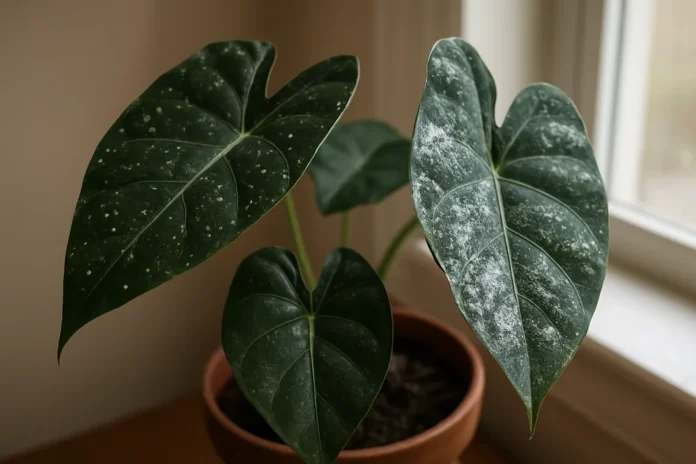
Alocasia leaves get white spots most often from pest feeding, powdery mildew, hard water residue, or normal leaf markings on certain varieties. In some cases, sun stress or sap residue can also leave pale or chalky-looking spots.
Seeing alocasia leaves with white spots can be unsettling, especially when the plant looked fine a few days earlier. The tricky part is that white spotting is not one single problem. On alocasia, it can mean anything from harmless mineral residue to spider mites, powdery mildew, or a leaf that is simply showing its natural pattern.
When I diagnose this on my own plants, I start with the look and feel of the spot rather than the color alone. Is it dusty and wipes off? Raised and cottony? Tiny pale speckles spread across the leaf? Stuck in the veins as part of the leaf itself? Those clues tell you far more than the word "white" ever will.
The good news is that most causes are fixable once you identify them correctly. Below, I will walk through the most common reasons an alocasia develops white spots, how to tell them apart, and what each one usually needs.
What the White Spots Can Look Like
Before jumping to treatment, take a close look at the shape, texture, and location of the spots. Alocasia leaves are glossy, dramatic, and sometimes naturally marked, so surface appearance matters a lot. A flashlight, your fingertip, and the underside of the leaf usually reveal the answer faster than guessing.
- Tiny pale dots or stippling across the leaf often point to spider mites or other sap-sucking pests.
- A dusty, flour-like coating that rubs off suggests powdery mildew.
- Crusty white marks, especially after misting or watering, are often mineral residue from hard water or fertilizer salts.
- Cottony clumps near stems or veins usually mean mealybugs.
- Smooth white patches that are part of the leaf tissue may be natural variegation or normal coloration on that cultivar.
- Bleached patches on exposed leaves can come from sun scorch or light stress.
If every spot looks identical and is repeated all over the plant, I start by suspecting water residue, light stress, or natural patterning. If the spotting is uneven and some leaves look worse than others, pests or disease move much higher on my list.
Spider Mites Are One of the Most Common Causes
Spider mites are a classic alocasia problem, especially indoors where air is dry and still. They feed by piercing leaf tissue, which leaves behind fine white or pale yellow stippling. From a distance, the leaf may look faded or dusty. Up close, the spots are usually tiny, scattered, and concentrated on the upper leaf surface while the pests themselves hide underneath.
You may also notice faint webbing between leaf veins or where the leaf joins the stem, though webbing often appears only after the infestation gets established. New leaves can emerge distorted, dull, or weak if mites have been feeding for a while.
How to Confirm Spider Mites
- Check the undersides of leaves for tiny moving specks.
- Hold the leaf under bright light to look for fine webbing.
- Tap a leaf over white paper and look for slow-moving dots.
- Look for widespread stippling rather than isolated patches.
What Usually Helps
Isolate the plant first. Rinse the leaves thoroughly, especially the undersides, then treat with insecticidal soap or horticultural oil according to label directions. Repeat treatments are usually necessary because mites reproduce quickly. Raising humidity modestly and improving air circulation can also make the plant less inviting, though humidity alone will not solve an active infestation.
Mealybugs Can Leave Cottony White Patches
If the white spots look fluffy, sticky, or clustered around leaf joints, veins, or petioles, mealybugs are a strong possibility. These pests cover themselves in a white waxy coating, so what you see is often more like a tuft or dab of cotton than a flat spot.
Mealybugs also leave behind honeydew, a sticky residue that can later attract sooty mold. An alocasia with mealybugs may show slowed growth, yellowing, or weak new foliage if the infestation continues.
- Inspect leaf bases, folds, and stem crevices carefully.
- Remove visible bugs with a cotton swab dipped in rubbing alcohol.
- Follow up with insecticidal soap or another labeled houseplant treatment.
- Recheck weekly because hidden eggs and crawlers are easy to miss.
Powdery Mildew Can Make Leaves Look Dusted with White
Powdery mildew is a fungal disease that appears as a soft white or grayish coating on the leaf surface. Unlike pest stippling, mildew tends to sit on top of the leaf and can look almost like flour or talc. On alocasia, it is more likely when foliage stays damp too long, air circulation is poor, or the plant is crowded among other houseplants.
The patches may start small and spread into larger irregular areas. Severely affected leaves can yellow, curl, or decline faster than healthy leaves.
Clues That Suggest Mildew Instead of Pests
- The white material looks powdery rather than like pinprick spots.
- It sits on the surface and may smear when rubbed.
- It can spread across both upper and lower leaf surfaces.
- There is no webbing, cottony insect mass, or stippled feeding pattern.
Remove the worst affected leaves if practical, keep water off the foliage, and give the plant more space and airflow. A houseplant-safe fungicide may be needed if the spread continues. Always avoid overapplying products on tender leaves, since alocasia can react to harsh treatments.
Hard Water and Fertilizer Salts Can Leave Harmless White Residue
Sometimes white spots are not damage at all. If you mist your plant, use tap water with lots of minerals, or splash fertilizer solution on the leaves, you may get chalky white marks when the droplets dry. These usually sit on top of the leaf and feel crusty or filmy rather than embedded in the tissue.
This is especially common on dark green alocasia leaves because residue stands out sharply against the glossy surface. The plant itself may be perfectly healthy even though the leaves look speckled.
- Try wiping one spot with a damp soft cloth.
- If it loosens easily, residue is likely the cause.
- Use filtered, distilled, or rainwater for misting if spotting keeps returning.
- Avoid letting fertilizer splash and dry on the foliage.
When I suspect residue, I clean one leaf first before treating the whole plant for pests or disease. That quick test can save a lot of unnecessary spraying.
Natural Variegation or Normal Leaf Features May Be the Reason
Not every white marking is a problem. Some alocasia varieties naturally have pale veins, silver flecking, or lighter areas that are part of the leaf. If the spots are symmetrical, stable, and present on new growth in the same pattern, they may simply be normal for that cultivar.
This is where knowing your exact variety helps. Alocasia baginda types, Amazonica hybrids, and several collector cultivars can all show dramatic contrast in their foliage. If the white area is smooth, clean-edged, and not expanding in a sickly way, it is less likely to be disease.
Natural markings should not come with sticky residue, fuzzy growth, webbing, leaf collapse, or obvious tissue damage. If those symptoms are absent and the plant is otherwise growing normally, there may be nothing to fix.
Sun Stress and Leaf Burn Can Bleach the Surface
Alocasia likes bright light, but many varieties can scorch in harsh direct afternoon sun or under an intense grow light placed too close. When that happens, the leaf tissue may fade to pale tan, cream, or whitish patches. These spots are usually flatter and larger than pest stippling and often show up on the most exposed leaves first.
The damaged area may feel thin, papery, or dry over time. Unlike mildew or residue, it will not wipe off. Once a leaf is burned, the tissue will not turn green again, but you can prevent additional damage by adjusting the light.
- Move the plant slightly back from a bright window if the leaf gets hot in direct sun.
- Diffuse harsh light with a sheer curtain.
- Keep grow lights at a safer distance based on their intensity.
- Judge recovery by healthy new leaves rather than old damaged patches disappearing.
Less Common Causes Worth Checking
A few other issues can create white or pale spotting on alocasia, though they are less common than pests and residue. Edema can sometimes leave corky pale marks after irregular watering. Sap residue may dry white after a leaf is nicked or damaged. Thrips can also cause silvery scarring that some gardeners initially describe as white spotting.
Cold drafts and abrupt environmental swings can weaken leaves and make minor blemishes more noticeable. If your plant recently moved from a nursery, shipping stress can also reveal old damage that was already developing before you brought it home.
I try to look at the newest leaf and the oldest affected leaf side by side. If only older leaves show the problem, I often suspect past stress or residue. If the newest leaf emerges marked, I look much harder for ongoing pests or environmental issues.
How to Tell Which Cause Is Most Likely
If you are still unsure, narrow it down by asking a few simple questions. Is the white material on the surface or in the leaf? Does it wipe off? Are there signs of insects underneath? Is the pattern even and repeated, or random and spreading?
- Wipe one spot gently with a damp cloth.
- Inspect the undersides of several leaves with bright light.
- Check whether the worst spots are on the most sun-exposed leaves.
- Look at where the spots collect, such as veins, leaf joints, or open leaf surfaces.
- Compare old leaves and new leaves for the same pattern.
If it wipes off, think residue or mildew. If it is cottony and clustered, think mealybugs. If it is fine stippling with possible webbing, think spider mites. If it is smooth and stable, think natural patterning. If it is bleached and papery, think light damage.
What to Do Next Without Stressing the Plant Further
Once you have a likely cause, keep your response focused. Alocasia can be sensitive, and throwing multiple sprays, repotting, heavy feeding, and major light changes at the plant all at once often creates a second problem. Start with the most likely issue and give the plant a little time to respond.
- Isolate the plant if pests or disease are possible.
- Clean the leaves gently before applying treatments.
- Use labeled products appropriate for houseplants and follow directions carefully.
- Avoid fertilizing a stressed plant heavily until active problems are under control.
- Watch new growth, since old spots often remain even after the issue is fixed.
Most importantly, do not judge success too quickly. A damaged leaf may stay marked forever, but if the newest leaves emerge clean and healthy, you are on the right track.
How to Prevent White Spots From Coming Back
Prevention comes down to stable care and regular inspection. Alocasia is not impossible to grow, but it does respond quickly when humidity drops, pests sneak in, or leaves stay dirty and damp.
- Inspect leaf undersides every week, especially in winter indoor conditions.
- Keep the plant in bright indirect light unless you know your variety tolerates more sun.
- Water consistently so the soil is evenly moist but not soggy.
- Use good airflow around the plant without exposing it to cold drafts.
- Wipe leaves occasionally to remove dust and mineral buildup.
- Quarantine new houseplants before placing them near your alocasia.
That simple routine catches most problems early, when they are much easier to correct.
FAQ
Can White Spots on Alocasia Go Away on Their Own?
Sometimes, if the spots are only hard water residue, they can be wiped away. Damage from pests, sunburn, or disease usually does not disappear from the affected leaf, though new growth can come in healthy after the cause is fixed.
How Do I Know if My Alocasia Has Spider Mites or Just Dust?
Dust sits loosely on the leaf surface and wipes off evenly. Spider mite damage looks like tiny pale speckles in the leaf tissue, and you may find mites or fine webbing on the undersides.
Is It Okay to Mist Alocasia Leaves?
Occasional misting is not always harmful, but it can leave mineral spots and may encourage fungal issues if leaves stay damp too long. Many gardeners get better results by raising room humidity rather than misting repeatedly.
Can Tap Water Cause White Spots on Alocasia?
Yes. Hard tap water often dries into chalky white residue on dark glossy leaves, especially after misting or overhead watering.
Should I Cut Off Leaves with White Spots?
Only remove them if the leaf is badly damaged, heavily infected, or mostly declining. If the leaf still has plenty of healthy green tissue, it can continue helping the plant while you address the underlying problem.
Do Mealybugs Look Like Fungus on Alocasia?
They can at first glance. Mealybugs are usually cottony, clumped, and often tucked into leaf joints or stems, while fungal growth like powdery mildew looks more like a flat dusty coating.
Can Too Much Sun Make Alocasia Leaves Turn White?
Yes. Strong direct sun or a grow light that is too close can bleach leaf tissue into pale or whitish patches, especially on leaves facing the light source.
Need help choosing the right treatment fast? Read our guide to the best houseplant pest sprays and leaf care products so you can protect your alocasia before the damage spreads.
