

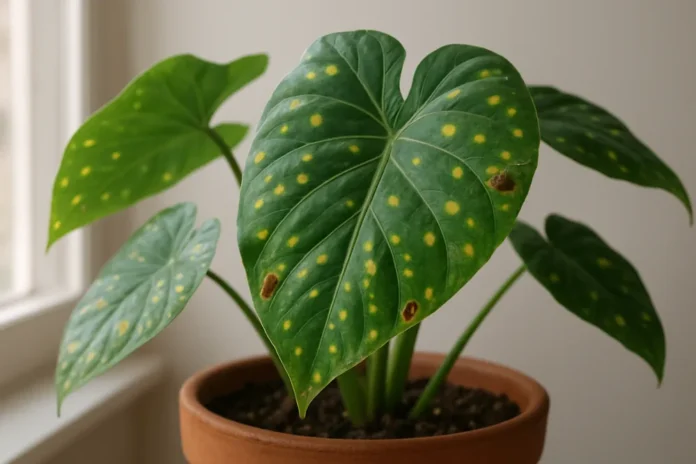
Yellow spots on alocasia are most often caused by watering stress, pest feeding, leaf burn, or disease. The exact cause usually depends on whether the spots look dry, soft, speckled, or outlined by brown tissue.
Seeing alocasia yellow spots show up on those big dramatic leaves can be frustrating fast. Alocasias are beautiful, but they are not shy about showing stress, and yellow spotting is one of the clearest early warning signs they give.
In my experience, the cause is usually not random. The size, texture, and placement of the spots tell you a lot. Some spots come from roots staying too wet, some from dry air and pest damage, and others from too much direct sun or a developing leaf disease.
The good news is that yellow spots on alocasia leaves are often fixable if you catch the pattern early. Once you know what healthy new growth should look like, it becomes much easier to tell whether your plant is recovering or still under stress.
What the Yellow Spots Are Telling You
Yellow spots are a symptom, not a diagnosis by themselves. On alocasia, they can appear as tiny speckles, larger bleached patches, soft yellow areas that later turn brown, or sharply outlined round lesions. Each version points toward a different problem.
Start by noticing whether the spots are on older leaves, newer leaves, only the sun-facing side, or scattered all over the plant. Also note whether the leaf feels papery, mushy, sticky, or dusty. Those small details are often more useful than the color alone.
- Tiny pale or yellow stippling often suggests spider mites or thrips.
- Larger faded patches on exposed leaves often suggest too much direct sun.
- Soft yellow areas with drooping can point to overwatering or root trouble.
- Round spots with brown centers or halos can indicate fungal or bacterial leaf spot.
- Scattered spotting after a care change may come from environmental shock.
When I diagnose an alocasia, I compare at least two old leaves and the newest leaf before deciding anything. If the newest leaf opens clean while older leaves stay spotted, the plant is often already past the worst of the problem.
Watering Stress and Root Problems
Overwatering is one of the most common reasons alocasia leaves develop yellow spotting. These plants like consistent moisture, but they do not want to sit in soggy potting mix. When roots stay wet too long, oxygen drops, roots weaken, and leaves start showing distress as yellow patches, edge discoloration, and collapse.
Underwatering can also create yellow spots, though the look is usually drier and more brittle. If the potting mix repeatedly goes bone dry, the leaf tissue can develop pale mottling or crispy yellowed sections, especially near the margins.
Signs the Roots Are Involved
- Leaves yellow and spot while the soil stays wet for many days
- Petioles feel weak or the plant slumps despite moist soil
- The pot smells sour or musty
- Roots look brown, mushy, or hollow instead of firm and pale
- Lower leaves decline first after frequent watering
If the roots are rotting, yellow spots are just one part of a bigger decline. You may also see general yellowing, limp stems, and leaves that fail quickly. In that case, simply watering less is usually not enough. The plant often needs fresh airy mix and removal of damaged roots.
I like to judge alocasia watering by the weight of the pot and the feel of the mix a couple inches down, not just by the top surface. The top can look dry while the lower root zone is still staying too wet.
Pests That Leave Yellow Speckles and Blotches
Spider mites and thrips are frequent culprits on alocasia, especially indoors. Their feeding damages leaf cells, which shows up as pale yellow speckling, scattered spots, or a dull washed-out look across the leaf surface. Heavy infestations can make leaves look dusty, silvery, or bronzed before they fully yellow.
Spider mites are especially common when air is warm and dry. You may notice very fine webbing near the leaf veins or undersides. Thrips are harder to spot, but they often leave irregular yellow or silvery scars and tiny black droppings.
How Pest Damage Usually Looks
- Many small yellow dots rather than a few large spots
- More damage on the undersides of leaves
- New leaves emerge distorted or streaked
- A silvery sheen, bronzing, or tiny black specks nearby
- Spots continue spreading even when watering seems fine
If you suspect pests, isolate the plant from nearby houseplants. Wipe both sides of the leaves and inspect the undersides with bright light. Repeated treatment is usually needed because eggs and hidden insects can survive a single cleaning.
Sunburn and Light Stress
Alocasia likes bright light, but many varieties scorch in strong direct afternoon sun. Sunburn often starts as pale yellow patches that later turn tan or brown and papery. The spots are usually larger and more bleached than pest stippling, and they often show up on the side facing the window or outdoors toward the strongest sun.
A sudden move from lower light to intense sun is a classic trigger. Even a plant that tolerated one location in winter can burn in the same spot during summer if the light gets harsher.
Clues That Light Is the Issue
- Spots are concentrated on the brightest side of the plant
- Affected areas look bleached before turning crispy
- The damage appeared shortly after moving the plant
- Leaves closest to glass or strong outdoor exposure are worst
- New growth stays healthy after light is adjusted
Damaged tissue will not turn green again, so success is measured by whether future leaves remain clear. Filtered bright light is usually the safest target for most alocasia grown indoors.
Fungal and Bacterial Leaf Spot
If the yellow spots are rounder, more defined, or surrounded by darker edges, disease moves higher on the list. Fungal and bacterial leaf spot can both affect alocasia, especially when leaves stay wet, airflow is poor, or the plant is crowded among other foliage.
Early lesions may start yellow, water-soaked, or translucent. As they develop, the centers often turn brown while the yellow border remains visible. In more severe cases, several spots merge into larger dead patches.
Conditions That Encourage Leaf Spot
- Splashing water onto leaves during watering
- High humidity without enough air movement
- Overcrowded shelves or plant groupings
- Old infected leaves left touching healthy ones
- Cool damp conditions that slow drying
Remove the worst affected leaves with clean scissors and avoid misting. Water the soil directly, give the plant better spacing, and keep foliage dry. For a mild case, those cultural fixes are often enough. If lesions keep multiplying on new leaves, a houseplant-safe fungicidal treatment may help, though bacterial issues are usually more about sanitation and environmental correction than sprays.
One pattern I take seriously is a spot that starts soft and yellow, then develops a distinct dark center and appears on multiple leaves at once. That usually behaves more like a leaf spot problem than a simple watering mistake.
Humidity, Temperature, and Environmental Shock
Alocasia can react dramatically to abrupt changes. A cold draft, a blast from an air conditioner, a dry heating vent, or even a sudden repot can trigger yellow spotting or patchy decline. This is especially common when the plant was already slightly stressed and then gets hit with one more change.
Low humidity by itself does not always create neat yellow dots, but it can weaken leaves and make pest problems worse. It also leads to crisp edges and poor leaf expansion, which can show up alongside spotting.
- Keep alocasia away from cold windows in winter and strong HVAC vents year-round.
- Avoid sudden jumps from very low light to intense light.
- Do not combine repotting, fertilizing, and a location change all at once if you can avoid it.
- Aim for warm, stable conditions with moderate to high humidity and good airflow.
A stressed alocasia often pauses growth for a while. If the plant is otherwise firm and the roots look healthy, patience and stability are usually more helpful than making several big corrections at once.
Nutrient Issues and Mineral Buildup
Nutrient deficiency is not the first cause I suspect when I see yellow spots on alocasia, but it does happen. More often, the problem is not lack of fertilizer so much as roots being unable to take nutrients up properly because the mix is exhausted, compacted, or salty.
Excess fertilizer and hard water mineral buildup can damage roots and create blotchy yellowing, browning at the margins, or tip burn that gradually spreads. This can look confusingly similar to watering stress because the root system ends up irritated in both cases.
When to Consider Feeding or Flushing
- The plant has been in the same mix a long time and growth has slowed
- White crust is visible on the soil surface or pot rim
- You fertilize often and spotting appears after feeding
- Leaves show general pale growth along with minor spotting
- Roots are present but the potting mix feels dense and tired
During active growth, a balanced diluted fertilizer usually works better than heavy feeding. If you suspect salt buildup, flushing the pot thoroughly or refreshing the mix can reduce stress. In winter or during dormancy, feeding less is often the better choice.
How to Narrow Down the Real Cause
If your alocasia has yellow spots and you are not sure why, work through the possibilities in a simple order. Start with the factors that are both common and easy to confirm: soil moisture, root health, pests, and light exposure.
- Check whether the potting mix is staying wet too long or drying bone dry.
- Inspect the roots if the plant is declining beyond a few spots.
- Look closely under the leaves for mites, thrips, webbing, or black specks.
- Review any recent move into stronger light or outdoor sun.
- Notice whether spots are soft and spreading, which raises concern for leaf spot disease.
- Think back to recent stress like repotting, drafts, heavy feeding, or low humidity.
Once you have a likely cause, make one or two corrections and then watch the next leaf. That new growth is your best report card. Old spots usually stay visible even when the plant is improving.
I try not to repot, spray, fertilize, and relocate an alocasia in the same week. If you change too many variables at once, you lose the ability to tell what actually helped and you can push a stressed plant even harder.
What to Do Right Now for Recovery
The best immediate fix depends on the cause, but a few recovery steps are broadly useful. First, remove only the leaves that are heavily damaged or clearly diseased. Leave mildly affected leaves in place if they still have plenty of green tissue, since they can still support the plant.
Next, stabilize the environment. Give the plant bright indirect light, keep it warm, and avoid erratic watering. If pests are present, treat consistently. If the roots are struggling, repot into a loose, chunky mix that drains well but does not become desert-dry the next day.
- Trim badly damaged or infected leaves with sanitized scissors
- Adjust watering so the root zone stays evenly moist, not saturated
- Move the plant out of harsh direct sun
- Inspect and treat pests repeatedly, not just once
- Improve airflow and avoid wetting the foliage
- Hold off on heavy fertilizer until healthy new growth appears
Recovery is rarely instant with alocasia. The plant may keep an older spotted leaf for a while, then slowly replace it with cleaner growth once conditions improve. That is normal. Focus on the trend, not the cosmetic state of one leaf.
FAQ
Should I Cut Off Alocasia Leaves with Yellow Spots?
Cut off leaves only if they are badly damaged, mostly yellow, or clearly diseased. If a leaf still has a lot of healthy green area, it can continue helping the plant while you fix the underlying problem.
Can Yellow Spots on Alocasia Turn Green Again?
Usually no. Damaged leaf tissue does not typically recover its original color. Improvement shows up as cleaner new growth rather than old spots disappearing.
Do Spider Mites Cause Yellow Spots on Alocasia?
Yes. Spider mites commonly cause fine yellow speckling, fading, and a dusty look on alocasia leaves, especially in warm dry indoor air.
Can Too Much Sun Cause Yellow Spots on Alocasia?
Yes. Direct sun can bleach alocasia leaves into pale yellow patches that later turn tan or brown, especially after a sudden move into brighter exposure.
Are Yellow Spots on Alocasia a Sign of Overwatering?
They can be. Overwatering often leads to soft yellow patches, drooping, and overall decline, especially if the soil stays wet too long and the roots begin to rot.
Does Misting Help Prevent Yellow Spots?
Not usually. Misting gives only brief humidity relief and can keep leaves wetter than is ideal if disease is already present. Better airflow, steadier humidity, and proper watering are more useful.
Why Does Only One Alocasia Leaf Have Yellow Spots?
If only one older leaf is affected, it may be age-related stress, minor sunburn, or a past watering issue. If new leaves stay healthy, the problem is often limited rather than ongoing.
Want to stop the guesswork with stressed tropicals? Read our alocasia care and treatment guides to find the best potting mixes, pest controls, and recovery tools for healthier new growth.
