

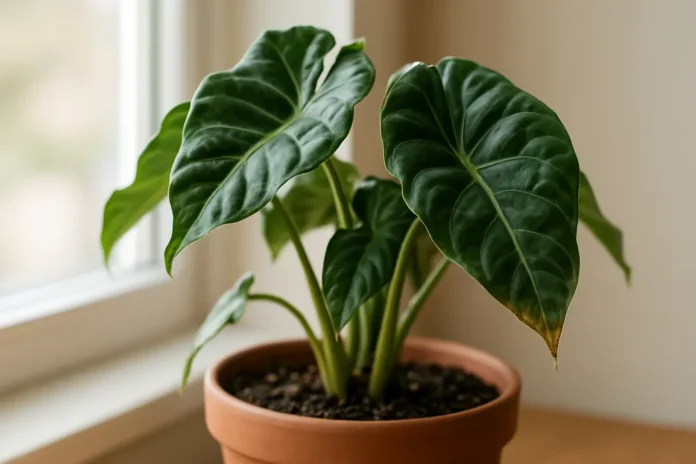
Alocasia leaves usually curl because the plant is under stress, most often from inconsistent watering, dry air, temperature stress, or pest activity. In some cases, curling also points to root trouble or excess fertilizer.
When an Alocasia starts curling its leaves, it is almost always telling you that something in its environment is off. These plants can look dramatic and lush when happy, but they react quickly to stress, especially around moisture, humidity, and temperature.
I have found that curling leaves on Alocasia rarely come from just one issue in isolation. A plant that is a little too dry, sitting near a vent, and pushing out tender new growth can curl much faster than one dealing with only a minor watering mistake. The good news is that once you read the pattern correctly, Alocasia often rebounds well.
The key is to look at the whole picture: soil moisture, air humidity, leaf texture, pest signs, and whether the curling is happening on new leaves, old leaves, or the entire plant. That combination usually points you to the real cause much faster than guessing.
What Curling Leaves Usually Mean on Alocasia
Leaf curling is a protective response. When an Alocasia cannot move water properly, loses moisture too fast, or faces environmental stress, the leaf edges roll or cup inward to reduce surface exposure. In simple terms, the plant is trying to conserve resources.
The most common triggers are underwatering, overwatering, low humidity, hot or cold air, and spider mites or other sap-sucking pests. Less often, fertilizer salt buildup, compacted soil, root rot, or transplant shock are involved. A curled leaf does not always mean it will flatten again, so focus on whether new growth improves after you correct the problem.
When I troubleshoot Alocasia, I look at several leaves before deciding on a cause. If the newest leaves are tightly curled and thin, I suspect humidity or watering stress first. If older leaves curl while the soil stays wet, I start thinking about root trouble.
Watering Problems Are the Most Common Cause
Underwatering and Dry Soil
Alocasia likes evenly moist soil, not bone dry soil and not constant sogginess. If the potting mix dries too far, the roots cannot supply enough water to the leaves. The leaves may curl inward, droop, develop crispy edges, or feel thinner than normal.
This often happens when the plant is in a small pot, a very chunky mix that dries fast, or a warm bright location where it uses water quickly. A plant can also be underwatered even if you water on schedule, because seasonal light and temperature changes alter how fast the soil dries.
Overwatering and Oxygen-starved Roots
Too much water can cause curling too. When soil stays saturated, roots lose access to oxygen and begin to function poorly. The plant then behaves as if it is drought-stressed because damaged roots cannot absorb water well, even though the soil is wet.
With overwatering, you may also notice yellowing leaves, limp stems, a heavy pot that stays wet for days, or a sour smell from the mix. Curling paired with persistently wet soil is a red flag for root stress.
- If the soil is dry several inches down and the leaves feel soft or papery, underwatering is more likely.
- If the soil is still wet days after watering and the leaves look curled but weak, overwatering or poor drainage is more likely.
- If the pot feels extremely light one week and waterlogged the next, inconsistent watering may be the core issue.
I do not water Alocasia by the calendar. I water when the top inch or two has dried slightly but the root ball still has some moisture below. That habit prevents both the drought swings and the swampy conditions that make leaves curl.
Low Humidity Can Make Leaves Curl Fast
Alocasia is a humidity-loving tropical plant, and dry indoor air is one of the biggest reasons leaves curl, especially in winter. When humidity is low, the leaves lose moisture faster than the roots can replace it. The result is curling, brown edges, and sometimes distorted unfurling on new leaves.
This is especially common in homes with forced-air heat, air conditioning, or naturally dry climates. A plant can be watered correctly and still curl if the surrounding air is too dry. New leaves tend to show this stress first because they are tender and still expanding.
- Leaf margins turning crisp along with curling
- New leaves opening misshapen or sticking slightly as they unfurl
- Curling that worsens near vents, radiators, or sunny windows with dry air
- A plant that improves noticeably when grouped with other tropicals or placed near a humidifier
Misting offers only brief relief and usually does not change humidity enough to solve the issue. A room humidifier, better plant grouping, or moving the plant away from drying airflow works much better.
Temperature Stress and Drafts Can Trigger Curling
Alocasia prefers warm, stable conditions. Cold drafts, sudden nighttime chills, blasts from AC vents, or heat from nearby registers can all make leaves curl. Even if the average room temperature seems acceptable, short periods of stress can show up in the foliage.
In many homes, the trouble spot is not the room itself but the microclimate around the plant. A windowsill that gets cold at night, a table under a ceiling vent, or a place beside an exterior door can all create enough fluctuation to upset an Alocasia.
- Curling shortly after moving the plant
- Leaves nearest the draft showing the worst symptoms
- Soft, stressed foliage after a cold snap or hot afternoon sun through glass
- No obvious watering issue, but ongoing curl and slowed growth
If temperatures dip much below what this tropical plant likes, growth can stall and roots become less efficient. That compounds watering stress, which makes curling even more likely.
Pests Often Hide on the Undersides of Leaves
Spider mites, thrips, aphids, and sometimes mealybugs can all contribute to curling leaves. These pests feed on plant sap, which disrupts moisture balance and damages tender tissue. Alocasia is especially prone to spider mites in dry indoor conditions.
Pest damage often shows up as curled or puckered leaves, fine stippling, faded patches, tiny dots on the undersides, or webbing in severe spider mite cases. Thrips may leave silvery scarring, while aphids often cluster on new growth and leaf stems.
- Check the underside of curled leaves with good light
- Look along the leaf veins and where the stem meets the leaf
- Watch for tiny moving specks, sticky residue, stippling, or webbing
- Inspect nearby houseplants too, because pests spread easily
Spider mites can fool gardeners because the plant may just look thirsty at first. If I see curling plus a dull, dusty-looking leaf surface, I turn the leaf over immediately. That has saved me from missing an early infestation more than once.
Root Problems, Soil Issues, and Fertilizer Stress
Compacted Soil and Root Crowding
Alocasia roots need both moisture and air. If the potting mix has broken down into a dense mass, water may either run down the sides without soaking in or sit too long around the roots. Both conditions can lead to curling leaves because the root system is not functioning evenly.
A severely rootbound plant can also dry out too quickly. In that case, you may notice the soil pulling from the pot edge, roots circling the drain holes, and leaves curling soon after watering cycles speed up.
Root Rot
If roots stay wet too long, root rot can develop. Damaged roots turn brown or mushy and cannot take up water properly. Curling, yellowing, collapse, and a general loss of vigor often follow.
Too Much Fertilizer or Salt Buildup
Excess fertilizer can burn roots and disrupt water uptake. That often causes leaf curling, browned edges, and stunted or distorted growth. Salt buildup is more likely when you fertilize frequently, use strong doses, or water lightly so minerals accumulate in the soil instead of flushing through.
- White crust on the soil surface or pot rim can suggest salt buildup
- Curling with browning tips after a feeding often points to fertilizer stress
- A dense, stale-smelling mix may indicate the plant needs a soil refresh
- Mushy roots and persistently wet soil point to root rot rather than simple thirst
Natural Leaf Behavior Versus a Real Problem
Not every curled or folded Alocasia leaf means disaster. A new leaf often emerges rolled up before it expands. An older leaf may also curl somewhat before the plant sheds it, especially if the plant is redirecting energy into new growth.
The difference is in the pattern. Normal development affects a single new leaf that gradually opens, or one aging lower leaf that declines while the rest of the plant stays healthy. A real problem usually affects multiple leaves, causes edge damage, slows growth, or creates a repeated pattern in each new leaf.
Seasonal slowing can also change the plant's behavior. In lower light months, Alocasia may use less water, grow more slowly, and become much more sensitive to overwatering. What worked in summer may be too much in winter.
How to Figure Out the Exact Cause on Your Plant
Start by checking the soil, because watering and root function sit behind many curling problems. Feel the mix below the surface, lift the pot to judge its weight, and note whether it dries too fast or stays wet too long. Then inspect humidity, temperature exposure, and pests.
- Check whether the soil is dry, evenly moist, or soggy.
- Look at which leaves are curling: new, old, or all of them.
- Inspect the leaf undersides for mites, thrips, aphids, or webbing.
- Think about recent changes like repotting, moving rooms, or turning on heat or AC.
- Review your fertilizer routine and whether salts may be building up.
- If the pattern still does not fit, slide the plant from the pot and examine the roots.
Healthy roots are usually firm and pale. Rotting roots are dark, mushy, or hollow. If the roots look healthy but the air is dry and the soil swings between wet and dry, your answer is likely environmental rather than pathological.
Change one thing at a time when possible. If you raise humidity, change watering, and repot all in the same weekend, it becomes much harder to tell what actually helped or stressed the plant further.
How to Fix Curling Alocasia Leaves
Once you know the likely cause, the fix becomes much simpler. The goal is not to force damaged leaves to flatten. The goal is to restore steady growth so the next leaves come out normal.
If the Plant Is Too Dry
Water thoroughly until excess drains out, and make sure the root ball is fully moistened. If the mix has become hydrophobic and water runs through too fast, bottom watering or slowly soaking the soil can help rehydrate it.
If the Soil Stays Too Wet
Reduce watering frequency, empty saucers, and make sure the pot drains freely. If the mix is dense or sour, repot into a chunky, airy blend that still holds some moisture without becoming waterlogged.
If Humidity Is Too Low
Use a humidifier, move the plant away from dry airflow, or group it with other tropical plants. Try to keep conditions stable rather than swinging between very dry and briefly humid.
If Pests Are Involved
Isolate the plant and treat it promptly. Depending on the pest, that may mean washing the leaves, using insecticidal soap, neem-based products, or another houseplant-safe treatment. Repeat applications are usually necessary because one treatment rarely solves an infestation completely.
If Fertilizer or Salts Are the Problem
Flush the soil thoroughly with clean water or repot if buildup is severe. Resume feeding lightly only when the plant is actively growing again.
If Roots Are Damaged
Trim off rotten roots with clean scissors, repot in fresh mix, and water carefully during recovery. Give the plant warmth, bright indirect light, and patience while it rebuilds the root system.
How to Prevent Curling in the Future
Prevention comes down to consistency. Alocasia responds best when moisture, humidity, and temperature stay fairly stable. It does not love dramatic swings, even if each condition is only briefly stressful.
- Keep the soil lightly and evenly moist, not soaked and not fully dry.
- Use a potting mix that drains well but does not become dusty fast.
- Provide bright indirect light so the plant can use water and grow steadily.
- Protect it from vents, cold windows, and sudden temperature changes.
- Check leaves regularly for spider mites and other pests.
- Fertilize modestly during active growth rather than feeding heavily year-round.
- Repot when the mix breaks down or the roots become crowded.
If you stay observant, you can usually catch the warning signs before curling gets severe. A slight fold, slower growth, or a dull leaf surface often appears before the plant reaches the point of major damage.
FAQ
Will Curled Alocasia Leaves Uncurl?
Sometimes mildly stressed leaves improve, especially if the issue was short-lived. But many damaged leaves stay somewhat curled, so the better sign is healthy new leaves after conditions are corrected.
Should I Cut Off Curled Alocasia Leaves?
Only remove them if they are heavily damaged, yellowing, or no longer helping the plant. If a leaf is still mostly green, it can still support recovery through photosynthesis.
Can Too Much Sun Make Alocasia Leaves Curl?
Yes. Hot direct sun, especially through a window, can increase water loss and stress the leaf tissue, which may lead to curling, fading, or scorched patches.
Do Alocasia Leaves Curl From Transplant Shock?
They can. After repotting or moving, the roots may struggle briefly to keep up with moisture demand, and leaves can curl while the plant adjusts.
How Humid Should It Be for Alocasia?
Alocasia generally prefers moderate to high humidity, and many plants look best when indoor humidity stays well above very dry household levels. The exact threshold varies by species and growing conditions, but consistently dry air often leads to curling and browning.
Why Is Only One Alocasia Leaf Curling?
If it is a brand-new leaf, that may be normal while it unfurls. If it is one older leaf and the rest of the plant looks healthy, it may simply be aging out rather than signaling a whole-plant problem.
Need the right setup for tropical houseplants? Check our guide to the best humidifiers, potting mixes, and pest treatments for Alocasia so you can fix curling leaves faster and keep new growth looking perfect.
