

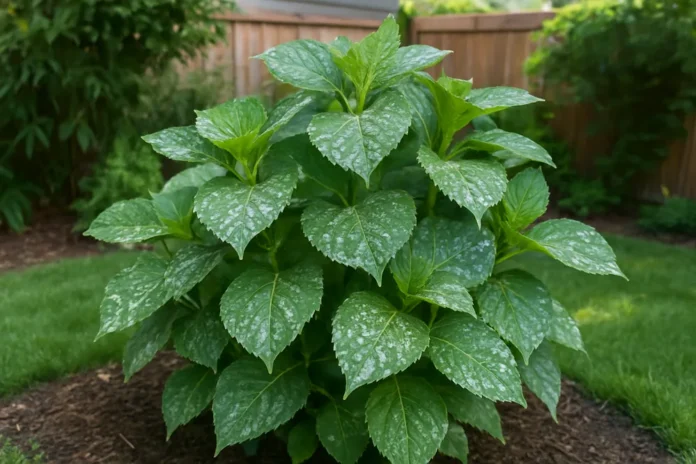
White spots on hydrangeas are most often caused by powdery mildew, sap-sucking pests, or harmless residue left by water or sprays. Sometimes the spotting is cosmetic, but sometimes it signals a fungal or insect problem that needs attention.
Seeing white spots show up on a hydrangea can be unsettling, especially when the plant looked healthy just a few days earlier. In my experience, this symptom can mean a few very different things, and the exact look and location of the spots matter more than most gardeners expect.
Sometimes the problem is powdery mildew coating the leaves. Other times it is stippling from pests, dried residue from overhead watering, or bleaching on blooms and foliage after heat and strong sun. The good news is that white spots are usually diagnosable once you slow down and look closely at the pattern.
What White Spots on Hydrangea Usually Mean
When gardeners say their hydrangea has white spots, they may be describing several different symptoms. A dusty film across the leaf surface points in one direction, while tiny pale specks, cottony clumps, or paper-dry bleached patches point in others. The first step is to notice whether the white area sits on the surface, is part of the leaf tissue itself, or is attached like an insect or residue.
- A powdery, wipeable coating usually suggests powdery mildew.
- Tiny pale dots or stippling often come from spider mites or other sap-feeding pests.
- Cottony clusters on stems or leaf undersides can indicate mealybugs or soft scale-related wax.
- Chalky spotting that appears after watering or spraying may be hard water or product residue.
- Flat, bleached patches on exposed leaves or blooms can be sunscald or weather damage.
When I diagnose this on hydrangeas, I look at three leaves from different parts of the shrub before I decide anything. If every affected leaf has the same white film on top, I think fungus first. If the damage is patchy and concentrated on stressed outer growth, I start considering pests, spray burn, or sun exposure.
Powdery Mildew Is the Most Common Cause
Powdery mildew is one of the most common reasons hydrangea leaves develop white spotting. Instead of isolated dots, it often starts as faint, dusty patches that spread into a flour-like coating. The spots may appear on upper leaf surfaces first, though they can move to stems and flower bracts in favorable conditions.
This fungal problem is especially common during warm days, cool nights, crowded growth, and poor air circulation. Unlike many leaf diseases, powdery mildew does not need soaking wet foliage to get started. Hydrangeas planted too close to fences, foundations, or other shrubs tend to hold humidity around the leaves, which makes the issue worse.
How to Recognize Powdery Mildew
- White or pale gray patches that look dusted on
- A coating you can sometimes rub off with your fingers
- Newer leaves becoming distorted or slightly curled
- Symptoms spreading across several leaves rather than staying on one damaged spot
- Heaviest infection in dense interior growth or shaded areas
If powdery mildew is mild, the plant often survives without serious long-term damage, but heavy infection can reduce vigor and spoil the look of the shrub. Remove badly affected leaves if practical, thin crowded stems to improve airflow, and avoid excess nitrogen fertilizer that pushes soft, susceptible new growth. If the problem repeats every year, a fungicidal treatment labeled for powdery mildew on ornamentals may help when started early.
Pests Can Create Pale Dots, Webbing, or Cottony White Patches
Not every white spot is a disease. Several hydrangea pests leave behind pale speckling, waxy deposits, or cotton-like masses that gardeners understandably describe as white spots. Spider mites are a frequent culprit in hot, dry weather. They feed by piercing leaf tissue, which creates fine stippling that can make the leaf look faded, dusty, or silvery white from a distance.
Mealybugs and some scale insects leave more obvious white material. Instead of flat spots inside the leaf, you may see fuzzy or waxy clusters along stems, at leaf nodes, or on the undersides of leaves. These pests also produce sticky honeydew, which can later support black sooty mold.
Signs the White Spotting Is Pest Related
- Fine stippling concentrated on leaf undersides or between veins
- Very thin webbing, especially with spider mites
- Cottony blobs at stem joints or near petioles
- Sticky leaves or nearby ants attracted to honeydew
- Yellowing, curling, or general decline along with the white symptom
If I suspect mites, I tap a leaf over a sheet of white paper. Tiny moving specks that start crawling after a few seconds are often the giveaway. It is a quick backyard test that is more useful than guessing from a distance.
For a light infestation, a strong spray of water directed at leaf undersides can reduce mite numbers. Insecticidal soap or horticultural oil can help with mites, mealybugs, and soft-bodied pests when applied according to the label. Be thorough with coverage, and avoid spraying during the hottest part of the day to prevent additional leaf stress.
Residue From Water, Fertilizer, or Sprays May Be Harmless
Sometimes white spots are not a plant problem at all. If your hydrangea has recently been watered overhead, sprayed with a foliar product, or exposed to hard water from irrigation, the spots may simply be mineral or product residue. These marks often look chalky, crusty, or ringed rather than fuzzy.
Residue usually sits on the surface and does not spread like a disease. It may be most obvious on darker green leaves or colored flower heads. If the spots appear after a treatment and stay limited to exposed surfaces, residue is a strong possibility.
How Residue Differs From Disease
- Spots appear soon after watering or spraying
- The pattern follows droplet marks or splashes
- Affected areas do not enlarge over time
- The leaf tissue underneath stays green and healthy
- The coating may wipe off cleanly with a damp cloth
If the problem is purely cosmetic, no major treatment is needed. Water at the base of the plant instead of overhead, mix sprays carefully, and avoid applying products stronger than the label recommends. On shrubs with repeated hard-water spotting, simply improving watering method often solves the issue.
Sunscald and Weather Stress Can Bleach Leaves and Blooms
Hydrangeas are sensitive to harsh afternoon sun in many parts of the U.S., especially when they are also short on moisture. White spots can actually be bleached tissue where the leaf or bloom was scorched. This is common after a heat wave, sudden exposure following pruning, or when a potted hydrangea is moved from shade into much brighter light.
Sunscald looks different from mildew. Instead of a powdery film, the damaged area is flat, dry, and part of the tissue itself. Flower petals may fade unevenly, and leaves may later turn tan or crispy around the white patch.
- Damage is heaviest on the outer, most exposed side of the plant
- The spots are often irregular rather than round
- Blooms may show pale, washed-out patches
- Edges can turn brown after the white area appears
- Symptoms follow extreme heat, transplanting, or sudden site changes
Give the plant steadier moisture, add mulch to cool the root zone, and provide some afternoon shade if your variety struggles in full sun. Do not expect damaged leaves to turn green again. Judge recovery by the condition of new growth rather than the old marked foliage.
Less Common Disease Issues and Lookalikes
A few less common problems can also create white or pale lesions on hydrangea. Some leaf spot diseases begin with tan to pale centers and darker edges. Insect feeding scars, hail injury, or abrasion from wind can also leave small whitish marks once tissue dries out. These do not always fit the classic mildew pattern.
Chemical injury is another possibility. If a lawn weed killer drifted onto nearby hydrangeas, you may see distorted growth, pale spotting, or bleached patches. The timing matters here. When symptoms show up shortly after spraying nearby turf or beds, drift or overspray should be on the list.
Clues That Suggest a Less Common Cause
- Spots have dark margins or tiny fruiting dots in the center
- Damage appeared right after stormy weather or hail
- Only the side facing a walkway, driveway, or lawn treatment area is affected
- Leaves are twisted or cupped along with discoloration
- The symptom does not match powdery, wipeable mildew or pest stippling
I am cautious about blaming nutrients when I see white spotting on hydrangeas. Nutrient problems more often cause general yellowing, interveinal chlorosis, or poor growth. True white spots usually come from surface issues, tissue damage, or pests rather than a simple feeding deficiency.
How to Tell Which Cause You Are Dealing With
A close inspection usually narrows this down quickly. Start by checking whether the spots are on leaves, stems, flowers, or all three. Then ask whether the spots wipe off, whether the tissue underneath is damaged, and whether the problem is concentrated in shady interior growth or sunny exposed growth.
Simple Observations That Help You Diagnose It
- Rub one affected spot gently with a fingertip or damp cloth.
- Turn over several leaves and inspect the undersides for webbing, cottony masses, or moving pests.
- Compare inner leaves to outer leaves and shaded areas to sunny areas.
- Think back to recent weather, watering method, and any sprays or fertilizers used.
- Check whether the symptom is spreading to fresh leaves or staying limited to older damaged tissue.
This process helps separate active problems from cosmetic ones. A spreading white film is different from static spotting after irrigation. New leaves that emerge cleanly usually mean the issue has been corrected or was temporary, while fresh symptoms on new growth point to an ongoing cause.
What to Do Next for a Healthier Hydrangea
Once you have identified the likely cause, focus on the least disruptive fix first. Hydrangeas respond best when you improve growing conditions while treating only what is necessary. Good airflow, even soil moisture, and sensible watering habits solve a surprising number of repeat issues.
Helpful Next Steps for Most Cases
- Prune lightly to open dense growth and improve air circulation
- Water at the base instead of wetting foliage whenever possible
- Mulch around the root zone to reduce drought stress and soil splash
- Remove heavily infected or badly damaged leaves if the plant is not stripped bare
- Treat confirmed fungal or pest problems with a labeled product rather than spraying broadly without a diagnosis
- Avoid pushing excess tender growth with heavy nitrogen fertilizer
If the shrub is otherwise vigorous, do not panic over a small amount of white spotting. Hydrangeas often carry a few imperfect leaves through summer while continuing to bloom well. The key is to stop the problem from worsening and to watch the quality of new growth over the next few weeks.
When White Spots Mean It Is Time to Act Quickly
Some cases deserve faster attention. If the white symptom is spreading rapidly across the plant, covering flower buds, or paired with leaf drop and general decline, the problem is more than cosmetic. Plants under repeated stress can lose vigor and bloom less the following season.
- White coating spreading across many leaves in a short time
- Visible pests or webbing on large portions of the shrub
- Leaf drop, stunting, or widespread yellowing along with the spots
- A newly planted hydrangea declining fast in heat or drought
- Repeated yearly infection that does not improve with basic care changes
In these cases, step in sooner with targeted treatment and a closer review of site conditions. If you cannot confidently identify the cause, a local extension office or garden center may help confirm whether you are dealing with mildew, mites, residue, or something less common.
FAQ
Can Powdery Mildew Kill a Hydrangea?
It usually does not kill an established hydrangea by itself, but heavy infection can weaken the plant, reduce flowering, and make it look rough. Repeated severe outbreaks are worth addressing.
Do White Spots on Hydrangea Leaves Always Mean Fungus?
No. White spots can also come from spider mites, mealybugs, hard-water residue, spray residue, sunscald, or physical damage.
Will the White Spots Go Away on Damaged Leaves?
Usually not. Existing damaged leaves often stay marked, so the better sign of recovery is healthy new growth without fresh spots.
Is It Safe to Water Hydrangeas From Above?
It is better to water at the base when you can. Overhead watering can leave residue, increase humidity around the leaves, and sometimes encourage disease problems.
Why Do My Hydrangea Blooms Have White Blotches but the Leaves Look Fine?
That often points to sun bleaching, weather stress, or residue on the flower heads rather than a major leaf disease. Some bloom varieties also fade naturally as they age.
Should I Remove Leaves with Powdery Mildew?
Remove the worst affected leaves if you can do it without overly thinning the shrub. Do not strip the plant bare, and always discard diseased material rather than composting it if the infection was severe.
Can Neem Oil Help with White Spots on Hydrangea?
Neem-based products may help with certain fungal issues and some soft-bodied pests, but they are not the right answer for every white spot. Make sure the diagnosis fits before spraying, and follow the product label carefully.
Why Did White Spots Show Up After I Moved My Hydrangea?
A sudden change in light, heat, and moisture can stress hydrangeas and lead to bleaching or scorch. Transplant shock can also make the plant more vulnerable to pests and disease.
Need help choosing the right treatment? Read our hydrangea disease and pest control guide to compare the best fungicides, insecticidal soaps, and care fixes before you buy.
