

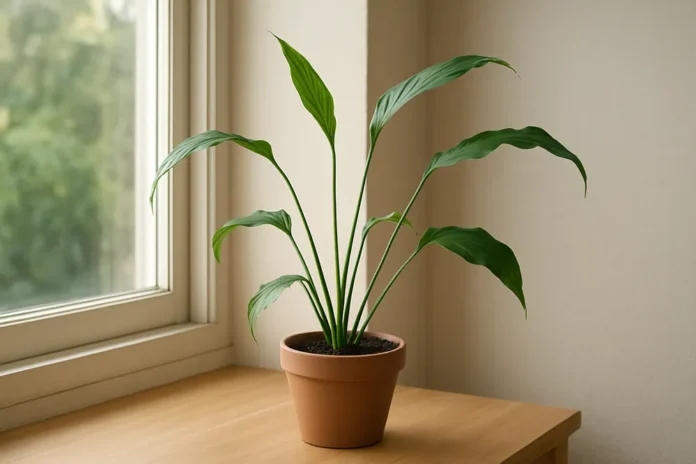
A peace lily usually gets leggy because it is not getting enough bright, indirect light and starts stretching toward a better light source. Sparse growth can also come from age, crowding, inconsistent care, or normal loss of older leaves.
A peace lily that looks leggy usually has long, stretched stems, fewer leaves, and a shape that seems loose instead of full and mounded. While that can look alarming, it often comes down to growing conditions rather than a serious disease or pest problem.
In most homes, the biggest reason a peace lily gets lanky is low light. These plants are famous for tolerating dim rooms, but tolerance is not the same as thriving. When light is too weak, new growth often stretches, leaf spacing increases, and the plant leans toward windows.
Legginess can also be tied to age, overcrowded roots, poor grooming, or stress from watering problems and low humidity. Once you know what is causing the stretched look, you can usually help the plant grow back fuller over time.
What Leggy Growth Looks Like on a Peace Lily
Leggy growth is not always dramatic at first. Your peace lily may simply seem more open and floppy than usual. Over time, the plant can develop long leaf stalks, smaller leaves, gaps in the center, and stems that bend toward one side.
- Long, thin leaf stalks instead of short, sturdy growth
- Leaves that are spaced farther apart
- A plant that leans toward a nearby window or lamp
- Smaller new leaves compared with older ones
- Bare or thin-looking areas at the base of the plant
- A general loss of that dense, fountain-like shape
This kind of growth is different from sudden collapse caused by severe underwatering or root rot. A leggy plant is still growing, but it is growing in a stretched, weaker form.
Low Light Is the Most Common Cause
Peace lilies adapt to lower light better than many houseplants, but they stay fullest in bright, indirect light. In dim conditions, the plant has to work harder to gather energy. As a result, it often elongates its leaf stems and reaches toward light rather than producing compact, balanced growth.
Why Stretching Happens
Plants naturally grow toward light. If a peace lily sits in a dark corner, across the room from a window, or under heavy shade from blinds or curtains, it may begin to stretch toward the brightest direction available. The plant is not misbehaving. It is trying to survive.
Light Levels That Work Best
Peace lilies do best near an east-facing window or a few feet back from a bright south- or west-facing window with filtered light. They usually stay healthier and fuller when they receive several hours of bright, indirect light each day. Harsh direct afternoon sun can scorch leaves, but too little light creates the opposite problem by making the plant lanky.
- Good spot: bright room with filtered light
- Risky spot: interior hallway, dark office, or far corner
- Warning sign: plant noticeably leaning in one direction
- Extra clue: slower growth and fewer flowers along with legginess
Natural Aging Can Make the Plant Look Sparse
Sometimes a peace lily is not truly leggy in the classic low-light sense. It may just be older and less dense than it once was. Mature plants often lose some lower leaves over time, and older clumps can develop an uneven, open shape.
Each leaf does not live forever. As older foliage yellows and is removed, the plant can look thinner, especially if new growth is slow during winter or in a low-light room. This is common with established plants that have been in the same pot for years.
If the foliage is otherwise healthy, green, and upright, age may be part of the reason the plant looks less full. In that case, better light, occasional division, and regular cleanup of old leaves can make a big visual difference.
Crowded Roots and an Overgrown Clump Can Change Its Shape
Peace lilies often grow as clumps made up of multiple crowns. As the plant matures, the pot can become crowded with roots and shoots competing for space, water, and nutrients. When that happens, new leaves may emerge smaller, growth may become uneven, and the center can start to look congested while outer leaves flop outward.
Signs the Plant May Be Overcrowded
- Roots circling tightly inside the pot
- Water running through the pot very quickly
- The plant drying out faster than it used to
- Lots of shoots packed together with little room between them
- Reduced leaf size or weaker-looking new growth
A rootbound peace lily does not always become leggy, but overcrowding can contribute to a stretched, messy appearance. Dividing or repotting can often restore a fuller look by giving each section more room to grow.
Watering Stress Can Weaken Growth
Improper watering does not usually create classic legginess by itself, but it can weaken the plant enough that growth becomes sparse and floppy. Peace lilies are famous for drooping when they get too dry, and repeated cycles of severe wilting can reduce vigor over time.
Underwatering Effects
When the soil dries too much and too often, leaf stems may become less sturdy, older leaves may yellow and die off faster, and new growth may stay smaller. That can leave the plant looking thin and stretched even if light is acceptable.
Overwatering Effects
Overwatering can damage roots and reduce the plant's ability to take up oxygen and nutrients. Stressed roots often lead to weak foliage, floppy stems, and poor overall growth. If the soil stays soggy, the issue may go beyond legginess and move into root rot.
- Water when the top inch of soil feels slightly dry
- Use a pot with drainage holes
- Empty saucers or cachepots after watering
- Avoid letting the plant repeatedly wilt hard
- Do not keep the potting mix constantly saturated
Low Humidity and Indoor Stress Can Add to the Problem
Peace lilies prefer moderate humidity, and very dry indoor air can slow healthy leaf development. Dry air alone usually does not cause true stretching, but it can make leaves smaller, tips browner, and the plant less lush overall.
Stress from heating vents, air conditioners, cold drafts, or sudden temperature swings can also interfere with strong growth. If your plant is surviving but not thriving, these background conditions may be contributing to the leggy look.
Most peace lilies do best in normal household temperatures between about 65 and 80 degrees Fahrenheit, away from strong blasts of hot or cold air.
Could Fertilizer Be Involved?
Fertilizer is usually not the main reason a peace lily becomes leggy, but nutrition still matters. If the plant has been in the same potting mix for a long time without fresh soil or light feeding, growth may weaken and become less full.
On the other hand, too much fertilizer can stress roots, cause brown tips, and encourage soft, weak growth rather than balanced development. Peace lilies are not heavy feeders. They usually do best with a diluted balanced houseplant fertilizer during active growth, not constant feeding year-round.
- Feed lightly in spring and summer if needed
- Skip fertilizer when the plant is stressed or recently repotted
- Flush the soil occasionally if salts may be building up
- Use fresh potting mix every couple of years to reset nutrients
How to Make a Leggy Peace Lily Fuller Again
A peace lily will not snap back into a compact shape overnight, but you can improve its appearance and encourage stronger new growth. The key is to correct the environment and then give the plant time to replace older stretched foliage.
Move It to Brighter Indirect Light
This is the most important fix for most leggy peace lilies. Move the plant closer to a bright window without placing it in scorching direct afternoon sun. Rotate the pot every week or two so all sides receive light more evenly.
Clean Up Old or Badly Stretched Leaves
You can prune individual leaves at the base if they are badly bent, yellowing, or making the plant look sparse. Use clean scissors or pruners. Removing older weak leaves helps the plant direct energy toward healthier growth.
Repot or Divide if Needed
If the roots are packed and the clump is overcrowded, repot into a slightly larger container or divide the plant into smaller sections. This often improves the overall shape and gives each crown enough room to develop fuller foliage.
Water More Consistently
Aim for evenly moist but not soggy soil. Let the top layer dry slightly before watering again. A consistent schedule based on the plant's needs is better than dramatic swings between bone dry and waterlogged.
Support Steady Growth Conditions
Keep the plant away from drafts and vents, maintain moderate humidity if your air is very dry, and feed lightly during the growing season if the plant has not been repotted recently.
What Not to Do
A leggy peace lily is easy to overcorrect. Some common reactions can make the plant more stressed instead of helping it recover.
- Do not move it from a dark corner straight into hot direct sun
- Do not overwater just because the plant looks weak
- Do not add heavy fertilizer to force new growth
- Do not expect old stretched stems to shorten
- Do not repot into a much larger pot than necessary
The best results come from gradual improvement and patience. New leaves should emerge stronger and more compact once the plant has enough light and stable care.
When Legginess Points to a Bigger Problem
Most leggy peace lilies are dealing with light or cultural stress, not disease. Still, there are times when a sparse, floppy plant may have a more serious issue underneath.
- Yellowing leaves throughout the plant along with soggy soil may suggest root rot
- Tiny stippling, webbing, or distorted growth may point to spider mites or other pests
- Blackened stems or a foul smell from the pot can indicate root damage
- No new growth at all during the active season may mean the plant is severely stressed
If you see these signs along with legginess, the plant likely needs more than a lighting adjustment. Root health and pest pressure should be considered too.
How Long Recovery Takes
Recovery depends on the season, the plant's overall health, and how long it has been growing in poor conditions. In spring and summer, you may start to see stronger new leaves within a few weeks after improving light and care. In fall and winter, progress is usually slower.
Keep in mind that older leggy stems will stay stretched. The goal is to improve future growth and gradually prune away the weakest leaves as newer, healthier foliage fills in.
FAQ
Can a Peace Lily Recover From Being Leggy?
Yes. A peace lily can grow fuller again once it gets brighter indirect light and steadier care. The old stretched stems will not shorten, but new growth can come in more compact.
Should I Cut Back a Leggy Peace Lily?
You can remove individual leaves that are badly stretched, bent, yellow, or unattractive by cutting them at the base. Peace lilies are not usually sheared back all at once like some foliage plants.
Do Peace Lilies Need More Sun if They Look Lanky?
They usually need more light, but not harsh direct sun. Bright, indirect light is ideal for fuller growth and helps prevent stretching.
Can I Fix Legginess with Fertilizer Alone?
No. Fertilizer will not solve legginess caused by low light. In some cases, too much fertilizer can make the plant more stressed.
Is a Leaning Peace Lily Always Leggy?
Not always. A plant may lean simply because it is reaching toward one light source. Rotating the pot regularly can help keep growth more balanced.
When Should I Repot a Leggy Peace Lily?
Repot if roots are crowded, water runs through too quickly, or the clump is packed tightly in the pot. Spring and early summer are usually the easiest times for repotting or dividing.
Will Low Humidity Make My Peace Lily Leggy?
Low humidity is usually not the main cause of legginess, but it can make the plant look less lush and more stressed. Dry air often contributes to brown tips and weaker overall growth.
Want a healthier, fuller houseplant collection? Read our guide to the best indoor plant lights and peace lily care tools so you can choose the right setup fast.
