

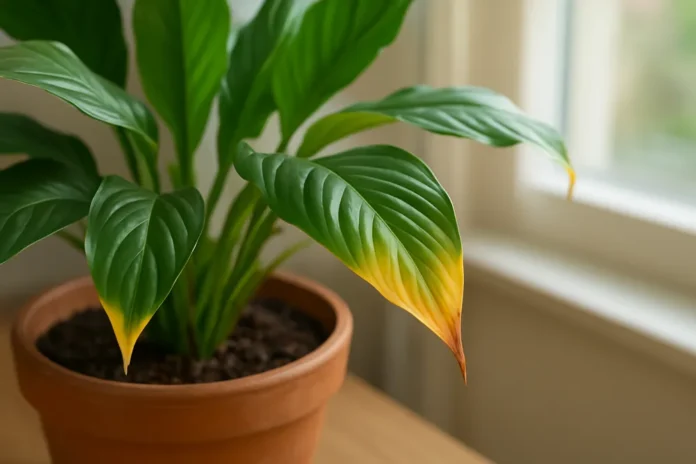
Peace lily leaf tips usually turn yellow because the plant is stressed by watering problems, dry air, mineral buildup, or aging foliage. In some cases, excess fertilizer, poor drainage, or root damage can also cause yellowing at the tips.
If your peace lily is developing yellow leaf tips, the problem is usually tied to everyday care rather than a serious disease. A peace lily is quick to show stress, and leaf tips are often the first place where that stress appears.
Yellowing at the ends of the leaves can happen when the soil stays too wet, gets too dry, or contains a buildup of salts from fertilizer or tap water. Low humidity, temperature swings, crowded roots, and normal leaf aging can also cause tip discoloration. The key is understanding the pattern, because a few yellow tips mean something very different from widespread yellowing across the whole plant.
What Yellow Tips Usually Mean on a Peace Lily
On peace lilies, yellow tips are a general stress signal. The plant is telling you that moisture, roots, water quality, or growing conditions are slightly off. Tip yellowing often appears before the rest of the leaf changes color, curls, or browns.
The exact shade matters. Pale yellow tips often point to mild watering inconsistency, mineral buildup, or low humidity. Yellow tips that quickly turn tan or brown usually suggest the tissue has dried out after stress. If entire leaves are turning yellow from the base inward, that more often signals overwatering, poor drainage, or old leaf replacement rather than a tip-specific problem.
- A few older leaves with yellow tips can be normal aging.
- Many leaves showing matching yellow tips usually means a care issue affecting the whole plant.
- Yellow tips plus drooping often point to watering stress.
- Yellow tips plus mushy stems or sour soil smell can indicate root trouble.
- Yellow tips with crust on the soil or pot rim often suggest fertilizer or tap water salt buildup.
Watering Problems Are the Most Common Cause
Soil That Gets Too Dry
Peace lilies like evenly moist soil, but not bone dry potting mix. If the plant repeatedly wilts before you water it, the delicate tissue at the leaf tips can yellow first. This happens because the plant loses moisture faster than it can move water to the farthest parts of the leaf.
Dry-stress tip damage is especially common in warm rooms, bright windows, or homes with air conditioning running constantly. The leaves may also look limp, folded, or slightly crispy around the edges.
Soil That Stays Too Wet
Overwatering can also cause yellow tips, even though many gardeners expect only brown or mushy symptoms. When roots stay waterlogged, they cannot absorb oxygen properly. That root stress reduces the plant's ability to move water and nutrients, which can show up first as yellowing at the leaf ends.
If wet soil is the issue, you may also notice overall yellowing, drooping despite damp soil, a heavy pot, or fungus gnats around the container.
- Underwatering tends to cause wilted leaves, dry potting mix, and tips that later turn brown.
- Overwatering tends to cause yellowing with persistently moist soil, weak growth, and possible root rot.
- Both problems can happen in the same plant if it cycles between very dry and very wet conditions.
Tap Water and Salt Buildup Can Burn the Tips
Peace lilies can be sensitive to minerals and chemicals in household water, especially fluoride, chlorine, and dissolved salts. Over time, these compounds build up in the potting mix and collect where water evaporates most quickly, including the leaf tips. The result can be yellowing that later becomes brown and papery.
This issue is more likely if you fertilize regularly, never flush the pot thoroughly, or use softened water. Water softeners often add sodium, which many houseplants dislike.
- White crust on the soil surface or pot rim
- Yellow or brown tips on multiple leaves
- Otherwise firm leaves with no major wilting
- Symptoms that slowly worsen even when watering seems consistent
Rainwater, distilled water, or filtered water is often gentler for peace lilies, especially if your tap water is hard or heavily treated.
Low Humidity Often Shows Up at the Ends of the Leaves
Peace lilies are tropical plants, so they prefer moderate to higher humidity than many homes provide. In dry indoor air, the leaf tips lose moisture faster than the roots can replace it. That moisture loss can start as pale yellowing before the tissue dries to brown.
Humidity-related tip yellowing is most common in winter, in homes with forced-air heat, or near vents that blow directly on the plant. It can also happen when a peace lily sits close to a sunny window where the air warms and dries out during the day.
- Dry air usually affects exposed leaf margins and tips first.
- The center of the leaf often stays green at first.
- New growth may emerge smaller if dry air continues for a long time.
Too Much Fertilizer Can Cause Yellow Tip Burn
Peace lilies do not need heavy feeding. When fertilizer is applied too often or too strongly, the excess salts can draw moisture away from root tissue and damage the leaf tips. This type of stress often begins as yellowing, then shifts to brown necrotic edges.
A fertilizer problem is especially likely if yellow tips appeared shortly after feeding, if the product was used at full strength, or if the plant was fertilized during winter when growth was slow.
- Feed lightly during active growth, not heavily year-round.
- Avoid fertilizing a wilted or dry plant.
- Skip fertilizer if the plant is struggling until growth looks normal again.
Root Stress and Drainage Problems Can Trigger Tip Yellowing
Healthy roots are the foundation of healthy leaves. If a peace lily is root-bound, sitting in compacted mix, or growing in a pot without proper drainage, the roots cannot take up water evenly. That inconsistent moisture supply often shows first at the leaf tips.
Root stress can come from several sources: a pot that has become too crowded, old potting mix that stays soggy or dries into a hard mass, or root rot from prolonged wet conditions. In all of these cases, the plant may have enough water in the pot but still be unable to use it efficiently.
Signs the Root Zone Is the Real Problem
- Water runs straight through the pot without soaking in well
- The plant wilts very quickly after watering
- Roots circle densely around the root ball
- The potting mix smells sour or musty
- Leaves yellow and droop even though the soil is moist
Light and Temperature Stress Can Contribute
Peace lilies grow best in bright, indirect light. Too little light usually causes slow growth and weak flowering, but harsh direct sun can scorch leaves and create pale yellow areas near the tips and edges. Strong afternoon sun is especially likely to bleach or burn tender foliage.
Temperature stress can do something similar. Cold drafts, hot dry air from vents, and sudden indoor temperature swings can all disrupt the plant's moisture balance. The result may be yellow tips, curling, or patchy edge damage.
- Keep peace lilies out of intense direct afternoon sun.
- Avoid placing them beside heaters, AC vents, or drafty doors.
- Aim for steady indoor temperatures with no sudden extremes.
Sometimes Yellow Tips Are Just Normal Aging
Not every yellow tip means the plant is in trouble. Older peace lily leaves naturally decline over time, and the process can begin at the tip or along the margin. If only one or two of the oldest outer leaves are affected while new leaves look healthy, aging is a reasonable explanation.
Aging leaves usually yellow gradually and are not accompanied by widespread drooping, mushy stems, or rapid decline. In a healthy plant, this kind of occasional leaf loss is part of normal growth.
How to Tell Which Cause Fits Your Plant
Because several problems can cause the same symptom, the best clue is the overall pattern. Look at the soil, the placement of the plant, how often you water, and whether the damage is limited to a few leaves or spread across the whole plant.
Common Patterns and What They Suggest
- Yellow tips with dry, droopy leaves usually point to underwatering or very dry air.
- Yellow tips with wet soil and limp growth often suggest overwatering or root stress.
- Yellow tips on many leaves with crusty soil commonly indicate fertilizer salts or mineral-heavy water.
- Yellowing on the side facing a window can mean light scorch.
- Only older outer leaves affected may simply be age-related.
If your peace lily recently changed locations, was repotted, or was fertilized, that timing is also important. Yellow tips often develop soon after a stress event, even if the full symptom takes a week or two to appear.
How to Prevent Yellow Tips From Coming Back
Once a leaf tip turns yellow, that damaged tissue usually does not turn green again. The goal is to stop new damage and support healthy new growth. Prevention is usually about consistency more than intensity.
- Water when the top inch of soil starts to dry, not on a rigid calendar.
- Use a pot with drainage holes and a loose indoor potting mix.
- Empty saucers or cachepots so roots do not sit in standing water.
- Use filtered, distilled, or rainwater if your tap water is harsh.
- Fertilize lightly during active growth and flush the soil occasionally.
- Keep humidity moderate, especially during winter heating season.
- Place the plant in bright, indirect light instead of direct sun.
If the plant is severely root-bound or the soil has become dense and tired, repotting into fresh mix can make a major difference. Peace lilies often respond quickly once the root environment improves.
When Yellow Tips Signal a Bigger Problem
Yellow tips alone are usually manageable, but they can be the first sign of more serious stress if other symptoms are present. Watch for rapid whole-leaf yellowing, blackened stems, foul-smelling soil, collapsing growth, or roots that are brown and mushy.
These signs suggest the plant may be dealing with root rot or long-term moisture imbalance rather than a simple humidity or water-quality issue. The sooner the root cause is corrected, the better the chances of recovery.
FAQ
Should I Cut Off Yellow Tips on My Peace Lily?
You can trim yellow tips for appearance, but only remove the discolored part and follow the natural shape of the leaf. Use clean scissors, and avoid cutting deep into healthy green tissue.
Can Yellow Tips Turn Green Again?
No. Once the tip tissue has been damaged, it will not return to green. What you want to see is healthy new growth and no spreading damage on existing leaves.
Is Tap Water Bad for Peace Lilies?
It can be, depending on your water quality. Peace lilies are sometimes sensitive to fluoride, chlorine, and dissolved minerals, which may build up in the soil and cause yellow or brown tip burn.
Do Peace Lilies Get Yellow Tips From Low Humidity?
Yes. Dry indoor air can cause the leaf tips to lose moisture faster than the plant can replace it, which often leads to yellowing followed by browning.
Why Do My Peace Lily Tips Turn Yellow After Fertilizing?
That usually points to fertilizer salt stress. Too much fertilizer, or feeding too often, can burn roots and show up as yellowing or browning at the tips of multiple leaves.
Can Overwatering Cause Yellow Tips Instead of Brown Tips?
Yes. Overwatering can stress roots and reduce oxygen in the potting mix, which may first show up as yellow tips before the leaves develop broader yellowing, drooping, or rot symptoms.
Are Yellow Tips a Sign of Disease on Peace Lilies?
Usually not. Yellow tips are much more commonly caused by watering issues, salt buildup, dry air, or root stress than by disease.
How Often Should I Water a Peace Lily to Avoid Yellow Tips?
There is no single schedule that works in every home. Most peace lilies do best when watered after the top inch of soil begins to dry, with adjustments for season, light, pot size, and indoor humidity.
Want to fix peace lily problems faster? Read our guide to the best indoor plant watering tools and moisture meters so you can prevent yellow tips before they spread.
