

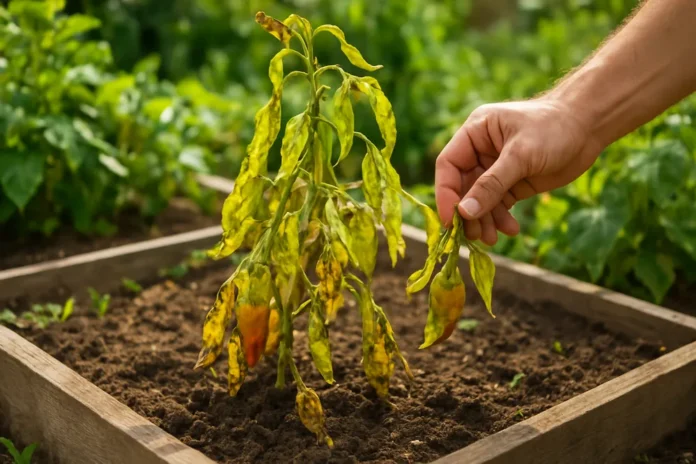
Pepper plants usually start dying because of root stress, watering problems, temperature extremes, pests, or disease. In many cases, several small stresses happen at once and push the plant into decline.
A pepper plant rarely collapses for no reason. When I see a once-healthy plant start wilting, yellowing, dropping leaves, or stalling out, the real issue is usually below the surface or tied to a pattern that has been building for days or weeks. Pepper plants are productive, but they are not especially forgiving when water, temperature, roots, and disease all start working against them at the same time.
The good news is that a dying plant often gives clues before it is truly lost. Leaves may curl, fade, spot, or droop. Stems may soften or darken. Fruit may stop developing, sunscald, or rot. If you match those symptoms to the right cause early enough, you can often save the plant or at least keep the problem from spreading to the rest of your pepper plant bed.
What a Dying Pepper Plant Usually Looks Like
Pepper plants decline in a few predictable ways. Some wilt even when the soil is wet. Others turn pale and stop growing. Some suddenly collapse at the base, while others slowly lose lower leaves, flower poorly, and set fewer peppers each week. The pattern matters because different causes affect different parts of the plant first.
- Leaves drooping morning and evening, not just during hot afternoon sun
- Yellow leaves starting at the bottom or across the whole plant
- Brown, black, or water-soaked spots on leaves, stems, or fruit
- Flowers dropping before fruit forms
- Fruit staying small, misshapen, or rotting on the plant
- Stem damage near the soil line
- White, mushy, or foul-smelling roots when lifted from the pot or dug gently
A pepper that looks bad by late afternoon but perks up again in the evening may simply be reacting to heat. A pepper that stays limp overnight, despite moist soil, usually has a deeper root or vascular problem. That distinction helps narrow things down fast.
Watering Mistakes Are the Most Common Cause
Overwatering and Poor Drainage
Overwatering is one of the biggest reasons pepper plants fade and die, especially in containers and raised beds with dense soil. Peppers like consistent moisture, but they do not want roots sitting in soggy ground. When soil stays wet for too long, roots lose oxygen, begin to rot, and can no longer support the top growth.
- Leaves look limp even though the soil feels wet
- Yellowing spreads across older leaves first
- Growth stalls and the plant looks dull rather than crisp
- Lower stems may darken or soften
- Roots appear brown instead of firm and white
When I am unsure whether a pepper is too dry or too wet, I stop looking at the leaves first and check the root zone. A wilted pepper in wet soil worries me much more than a wilted pepper in dry soil, because waterlogged roots can decline quickly once rot starts.
Underwatering and Uneven Moisture
Peppers also suffer when they are allowed to swing from bone dry to soaking wet. Underwatering stresses the plant, causes blossom drop, weakens fruit development, and makes foliage look tired and thin. Repeated drought stress can also make peppers more vulnerable to mites, aphids, and sun injury.
Container peppers dry out much faster than in-ground plants, particularly during fruiting. A black nursery pot in full summer sun can heat up and dry from the edges inward before the top of the soil looks especially dry.
- Leaves wilt in heat and do not fully recover by morning
- Leaf edges may crisp or curl inward
- Flowers and tiny fruit drop off
- Soil pulls away from the inside edge of the pot
- Fruit may develop thin walls or uneven ripening
Temperature Stress Can Push Peppers Into Rapid Decline
Pepper plants like warmth, but there is a difference between warm and punishing. Cold snaps, chilly nights, sudden heat waves, and strong dry wind can all make a healthy pepper look like it is dying. Peppers are especially sensitive after transplanting, during flowering, and when loaded with fruit.
Cold Damage
Cool weather slows roots and weakens growth. Once temperatures dip too low, leaves can look gray-green, droopy, or water-soaked. Repeated cold nights can stop growth so completely that the plant never really catches up. Frost or near-frost conditions can turn tissue black and collapse tender stems.
Heat and Sun Stress
Extreme heat can cause flowers to drop, leaves to curl, and fruit to sunscald. If the root system is small or moisture is inconsistent, the plant may seem to fail all at once during a hot spell. In very intense afternoon sun, even established peppers can wilt dramatically.
- Bleached or tan patches on fruit or upper leaves
- Leaf curl during hot hours
- Sudden flower drop in very warm weather
- Little new growth despite regular feeding
- Plant looks stressed most after hot wind or reflected heat from patios and walls
Root Trouble Often Hides Until the Plant Is Already Struggling
Root problems are easy to miss because the damage starts where you cannot see it. A pepper may look fine for a while, then slowly weaken as roots run out of space, stay cold, rot in compacted soil, or get damaged during transplanting or cultivation.
Rootbound Container Plants
A rootbound pepper can dry out too fast, take up nutrients poorly, and stop growing even if it is flowering. If roots are circling tightly around the container and there is very little soil left to hold water, the plant can decline quickly in summer.
Compacted or Poorly Drained Garden Soil
Heavy clay and compacted planting holes can act like bowls that trap water around the root ball. That is especially common when a pepper is planted into amended soil surrounded by tighter native soil. The top may look acceptable at first, but roots often struggle to move outward.
Transplant Shock
Peppers dislike rough handling. Bent stems, disturbed roots, sudden sun exposure, and planting out too early can all cause leaves to droop and growth to pause. Mild transplant shock usually passes, but severe root damage can set the plant back enough that disease and stress finish the job.
Nutrient Problems Can Make a Pepper Look Like It Is Dying
A true nutrient deficiency is not always the main cause, but it often shows up alongside root stress, poor pH, and irregular watering. If roots cannot function well, the plant cannot access nutrients properly even when fertilizer is present.
- Nitrogen shortage often causes older leaves to yellow gradually and overall growth to slow
- Magnesium issues may show as yellowing between veins on older leaves
- Calcium-related stress can contribute to blossom end rot on fruit, especially when moisture is inconsistent
- Excess fertilizer can burn roots and leaf edges, creating decline that looks like drought
I see more peppers hurt by too much fertilizer than by too little in containers. Strong synthetic feed in dry soil can burn roots, while repeated high-nitrogen feeding can produce lush top growth that is more vulnerable to pests and less stable in heat.
If you suspect both a nutrient issue and a watering issue, fix the watering pattern first. Feeding a stressed pepper before the roots recover often makes the plant look worse, not better.
Pests Can Drain, Distort, and Weaken the Whole Plant
Small insects can do a surprising amount of damage, particularly in hot, dry weather or on plants already stressed by water or heat. A heavy infestation weakens the plant directly and can also spread disease.
Aphids
Aphids cluster on tender new growth, buds, and the undersides of leaves. They suck sap, curl leaves, deform tips, and leave behind sticky honeydew that can lead to sooty mold.
Spider Mites
Spider mites are a classic problem during hot, dry stretches. Leaves may look speckled, dusty, bronzed, or faded before they drop. Fine webbing often appears only when the infestation is already advanced.
Thrips, Whiteflies, and Flea Beetles
Thrips scar foliage and can spread viruses. Whiteflies weaken leaves and create sticky residue. Flea beetles chew many tiny holes, which is most serious on young plants that need every leaf to establish.
- Distorted new leaves often point to sap-sucking insects
- Fine speckling and bronze foliage suggest mites
- Sticky leaves or ants climbing the plant often suggest aphids or whiteflies
- Tiny holes in leaves are more consistent with chewing pests than disease
Disease Is More Likely when the Plant Is Already Stressed
Peppers can be hit by fungal, bacterial, and viral problems. Some attack roots, some spot leaves, and some move through the plant's vascular system so it wilts even when soil moisture seems fine. Disease becomes more likely when foliage stays wet, air flow is poor, temperatures swing, or plants are crowded.
Root and Crown Rots
Phytophthora and other rot organisms thrive in wet soil. Plants may wilt suddenly, stems near the soil line may darken, and fruit may show soft rot. Once crown tissue is badly damaged, recovery is unlikely.
Leaf Spot and Blight
Bacterial leaf spot and fungal leaf diseases cause dark lesions, yellow halos, and leaf drop. A pepper can survive some spotting, but severe defoliation weakens it enough that fruit production crashes.
Wilt Diseases and Viruses
Wilt diseases can cause one-sided drooping, steady decline, or total collapse. Viruses often create mottled leaves, distorted growth, and stunting that does not improve no matter how well the plant is watered or fed.
When a pepper stays wilted in moist soil and only one branch or one side goes down first, I start thinking beyond simple watering problems. That uneven pattern often points to vascular damage, stem injury, or a disease moving through part of the plant.
Stem and Fruit Problems Can Signal a Larger Issue
Sometimes the first visible clue is not in the leaves at all. The stem base may narrow, darken, or soften. Fruit may rot at the blossom end, develop pale sunken patches, or stop enlarging. These symptoms often reflect stress that started in the roots or with moisture management.
- Soft or dark stem bases suggest rot or severe damping-type damage
- Blossom end rot on peppers is linked to calcium transport problems, often tied to erratic watering
- Sunken tan patches on fruit often indicate sunscald after leaves thin out
- Cracked fruit can come from sudden heavy watering after a dry spell
How to Narrow Down the Real Cause
The fastest way to diagnose a dying pepper is to stop treating the whole plant as one symptom. Look at the soil, roots, stem base, newest leaves, oldest leaves, and fruit separately. Then compare what changed first.
- Check soil moisture several inches down, not just the dry-looking surface.
- Look at the stem right at soil level for darkening, constriction, cracks, or mushiness.
- Inspect the undersides of leaves and new growth for insects, webbing, and sticky residue.
- Compare old leaves to new leaves. Old-leaf yellowing often suggests root or nutrient stress, while twisted new growth often points to pests, herbicide drift, or virus.
- If the plant is in a pot, slide it out carefully and inspect the roots for circling, rot, or a sour smell.
- Review the weather and watering pattern from the last two weeks, because pepper decline often follows stress with a delay.
This kind of simple troubleshooting usually tells you more than adding fertilizer or spraying a general product right away. Many home gardeners lose peppers because they react too quickly with the wrong treatment while the original root problem keeps getting worse.
When a Pepper Plant Can Be Saved and when It Should Be Removed
A pepper plant has a good chance of recovering if the growing tip is still alive, the stem is firm, and the roots are mostly healthy. Plants stressed by temporary drought, mild transplant shock, or a manageable pest outbreak often rebound well once conditions stabilize.
Recovery is less likely when the crown is rotting, the roots are mostly brown and mushy, the plant has a serious wilt disease, or virus symptoms are widespread. In those cases, keeping the plant in place can waste time and increase the chance of problems spreading.
- Save it if new growth still looks viable and the stem base is solid
- Remove it if the crown is collapsing or the plant is chronically wilted in moist soil
- Remove it if virus symptoms are severe and persistent across the whole plant
- Do not compost obviously diseased plants unless you are confident your compost system runs hot enough
How to Prevent the Same Problem Next Season
Prevention matters because peppers are more productive when they never have to recover from a major setback. Healthy growth early in the season usually carries through to better flowering, stronger fruit set, and fewer disease problems later on.
- Plant after the soil has warmed and nights are reliably mild
- Use loose, well-drained soil and containers with excellent drainage holes
- Water deeply and consistently rather than lightly every day
- Mulch to reduce moisture swings and protect shallow roots
- Space plants for air flow and avoid wetting foliage late in the day
- Inspect new growth weekly for aphids, mites, and other early pest activity
- Rotate peppers and other nightshades when disease has been a problem
- Feed moderately and avoid pushing soft, overly lush growth
In my own garden, the peppers that perform best are the ones that never face repeated stress swings. Warm soil, steady moisture, and clean airflow solve more pepper problems than any rescue treatment ever will.
FAQ
Can a Wilted Pepper Plant Recover?
Yes, if the roots and stem base are still healthy. Peppers often recover from short-term drought, mild heat stress, or transplant shock, but recovery is much less likely if the crown is rotting or a wilt disease is involved.
Why Is My Pepper Plant Wilting Even Though the Soil Is Wet?
That usually points to root trouble rather than simple thirst. Overwatering, poor drainage, root rot, crown rot, or a vascular disease can all prevent the plant from moving water properly.
Should I Cut Off Dying Leaves From a Pepper Plant?
Remove leaves that are badly diseased, fully dead, or heavily infested with pests. Leave mildly damaged leaves in place if the plant still needs them for energy, especially when overall foliage is already sparse.
Why Are the Flowers Falling Off My Pepper Plant?
Flower drop is often caused by heat stress, cold nights, watering swings, or general plant stress. Excess nitrogen can also encourage leafy growth at the expense of fruit set.
How Do I Know if My Pepper Plant Has Root Rot?
A pepper with root rot often stays wilted in wet soil and may yellow or stall out. If you inspect the roots, they are usually brown, soft, or foul-smelling instead of white and firm.
Can Too Much Fertilizer Kill a Pepper Plant?
Yes. Overfertilizing can burn roots, damage leaf edges, and create lush but weak growth that is more vulnerable to stress and pests.
Why Is Only One Side of My Pepper Plant Dying?
One-sided decline often suggests stem injury, partial root damage, or a vascular problem moving through part of the plant. It is less typical of simple whole-plant thirst.
Is It Better to Replace a Dying Pepper Plant or Wait?
If the plant still has healthy roots, a firm stem, and viable new growth, it may be worth keeping. If the crown is rotting, the plant is badly diseased, or growth is severely distorted, replacement is often the better choice.
Want to keep the rest of your peppers productive? Read our guide to the best pepper fertilizers, disease controls, and watering tools so you can fix stress fast and grow a stronger harvest.
