

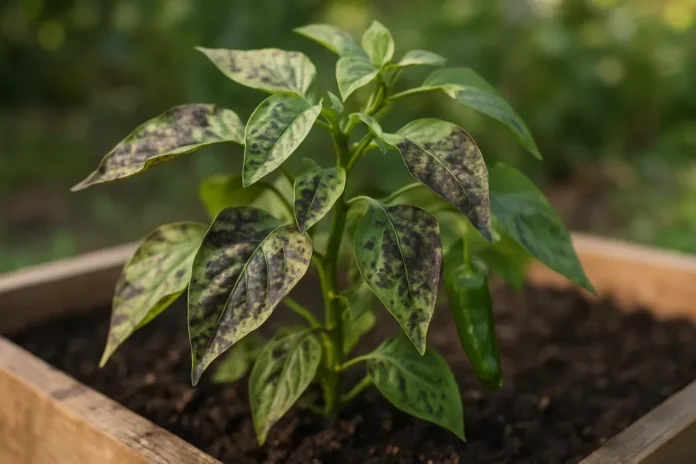
Pepper leaves usually turn black from cold injury, disease, water-related stress, or tissue damage that causes leaves to darken and die. In many cases, the black color is dead leaf tissue rather than a nutrient problem.
Seeing pepper leaves turning black can be alarming, especially when the plant looked healthy just days before. In my garden, this symptom often shows up suddenly after a cold night, a stretch of soggy weather, or the first signs of disease. The good news is that blackened leaves usually follow a pattern, and that pattern can tell you a lot.
Sometimes the leaf goes dark around the edges first. Sometimes you get black spots with yellow halos. Other times the whole leaf looks water-soaked, collapses, and then turns dark. Those differences matter because peppers react in specific ways to cold, bacterial problems, fungal issues, sun stress, and root trouble.
If your pepper plant leaves are turning black, start by looking at where the damage appears, how quickly it spread, and what the weather has been doing. Once you match the symptom pattern to the likely cause, the fix becomes much clearer.
What Black Pepper Leaves Usually Mean
Black on pepper leaves is usually a sign that plant tissue has died or is in the process of dying. Peppers do not normally develop healthy black foliage the way some ornamental plants do, so when green leaves darken, there is almost always some kind of stress behind it. The key question is whether the damage came from the environment, a pathogen, or a problem in the root zone.
Environmental damage tends to affect exposed leaves first and often shows up after a clear event like a cold snap, harsh sun, or a watering mistake. Disease-related blackening is more likely to appear as distinct spots, lesions, or patches that spread from leaf to leaf. Root and drainage issues often cause a more general decline first, then darkened or collapsing foliage later.
- Whole leaf turning dark after a chilly night usually points to cold injury
- Small black or brown spots with yellow margins often suggest bacterial or fungal leaf disease
- Dark, blistered, or corky areas after overwatering can indicate edema or root stress
- Blackened edges on leaves after intense heat or transplant shock may be scorch followed by tissue death
- Soft, water-soaked dark leaves can mean rot, blight, or severe stress
Cold Damage Is One of the Most Common Causes
Peppers are warm-season plants and they dislike cold more than many gardeners expect. Temperatures below about 55 degrees Fahrenheit can stress them, and a night in the low 40s or colder can leave leaves darkened, limp, and eventually black. This is especially common in spring when young transplants go out a little too early or when an unexpected cold front rolls through.
Cold-injured leaves often look dull, wilted, or water-soaked at first. Within a day or two, those damaged areas may turn dark purple-black or fully black as the cells collapse. The most exposed leaves usually show the worst symptoms first, while sheltered inner growth may stay healthier.
When I suspect cold damage, I look at the newest exposed leaves and the top half of the plant first. If the darkening appeared almost overnight and the stems are still firm, cold is far more likely than a spreading disease.
- Damage appears suddenly after cool nights
- Upper or outer leaves are hit hardest
- Leaves may droop before turning black
- Stems can remain alive even if several leaves are lost
Mild cold damage is often survivable. If the stem and growing tip remain firm and green inside, the plant may push new growth once the weather warms. Badly blackened leaves will not recover, but the plant itself can still bounce back if the roots were not harmed.
Bacterial Leaf Spot Can Create Dark Lesions
One of the more common disease causes of black pepper leaves is bacterial leaf spot. This problem often begins as tiny water-soaked specks that become dark brown to black. As the spots enlarge, the surrounding tissue may yellow, and heavily infected leaves can look ragged, scorched, or peppered with dead patches.
Bacterial leaf spot spreads fastest in warm, wet conditions, especially when leaves stay damp from rain, overhead watering, or crowded planting. Splashing water helps move the bacteria from one leaf to another. It can also arrive on infected transplants or contaminated seed.
- Small dark spots that increase in number
- Yellow halo around some lesions
- Leaf drop after spotting becomes severe
- Spots may also show up on stems or fruit
Once bacterial spotting is active, badly affected leaves rarely improve. The goal becomes slowing spread and protecting new growth. Good airflow, avoiding wet foliage, removing heavily infected leaves, and cleaning up plant debris all help reduce pressure.
Fungal Diseases and Blights Can Blacken Leaves
Several fungal problems can make pepper leaves turn black or nearly black, though the exact look varies. Alternaria and similar leaf spot diseases often begin as brown or black lesions that expand over time. In humid conditions, the damaged tissue can merge into larger dead patches, making the leaf look burned or darkened.
In severe cases, fungal disease may begin low on the plant where humidity stays trapped and soil can splash onto leaves. This lower-to-upper spread is a useful clue. If the oldest, lowest leaves spot first and the problem slowly climbs, fungal disease is more likely than sudden cold damage.
Fungal issues are encouraged by poor airflow, dense foliage, mulch or soil splashing onto leaves, and frequent overhead watering. Wet weather does a lot of the work for them. If you water late in the day and leaves stay damp overnight, disease pressure rises quickly.
If you need to prune off damaged leaves, disinfect pruners between plants and avoid working when foliage is wet. That simple habit prevents a lot of accidental disease spread in pepper rows and containers.
Overwatering, Poor Drainage, and Edema Can Darken Foliage
Not every blackened leaf is caused by infection. Peppers with soggy roots often develop stressed, blotchy foliage that can darken as tissue breaks down. In containers, this is especially common when potting mix stays wet for too long, drainage holes are blocked, or the plant is watered on a fixed schedule instead of by soil moisture.
Edema is another possibility. This happens when roots take up water faster than leaves can use it, causing cells to burst. On peppers, edema can show up as blistered, corky, or darkened patches, usually after cool, cloudy, wet conditions or inconsistent watering. It may not look exactly like classic black spot disease, but it can still make leaves appear ugly and damaged.
- Leaves may droop even though soil is wet
- Lower leaves often show stress first
- Roots may smell sour or look brown if rot has begun
- Container plants are at higher risk when drainage is poor
When roots sit in waterlogged soil, oxygen drops and roots cannot function normally. That weakens the whole plant and makes it more vulnerable to secondary problems, including rot and leaf drop. Blackened leaves from root stress will not green back up, but healthy new growth is possible if drainage improves soon enough.
Sunscald, Wind, and Physical Damage Can Lead to Black Patches
Peppers that move suddenly from protected conditions into intense sun and wind can develop scorched tissue. At first the leaf may bleach, bronze, or look papery. Later, those damaged areas can turn dark brown or black as the dead tissue dries out. This often happens after hardening off was rushed or a nursery-grown plant went straight into full sun.
Hail, rough handling, and even leaves pressed against a hot wall or reflective surface can also injure tissue badly enough to darken. These cases are usually more random than disease. You may see damage only on one side of the plant or only on the most exposed leaves.
- Damage is worse on the sunniest or windiest side
- No clear spotting pattern spreads from leaf to leaf
- New leaves may emerge normally once conditions improve
- Recent transplanting often lines up with this kind of stress
Less Common Causes Worth Considering
A few other issues can cause pepper leaves to go black, though they are less common in home gardens. Herbicide drift can distort leaves and leave scorched, darkened patches. Severe fertilizer burn can cause leaf edge death that turns brown-black. Pest damage from sap-sucking insects can also weaken leaves enough that they darken later, especially if disease takes hold in the wounds.
Some peppers also develop purple-black coloration from anthocyanin pigments, especially in bright sun or cool weather. This is more common on stems, veins, or naturally dark varieties, and it is not the same as dead black tissue. Healthy pigment looks smooth and intact. Damaged tissue looks collapsed, spotty, papery, or water-soaked.
I do not rush to blame nutrients when leaves turn black. Nutrient deficiencies in peppers usually show up as yellowing, interveinal chlorosis, or poor growth first, while true blackening usually means injury, disease, or dead tissue.
How to Tell Which Cause Is Most Likely
The fastest way to narrow this down is to match the pattern on the plant with recent conditions. Ask yourself whether the problem appeared overnight or crept in gradually. Think about temperature swings, rainfall, watering habits, and whether the plant was recently transplanted or crowded by neighboring foliage.
- If the blackening happened very suddenly after cool weather, suspect cold injury.
- If you see many distinct spots, especially with yellow around them, suspect bacterial or fungal disease.
- If the plant is in wet soil and looks generally stressed, suspect drainage trouble or root issues.
- If only exposed leaves are damaged after transplanting or heat, suspect sun, wind, or physical stress.
- If the dark color looks smooth and natural rather than dead or collapsing, consider normal pigmentation.
Also inspect stems and fruit. Disease that affects several plant parts at once is more concerning than a few damaged leaves. Check the underside of leaves, the lower canopy, and the soil line. Those areas often reveal whether the problem is spreading or whether it was a one-time stress event.
What to Do Right Now to Help Your Pepper Plant
Start by removing the immediate stress if you can. Protect peppers from cold nights, let soggy soil dry to an appropriate level, and stop overhead watering if disease is suspected. If a few leaves are badly blackened, you can prune them off to improve airflow and make the plant easier to monitor.
Avoid the temptation to throw multiple treatments at the plant all at once. Extra fertilizer, more water, and aggressive pruning can make a stressed pepper worse. The better approach is to correct the likely cause, then watch the new growth. Old damaged leaves may never recover, so the plant's progress is measured by whether fresh leaves come in clean and healthy.
- Move potted peppers to shelter if nights are too cool
- Water only when the top layer of soil has begun to dry, rather than by the calendar
- Keep water off leaves whenever possible
- Space plants well and prune lightly for airflow
- Remove fallen diseased leaves and plant debris from the soil surface
- Check drainage in containers and raised beds
If disease is spreading rapidly, you may need a labeled copper or fungicidal product depending on the problem and local recommendations. For home gardeners, sanitation and moisture control are often the most important first moves. Products help most when started early and used alongside better growing conditions, not instead of them.
Can Black Pepper Leaves Recover?
In most cases, blackened leaf tissue does not turn green again. Once pepper tissue is dead, it stays dead. What you are hoping for is plant recovery, not leaf recovery. If the stems, crown, and roots remain healthy enough, peppers can replace damaged foliage with new growth.
Recovery is most likely after mild cold damage, brief watering mistakes, or temporary sun stress. It is less likely when the plant has advanced root rot, widespread bacterial disease, or stem damage. If new leaves emerge clear, green, and properly shaped, that is a strong sign the plant is moving in the right direction.
How to Prevent It From Happening Again
Healthy peppers are much less likely to develop blackened leaves when their basic growing conditions stay steady. Most prevention comes down to temperature protection, careful watering, clean foliage, and enough airflow around the plant.
- Wait for reliably warm weather before planting peppers outdoors
- Harden off transplants gradually before exposing them to full sun and wind
- Use well-drained soil and containers with open drainage holes
- Water deeply but not constantly, allowing the upper soil layer to dry slightly between waterings
- Mulch to reduce soil splash, but keep mulch from pressing against stems
- Avoid overhead watering late in the day
- Give plants enough spacing so leaves dry quickly after rain
- Start with healthy transplants and remove diseased debris promptly
If you grow peppers every year, crop rotation helps too. Avoid planting them in the same spot season after season when disease has been a problem. That one change can lower repeat issues more than many gardeners expect.
FAQ
Should I Remove Black Leaves From My Pepper Plant?
Remove leaves that are mostly black, mushy, or heavily spotted, especially if disease is likely. If only a small area is damaged, you can leave the leaf temporarily and watch whether the problem spreads.
Can Overwatering Really Make Pepper Leaves Turn Black?
Yes. Overwatering can stress roots, trigger edema, and encourage rot, all of which can lead to darkened or collapsing leaves. Container peppers are especially vulnerable when drainage is poor.
Will Black Pepper Leaves Turn Green Again?
No. Blackened tissue is usually dead and will not recover. Focus on whether the plant produces healthy new growth after conditions improve.
Are Black Spots on Pepper Leaves Always a Disease?
Not always. Cold injury, edema, sunscald, and physical damage can also create dark patches. Distinct spreading spots with yellow halos are more suggestive of disease than random blackened areas.
Can Cold Weather Kill a Pepper Plant Overnight?
Yes, especially if temperatures drop well below what peppers tolerate. Even if the plant survives, leaves may turn dark and collapse within a day or two after the cold exposure.
Is It Safe to Eat Peppers From a Plant with Black Leaves?
Often yes, if the fruit itself is healthy and free of rot or lesions. Do not eat fruit that is soft, spotted, moldy, or otherwise diseased.
Do Nutrient Deficiencies Make Pepper Leaves Turn Black?
Usually not as a first symptom. Most nutrient problems cause yellowing, pale leaves, or poor growth before any dark necrotic areas appear.
Need a reliable fix fast? Read our guide to the best pepper plant sprays, fungicides, and care products so you can stop leaf damage and protect new growth.
