

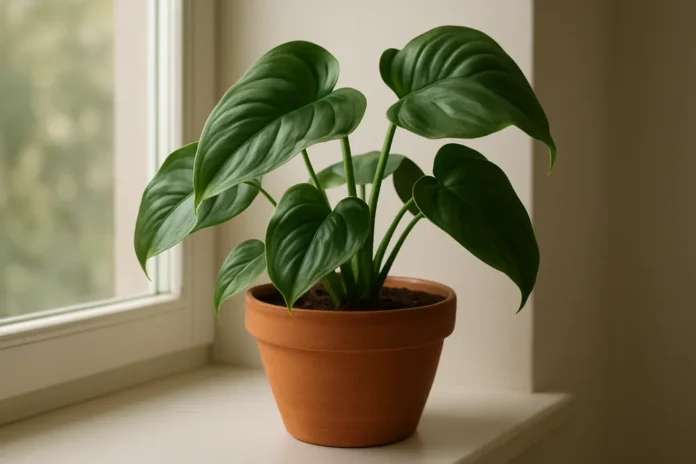
Philodendron leaves usually curl because the plant is stressed by watering problems, dry air, temperature extremes, or root and pest issues. The curling is the plant's way of reducing stress and protecting its foliage.
Curling leaves on a philodendron can look alarming, especially when the plant was full and easygoing just a week or two ago. In most cases, philodendron leaves curling is not a mysterious disease. It is a stress signal, and the good news is that philodendrons often recover well once you correct the cause.
I usually start by looking at the whole pattern instead of one leaf. Are the newest leaves tight and twisted, or are older leaves folding inward? Is the soil bone dry, soggy, or compacted? Has the plant been near an AC vent, a heater, or a sunny window? Those clues matter because curling can come from several different problems that need very different fixes.
If your philodendron is curling but not yet turning mushy or collapsing, you likely still have time to turn it around. The sections below walk through the most common reasons, how to tell them apart, and what usually works in a real home growing setup.
What Curling Leaves Usually Mean on a Philodendron
Leaf curling is a protective response. When a philodendron is struggling to manage water, temperature, humidity, or root function, it may roll or cup its leaves to reduce moisture loss and limit surface exposure. That means the symptom itself is useful, but it does not point to only one cause.
The direction and texture of the curl can help. Leaves that curl inward and feel dry often suggest dehydration, dry air, or heat stress. Leaves that curl while the soil stays wet may point to root damage from overwatering. Twisted, distorted, or sticky new leaves make me think about pests first, especially thrips, spider mites, or aphids.
- Older leaves curling first often suggests watering stress or root issues.
- New leaves curling first can suggest low humidity, pest feeding, or trouble unfurling.
- Crispy edges alongside curling often point to dryness, salt buildup, or too much direct sun.
- Yellowing with curling often points to root stress, overwatering, or nutrient imbalance.
- Soft stems, a sour smell, or constantly wet mix suggest root rot or poor drainage.
When I diagnose curling, I pay more attention to which leaves changed first than to the curl itself. A plant with curled oldest leaves and dry mix tells a very different story from a plant with deformed newest leaves and sticky residue.
Underwatering and Inconsistent Watering
The most common reason philodendron leaves curl is simple watering stress. If the potting mix dries too much, the plant cannot keep enough water moving to the leaf tissue. The leaves respond by curling inward to slow moisture loss. This is especially common in warm rooms, small pots, and chunky mixes that dry fast.
Inconsistent watering can be just as stressful as chronic dryness. A plant that goes from very dry to soaked over and over may produce curling, limpness, and brown edges because the roots are never working under stable conditions.
Signs the Plant Is Too Dry
- Leaves curl inward or droop at the same time
- Pot feels very light when lifted
- Soil pulls away from the sides of the pot
- Leaf edges feel crisp or papery
- Older leaves may yellow and drop after repeated dry spells
How to Fix It
Water thoroughly until excess drains from the bottom, then let the top inch or two dry before watering again. Do not switch to a rigid calendar. Philodendrons use water faster in summer, in brighter light, and when rootbound. Use your finger, a wooden skewer, or the weight of the pot to judge moisture instead.
If a dry potting mix has become hydrophobic and water runs down the sides, I like to water in two passes about ten minutes apart. The first pass re-wets the mix, and the second actually hydrates the root ball.
Overwatering and Root Stress
Many gardeners assume curled leaves always mean the plant needs more water, but overwatering can cause the same symptom. When roots sit in poorly aerated, constantly wet soil, they lose access to oxygen and begin to weaken or rot. Once that happens, the plant cannot absorb water properly, even though the pot is wet.
That mismatch confuses people. The soil feels moist, yet the leaves still curl and droop. In severe cases, the stems soften, the base smells sour, or older leaves turn yellow before dropping.
Clues That Point to Overwatering
- Soil stays wet for many days after watering
- Leaves curl but also look limp or swollen
- Yellowing happens along with curling
- Pot has poor drainage or no drainage hole
- Black, mushy, or foul-smelling roots are present if you inspect the root ball
How to Fix It
Let the mix dry to an appropriate level before watering again. If the soil is dense and slow draining, repot into a more open aroid mix with ingredients like potting soil, bark, and perlite. Trim any dead roots, use a pot with a drainage hole, and avoid watering again until the root zone has some air. Recovery is usually judged by healthier new growth, not by the oldest damaged leaves flattening back out right away.
Low Humidity and Dry Indoor Air
Philodendrons tolerate average household humidity better than some tropicals, but very dry air can still make leaves curl, especially newer leaves that are trying to unfurl. This shows up often in winter when heating systems run constantly or when the plant sits near a vent.
Low humidity tends to cause leaves to curl or fold while also looking a bit thin, dull, or stuck. You may see crispy tips, torn unfurling leaves, or a new leaf that opens unevenly because the outer tissue dried too quickly.
Ways to Raise Humidity Without Overdoing It
- Move the plant away from heating and cooling vents
- Group plants together to create a slightly more humid microclimate
- Use a small humidifier nearby if your home is very dry
- Keep the plant out of harsh midday sun that speeds moisture loss
- Avoid misting as your main fix because it helps only briefly
You do not need to chase tropical greenhouse humidity, but a modest increase can make a big difference for new foliage. Stable conditions matter more than dramatic swings from very dry to very humid.
Temperature Stress and Harsh Light
Philodendrons prefer warm, steady indoor temperatures. Cold drafts, hot windows, space heaters, and air conditioning blasts can all trigger leaf curling. Sudden temperature changes are often more damaging than mildly imperfect temperatures that stay steady.
Too much direct sun can cause a similar response. While philodendrons enjoy bright light, most common houseplant types prefer bright indirect light. Strong afternoon sun can overheat the leaf surface, causing curling, fading, or scorch patches.
Look for These Environmental Clues
- Curling is worse on the side facing a window
- Leaves have pale, bleached, or scorched spots
- The plant sits near a drafty door, cold glass, radiator, or vent
- Curling started after moving the plant to a brighter location
- New growth is smaller after a heat or cold event
Aim for a location with bright filtered light and temperatures that stay roughly in the comfortable household range. If the plant receives direct sun, sheer curtains or pulling it a few feet back from the window often solves the issue.
Pests That Distort or Curl Leaves
Sap-sucking pests can absolutely make philodendron leaves curl. Spider mites, thrips, aphids, and mealybugs damage tender tissue, especially on new growth. Because they feed by piercing plant cells, the leaves may emerge twisted, puckered, curled, or stunted.
Thrips and spider mites are especially sneaky because you may notice the damage before you notice the insects. A plant can look dry or stressed even when watering is fine.
Pest Signs to Watch For
- Tiny moving dots, especially on leaf undersides
- Fine webbing between leaves or along stems
- Silvery streaks, stippling, or scarred patches
- Sticky residue or distorted new growth
- Leaves curling unevenly rather than in a uniform pattern
If you find pests, isolate the plant first. Rinse the foliage, especially the undersides, and treat with insecticidal soap, horticultural oil, or another houseplant-safe control labeled for the pest you found. Repeat treatments are usually necessary because eggs and hidden insects survive the first round.
A philodendron with curling that keeps getting worse even after you correct watering often turns out to have pests. I always inspect the newest leaf and the underside of the next two leaves before I assume the problem is purely environmental.
Potting Mix, Rootbound Plants, and Fertilizer Issues
Sometimes curling comes from a less obvious root-zone problem. If the plant is badly rootbound, water may rush straight through the pot and leave the root mass dry inside. On the other hand, a dense peat-heavy mix can stay too wet and stale. Both conditions stress the roots and can produce curled leaves.
Excess fertilizer and salt buildup can also curl leaf edges and tips. This happens when fertilizer is applied too often, used too strongly, or builds up in the pot because the soil is rarely flushed thoroughly.
Root and Feeding Problems to Consider
- Roots circling densely around the pot
- Water running through too quickly with little absorption
- White crust on the soil surface or pot rim
- Burned tips after recent fertilizing
- Stalled growth alongside curling
Repot rootbound plants into a container just one size larger with a well-draining mix. If fertilizer buildup is the issue, flush the pot thoroughly with water and pause feeding for a few weeks. During active growth, a diluted balanced fertilizer works better than heavy feeding.
How to Tell Which Cause Is Most Likely
Because so many issues can look alike, use a simple process of elimination. Start with the root zone, then the room conditions, then pests. In my experience, that order solves most cases faster than focusing on the leaf alone.
- Check the soil moisture two inches down and lift the pot to judge its weight.
- Confirm the pot has a drainage hole and the mix is not staying soggy for a week.
- Look at where the plant sits relative to heaters, AC vents, cold windows, and direct sun.
- Inspect the newest leaves, leaf undersides, and stem joints for insects, webbing, or sticky residue.
- Think back to any recent changes such as repotting, fertilizing, moving, or missed watering.
Uniform curling across several leaves after the pot dried hard usually points to underwatering or dry air. Curling plus yellowing in wet soil suggests overwatering or root trouble. Twisted new leaves with speckling or silvering strongly suggest pests.
What Recovery Looks Like
Once you correct the cause, the plant may not instantly flatten every curled leaf. Older damaged leaves often stay somewhat misshapen, especially if they dried out, scorched, or were distorted by pests while developing. The better sign is that new leaves come in smoother, fuller, and easier to unfurl.
Give the plant a couple of weeks of stable care before making more changes. Frequent shifting between extra watering, repotting, fertilizing, and moving to different light levels can add stress instead of fixing it.
- Watch new growth more than old damage
- Prune only leaves that are mostly dead or unattractive
- Keep watering even and avoid dramatic dry-outs
- Hold fertilizer until the plant is actively growing well again
- Expect gradual improvement rather than overnight recovery
FAQ
Will Curled Philodendron Leaves Uncurl Again?
Sometimes mildly stressed leaves relax after the plant is rehydrated or moved into better conditions, but many damaged leaves stay partly curled. The best sign of recovery is healthy new growth.
Can Low Humidity Alone Make Philodendron Leaves Curl?
Yes, especially with new leaves that are trying to unfurl. Very dry indoor air often causes curling, crispy tips, or leaves that open unevenly.
Should I Cut Off Curled Leaves?
Only if they are badly damaged, mostly brown, or you dislike how they look. Slightly curled leaves can still photosynthesize and support recovery.
How Often Should I Water a Curling Philodendron?
Water based on soil dryness rather than a fixed schedule. Most philodendrons do best when the top inch or two of soil dries before the next thorough watering.
Can Too Much Sun Make Philodendron Leaves Curl?
Yes. Direct sun, especially hot afternoon sun, can overheat the leaves and cause curling, fading, and scorched patches.
Do Pests Cause Curled New Leaves on Philodendron?
Yes, particularly thrips, spider mites, and aphids. They often distort tender new growth before you notice the insects themselves.
Is Curling a Sign of Root Rot?
It can be if the soil stays wet and the plant also shows yellowing, limpness, or a sour smell from the pot. Curling by itself is not proof of root rot.
Still troubleshooting your plant? Read our philodendron care guide and top-rated houseplant soil roundup to fix stress fast and keep new leaves growing clean and full.
