

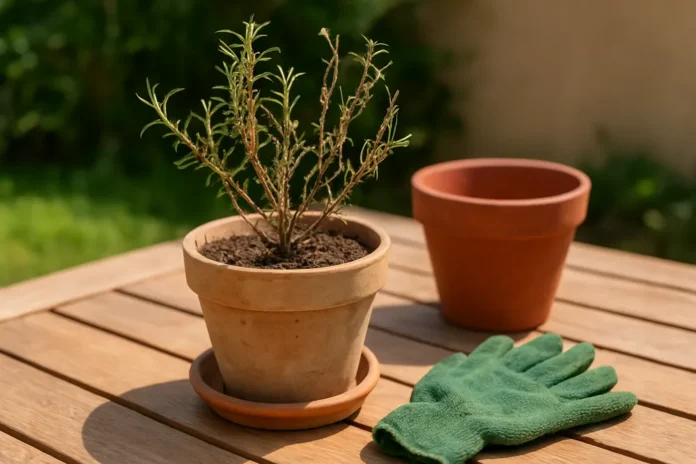
Rosemary usually stops growing because it is getting too little sun, staying too wet, sitting in heavy soil, or struggling with root stress. Slow growth can also come from cold weather, overfeeding, or a pot that no longer suits the plant.
When rosemary stops growing, it is usually reacting to conditions that are a little too comfortable for softer herbs and a little too harsh for a Mediterranean shrub. Home gardeners often assume a slow rosemary needs more water or more fertilizer, but those are not always the right fixes. In my experience, rosemary grows best when it gets strong sun, fast drainage, and a chance to dry slightly between waterings.
A healthy rosemary plant should put on fresh tips during its active season, hold its color well, and keep a dense, sturdy shape. If yours has been sitting still for weeks or months, the cause is often hiding in the roots, the soil texture, the amount of direct light, or the way the plant came through winter. The good news is that rosemary is usually very clear once you know what signs to look for.
What Normal Rosemary Growth Looks Like
Before assuming something is wrong, it helps to know how rosemary normally behaves. It is not a fast, lush herb like basil. Even a healthy plant can grow in a compact, woody, restrained way, especially in a pot or during cooler months. New growth usually appears as softer green tips at the ends of stems, while older stems gradually turn woody and firm.
Growth also depends on the season. In many parts of the U.S., rosemary slows down sharply in fall and winter, then picks up again in spring once days are longer and temperatures warm. Indoor rosemary often looks especially stalled because household light levels are much weaker than gardeners expect.
- Healthy rosemary growth is usually compact, firm, and slightly slow, not floppy or overly lush.
- New tips should be green and flexible, not blackened, mushy, or brittle.
- A mature plant may spend energy thickening woody stems instead of making dramatic top growth.
- Container plants often grow more slowly than those planted in a warm, sharply drained garden bed.
Too Little Sun Is One of the Most Common Reasons
Rosemary needs a lot of direct sunlight to grow well. This plant is native to bright, exposed conditions, and it really shows when light is inadequate. If your rosemary sits on a porch with filtered light, indoors near a window that gets only a few hours of sun, or in a crowded bed shaded by taller plants, growth can nearly stop.
Low light often causes more than slow growth. The plant may become thin, pale, stretched, or sparse in the center. Instead of making sturdy side shoots, it may produce weak stems that lean toward the brightest direction. Indoors, even south-facing windows can be marginal in winter, especially in northern states.
When I troubleshoot rosemary, light is usually my first suspect if the plant looks alive but inactive. A plant can survive in bright shade for quite a while, but survival and real growth are not the same thing with rosemary.
- Best growth usually comes with at least 6 to 8 hours of direct sun.
- Weak, stretched stems often point to insufficient light.
- Indoor rosemary is much more likely to stall than outdoor rosemary.
- Shifting the plant into stronger sun often helps, but do it gradually if it has been in lower light.
Overwatering and Poor Drainage Can Shut Down Growth
Rosemary dislikes wet feet. One of the biggest reasons it stops growing is that the roots are staying too moist for too long. In heavy garden soil, saucer-filled containers, or decorative pots without drainage, oxygen around the roots drops and the plant cannot function normally. Growth slows first, then foliage color declines, and eventually stems may die back.
This is where many gardeners get tripped up. A stressed rosemary can look dull and tired, which gets mistaken for thirst. More water then makes the problem worse. If the soil is damp several inches down, watering again is not the answer.
Root stress from excess moisture can also make the plant more vulnerable to root rot. Once roots begin to decay, rosemary often seems frozen in place. It may hold onto older leaves for a while without actually growing, then suddenly drop needles or brown out in patches.
- Soggy soil limits oxygen to the roots and slows or stops growth.
- Yellowing, blackened stems, and needle drop can follow chronic overwatering.
- Containers must have drainage holes, not just a layer of rocks at the bottom.
- Rosemary usually prefers the soil to dry somewhat between deep waterings.
Heavy Soil Keeps Roots From Doing Their Job
Even if you are not watering too often, the soil itself may be the problem. Rosemary grows best in soil that drains quickly and does not stay dense after rain or irrigation. Clay-heavy or compacted soil holds too much moisture and can physically restrict the roots, making it hard for the plant to expand or take up nutrients efficiently.
In containers, ordinary moisture-retentive potting mix can be too rich and too wet for rosemary. Many bagged mixes are designed for general container flowers or vegetables, not woody herbs that prefer a leaner, airier root zone. A rosemary planted in the wrong mix may stay alive but barely grow.
If I am potting rosemary, I never aim for a fluffy, water-holding mix like I would for basil or petunias. I want a mix that dries at a reasonable pace and leaves the root zone feeling airy, not swampy.
- Clay soil often causes slow growth because it stays wet and compact.
- Raised beds or mounded planting areas can help in poorly drained yards.
- Container rosemary often performs better in a grittier, fast-draining mix.
- Roots that sit in dense soil may struggle even when the top of the soil looks dry.
Pot Problems and Root Stress Are Easy to Miss
A pot that is too large, too small, or poorly drained can all contribute to stalled rosemary. In an oversized pot, soil may stay wet too long around a modest root ball. In an undersized pot, the roots may circle densely and dry out too quickly. Both situations can slow growth dramatically.
Repotting stress can also pause growth for a while, especially if roots were disturbed heavily or the plant was moved during hot weather. Rosemary does not always bounce back instantly after transplanting. It often needs time to rebuild roots before you see much top growth.
If you slide the root ball out and see thick circling roots with very little soil left, the plant may be rootbound. If you see dark, soft, unpleasant-smelling roots, that is more consistent with rot. Both can lead to a rosemary that seems stuck.
- A pot that is slightly larger than the root ball is usually better than a much bigger one.
- Unglazed terra cotta often suits rosemary because it helps the soil dry faster.
- Rootbound plants may need more frequent watering but also a better-sized container.
- Fresh top growth usually returns only after the roots are comfortable again.
Cold Temperatures and Winter Stress Slow Rosemary Down
Rosemary does not grow much in cold conditions, and in some climates it takes real damage from winter exposure. If your plant has been through freezing temperatures, cold winds, or repeated freeze-thaw cycles, it may spend a long time recovering instead of actively growing. Even where it survives, winter injury can kill stem tips and delay spring growth.
Indoor overwintered rosemary can struggle too, just for different reasons. Warm indoor air, dry heat, and low winter sun often create a stressful combination. The plant may not die, but it may not put on meaningful growth until it returns to stronger light and better airflow.
After winter, be patient before pruning heavily. Dead tips are common, but living wood lower on the plant may still push new shoots once temperatures stabilize.
Too Much Fertilizer Can Cause Problems Too
Many gardeners reach for fertilizer when a plant stalls, but rosemary is not a heavy feeder. In fact, too much fertilizer can create weak, sappy growth or stress the roots with salt buildup. If the plant is already struggling from poor drainage or low light, feeding it more will not solve the underlying issue.
That said, rosemary grown in containers for a long time can eventually run short on nutrients. This usually shows up as generally weak growth rather than dramatic deficiency patterns. A light feeding during active growth may help if everything else is in good shape, but rosemary rarely wants aggressive feeding.
- Overfertilizing can stress roots and reduce overall plant health.
- Container plants may need modest feeding during spring and summer.
- High-nitrogen fertilizer can push tender growth that is less sturdy and less aromatic.
- Fix light, drainage, and root health before assuming fertilizer is the answer.
Pruning Mistakes and Harvest Habits Can Stall New Growth
Rosemary generally responds well to light trimming, but severe pruning into old, leafless wood can slow recovery. If a plant has been cut back hard past the green growing tips, it may take a long time to push new shoots, and some bare woody sections may never fill back in.
On the other hand, never harvesting or lightly pinching rosemary can also leave it less shapely over time. Regular small trims during the growing season often encourage branching. The key is to cut where there is still healthy green growth, not deep into old wood unless you know the variety and plant condition can handle it.
I look closely at where the last cuts were made. If all the pruning happened on brown, woody stems with no green below, I lower my expectations for quick regrowth and focus on whether new shoots are emerging from healthier sections.
Pests, Disease, and Hidden Damage Can Suppress Growth
Rosemary is not the most pest-prone herb, but it is not immune. Spider mites, aphids, whiteflies, and scale can reduce vigor, especially on indoor plants or those with poor airflow. A plant under pest pressure often grows very slowly because so much energy is going into basic survival.
Fungal issues are more common when moisture stays high around the foliage and roots. Root rot is the major concern, but foliar diseases can also weaken the plant. Sometimes the clue is subtle, such as sticky leaves, fine webbing, distorted tips, black spotting, or localized dieback.
- Check stem joints and leaf undersides for insects or webbing.
- Poor airflow and wet foliage increase disease pressure.
- Root problems can exist even when the top of the plant still looks partly green.
- A stalled plant with dieback in patches deserves a close inspection before more watering or feeding.
How to Tell Which Problem You Are Actually Dealing With
Because rosemary reacts similarly to several stresses, diagnosis works best when you look at the whole pattern rather than one symptom. Start with the environment. How many hours of direct sun does it really get? How fast does the soil dry? Is it in a pot with drainage? Has it recently been moved, repotted, pruned, or exposed to cold?
Then look at the plant itself. Pale, stretched stems suggest low light. Drooping with damp soil suggests root stress. Blackening stems and a sour-smelling root ball point more strongly to rot. Crispy tips after winter often line up with cold damage or drying winds. Dense circling roots suggest a container problem rather than a nutrient problem.
- Confirm the amount of direct sunlight the plant receives.
- Check soil moisture below the surface, not just on top.
- Inspect the container drainage and overall soil texture.
- Look for recent stress events such as repotting, freezes, or heavy pruning.
- Examine stems and leaves for pests, dieback, or unusual discoloration.
- Inspect the roots if the plant is in a pot and the problem remains unclear.
What Helps Rosemary Start Growing Again
Rosemary recovery is usually about correcting conditions, not forcing growth. Give it stronger sun if possible, improve drainage, and let the soil dry moderately between waterings. If the plant is in a poor mix, repot into a faster-draining medium in a container with proper drainage holes. If roots are rotting, trim away obviously dead roots and reduce watering while the plant reestablishes.
If the issue is seasonal slowdown, the best fix may simply be patience. Wait for warmer temperatures and longer days before judging the plant too harshly. If cold damage occurred, prune only dead material once new growth begins to show where the living wood starts.
Avoid throwing every remedy at the plant at once. More water, more fertilizer, a bigger pot, and a heavy prune can compound stress. Rosemary responds best when one or two obvious problems are corrected and the plant is allowed time to settle.
- Increase direct sun exposure whenever possible.
- Use sharply drained soil and a container with drainage holes.
- Water deeply, then allow some drying before watering again.
- Hold fertilizer to a light hand, especially on stressed plants.
- Prune lightly into green growth, not deep into bare wood.
- Expect recovery to show first as fresh green tips, not instant size increase.
FAQ
Can Rosemary Recover After Not Growing for Months?
Yes, if the roots and main stems are still healthy. Rosemary often resumes growth once light, drainage, temperature, or root issues are corrected, but it may take several weeks to show clear improvement.
Should I Fertilize Rosemary if It Looks Stuck?
Not automatically. Rosemary is often stalled by low light or excess moisture, and fertilizer will not fix those problems. Feed lightly only if the plant is otherwise healthy and actively growing.
Why Is My Potted Rosemary Alive but Not Getting Bigger?
Container rosemary often stalls from limited sun, moisture-retentive potting mix, or root stress. It may survive in a pot for a long time without making much new growth if the root zone stays too wet or cramped.
Does Rosemary Stop Growing in Winter?
Yes, it commonly slows down or pauses in winter, especially in cooler climates or indoors with weak light. That slowdown is normal unless you also see dieback, yellowing, rot, or pest problems.
How Often Should I Water Rosemary?
There is no perfect calendar schedule because pot size, weather, and soil type all matter. In general, rosemary prefers a deep watering followed by some drying time rather than constantly moist soil.
Can a Rosemary Plant Be Too Rootbound to Grow Well?
Yes. A tightly rootbound plant may dry out too fast, struggle to take up nutrients, and slow its top growth. If roots are circling densely with little soil left, a better-sized pot can help.
Will Rosemary Regrow From Old Woody Stems?
Sometimes, but not reliably. Rosemary is much more likely to regrow well when cuts are made above healthy green growth rather than deep into bare, older wood.
Want the best setup for stronger herb growth? Read our guide to the best soil mixes, pots, and grow lights for rosemary so you can fix slow growth with the right tools.
