

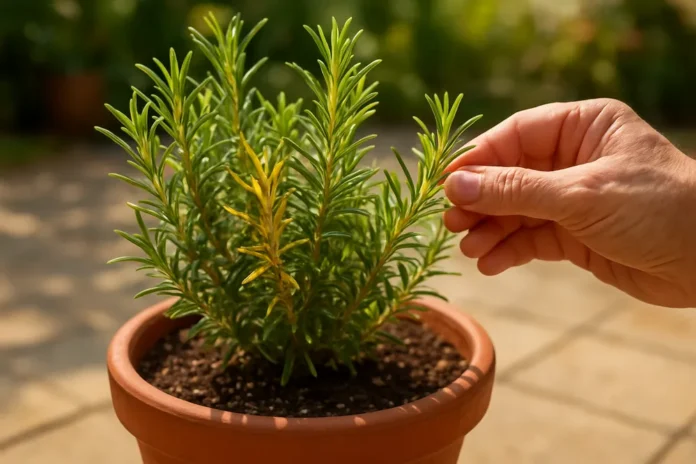
Rosemary usually turns yellow because its roots are staying too wet, its soil drains poorly, or it is not getting enough sun. Cold damage, nutrient imbalance, pests, and container stress can also cause yellow foliage.
When rosemary leaves turn yellow, I usually start by looking at water and light before anything else. Rosemary is one of those plants that likes conditions many gardeners accidentally improve to death. It wants sharp drainage, plenty of sun, and a chance to dry a bit between waterings. When that balance is off, the plant often shows it with pale or yellow needles.
The tricky part is that yellowing does not always mean the same thing. A rosemary plant in a heavy potting mix can yellow from soggy roots, while one in a small container during summer may yellow because it dries too hard between waterings. Add in winter stress, nutrient issues, and the occasional pest problem, and you need to read the whole plant instead of guessing from leaf color alone.
If your yellowing rosemary still has some green growth and a woody stem that feels alive, there is a good chance you can turn it around. The key is matching the pattern of yellowing with the most likely cause so you fix the real problem instead of piling on fertilizer or extra water.
What Yellow Rosemary Is Trying to Tell You
Rosemary does not usually yellow for no reason. The color change is a stress signal, and the pattern matters. If the whole plant looks washed out and limp, I think about roots first. If only inner or lower growth is yellowing while tips stay green, I consider old foliage shed, crowding, or light issues. If yellow leaves are followed by browning and needle drop, the problem has often been going on longer than it first appeared.
- Uniform yellowing across much of the plant often points to watering or root stress.
- Yellowing with blackened stems or mushy soil suggests rot from poor drainage.
- Pale yellow growth with weak, stretched stems can indicate not enough sunlight.
- Yellow speckling or stippling may come from spider mites or sap-sucking pests.
- Older interior needles turning yellow while outer tips remain healthy can be normal aging, especially on dense mature plants.
When I diagnose rosemary, I do not start with the yellowest leaf. I start with the pot, the soil texture, and whether the newest growth still looks firm. Rosemary can hang onto damaged foliage for a while, so the root zone usually tells the story faster than the leaves do.
Overwatering Is the Most Common Cause
For most home gardeners, overwatering is the top reason rosemary turns yellow. This plant is adapted to lean, fast-draining conditions, and it does not like roots that stay damp day after day. When the soil stays wet, oxygen drops around the roots and they stop functioning well. The leaves then lose color, often becoming dull green first and then yellow.
Overwatered rosemary can look confusing because it may appear dry and limp even while the soil is wet. That happens because damaged roots cannot move water properly. Gardeners see wilt, assume the plant is thirsty, and water again. Unfortunately, that usually makes the problem worse.
- Soil feels wet several days after watering
- Leaves yellow broadly rather than in neat patches
- Stems feel soft near the base
- Needles drop when touched
- The pot feels unusually heavy for its size
If your rosemary is in a container, empty any saucer after watering so roots are not left sitting in trapped water. In the ground, look at where the plant sits after rain. A low pocket near a downspout, sprinkler overspray, or dense clay area can keep rosemary too wet even when the rest of the garden seems fine.
Poor Drainage and Root Rot Often Follow Wet Soil
Sometimes the issue is not how often you water but where the water goes. Rosemary needs a root zone that drains quickly. If it is planted in heavy clay, compacted garden soil, or a decorative pot without drainage holes, yellowing can progress into root rot. Once roots start rotting, the plant may decline quickly.
Root rot usually shows up as yellowing that does not improve even when watering is reduced. You may also notice a sour smell in the potting mix, black or brown roots instead of pale firm ones, or stems that darken at the crown. At that point, the plant is struggling below the surface more than above it.
- Use containers with real drainage holes, not just a pebble layer at the bottom
- Choose a gritty potting mix that dries fairly quickly
- Avoid planting rosemary in spots where puddles linger after rain
- Do not mulch thickly right against the woody base
If I suspect root rot in a potted rosemary, I slide the root ball out and look before I do anything else. Healthy roots are light colored and firm. Dark, mushy roots tell me the plant needs immediate drainage correction, not fertilizer.
Underwatering Can Also Cause Yellow Leaves
Although rosemary hates soggy conditions, it is not a cactus. In hot weather, especially in terra cotta pots or small containers, it can dry so hard that foliage yellows before it browns and crisps. This is more common on patios, balconies, and sunny porches where reflected heat speeds up moisture loss.
A drought-stressed rosemary often feels dry all the way through the root ball. The leaves may yellow from the tips inward, curl slightly, or become brittle. Unlike overwatered plants, the pot feels very light and pulls away from the sides as the soil shrinks.
The fix is not constant dampness. Rosemary does best with a deep watering followed by a partial dry-down, not frequent shallow sips. That pattern encourages healthier roots and keeps the plant from bouncing between dust-dry stress and swampy stress.
Too Little Sun Makes Rosemary Pale and Weak
Rosemary wants full sun, and in much of the U.S. that means at least six to eight hours of direct light. In lower light, it often becomes sparse, floppy, and pale yellow-green rather than richly colored. The plant may survive for a while, but it rarely looks vigorous.
Indoor rosemary commonly struggles here. A bright kitchen may look sunny to us, but it is still much dimmer than outdoor light. When rosemary spends too long in weak light, yellowing may be accompanied by stretched stems, wider spacing between leaf clusters, and a general loss of fragrance.
- Plants lean strongly toward the light source
- New growth is thin, soft, or elongated
- Interior growth yellows as outer foliage shades it
- The plant stays damp longer because lower light slows water use
If sunlight is the issue, moving the plant to a brighter location usually helps more than changing fertilizer. Once rosemary gets the light it wants, new growth tends to come in greener and tighter.
Nutrient Problems Are Possible but Less Common
Many gardeners assume yellow leaves mean the plant needs feeding, but rosemary is not a heavy feeder. In fact, too much fertilizer can do more harm than too little. That said, a rosemary that has lived in the same container soil for a long time can eventually show nutrient depletion, especially as older potting mix breaks down and drains poorly.
Nitrogen deficiency usually causes an overall pale look and slow growth rather than sudden dramatic yellowing. Iron-related chlorosis can also happen, particularly in alkaline or poorly draining soil, where leaves yellow but veins may stay somewhat greener. Still, if the roots are wet or the plant lacks sun, feeding alone will not solve it.
- Suspect nutrient shortage when growth is slow, pale, and the plant has been in the same container mix for a long time
- Suspect fertilizer burn when yellowing follows a strong feeding and leaf tips also brown
- Treat nutrition as a secondary cause unless watering and light already look right
I rarely reach for fertilizer first with rosemary. When I do feed it, I use a light hand because rich, fast growth is not the goal. This herb stays healthier when it grows sturdy and slightly lean instead of soft and lush.
Pests Can Cause Yellow Speckling and Decline
Rosemary is fairly tough, but pests do show up, especially on stressed indoor or patio plants. Spider mites are a common culprit. They feed by piercing plant tissue, which creates fine yellow stippling or a dusty, faded look. If the infestation grows, leaves may yellow more broadly and drop.
Aphids, whiteflies, and scale can also contribute to yellowing, though they are less common on rosemary than on many softer herbs. Look closely along stems and on leaf undersides. A hand lens helps if the yellowing looks spotted rather than uniform.
- Fine webbing between stems or leaves points to spider mites
- Sticky residue can suggest aphids or whiteflies
- Small bumps attached to stems may be scale insects
- Pest issues are more likely when air is dry and the plant is already stressed
Pest damage alone may not be the whole problem. I often see mites show up after rosemary has already been weakened by poor light or uneven watering. If you only treat the insects but leave the plant stressed, the yellowing usually returns.
Cold Damage and Winter Stress Can Yellow Rosemary
Rosemary can handle some chill, but cold tolerance depends on the variety, plant maturity, drainage, and your winter conditions. In colder parts of the U.S., yellowing may appear after freezes, icy wind, or repeated temperature swings. Sometimes the damage does not show immediately. The plant may look dull green at first, then yellow as injured tissue declines.
Winter-wet soil makes cold injury worse because saturated roots are more vulnerable. Container plants are especially exposed since their roots get colder than roots in the ground. If your rosemary yellowed after a cold snap, check whether only outer growth is damaged or whether stems are also turning brown and brittle.
Do not rush to prune everything right away after cold injury. Wait until you can clearly see what growth is alive. New buds often reveal the true extent of damage better than a quick cut made too early.
Container Problems That Often Get Overlooked
Potted rosemary has a shorter margin for error than rosemary in the ground. The roots can become crowded, the mix can compact over time, and watering swings happen faster. A plant that did well last year may start yellowing simply because its potting mix has broken down and now holds too much moisture.
The container itself matters too. Oversized pots stay wet longer than a rosemary root system can handle, while tiny pots may dry out so fast that the plant is repeatedly stressed. Decorative cachepots without drainage are another common troublemaker because excess water collects where you cannot see it.
- Repot when roots are dense and circling heavily
- Refresh old potting mix if it has become fine, compacted, or slow to drain
- Match pot size to root size instead of jumping several sizes up
- Use terra cotta if you tend to overwater, since it dries faster than plastic
How to Tell Which Cause Is Most Likely
The fastest way to figure out yellow rosemary is to combine leaf pattern, soil condition, and growing location. Start by asking whether the soil is staying wet or going bone dry. Then look at the newest growth, the amount of direct sun, and whether the yellowing is uniform, spotted, or concentrated on older interior foliage.
- Feel the soil several inches down or inspect the root ball if the plant is potted.
- Check drainage holes and note whether water escapes freely.
- Look for signs of stretch, weak growth, or shade from nearby plants.
- Inspect stems and leaf undersides for mites, scale, or sticky residue.
- Think back to recent weather, fertilizer use, repotting, or cold exposure.
If multiple clues point the same way, trust the pattern. For example, yellow leaves plus wet soil plus low light almost always lead me toward a moisture problem before anything else. Yellow tips plus an extremely light pot in hot weather push me toward drought stress instead.
How to Help Rosemary Recover
Once you identify the cause, keep the fix simple. Rosemary responds best when you correct the growing conditions rather than trying five remedies at once. New growth is the best sign of recovery. Existing yellow leaves may not turn green again, so judge progress by whether fresh growth emerges healthy and firm.
- Reduce watering frequency if the soil stays wet too long
- Move the plant into stronger direct sun if light is lacking
- Repot into a gritty, faster-draining mix if the root zone is compacted or sour
- Trim only clearly dead stems after stress has stabilized
- Treat pests promptly if you find active infestations
- Feed lightly only if the plant truly appears depleted and root conditions are healthy
Recovery can take a few weeks in warm weather and longer in cooler seasons. Be patient, but not passive. If the plant keeps yellowing after you cut back water, for example, the deeper issue may be root rot or poor light rather than simple overwatering.
When Yellowing Is Normal and when It Is Serious
A few yellow needles inside an older, dense rosemary shrub are not always a problem. Plants naturally shed some interior growth as branches age and become shaded. If the outer tips are green, fragrant, and producing healthy new growth, a little yellowing inside the plant can be normal.
It becomes more serious when yellowing spreads quickly, affects new growth, is paired with stem dieback, or follows a period of wet soil. Widespread needle drop, mushy stems, and a bad smell from the root zone all point to a bigger issue that needs prompt correction.
FAQ
Will Yellow Rosemary Leaves Turn Green Again?
Usually no. Once rosemary needles have turned fully yellow, they often stay that way or drop. The real sign of improvement is healthy green new growth after you correct the cause.
Should I Cut Off Yellow Parts of My Rosemary?
You can remove clearly dead or brittle growth, but avoid heavy pruning while the plant is stressed unless stems are obviously dead. Keeping some foliage helps you monitor whether the plant is stabilizing.
How Often Should I Water Rosemary?
There is no fixed schedule that fits every plant. Water when the soil has partially dried and the plant actually needs it, then water thoroughly rather than giving frequent shallow drinks.
Can Rosemary Recover From Root Rot?
It can if the damage is caught early and the plant is moved into much better drainage. Severe rot with major stem collapse is harder to reverse.
Why Is My Indoor Rosemary Turning Yellow?
Indoor rosemary often yellows from a combination of low light and overly wet soil. Dry indoor air and spider mites can also add to the problem.
Does Rosemary Need Fertilizer for Yellow Leaves?
Not usually. Yellowing rosemary is more often caused by moisture, drainage, or light problems than by a nutrient shortage.
Can Cold Weather Make Rosemary Yellow?
Yes. Freeze injury, cold wind, and winter-wet soil can all lead to yellowing, especially in container plants or less hardy varieties.
Want the best fix for a struggling herb plant? Read our guide to the best soil mixes, pots, and plant treatments for rosemary so you can correct yellowing before the damage spreads.
