

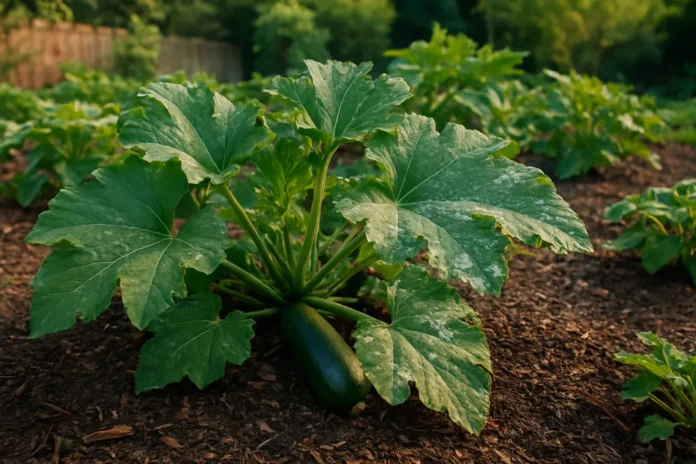
White patches on zucchini leaves are often either normal silvery variegation or powdery mildew. Less often, they can be linked to pest feeding, leaf damage, or stress that affects healthy growth.
Seeing white patches spread across zucchini leaves can be unsettling, especially when the plant looked vigorous just a few days earlier. The tricky part is that not every white mark means trouble. Many zucchini varieties naturally develop pale, silvery mottling on their leaves, while others develop white patches because of disease, insect activity, or stress.
When I look at a squash plant with white patches on leaves, I start by asking a simple question: does the white area look built into the leaf, or does it look like something sitting on top of it? That one distinction usually points me in the right direction fast. Once you know whether you are dealing with harmless variegation or a real problem like powdery mildew, the next steps become much more straightforward.
Below, I will walk through the most common causes, how to tell them apart, and what actually helps zucchini recover without wasting time on treatments the plant does not need.
The Most Common Reason Is Normal Leaf Variegation
A lot of home gardeners assume white patches automatically mean disease, but many zucchini plants naturally have silver or pale white markings on their leaves. This is called variegation, and it is especially common in zucchini and other summer squash. These markings are part of the leaf tissue itself, not a coating or infection.
Normal variegation usually appears as angular, symmetrical pale areas that follow the leaf veins. The leaf still feels healthy, firm, and flat. There is no fuzzy growth, no dusting that rubs off on your fingers, and no shrinking or collapse of the tissue around the patch.
- The white or silver areas appear on multiple leaves in a similar pattern.
- The patches are inside the leaf surface rather than powdery on top.
- The plant continues growing, flowering, and setting fruit normally.
- The leaf edges stay green and healthy rather than curling or browning.
I have seen plenty of gardeners remove perfectly healthy leaves because they mistook natural variegation for mildew. If the pattern looks clean, even, and repeated from leaf to leaf, I treat it as a variety trait unless another symptom shows up.
Powdery Mildew Is the Main Disease to Watch For
If the white patches look dusty, chalky, or fuzzy, powdery mildew is the most likely culprit. This fungal disease is extremely common on zucchini, especially later in the season when nights are cooler, humidity is high, and the plants have become large enough that air no longer moves well through the leaves.
Powdery mildew often starts as small white spots on upper leaf surfaces. Those spots gradually expand and merge until large sections of the leaf look like they were sprinkled with flour. Over time, infected leaves may yellow, dry out, or lose vigor, which can reduce fruit production because the plant has less healthy foliage to power growth.
How Powdery Mildew Usually Looks
- White coating sits on the leaf surface rather than inside the leaf.
- Patches can be rubbed lightly and may leave residue on your fingers.
- Spots start small and spread outward over days.
- Older leaves are often affected first.
- Leaves may eventually turn yellow or brown around infected areas.
Unlike many fungal problems, powdery mildew does not need soaking wet leaves to get started. It often thrives in warm days, cool nights, and crowded plantings. Zucchini is particularly vulnerable because the broad leaves shade one another and trap humidity.
If I suspect powdery mildew, I check the oldest, biggest leaves first. That is usually where it establishes before it climbs into newer growth, and catching it there gives you a much better chance of slowing it down.
How to Tell Normal Variegation From Powdery Mildew
This is the key diagnosis for most gardeners. The appearance can seem similar at first glance, but the texture, pattern, and effect on the plant are very different. Once you compare several leaves side by side, the difference becomes easier to spot.
- Look at the pattern. Variegation tends to be even and tied to the veins. Mildew looks more random and patchy.
- Touch the leaf. Variegation is smooth because it is part of the tissue. Mildew feels like a coating.
- Watch for spread. Variegation stays consistent. Mildew expands over time.
- Check plant health. A variegated plant still looks strong. Mildew often leads to yellowing, browning, and leaf decline.
If you are still unsure, compare the newest leaves with older ones. Natural variegation tends to show up in the same style across the plant. Disease usually looks uneven, with some leaves clearly worse than others.
Other Causes of White Patches on Zucchini Leaves
While natural variegation and powdery mildew account for most cases, they are not the only possibilities. A few other issues can leave pale or white blotches on zucchini foliage, though they usually come with extra clues.
Spider Mites and Sap-sucking Pests
Spider mites, aphids, and leafhoppers can all damage leaf tissue by feeding on plant juices. This often creates tiny pale speckles at first, sometimes called stippling. If the feeding becomes heavy, the leaf can take on a washed-out or patchy appearance that looks whitish from a distance.
With spider mites in particular, you may notice fine webbing on the undersides of leaves and a dull, dusty look. Pest damage rarely forms the broad powdery coating typical of mildew, and it usually comes with visible insects or stippled tissue when you inspect closely.
Sunscald or Weather Damage
Sudden heat, intense sun, or wind can bleach tender leaf tissue, especially after transplanting or after a period of cloudy weather. These pale areas tend to look papery or scorched rather than powdery. They also do not spread from leaf to leaf in the way a fungus does.
Residue From Sprays or Hard Water
Sometimes the white patch is not in the leaf at all. Foliar sprays, insecticidal soap residue, baking soda mixtures, or mineral-heavy water can dry on the leaf surface and leave a chalky film. This often shows up after treatment or overhead watering and is usually more noticeable in streaks or droplets.
Nutrient or Root Stress
Nutrient deficiencies do not usually create crisp white patches in the same way mildew or variegation do, but severe stress can cause leaves to fade, yellow between veins, or develop damaged areas that later bleach out. If the whole plant is struggling, roots, watering patterns, and fertility are worth reviewing too.
What to Do if the White Patches Are Powdery Mildew
You usually cannot erase existing mildew damage, but you can slow the disease and protect healthy new growth. The goal is to reduce spread, improve airflow, and keep the plant productive for as long as possible.
- Remove the worst infected leaves if the plant still has plenty of healthy foliage. Do not strip the plant bare.
- Space and thin plants so air can move through them more easily.
- Water at the soil line rather than overhead whenever possible.
- Avoid excess nitrogen, which pushes soft leafy growth that is more vulnerable.
- Use a labeled fungicidal treatment if the problem is advancing quickly. Options may include sulfur or potassium bicarbonate products, depending on label directions and temperature limits.
- Dispose of badly infected leaves rather than composting them if you are unsure your compost pile gets hot enough.
Home remedies get mixed results. Milk sprays, baking soda mixtures, and diluted solutions circulate widely, but they are often inconsistent and can even damage leaves if mixed too strongly or applied in hot sun. A product specifically labeled for powdery mildew on edible crops is usually the safer route.
Change one thing at a time when you treat mildew. If you prune heavily, start a spray, and change watering all at once, it gets much harder to tell what actually helped and whether the plant is recovering through healthy new leaves.
What to Do if the White Patches Are Normal Variegation
If the markings are natural, the best response is simple: do nothing. There is nothing to cure, and removing leaves will only reduce the plant's energy supply. Keep caring for the zucchini as usual with steady watering, regular harvesting, and good pest monitoring.
Healthy zucchini plants grow fast, so any true issue usually reveals itself soon enough through poor vigor, spreading spots, yellowing, or reduced flowering. If none of that is happening, the white pattern is probably just how your variety looks.
How to Prevent Future Leaf Problems on Zucchini
Even if the current white patches turn out to be harmless, prevention matters because zucchini is prone to foliar issues as the season progresses. A few growing habits make a big difference.
Give Plants Enough Room
Crowded zucchini turns into a dense tangle fast. Good spacing improves airflow, helps leaves dry faster, and makes it easier to notice problems before they get severe.
Water the Soil, Not the Leaves
Drip irrigation, a soaker hose, or careful hand watering at the base keeps the canopy drier and reduces the odds of leaf disease. It also limits splash that can move spores and debris upward.
Harvest Often
Frequent picking keeps the plant producing and makes it easier to get close enough to inspect leaves. Oversized fruits drain energy and can leave the plant looking weaker overall.
Feed Steadily, Not Excessively
Zucchini likes fertile soil, but too much nitrogen can create lush, crowded foliage that is harder to keep healthy. Aim for balanced nutrition rather than pushing maximum leaf growth.
Clean Up Old Plant Debris
At season's end, remove spent vines and diseased leaves from the garden area. Good sanitation reduces places where pests and pathogens can linger.
When White Patches Mean the Plant Is in Real Trouble
A few pale spots alone are not always a crisis, but some warning signs tell you the plant is declining beyond a cosmetic issue. If you see these symptoms along with white patches, act quickly or prepare to replace the plant.
- White coating is spreading rapidly to many leaves.
- Leaves are yellowing, collapsing, or turning brown.
- New growth is stunted or deformed.
- Flowering drops off sharply.
- Fruit production slows while the plant still has warm weather left.
- Pest populations are clearly building on leaf undersides.
Late in the season, an older zucchini plant with advanced mildew may simply be nearing the end of its productive run. In that case, the most practical move is often to harvest what you can, remove the plant when it finishes, and plan for better spacing and disease prevention next time.
When a zucchini plant looks questionable, I judge it by the newest growth and current fruit set, not just by the oldest leaves. Squash naturally ages fast, so a plant can still produce well even when the lower canopy looks rough. If the new leaves stay clean and the fruits keep coming, I do not panic.
A Simple Diagnosis Checklist
If you want a quick way to sort the problem, use this basic checklist on the plant in front of you.
- Check whether the white area feels smooth or powdery.
- See whether the pattern repeats evenly on several leaves.
- Look for yellowing, browning, curling, or spread over time.
- Inspect leaf undersides for webbing or insects.
- Think back to recent sprays, overhead watering, or weather stress.
- Decide whether the plant is otherwise growing strongly.
Most of the time, this quick review will separate harmless variegation from powdery mildew or another manageable issue. Zucchini grows so aggressively that clear patterns usually emerge fast once you know what to look for.
FAQ
Are White Patches on Zucchini Leaves Always Powdery Mildew?
No. Many zucchini varieties naturally have silvery or white variegation on their leaves. Powdery mildew usually looks like a dusty coating on the surface and tends to spread over time.
How Can I Tell if My Zucchini Leaf Is Naturally Variegated?
Natural variegation is smooth, consistent, and often follows the leaf veins in a repeating pattern. The leaf still looks healthy and firm, and the pale areas do not rub off.
Can I Eat Zucchini From a Plant with Powdery Mildew?
Yes, the fruit is usually still fine to eat as long as it is healthy and not rotting. Wash it well before using, and avoid eating fruit that is damaged or declining.
Should I Cut Off Leaves with White Mildew Patches?
You can remove the worst affected leaves if the plant still has enough healthy foliage left. Do not remove too many at once, because zucchini needs those leaves to keep producing.
Does Overhead Watering Cause White Patches on Zucchini Leaves?
Overhead watering does not cause natural variegation, but it can contribute to leaf disease and leave residue on foliage. Watering at the base is usually better for keeping zucchini leaves healthier.
Will Powdery Mildew Kill My Zucchini Plant?
It can weaken the plant and shorten its productive life, especially late in the season or when it spreads unchecked. Mild cases are often manageable if you improve airflow and protect healthy new growth.
What Is the Best Spray for Powdery Mildew on Zucchini?
A fungicide labeled for powdery mildew on edible crops is the safest choice. Always follow the product label for timing, temperature, and harvest restrictions.
Why Do Only the Older Zucchini Leaves Have White Patches?
That pattern often points to powdery mildew starting on mature leaves first, though some varieties also show stronger variegation on larger leaves. If the white area is dusty and spreading, disease is more likely.
Need a proven treatment plan? Read our guide to the best powdery mildew sprays and zucchini disease controls so you can protect healthy leaves and keep harvests coming.
