

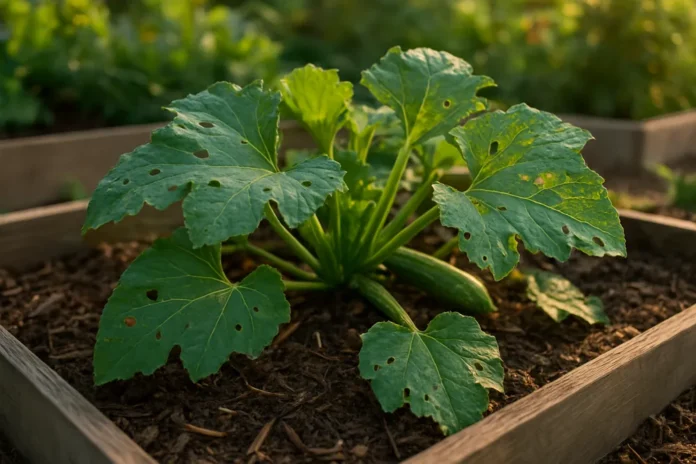
Zucchini leaves usually get holes from chewing insects like cucumber beetles, squash bugs, flea beetles, slugs, or caterpillars. In some cases, older leaves also tear from wind, hail, or natural wear as the plant grows fast.
Seeing holes suddenly show up in zucchini leaves can be alarming, especially when the plant looked perfectly healthy a day or two earlier. In most home gardens, the problem is not mysterious at all. Something is chewing, scraping, or tearing the foliage, and the pattern of damage usually tells you which culprit is most likely.
I have found that zucchini is one of those crops that can look dramatic even when the damage is still manageable. A few ragged openings in a big leaf often matter less than gardeners think, but heavy feeding on young plants can slow growth, reduce vigor, and open the door to bigger problems. The key is figuring out whether you are dealing with pests, disease, or simple physical damage.
Once you know what the holes look like, where they appear, and when they show up, it becomes much easier to choose the right fix. Zucchini leaf holes are usually treatable, and in many cases you can stop the damage without doing anything harsh or complicated.
What the Holes Are Telling You
Not all holes mean the same thing. Small, neat pinholes often point to flea beetles. Larger ragged bites along the leaf edge may suggest caterpillars, beetles, or slugs. Leaves that seem to shred or split after unfurling can be reacting to wind or hail rather than active feeding. Before treating anything, look closely at the shape, size, and placement of the damage.
- Tiny shotgun-style holes scattered across young leaves often suggest flea beetles.
- Larger irregular holes between veins can come from cucumber beetles or caterpillars.
- Jagged chewing with slime trails or overnight damage often points to slugs or snails.
- Torn or ripped openings with browned edges after storms are often weather-related rather than insect feeding.
- Holes that start as spots and then dry out can occasionally indicate disease-related tissue death.
When I diagnose zucchini damage, I pay more attention to the newest leaves than the oldest ones. Fresh damage on tender new growth usually means the problem is active right now, while holes only on older leaves may be leftover injury the plant has already outgrown.
Common Pests That Chew Holes in Zucchini Leaves
Cucumber Beetles
Cucumber beetles are one of the most common zucchini pests in U.S. gardens. They chew irregular holes in leaves, especially when plants are young. The adults are small and active, often yellow-green with black spots or stripes depending on the species. They can also spread bacterial wilt, which makes them more serious than simple cosmetic chewers.
You will usually spot cucumber beetle damage early in the season. Seedlings and newly transplanted zucchini are especially vulnerable because a few beetles can remove a surprising amount of leaf tissue fast.
Flea Beetles
Flea beetles leave very small round holes that make the foliage look peppered or shot through. They are tiny, dark, and quick to jump when disturbed. On larger established zucchini plants, flea beetle damage is often more annoying than dangerous, but young plants can be stunted if feeding gets heavy.
Squash Bugs
Squash bugs do not usually create big obvious chewing holes the way beetles or caterpillars do, but they can cause puncture damage that weakens leaves and leads to yellowing, crisp patches, or tissue collapse that later tears out. If your leaves have a mix of stippling, wilting, and ragged openings, squash bugs may be involved. Check the undersides of leaves for bronze egg clusters and flattened gray-brown bugs.
Slugs and Snails
Slugs and snails chew irregular holes with ragged edges, often on low leaves or leaves touching mulch. Damage tends to appear overnight, and the giveaway is a silvery slime trail. They are more common in damp gardens, thick mulch, crowded beds, or long stretches of rainy weather.
Caterpillars and Other Leaf Chewers
Several caterpillars can feed on zucchini leaves, including cabbage loopers and armyworms in some regions. Grasshoppers can also chew large rough-edged holes in hot, dry summers. If you see dark droppings, missing leaf sections, or damage high on the plant without slime trails, a caterpillar or grasshopper becomes more likely.
When Holes Are Not Caused by Insects
Sometimes gardeners assume every hole is a bug problem, but zucchini leaves are large, soft, and easily damaged by the environment. Wind can whip leaves against cages, neighboring plants, or rough mulch and create tears that expand as the leaf grows. Hail can punch holes straight through tender tissue. Even rough handling during harvest or weeding can leave openings that look like feeding damage a day later.
Zucchini also grows quickly, and leaves sometimes emerge slightly damaged from an earlier event. What looks like fresh chewing may have happened when the leaf was still folded. As the leaf expands, those tiny injuries stretch into bigger visible holes.
- Wind damage usually looks torn, split, or frayed rather than neatly chewed.
- Hail damage often appears suddenly on many plants at once, not just zucchini.
- Mechanical damage often shows up where leaves rub on supports, edging, or nearby stems.
- Older leaves naturally wear out faster and may split more easily than new vigorous leaves.
Can Disease Cause Holes in Zucchini Leaves
Disease is a less common cause of true holes, but it can happen. Some leaf spot diseases kill small patches of tissue. Once that dead tissue dries out and falls away, the leaf can look holey. This usually starts as discolored spots rather than clean bites. You may see yellow halos, tan centers, browning, or a larger pattern spreading across multiple leaves.
Angular leaf spot is one issue cucurbits can develop, and the lesions may dry and crack out of the leaf. Bacterial and fungal leaf spots can behave similarly in humid conditions. If the plant has holes plus spotting, water-soaked lesions, fuzzy growth, or widespread yellowing, disease deserves a closer look.
If you suspect disease, avoid immediately spraying for insects just because there are holes. I like to look for the sequence first: spots before holes often suggests disease, while holes without spotting usually points back to chewing pests or physical damage.
How to Identify the Real Cause in Your Garden
A quick inspection tells you more than a random treatment ever will. Check plants in the morning and again at dusk because different pests feed at different times. Look at the top and underside of leaves, stems near the crown, mulch around the plant, and any blossoms that may be attracting beetles.
- Examine the newest leaves first for fresh damage.
- Look for live insects, eggs, droppings, or slime trails.
- Notice whether the holes are tiny, ragged, round, or torn.
- Check whether nearby cucumbers, melons, pumpkins, or beans show similar damage.
- Think about recent weather such as wind, hail, or heavy rain.
- Watch one damaged plant for a day before treating the whole bed if the problem is not severe.
Patterns matter. Damage only on low leaves often points to slugs. Damage concentrated on new transplants often suggests beetles. Damage scattered after a storm may not need any treatment at all. The more specific your diagnosis, the simpler your response will be.
I do not judge zucchini health by one ugly leaf. If the plant is pushing strong new growth, flowering normally, and the stems look firm, I treat a few holes as a warning sign rather than a disaster.
How Much Leaf Damage Zucchini Can Tolerate
Zucchini is vigorous and can tolerate a fair amount of cosmetic damage once established. Mature plants with broad healthy leaves often keep producing even if older foliage looks rough. The bigger concern is repeated feeding on young plants, damage that keeps increasing, or pests that also spread disease or attack stems and fruit.
If more than a small portion of the newest growth is being eaten, the plant seems stalled, or pests are easy to find every day, it is time to step in. On the other hand, if only a few older leaves have holes and new leaves look clean, the plant may already be outgrowing the problem.
- Minor damage on large mature leaves is often mostly cosmetic.
- Heavy damage on seedlings and new transplants can reduce growth fast.
- Increasing damage over several days usually means the pest is still present.
- Leaf holes paired with wilting, yellowing, or stem injury deserve faster action.
What to Do for Insect Damage
The best treatment depends on the pest. For a few beetles or caterpillars, hand-picking can be enough. Slugs can be trapped or reduced by cutting back excess moisture and hiding spots. Floating row covers work well early in the season for excluding cucumber beetles and flea beetles, though they need to be removed or opened when pollination is needed.
Insecticidal soap is not very useful for hard-bodied beetles, but it may help with softer pests when used correctly. Neem-based products can reduce some feeding, though coverage and timing matter. Bt products are useful only for caterpillars, not beetles or slugs. If you want effective control, matching the product to the pest matters far more than spraying something general.
- Hand-pick cucumber beetles, caterpillars, and squash bug adults when populations are low.
- Remove squash bug eggs from leaf undersides before they hatch.
- Use row covers on young plants to prevent early feeding pressure.
- Set slug traps or use iron phosphate bait if slugs are active.
- Keep weeds and heavy debris down around the base of plants so pests have fewer hiding spots.
- Apply any garden treatment in the evening or early morning to protect pollinators.
With zucchini, I prefer to start with exclusion and hand removal before sprays. Broad spraying can disrupt pollinators, and squash plants need those pollinators constantly once flowering begins.
What to Do for Weather or Disease Damage
If weather caused the holes, the solution is mostly supportive care. Keep the plant evenly watered, avoid extra stress, and let healthy new leaves replace the damaged ones. Do not remove every marked leaf right away unless it is badly torn or lying on the ground. The plant still uses that foliage for energy.
For suspected leaf spot disease, water at the base rather than overhead, improve spacing and airflow, and remove the most badly affected leaves if the plant still has plenty of healthy growth. Sanitize tools and avoid handling wet plants. If disease pressure is strong year after year, crop rotation and resistant varieties are more useful than constant rescue treatments.
- Stake or space plants so leaves are not constantly rubbing.
- Water deeply and consistently to support recovery.
- Avoid overfertilizing stressed plants with lots of nitrogen.
- Remove badly infected debris and do not compost diseased material unless your compost gets fully hot.
- Rotate zucchini and related cucurbits to a different bed next season if disease was significant.
How to Prevent Holes in Future Zucchini Crops
Prevention starts before the holes appear. Healthy fast-growing zucchini handles light feeding much better than stressed plants. I like to give zucchini full sun, consistent moisture, room for airflow, and a head start with row cover if beetles are common in my area. Clean beds and regular scouting make a big difference because small pest populations are easier to control than exploding ones.
- Use lightweight row covers early in the season in beetle-prone gardens.
- Inspect plants several times a week, especially when they are small.
- Keep mulch from piling directly against stems if slugs are a problem.
- Water in the morning so foliage and soil surface dry faster.
- Remove crop debris at the end of the season to reduce overwintering sites.
- Mix in flowers that attract beneficial insects, but keep the zucchini bed easy to inspect.
- Avoid planting zucchini in the exact same spot every year.
No zucchini patch stays perfect all season. Big leaves invite damage, and summer pests always seem to notice squash sooner rather than later. But if you catch trouble early, most hole problems stay manageable, and the plant can still produce heavily.
FAQ
Will Zucchini Survive if the Leaves Have Holes?
Usually yes. Established zucchini plants can tolerate moderate leaf damage, especially on older leaves. The bigger risk is heavy feeding on young plants or damage that keeps spreading to new growth.
Should I Cut Off Zucchini Leaves with Holes?
Not automatically. Leaves with a few holes still help feed the plant. Remove leaves only if they are badly damaged, diseased, collapsed onto the soil, or crowding airflow around the center of the plant.
What Bug Makes Tiny Holes in Zucchini Leaves?
Tiny scattered pinholes are often caused by flea beetles. They create a shotgun-like pattern, especially on young leaves and smaller plants.
Do Cucumber Beetles Eat Zucchini Leaves?
Yes. Cucumber beetles commonly chew irregular holes in zucchini leaves, especially early in the season. They are also important to control because they can spread bacterial wilt.
Can Powdery Mildew Cause Holes in Zucchini Leaves?
Powdery mildew usually does not create true holes. It more often causes white coating, yellowing, and decline in leaf health. Holes are more likely from chewing pests, physical damage, or leaf spot diseases that kill tissue.
Why Do the Holes Seem Bigger After the Leaf Opens?
Damage often happens when the leaf is still folded and tender. As the leaf expands, that small injury stretches into a larger visible hole or tear.
Are Holes in Zucchini Leaves Dangerous for the Fruit?
Sometimes, but not always. A few holes alone may not affect fruit production much. Problems become more serious when the pest also attacks blossoms, spreads disease, or weakens the plant enough to reduce flowering and fruit set.
What Is the Safest First Treatment for Holey Zucchini Leaves?
The safest first move is usually hand inspection and pest removal, followed by physical barriers like row covers when practical. That approach helps avoid unnecessary sprays and protects pollinators.
Need a fix that matches the pest you are actually dealing with? Read our guide to the best zucchini pest controls and row covers so you can protect plants fast and keep harvests coming.
