

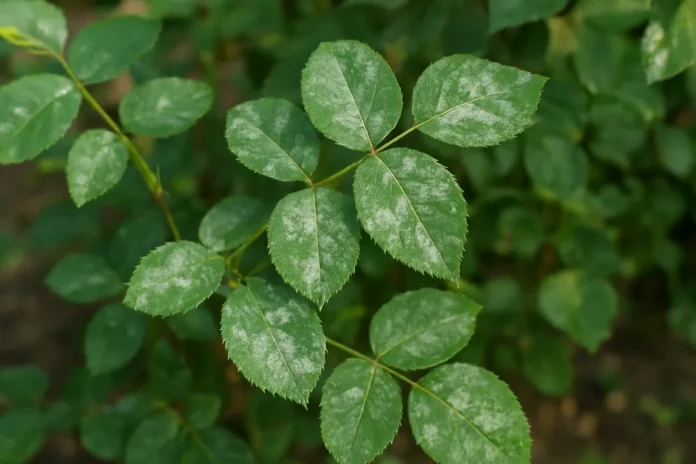
White patches on rose leaves are most often caused by powdery mildew, a common fungal disease that leaves a dusty white coating on foliage. They can also come from pest feeding, mineral residue, or spray damage.
If your problem with white patches on rose leaves seemed to appear overnight, you are not alone. White marks on rose foliage can look dusty, bleached, spotted, or even fuzzy, and the exact appearance often tells you what is going wrong.
In most home gardens, the leading cause is powdery mildew, especially when roses are growing in humid air with limited airflow. But not every pale or chalky patch is a fungus. Hard water residue, insect activity, sun injury, and spray burn can all leave white areas that are easy to confuse with disease.
The good news is that most causes are manageable once you know what you are seeing. A close look at the pattern, texture, and spread of the white patches can help you narrow down the problem and choose the right fix before your rose loses more leaves.
What White Patches on Rose Leaves Usually Mean
White patches are a symptom, not a diagnosis. On roses, they usually fall into a few categories: fungal growth on the leaf surface, physical residue left behind by water or sprays, feeding damage from pests, or tissue that has been bleached or injured. The key is to notice whether the patch sits on top of the leaf, changes the leaf tissue itself, or appears alongside curling, distortion, holes, or sticky residue.
- Dusty, powder-like white coating often points to powdery mildew.
- Flat chalky spots that wipe off partly may be mineral or spray residue.
- Silvery or bleached patches with tiny specks can suggest pest feeding, especially mites or thrips.
- Pale, papery, scorched areas may come from chemical burn or sunscald.
- White patches with distortion or stunting can indicate a more serious stress problem, sometimes involving herbicide drift or repeated pest pressure.
Because several problems can look similar from a distance, avoid treating immediately with multiple products at once. A better first step is to inspect both the top and underside of several leaves and note whether the patches spread like a coating, stay fixed like a stain, or come with live insects, webbing, or damaged new growth.
Powdery Mildew Is the Most Common Cause
How to Recognize It
Powdery mildew is the top reason rose leaves develop white patches. It starts as small white or grayish spots that expand into a dusty coating on leaves, stems, and sometimes buds. New growth may curl, pucker, or become misshapen. Unlike many leaf diseases, powdery mildew does not need standing water on the leaf to spread. It thrives when days are warm, nights are cool, and airflow is poor.
Why Roses Get It
Roses planted too close together, crowded by shrubs, or grown in shaded areas are especially prone to this fungus. Soft, lush growth triggered by heavy nitrogen feeding can also make plants more vulnerable. In many parts of the U.S., the disease becomes more obvious in spring and early summer, then flares again during mild fall weather.
What to Do
- Prune lightly to improve airflow around and through the plant.
- Remove the worst infected leaves if the outbreak is still limited.
- Water at the base rather than wetting foliage late in the day.
- Avoid overfeeding with high-nitrogen fertilizer during active outbreaks.
- Use a rose-labeled fungicide or organic option such as sulfur, potassium bicarbonate, or horticultural oil, following the label carefully.
If the coating rubs off on your fingers and seems to spread from leaf to leaf, powdery mildew is very likely. Early treatment works much better than waiting until the entire plant looks dusty.
Residue From Hard Water, Rain Splash, or Sprays
Not every white patch is living disease. Roses watered with hard tap water or sprayed repeatedly with certain products can develop a whitish film or speckled residue on leaf surfaces. This is especially common when water dries quickly and leaves mineral deposits behind.
- Hard water often leaves pale spots or a crusty film, especially after overhead watering.
- Insecticidal soap, neem, dormant oil, and foliar nutrients can dry into visible residue if mixed too strongly or applied in hot weather.
- Dust mixed with dew or irrigation can create a blotchy white cast on leaves near paths, roads, or dry soil.
Residue usually looks superficial rather than fuzzy. It may be concentrated on upper leaf surfaces and does not typically distort new growth the way powdery mildew can. If you gently wipe a leaf with a damp cloth and the mark disappears or fades significantly, residue is more likely than disease.
To prevent this issue, water the soil instead of the leaves when possible, mix sprays exactly as directed, and avoid applying products during hot sunny periods. A light rinse with plain water can sometimes remove harmless deposits.
Pests That Can Leave White or Silvery Patches
Spider Mites
Spider mites are tiny pests that feed by piercing leaf tissue and sucking out contents. Their feeding can create fine pale stippling that merges into whitish or bronzed patches. In hot, dry weather, roses are frequent targets. You may also see faint webbing on leaf undersides or between stems when infestations are heavy.
Thrips
Thrips usually target buds and flowers, but they can also scar leaves and leave silvery white patches. Damage often looks shiny, scraped, or streaked rather than powdery. Distorted blooms or browned petal edges often appear at the same time.
Leafhoppers and Other Sap-feeding Insects
Rose leafhoppers can produce a pale stippled look on foliage. At first, the damage resembles tiny white flecks. As feeding continues, larger washed-out patches can develop and the plant may look dull or faded overall.
How to Confirm Pest Damage
- Check undersides of leaves with a hand lens.
- Tap a stem or leaf over white paper to spot moving mites or thrips.
- Look for webbing, black specks, distorted buds, or a stippled pattern.
- Notice whether the white areas are within the leaf tissue rather than sitting on top of it.
If pests are the cause, treatment should target the insect or mite involved. Broad spraying without confirming the culprit can make mite problems worse by harming beneficial insects.
Chemical Burn, Sunscald, and Other Physical Injury
Rose leaves can also develop pale or white patches when the tissue itself has been damaged. This kind of injury is common after sprays are applied during heat, after herbicide drift, or when tender new growth is suddenly exposed to intense sun.
- Chemical burn often appears after foliar sprays, especially if the product was too concentrated or used during high temperatures.
- Herbicide drift may cause bleached spots, curling, narrow leaves, twisted growth, or deformed shoots.
- Sunscald can create papery pale patches on leaves that were previously shaded and then exposed to strong afternoon sun.
Unlike powdery mildew, these patches do not spread from leaf to leaf like a coating. Damaged tissue usually stays in place and may later turn tan or brown around the edges. If symptoms appeared shortly after a lawn weed treatment, perimeter spray, or garden product application, injury is a strong possibility.
The main remedy is prevention and patience. Remove badly damaged leaves if needed, keep the plant evenly watered, and avoid additional stress while new growth replaces injured foliage.
How to Tell the Difference at a Glance
A quick visual comparison can help you sort through the likely causes.
- If the patch looks like flour dusted on the leaf, think powdery mildew.
- If it wipes off like film or leaves a faint ring, think water or spray residue.
- If the leaf looks scraped, silvery, or finely stippled, think pests.
- If the patch is bleached, papery, or tied to recent spraying or heat, think physical or chemical injury.
- If only older outer leaves are affected and the problem is not spreading, a temporary residue or localized damage is more likely than a disease outbreak.
You may also see more than one issue at the same time. For example, a drought-stressed rose in a crowded bed may have both spider mites and powdery mildew. That is why it helps to inspect several leaves from different parts of the plant before deciding on treatment.
Best Treatments for Each Cause
If It Is Powdery Mildew
- Prune for better airflow.
- Remove heavily infected foliage from the plant and ground.
- Use a labeled fungicide consistently, not just once.
- Reduce dense shade and avoid excess nitrogen.
If It Is Residue
- Rinse foliage lightly with plain water if practical.
- Switch to soil-level watering.
- Review spray mixing rates and application timing.
- Do not keep treating a residue problem as if it were a fungus.
If It Is Mites or Other Pests
- Blast leaf undersides with water for light mite infestations.
- Use insecticidal soap, horticultural oil, or another rose-safe product labeled for the pest.
- Repeat applications as directed because eggs and hidden pests are easy to miss.
- Preserve beneficial insects by avoiding unnecessary broad-spectrum insecticides.
If It Is Chemical or Sun Injury
- Stop the product or practice that caused the injury.
- Keep watering consistent, but do not overwater.
- Wait for healthy new growth before pruning heavily.
- Protect recently exposed plants from harsh afternoon sun when possible.
Whatever the cause, avoid piling on treatments all at once. Using fungicides, oils, soaps, and fertilizers together can worsen stress and make diagnosis harder.
How to Prevent White Patches From Coming Back
Healthy rose care goes a long way toward preventing recurring leaf problems. Most white patch issues become worse when roses are crowded, stressed, or repeatedly exposed to the same trigger.
- Plant roses where they get good morning sun and steady airflow.
- Space plants generously so foliage dries and breathes easily.
- Water deeply at the base instead of lightly overhead.
- Clean up fallen diseased leaves to reduce reinfection.
- Fertilize moderately to support growth without producing weak, overly lush foliage.
- Inspect leaves often during warm, humid, or dry stressful weather so you catch problems early.
- Use resistant rose varieties if powdery mildew is a repeat issue in your area.
Routine observation matters more than complicated care. A rose checked once or twice a week is much easier to protect than one left alone until symptoms cover the plant.
When the Problem Is Serious Enough to Act Fast
Some white patches are cosmetic, but others can weaken the plant if ignored. Quick action is worth taking when new growth is becoming distorted, patches are spreading rapidly to many leaves, buds are affected, or the plant is losing vigor and dropping foliage.
- Treat quickly if the white coating is expanding every few days.
- Act fast if the rose is a prized shrub, climbing rose, or newly planted specimen under stress.
- Be more cautious if multiple plants nearby show similar symptoms, which may indicate disease pressure or drift damage.
- Consider local extension advice if symptoms are unusual, severe, or resistant to normal treatment.
The sooner you match the symptom to the actual cause, the better your chances of saving healthy foliage and keeping blooms on schedule.
FAQ
Can White Patches on Rose Leaves Go Away on Their Own?
Residue from water or sprays may fade or wash off, but powdery mildew and pest damage usually will not resolve fully without some corrective action. The leaf may stay marked even after the problem is controlled.
How Do I Know if It Is Powdery Mildew or Just Hard Water Spots?
Powdery mildew looks dusty or fuzzy and often spreads across leaves and stems. Hard water spots usually look flatter, more spotty, and may wipe off or appear mainly after overhead watering.
Should I Remove Leaves with White Patches?
Remove heavily infected or badly damaged leaves if the plant can spare them, especially with powdery mildew. Do not strip too much foliage at once, and always clean up fallen leaves from the ground.
Is It Safe to Spray Neem Oil on Roses with White Patches?
Neem oil can help with some fungal and pest issues, but it can also cause leaf burn if used in high heat or mixed improperly. Always follow the label and avoid spraying stressed plants during hot sunny periods.
Can Spider Mites Make Rose Leaves Look White?
Yes. Spider mites often cause tiny pale specks that blend into silvery or whitish patches, especially during hot dry weather. Webbing on leaf undersides is another clue.
Do White Patches Mean My Rose Is Dying?
Usually not. Most causes are treatable or manageable, especially if you catch them early. A healthy established rose often recovers well once the source of stress is corrected.
Will Overhead Watering Cause White Patches?
It can. Overhead watering may leave mineral residue on leaves and can also create conditions that favor certain diseases, depending on weather and airflow.
Need the right fix fast? Explore our rose disease and pest treatment guides to compare the best fungicides, miticides, and care products for healthier, cleaner foliage.
