

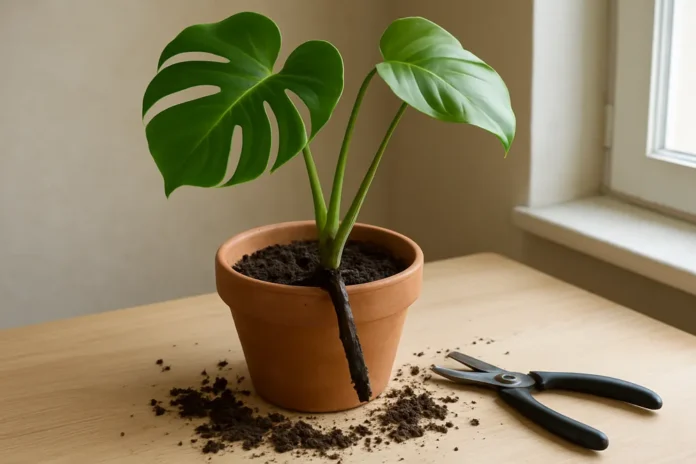
Monstera stems usually rot because they stay too wet for too long, which allows stem tissue to break down and invites fungal or bacterial infection. Cold damage, poor drainage, and buried stems can also trigger rot.
Seeing Monstera stems rotting is alarming because stem damage can spread fast and threaten the whole plant. What starts as a soft spot or dark patch can quickly turn into mushy, collapsing growth, especially if the potting mix stays wet or the plant has already been stressed.
In most cases, stem rot happens when moisture lingers around the base of the plant, oxygen levels in the root zone drop, and decay-causing organisms move in. A Monstera can recover if you catch the issue early, remove damaged tissue, and correct the growing conditions that caused the problem.
The tricky part is that stem rot may start for more than one reason at the same time. Overwatering is the most common trigger, but buried nodes, compacted soil, cold temperatures, contaminated pruning tools, and poor airflow can all make stem rot more likely.
What Stem Rot Looks Like on a Monstera
Stem rot is more than cosmetic damage. Healthy Monstera stems feel firm, look green to light brown depending on age, and support leaves without bending or collapsing. Rotting stems lose structure as plant tissue breaks down.
- Soft, mushy, or water-soaked spots on stems or petiole bases
- Dark brown or black discoloration that expands over time
- A sour, swampy, or foul smell near the soil line
- Stem sections that wrinkle, collapse, or split open
- Leaves yellowing and drooping even though the soil is wet
- Rot starting where stems meet the soil, a node, or a wound
Not every brown mark is rot. Older stems can develop tougher, corky texture as they age, and aerial roots may dry or brown without indicating disease. Rot is usually soft, spreading, and associated with excess moisture or tissue collapse.
The Most Common Reason Is Too Much Moisture
The leading cause of Monstera stem rot is prolonged wetness. Monsteras like evenly moist but airy conditions, not soggy soil that stays wet for days and days. When the root zone remains saturated, oxygen drops and roots begin to suffocate. Once roots weaken, the plant cannot regulate water well, and stem tissue becomes vulnerable to decay.
How Overwatering Leads to Stem Rot
Overwatering does not just mean giving too much water at one time. It often means watering too frequently, using a pot that dries very slowly, or growing the plant in heavy soil that traps moisture. Wet conditions encourage fungi and bacteria that attack stressed tissue, especially around buried nodes and the base of the plant.
- Watering again before the top few inches of mix have dried
- Using decorative cachepots that trap drained water
- Keeping the plant in a pot much larger than the root ball
- Growing in dense peat-heavy soil without enough chunky material
- Leaving the pot in low light where water use slows down
If your Monstera has soft black stems and the soil feels wet most of the time, excess moisture is the first cause to suspect.
Poor Drainage and Heavy Soil Make the Problem Worse
Even careful watering can lead to rot if the pot and soil do not drain well. Monsteras naturally grow in loose, airy organic matter with excellent oxygen flow around their roots. Standard indoor potting soil can stay too compact and damp for too long unless it is amended.
Drainage Problems That Commonly Trigger Stem Decay
- Pots without drainage holes
- Compacted potting mix that no longer absorbs and releases water evenly
- Fine-textured soil with little bark, perlite, or pumice
- Salt buildup that damages roots and slows healthy uptake
- Roots circling densely in a pot and trapping moisture in the center
When water cannot move through the pot quickly enough, the lower stem and nearby nodes may remain damp. That is especially risky if part of the stem is sitting below the soil line. Monsteras tolerate moist roots better than wet stems.
Buried Stems and Nodes Often Start Rotting First
A common Monstera care mistake is planting too deep. The base of the stem and the nodes along it can produce roots, but they are still susceptible to rot if buried in dense, wet mix. Constant contact with moisture softens the tissue and creates an entry point for infection.
This happens often after repotting, when growers try to stabilize a leaning plant by covering too much stem with soil. It also happens when potting mix gradually settles and creeps up around the stem base.
- The main stem sits noticeably below its previous soil level
- Rot begins exactly where a node or stem joint touches wet mix
- The upper plant looks fine at first while the base turns dark and soft
- New roots fail to establish because the buried tissue decays first
Cold Stress Can Damage Stems and Invite Rot
Monsteras are tropical plants that react poorly to cold drafts, chilly windows, and sudden temperature drops. Cold injury can damage cell walls in the stems, creating water-soaked patches that later turn brown or black. Once tissue is injured, rot-causing organisms can move in much more easily.
Situations That Cause Cold-related Stem Damage
- Temperatures falling below about 55 degrees Fahrenheit
- Leaves and stems touching a cold window overnight
- Drafts from air conditioning or winter doors
- Watering with very cold water in a cool room
- Outdoor exposure during cold spring or fall nights
Cold stress alone may not rot a stem, but it weakens tissue enough that wet soil and poor airflow can finish the job.
Fungal and Bacterial Infections Can Spread Through Damaged Tissue
Many cases of stem rot are not caused by watering alone. They are a combination of stress plus infection. Once stem tissue is bruised, overwatered, or buried, fungi and bacteria can colonize it and spread upward or downward through the plant.
Clues That Infection Is Involved
- Rot spreads quickly over a few days
- The affected area smells sour or foul
- The tissue becomes slimy rather than simply soft
- Dark lesions appear at pruning wounds or broken points
- Nearby stems begin showing similar collapse
Contaminated tools can spread disease from one cut to another, especially during propagation. If a stem cutting was taken with a dirty blade or planted before the cut surface had time to dry slightly, rot can begin at the cut end and move inward.
Propagation Mistakes Are Another Major Cause
Monstera cuttings are easy to root, but they are also easy to rot if the setup stays too wet or stagnant. Stem cuttings have limited reserves and no established root system, so they cannot handle the same moisture level as a mature plant.
Common Propagation Issues That Lead to Stem Rot
- Submerging too much of the cutting in water
- Using dirty jars, shears, or rooting media
- Placing the cutting in low light where growth is slow
- Keeping the medium soaked instead of lightly moist
- Trying to root a damaged or already soft stem segment
- Packing sphagnum moss or soil too tightly around the node
A healthy cutting should stay firm while it forms roots. If the node or stem base becomes translucent, mushy, or black, rot has started.
How to Tell Stem Rot From Normal Aging or Cosmetic Damage
Because Monstera stems can scar, harden, and change color with age, many gardeners are unsure whether they are seeing rot or harmless maturity. The difference is mostly in texture, speed, and smell.
- Normal aging: firm texture, dry surface, gradual change, no foul smell
- Minor bruising: localized mark, tissue stays firm, no spread
- Stem rot: soft or mushy texture, expanding dark area, possible odor, stem weakness or collapse
If you can gently press the discolored area and it gives way, leaks, or feels hollow, you are likely dealing with active rot rather than natural corking.
What to Do Right Away if Your Monstera Stem Is Rotting
Fast action matters because rot rarely reverses in damaged tissue. The goal is to remove decay, save healthy parts, and stop the conditions that allowed the problem to start.
Immediate Rescue Steps
- Stop watering until you assess the plant fully.
- Remove the Monstera from its pot and inspect roots, stems, and nodes.
- Trim away all soft, black, or mushy tissue with a sterile blade until you reach firm, healthy tissue.
- Discard severely infected soil and clean the pot thoroughly, or switch to a clean pot with drainage holes.
- Repot into a chunky, fast-draining aroid mix with bark, perlite or pumice, and quality potting mix.
- Keep the plant warm, in bright indirect light, and avoid fertilizing until new growth resumes.
If the main stem is badly damaged but an upper section is still healthy, you may have better luck saving the plant by taking a firm cutting above the rot and rerooting it.
When the Roots Are Involved Too
Stem rot often travels with root rot. If the roots are brown, mushy, or slough off their outer coating, they are no longer supporting the plant properly. In that case, fixing the stem alone is not enough.
Prune away dead roots, keep only the firm white or tan ones, and reduce moisture after repotting. A plant with significant root loss will need time before it can support all of its old foliage. Some yellowing or drooping during recovery is common.
- Healthy roots feel firm and look white, cream, or light tan
- Rotten roots feel mushy, stringy, or hollow
- A sour smell from the root ball usually signals advanced root decline
How to Prevent Monstera Stem Rot in the Future
Prevention is mostly about moisture management and sanitation. Monsteras are forgiving plants when they have warmth, airflow, and a well-draining root zone. They are far less forgiving when stems stay wet and oxygen is limited.
Best Habits for Prevention
- Water only when the upper portion of the mix has dried to the touch
- Use a chunky aroid mix instead of dense, compact soil
- Choose pots with drainage holes and empty saucers or cachepots promptly
- Keep stems and nodes above the soil line unless rooting intentionally
- Place the plant in bright indirect light so it uses water efficiently
- Protect it from cold drafts and low indoor temperatures
- Sterilize pruning tools before taking cuttings or trimming damaged growth
- Provide moderate airflow around crowded indoor plants
The right balance is deep watering followed by enough drying time, not constant dampness. That one change prevents most Monstera stem problems.
When a Rotting Monstera Can Still Be Saved
A Monstera is often salvageable if some stem tissue and at least one healthy node remain firm. Even if the lower base is lost, viable top cuttings can usually be rooted again. Recovery is less likely when rot has moved through most of the main stem, multiple nodes, and the majority of the root system.
Signs of a good recovery chance include firm green growth above the damage, healthy aerial roots, no foul odor after pruning, and stable leaves once the plant is repotted. New roots and fresh leaf growth are the clearest signs that the crisis has passed.
FAQ
Can a Monstera Recover From Stem Rot?
Yes, if you catch it early and remove all rotted tissue. A Monstera can recover from mild stem rot or be restarted from healthy cuttings if enough firm stem and viable nodes remain.
Should I Cut Off a Soft Monstera Stem?
Yes. Soft, mushy stem tissue will not turn healthy again, and leaving it in place allows rot to spread. Cut back to firm, clean tissue with a sterilized blade.
Why Is My Monstera Stem Black Near the Soil?
Blackening near the soil line usually points to excess moisture, buried stem tissue, or root rot spreading upward. It is especially common in dense soil or pots that stay wet too long.
Can I Save a Monstera by Propagating the Healthy Top?
Yes, that is often the best option when the lower stem is rotting. Take a firm cutting above the damaged section, include a healthy node, and root it in a clean propagation setup.
Does Misting Cause Monstera Stem Rot?
Occasional misting alone usually is not the main cause, but frequent moisture sitting on stems in low airflow can contribute to surface problems. Wet soil is a much more common cause than leaf mist.
What Kind of Soil Helps Prevent Monstera Rot?
Use a loose, fast-draining aroid mix that contains potting soil plus chunky bark, perlite, pumice, or similar materials. The goal is moisture retention with plenty of air around the roots.
How Often Should I Water a Monstera After Repotting From Rot?
Water thoroughly after repotting, then wait until the upper part of the mix dries before watering again. The exact timing depends on light, temperature, pot size, and soil texture.
Need the right setup to stop rot for good? See our guide to the best Monstera potting mixes and drainage pots so you can repot with confidence and protect new growth.
