

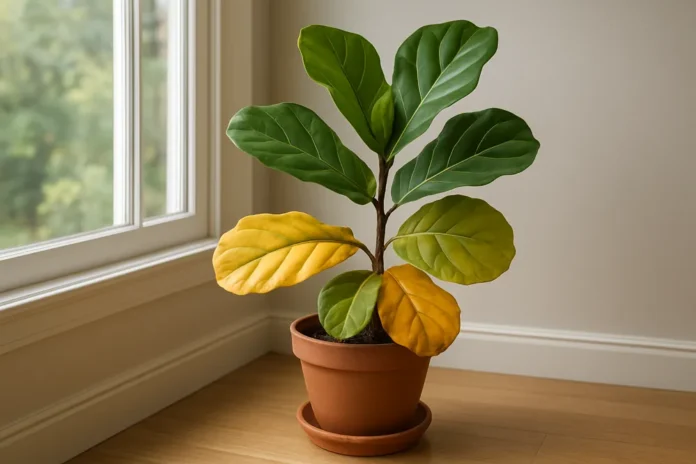
Fiddle Leaf Fig Leaves Turning Yellow usually means watering stress, poor drainage, low light, or a nutrient imbalance. Sometimes yellowing is also caused by normal leaf aging, temperature stress, or pests.
Seeing fiddle leaf fig leaves turning yellow can be frustrating, especially when the plant looked healthy just a week ago. Yellowing is one of the most common distress signals in fiddle leaf figs, but it does not always mean the plant is dying. In many cases, it is reacting to moisture problems, light levels, or a recent change in its environment.
The tricky part is that several issues can produce similar yellow leaves. Overwatering, underwatering, poor drainage, low humidity, nutrient problems, pests, and even normal aging can all be involved. The best clue is the pattern of yellowing, including which leaves are affected, whether the leaf feels limp or crispy, and if brown spots or leaf drop show up too.
Once you match the symptoms to the likely cause, fiddle leaf figs are often very recoverable. A few targeted changes to watering, light, and potting conditions usually stop the spread and help new growth come in healthy and green.
What Yellow Leaves Usually Mean On A Fiddle Leaf Fig
Yellow leaves are a sign that chlorophyll is breaking down and the plant is under some kind of stress. On fiddle leaf figs, the most common trigger is root stress. That often starts when soil stays wet too long, roots cannot get enough oxygen, or the plant is not taking up water correctly.
Not all yellowing looks the same. A single oldest leaf near the bottom turning yellow is often harmless aging. Several leaves turning pale at once, especially if the soil is wet, points more toward overwatering or drainage trouble. Yellow edges with crisp browning may suggest dryness, salt buildup, or inconsistent watering.
Fiddle leaf figs also tend to react strongly to environmental changes. Moving the plant, changing seasons, running heat or air conditioning, or repotting can all trigger temporary stress. The important question is whether the yellowing is limited and stable or spreading leaf by leaf.
Common Causes Of Yellow Fiddle Leaf Fig Leaves
Overwatering And Soggy Soil
This is the most common reason fiddle leaf fig leaves turn yellow indoors. When the potting mix stays wet for too long, roots lose oxygen and begin to decline. Damaged roots cannot absorb water and nutrients properly, so leaves start yellowing even though the soil seems moist.
- Yellow leaves appear on multiple parts of the plant, not just the bottom
- Leaves may feel soft, limp, or slightly swollen rather than crisp
- Brown spots can develop in the middle of the leaf
- Soil stays wet for many days after watering
- A sour smell from the pot may suggest root rot
Overwatering does not just mean watering too often. It can also come from a pot without enough drainage, a decorative cachepot that traps water, or a heavy mix that dries too slowly.
Underwatering And Very Dry Soil
Fiddle leaf figs can also yellow when they get too dry, especially if the plant is kept near bright windows, vents, or in a small pot that dries quickly. In this case, the roots are not getting enough moisture to support the leaf canopy.
- Lower leaves yellow first, then may drop
- Leaf edges can become dry or brown
- The pot feels very light
- Soil pulls away from the sides of the pot
- Leaves may look dull, droopy, or slightly curled
Repeated cycles of bone-dry soil followed by heavy watering are especially stressful. The plant struggles to maintain steady water uptake, and the oldest leaves are often sacrificed first.
Poor Drainage And Root Problems
Even if your watering schedule seems reasonable, poor drainage can create the same symptoms as overwatering. A pot without drainage holes, compacted soil, or a rootbound plant can keep the root zone too wet or too crowded. Once roots are stressed, yellowing can spread quickly.
Root rot is a more advanced version of this problem. If roots are brown, mushy, or have a foul smell, the plant is dealing with decay below the soil surface. Yellow leaves often follow because healthy root tissue is no longer available to support the plant.
Not Enough Light
Fiddle leaf figs need bright light to maintain large, healthy leaves. In rooms that are too dim, the plant cannot photosynthesize enough to support all its foliage. Leaves may fade from rich green to pale yellow-green, then yellow fully and drop.
- Growth slows or stops
- New leaves are smaller than older ones
- The plant leans toward the window
- Yellowing is gradual rather than sudden
- Leaf drop often happens on the shaded side or lower half
Low light can also make watering issues worse. Soil dries more slowly in dim conditions, so a plant in a dark corner is much more likely to stay wet too long.
Nutrient Deficiency Or Salt Buildup
Yellow leaves can sometimes be tied to feeding problems. If the plant has been in the same pot for a long time without fertilizer, it may run low on nitrogen or other nutrients needed for leaf color and growth. On the other hand, too much fertilizer can build up salts in the soil and damage roots, which also causes yellowing.
Deficiency tends to cause more uniform paling, while salt stress often brings yellowing plus brown tips or margins. White crust on the soil surface or pot rim is another clue that fertilizer salts are collecting.
Temperature Swings And Drafts
Fiddle leaf figs prefer stable indoor conditions. Cold drafts from winter windows, blasts from air conditioners, and dry heat from vents can all shock the plant. Stressed leaves may yellow and drop, especially after a sudden environmental shift.
This cause is more likely if the yellowing started soon after moving the plant, opening windows regularly, or changing seasonal heating and cooling patterns.
Pests Such As Spider Mites Or Scale
Pests are less common than watering problems, but they do happen. Spider mites, scale, mealybugs, and thrips feed on plant tissue and sap. That damage can make leaves look stippled, faded, or yellow over time.
- Tiny speckles or stippling on leaves
- Sticky residue or black sooty mold
- Fine webbing, especially under leaves
- Small bumps or cottony patches on stems and leaf joints
- Yellowing concentrated on damaged foliage
Natural Aging
Sometimes the answer is simple. As fiddle leaf figs grow, they naturally shed some older lower leaves. If only one or two bottom leaves turn yellow occasionally while the rest of the plant looks vigorous, this is usually normal.
Natural aging is usually slow and limited. It does not cause widespread yellowing, soggy soil symptoms, or damaged new growth.
How To Tell Which Cause Fits Your Plant
The fastest way to narrow it down is to look at three things together: where the yellowing starts, what the soil feels like, and what the leaves look like beyond the color change.
Look At Which Leaves Are Affected
- Only older bottom leaves: often normal aging or inconsistent watering
- Many leaves across the plant: often overwatering, drainage trouble, or low light
- Mostly new growth: possible severe root stress, nutrient issues, or pest pressure
Check Soil Moisture Correctly
Do not judge by the surface alone. Insert a finger or wooden skewer a few inches into the mix. If it comes out wet and cool days after watering, the plant may be staying too moist. If it feels dry deep into the root zone and the pot is very light, the plant may be too dry.
Study The Texture Of The Leaves
- Soft yellow leaves with dark spots often point to overwatering
- Dry yellow leaves with crispy edges often point to underwatering or salt stress
- Pale yellow leaves without much spotting may suggest low light or nutrient deficiency
- Speckled yellowing with visible damage may suggest pests
If several clues overlap, start with the root environment first. Most indoor fiddle leaf fig problems trace back to water, soil, and drainage working together.
How To Fix Yellow Leaves On A Fiddle Leaf Fig
Adjust Watering Based On Soil Dryness
Water thoroughly when the upper portion of the potting mix has dried, then let excess drain completely. Avoid small sips of water that moisten only the top layer. Also avoid watering on a rigid calendar without checking the soil first, because drying speed changes with light, season, and room temperature.
If the plant has been kept too wet, give it more time between waterings and empty any collected water from saucers or outer pots. If the plant has been too dry, rehydrate the root ball evenly and return to a more consistent routine.
Improve Drainage If Needed
Make sure the pot has drainage holes. If it does not, move the plant into one that does. Use a chunky indoor potting mix that allows air around the roots. A good mix for fiddle leaf figs often includes potting soil plus bark, perlite, or another coarse amendment.
If the soil is dense, sour-smelling, or staying wet for a week or more, repotting may be the best solution. Trim off obviously rotten roots with clean scissors and replant in fresh, airy mix.
Give The Plant Brighter Indirect Light
Place the plant near a bright window where it gets strong indirect light and some gentle direct morning or late afternoon sun if your space allows. Avoid suddenly moving it from a dim corner into harsh midday sun, which can scorch leaves. Increase light gradually over several days.
Rotate the pot every week or two so growth stays even. In low-light homes, a quality grow light can help maintain leaf color and reduce stress.
Feed Carefully During Active Growth
During spring and summer, use a balanced houseplant fertilizer according to label directions. Do not overfeed in hopes of quickly greening the plant up. Too much fertilizer can worsen root stress and leaf yellowing.
If you suspect salt buildup, flush the potting mix with water and let it drain well, or repot if buildup is severe. Hold off on fertilizer if the plant is weak from overwatering or root damage until it starts recovering.
Stabilize The Environment
Keep fiddle leaf figs away from cold drafts, heater vents, and abrupt temperature swings. Try to maintain a stable room temperature and moderate humidity. Consistency matters more than trying to create tropical conditions overnight.
Treat Pest Problems Promptly
If pests are present, isolate the plant from others. Wipe leaves clean and treat with insecticidal soap or neem-based products labeled for indoor plants, following directions carefully. Repeat treatments as needed because eggs and hidden insects often survive a single application.
Remove Only Fully Yellow Leaves
A partly yellow leaf can still contribute some energy, so there is no rush to remove it. Once a leaf is mostly or fully yellow, you can prune it off with clean shears. Focus on correcting the cause rather than stripping the plant bare.
How Long Recovery Takes
Yellow leaves usually do not turn green again, so recovery is measured by whether yellowing stops and new growth comes in healthy. If you correct a simple watering or light issue, the plant may stabilize within a couple of weeks. Root problems can take longer, especially if repotting was necessary.
Be patient after making changes. Fiddle leaf figs dislike constant adjustments. Make one or two thoughtful corrections, then give the plant time to respond before changing everything again.
How To Prevent Yellow Leaves In The Future
- Use a pot with drainage holes and an airy houseplant mix
- Water based on soil dryness, not a fixed schedule
- Keep the plant in bright indirect light
- Rotate it regularly for even growth
- Fertilize lightly during active growth only
- Watch for pests on the undersides of leaves
- Avoid sudden moves, drafts, and major temperature swings
- Do not let water sit in saucers or outer pots
Healthy fiddle leaf figs thrive on consistency. When light, moisture, and drainage stay balanced, yellow leaves become much less common.
FAQ
Should I Cut Off Yellow Fiddle Leaf Fig Leaves?
You can remove leaves that are fully yellow or mostly yellow, since they will not turn green again. If a leaf is only partly yellow, it can still help the plant, so it is fine to leave it until you correct the underlying problem.
Can Yellow Leaves Turn Green Again on a Fiddle Leaf Fig?
Usually no. Once a leaf has turned yellow, the damaged tissue rarely regains its original color. The goal is to stop more leaves from yellowing and encourage healthy new growth.
How Often Should I Water a Fiddle Leaf Fig with Yellow Leaves?
There is no perfect weekly schedule because drying speed depends on light, pot size, season, and soil mix. Water when the top portion of the soil has dried and always let excess water drain away.
Why Are Only the Bottom Leaves on My Fiddle Leaf Fig Turning Yellow?
If only one or two lower leaves yellow occasionally, that is often normal aging. If many bottom leaves yellow at once or start dropping quickly, inconsistent watering or low light is more likely.
Does Low Humidity Make Fiddle Leaf Fig Leaves Turn Yellow?
Low humidity alone is not the most common cause, but it can contribute to stress, especially with dry indoor heat. It more often leads to brown edges and overall dryness than widespread yellowing by itself.
Can I Save a Fiddle Leaf Fig with Yellow Leaves From Overwatering?
Yes, many overwatered plants recover if the roots are not too far gone. Let the soil dry appropriately, improve drainage, and repot if the mix is staying soggy or the roots show signs of rot.
Why Did My Fiddle Leaf Fig Leaves Turn Yellow After I Moved It?
A new location can change light, temperature, airflow, and watering needs all at once. Fiddle leaf figs often react to that stress with yellowing or leaf drop until they adjust.
Need the right fix fast? Explore our guide to the best fiddle leaf fig soils, pots, and plant care tools so you can correct yellowing and get your plant growing strongly again.
