

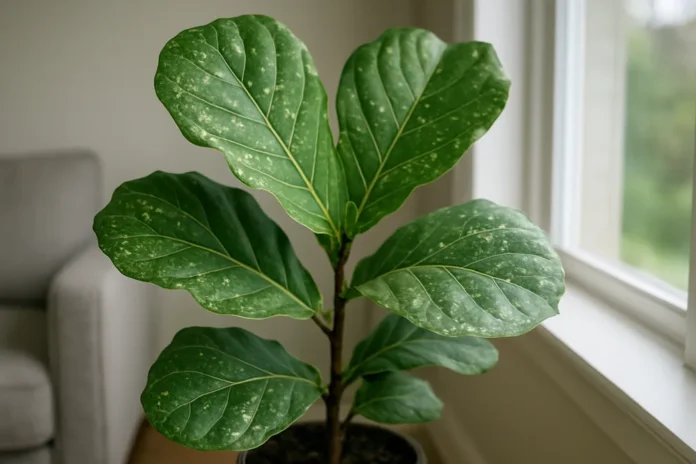
White spots on a fiddle leaf fig are often caused by hard water residue, edema from inconsistent watering, or pest activity like spider mites and mealybugs. In some cases, they can also signal fungal disease or leaf damage from stress.
Seeing fiddle leaf fig leaves develop white spots can be alarming, especially on a plant known for its big, dramatic foliage. The good news is that white spotting is usually a clue you can read, not a mystery you have to guess at.
In many homes, the cause is something relatively manageable, such as mineral buildup from tap water, inconsistent watering, or a mild pest problem. Less often, white spotting points to fungal issues or physical stress from low humidity, cold drafts, or sudden environmental changes.
The key is to look closely at what the spots actually look like. Chalky residue, tiny raised dots, cottony clusters, and pale scarring all suggest different problems, and once you match the pattern to the cause, treatment becomes much easier.
What White Spots Usually Mean on a Fiddle Leaf Fig
White spots are a symptom, not a single diagnosis. On fiddle leaf figs, they most commonly come from residue left behind by water or guttation, edema caused by uneven moisture, sap-sucking pests, or disease-related spotting. The appearance, texture, and placement of the spots matter more than the color alone.
- Powdery or chalky white marks often point to hard water or mineral deposits.
- Tiny crusty white dots, especially near leaf veins, can be dried mineral salts released by the plant.
- Cottony white clumps usually suggest mealybugs.
- Fine speckling with webbing often indicates spider mites.
- Pale blotches or scarring can follow sun stress, physical damage, or pest feeding.
- White or grayish patches with spreading lesions may be linked to fungal problems.
Because fiddle leaf figs are sensitive to moisture swings and indoor conditions, more than one issue can show up at the same time. A stressed plant is more likely to develop edema and also become attractive to pests, so it is worth evaluating the whole care routine instead of focusing only on the spots.
Mineral Residue and Hard Water Buildup
Why It Happens
One of the most common harmless causes of white spots is mineral residue from tap water. If you mist your fiddle leaf fig, wipe leaves with hard water, or the plant releases moisture from leaf pores overnight, calcium and other dissolved minerals can dry on the surface and leave a pale film or dotted marks.
What It Looks Like
- Flat white spots or rings on the top of leaves
- Chalky residue that wipes off with a damp cloth
- Clusters of small white dots, often near veins or along leaf edges
- No yellow halo, mushiness, or tissue collapse around the spot
How to Fix It
Wipe the leaves with a soft cloth dampened with distilled water or rainwater. For stubborn deposits, use a very diluted mix of water with a small splash of white vinegar, then follow with plain water so residue does not sit on the leaf. Going forward, avoid frequent misting with hard tap water and use filtered, distilled, or rainwater if your tap water is especially mineral-heavy.
This type of spotting is mostly cosmetic. If the spots wipe away cleanly and do not return quickly after improving your watering and cleaning routine, the plant is likely fine.
Edema From Inconsistent Watering
Why It Happens
Edema happens when the roots absorb water faster than the leaves can use or release it. Cells inside the leaf swell and burst, which later dries into pale, tan, or white corky spots. Fiddle leaf figs are especially prone to this after a cycle of drying out too much and then getting heavily watered.
What It Looks Like
- Small raised white or tan specks that feel rough
- Spots that are embedded in the leaf rather than sitting on top
- Damage often concentrated on newer leaves
- No fuzzy growth, but the texture may become corky over time
How to Fix It
The solution is consistency. Water when the top 1 to 2 inches of soil feel dry, then water thoroughly until excess drains out. Do not let the pot sit in standing water, and avoid extremes of bone-dry soil followed by soaking. Stable light, good drainage, and moderate airflow help the plant process moisture more evenly.
Existing edema spots will not disappear, but new growth should come in clean once the watering pattern improves.
Mealybugs and Spider Mites
Mealybugs
Mealybugs are soft-bodied insects that hide along stems, leaf undersides, and where leaves join the stem. They look like tiny bits of white cotton and feed by sucking sap. Their feeding weakens the plant and can leave pale spots, distorted growth, and sticky residue called honeydew.
- Cottony white clusters in leaf axils or along stems
- Sticky leaves or nearby surfaces
- Yellowing, slowed growth, or dropping leaves
Remove visible mealybugs with a cotton swab dipped in rubbing alcohol, then treat the plant with insecticidal soap or neem oil labeled for houseplants. Repeat treatment as directed, since eggs and hidden insects can survive the first round.
Spider Mites
Spider mites are tiny and easy to miss, but their damage often appears as pale or whitish stippling across the leaves. In dry indoor air, they multiply fast. Heavy infestations may also leave fine webbing, especially on leaf undersides and around new growth.
- Tiny white or pale speckles across the leaf surface
- Fine webbing on undersides or between stems and leaves
- A dull, dusty-looking leaf finish
Rinse the plant thoroughly, focusing on the undersides of leaves, then treat with insecticidal soap or horticultural oil. Increase humidity modestly and keep the plant away from heating vents, since dry conditions favor mites.
Fungal Leaf Problems and Mildew
Although less common than residue or pests, fungal issues can also cause white or grayish spotting. Powdery mildew can create a dusty white coating, while other fungal leaf spots may begin pale and later turn brown or develop yellow margins.
When Fungal Issues Are More Likely
- Leaves stay wet for long periods
- Air circulation is poor
- The plant is crowded among other houseplants
- Humidity is high but airflow is low
- Overwatering is chronic
How to Tell It Apart
Fungal spots usually do not wipe away as cleanly as mineral residue. They may spread over time, affect multiple leaves, and come with tissue discoloration, yellowing, or soft areas. Powdery mildew can look dusty, but it tends to sit in irregular patches instead of neat dried droplets or vein-centered dots.
What to Do
Remove badly affected leaves with clean pruners, avoid wetting the foliage, and improve airflow around the plant. If the spread continues, use a houseplant-safe fungicide according to the label. Also review your watering schedule and drainage, because fungal problems often follow overly wet soil and stagnant conditions.
Sun Stress, Physical Damage, and Environmental Shock
White spotting is not always a pathogen or pest issue. Fiddle leaf figs can develop pale bleached patches after sudden exposure to strong direct sun, especially if they were previously in lower light. They can also scar from rubbing against walls, being moved often, or exposure to cold drafts and abrupt temperature swings.
- Sunscald often appears as broad pale, bleached areas on the side facing the window.
- Physical damage can leave irregular white or tan scars where tissue was bruised.
- Cold stress may cause patchy discoloration that later turns brown.
If the white areas appeared after you moved the plant to a brighter window or outdoors, light shock is a strong possibility. Fiddle leaf figs prefer bright, indirect light with some gentle direct sun after gradual acclimation, not a sudden jump from dim conditions to intense afternoon sun.
Damaged tissue will not turn green again, but the problem stops once conditions stabilize. Keep the plant in a bright spot with consistent temperatures and avoid frequent repositioning.
How to Diagnose the Cause by Looking Closely
A close inspection usually narrows the cause quickly. Look at both leaf surfaces, the stems, and the newest leaves. Good light is essential, and a magnifying glass can help if pests are involved.
- Rub a spot gently with a damp cloth. If it wipes off, think mineral residue or surface mildew.
- Check whether the spot is raised or embedded. Raised corky dots suggest edema, while cottony growth points to mealybugs.
- Inspect the undersides of leaves for webbing, moving specks, or clustered insects.
- Notice the pattern. Window-facing bleaching suggests sun stress, while scattered stippling often suggests mites.
- Review recent care changes such as watering swings, a new location, misting, or a heater running nearby.
If only old leaves show a few white marks that do not spread, the issue is often cosmetic. If new leaves are emerging deformed or the spotting is increasing week by week, the underlying stress is ongoing and needs attention.
Best Treatment Based on the Type of White Spot
- Wipeable chalky spots: Clean leaves and switch to lower-mineral water for misting or wiping.
- Embedded rough white specks: Correct inconsistent watering and improve drainage to prevent more edema.
- Cottony clumps: Isolate the plant and treat for mealybugs.
- Fine pale stippling with webbing: Rinse and treat for spider mites.
- Spreading dusty patches or lesions: Improve airflow and consider a fungicide labeled for indoor plants.
- Bleached patches after a move: Reduce harsh direct sun and let the plant acclimate gradually.
Avoid treating every white spot the same way. Applying oils to a plant with sun stress, or fungicide to mineral residue, can add unnecessary stress without solving the problem.
How to Prevent White Spots From Coming Back
Most white-spot issues become much less likely when a fiddle leaf fig gets consistent care. This plant does best with a stable routine rather than frequent changes.
- Water only when the top layer of soil has dried slightly, not on a rigid calendar.
- Use a pot with drainage holes and a well-draining indoor plant mix.
- Keep the plant in bright, indirect light with gradual adjustment to stronger sun.
- Wipe leaves periodically to remove dust and any mineral deposits.
- Check new growth and leaf undersides often for early pest activity.
- Keep the plant away from cold drafts, heater vents, and abrupt temperature shifts.
- Avoid over-misting, especially if your tap water leaves residue.
Healthy fiddle leaf figs are not immune to cosmetic spotting, but they are much better able to resist pests, handle occasional care mistakes, and grow past minor leaf damage.
When White Spots Are a Serious Problem
A few isolated white marks are usually not an emergency. The bigger concern is when the spots come with broader signs of decline. If the plant is dropping leaves, showing stem damage, producing weak new growth, or developing widespread yellowing and browning, the white spots may be part of a larger stress issue.
- The spotting spreads rapidly across multiple leaves
- Leaves are sticky, distorted, or covered in webbing
- Spots are paired with mushy stems or foul-smelling soil
- New leaves emerge damaged or fail to expand normally
- The plant continues declining after basic care corrections
In those cases, review root health, drainage, and pest pressure together. Root stress from overwatering can weaken the plant enough to trigger several visible symptoms at once.
FAQ
Can White Spots on a Fiddle Leaf Fig Go Away on Their Own?
Surface residue can be wiped away, but most true leaf damage does not disappear. The goal is to stop new spots from forming by fixing the underlying cause.
Are White Spots on Fiddle Leaf Fig Leaves Usually From Tap Water?
Often, yes. Hard water commonly leaves chalky marks, especially if you mist the plant or wipe leaves with mineral-rich water.
How Do I Know if the White Spots Are Pests Instead of Residue?
Pest-related spots usually come with other clues such as cottony clusters, webbing, sticky leaves, or fine stippling that does not wipe off. Residue tends to sit on the surface and clean away more easily.
Should I Cut Off Leaves with White Spots?
Only remove leaves if they are heavily damaged, diseased, or hosting a bad infestation. If the leaf is still mostly healthy, it can continue helping the plant photosynthesize.
Can Overwatering Cause White Spots on a Fiddle Leaf Fig?
Yes. Overwatering or uneven watering can lead to edema, which often shows up as rough pale or white corky spots on the leaves.
Is Powdery Mildew Common on Fiddle Leaf Figs Indoors?
It is less common than residue, edema, or pests, but it can happen in humid rooms with poor airflow. It usually appears as irregular dusty white patches rather than neat dots.
Will Neem Oil Fix All White Spots on Fiddle Leaf Fig?
No. Neem oil may help with some pests and mild fungal issues, but it will not remove mineral deposits or reverse edema damage.
Need help saving a struggling houseplant fast? Read our guide to common fiddle leaf fig problems and the best treatments so you can choose the right fix with confidence.
