

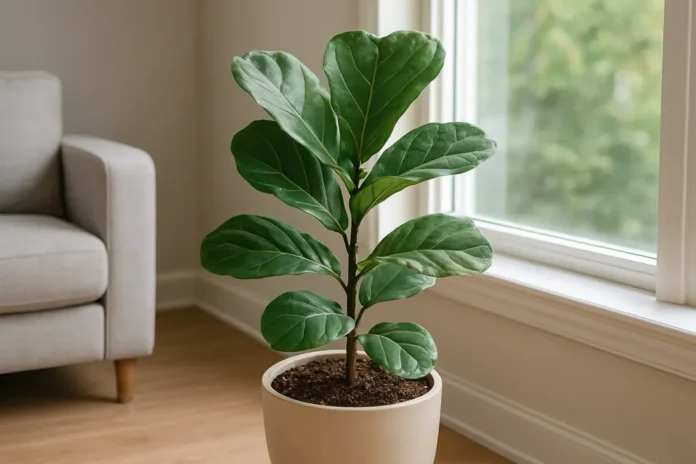
A fiddle leaf fig usually stops making new leaves because it is not getting enough light, warmth, or steady growing conditions. Stress from watering problems, root issues, low humidity, or seasonal slowdown can also pause new growth.
If your fiddle leaf fig looks alive but is not pushing out fresh growth, the problem is usually tied to light, root health, or overall growing conditions. leaves are one of the clearest signs of how actively this plant is growing, so a long pause in leaf production often means the plant is conserving energy instead of using it for new growth.
In many homes, not growing new leaves does not mean the plant is dying. Fiddle leaf figs commonly slow down in fall and winter, and they also react strongly to sudden changes like moving to a darker room, inconsistent watering, cold drafts, or becoming rootbound. The good news is that once the main stress is corrected, healthy plants often resume growth during the active season.
This guide covers the most common reasons a fiddle leaf fig stops producing leaves, how to tell normal slowdown from a real problem, and what helps the plant start growing again.
When a Pause in Growth Is Normal
Fiddle leaf figs do not grow at the same speed all year. In many U.S. homes, they grow most actively in spring and summer when days are longer and indoor temperatures are warmer. During fall and winter, slower growth or a complete pause can be normal, especially if the plant is indoors near a window with weaker seasonal light.
A healthy plant in a resting phase will usually keep its existing leaves looking firm and reasonably green, even if no new ones appear for weeks or months. If the plant is also dropping leaves, leaning hard toward the window, showing brown spots, or looking dull and weak, the issue is more than a seasonal pause.
- Normal slowdown is more likely from late fall through winter.
- A plant can pause growth after being moved to a new home or room.
- If the plant looks stable but inactive, it may simply be waiting for stronger light and warmer conditions.
Low Light Is the Most Common Reason
If a fiddle leaf fig is not growing new leaves, low light is the first thing to suspect. These plants need bright conditions to produce enough energy for new growth. They often survive in medium light, but survival is not the same as active growth.
What Low Light Looks Like
- No new leaves for a long period during spring or summer
- Stems stretching toward the nearest window
- Long spaces between leaves on newer growth
- Smaller new leaves than older ones
- Leaf drop from the lower part of the plant
A bright room is not always bright enough for a fiddle leaf fig. Many plants that appear close to a window are still too far away to get the intensity they need. A spot right in front of an east, south, or bright west-facing window usually works better than the middle of a room.
If natural light is limited, a quality grow light can help restart growth. This is especially useful in winter or in apartments with shaded exposure.
Watering Stress Can Stall Leaf Production
Both underwatering and overwatering can stop a fiddle leaf fig from making new leaves. When moisture swings too far in either direction, the plant shifts its energy from growth to basic survival.
How Underwatering Affects Growth
A plant that stays too dry for too long cannot support active growth. The soil may pull away from the pot edges, leaves may droop or crisp at the margins, and the plant may stop producing new leaves because it does not have enough water pressure to expand fresh tissue.
How Overwatering Affects Growth
Overwatering is just as common. Constantly soggy soil reduces oxygen around the roots, which weakens root function and can lead to rot. If the roots are unhealthy, the plant cannot take up water and nutrients properly, so new leaves often stop forming.
- Underwatered plants often have dry, compacted soil and limp or crispy leaves.
- Overwatered plants may have yellowing leaves, soft spots, a musty smell, or persistently wet soil.
- A consistent watering routine is better than watering on a strict calendar.
Root Problems Can Quietly Halt Growth
Root issues are a major hidden cause of no new leaves. Even when the foliage looks decent, rootbound conditions, poor drainage, or root damage can keep a fiddle leaf fig from growing.
When the Plant Is Rootbound
A rootbound fiddle leaf fig has roots circling tightly inside the pot with very little loose soil left. This makes watering harder to manage and limits access to oxygen, water, and nutrients. The plant may hold onto its old leaves but stop pushing new ones.
When Drainage Is Poor
Heavy, compact soil or pots without drainage holes can leave roots wet too long. In that situation, growth often slows before obvious leaf damage appears. A healthy root system needs both moisture and air space.
- Roots growing from drainage holes can signal crowding.
- Water running straight through the pot may mean there is little soil left to hold moisture.
- A sour smell, black roots, or mushy roots point to rot rather than crowding.
Nutrients Matter, but Too Much Fertilizer Can Backfire
A fiddle leaf fig that has been in the same potting mix for a long time may simply be low on nutrients. Nitrogen supports leafy growth, so a plant that never receives fertilizer during the growing season can slow down and stop producing fresh leaves.
At the same time, overfertilizing can stress the roots and cause salt buildup in the soil. That can lead to brown leaf edges, stalled growth, and root burn. Fertilizer helps only when the plant has enough light and healthy roots to use it.
Signs Nutrition May Be Part of the Problem
- The plant has not been fertilized in a year or more during active growth.
- Growth was strong before but gradually slowed without other major changes.
- Older potting mix looks depleted and dries oddly fast or stays wet too long.
- Leaf color looks pale rather than rich green.
Temperature and Humidity Affect Growth More than Many Gardeners Expect
Fiddle leaf figs are tropical plants, so they grow best in warm, stable indoor conditions. If your plant sits near a drafty door, cold window, heating vent, or air conditioner, growth can slow or stop even if everything else seems fine.
Low humidity usually does not stop growth by itself, but it can add stress, especially in winter when indoor air becomes dry. New leaves are tender and expand more easily when the plant is not fighting dry air and temperature swings.
- Best growth usually happens in temperatures around 65 to 85 degrees Fahrenheit.
- Cold drafts can trigger stalled growth and leaf drop.
- Very dry indoor air may cause brown edges and weaker new growth.
Recent Changes Can Trigger a Stress Response
Fiddle leaf figs are well known for reacting to change. If the plant was recently repotted, moved, rotated into a very different light source, shipped, purchased, or exposed to a sudden schedule change, it may pause before making new leaves again.
This is often temporary. Plants need time to adjust to new root conditions, a new watering rhythm, and a different light environment. During that adjustment period, the safest strategy is stability. Constantly moving the plant or changing multiple care factors at once usually prolongs the problem.
Pests and Disease Can Reduce Growth Energy
A fiddle leaf fig dealing with sap-sucking pests may stop producing leaves because the plant is losing energy. Spider mites, scale, mealybugs, and thrips are the most common indoor culprits. They can be easy to miss at first, especially on the undersides of leaves or along stems.
- Fine webbing or speckled leaves can suggest spider mites.
- Sticky residue may point to scale or mealybugs.
- Silvery scarring or distorted growth can happen with thrips.
- Black spots with soft tissue may suggest disease tied to excess moisture.
If pests are present, growth often resumes only after the infestation is controlled and the plant has time to recover.
How to Encourage New Leaves Again
Once you understand the likely cause, the goal is to improve growing conditions without shocking the plant. New growth usually returns when the plant has enough light, a healthy root zone, and a steady care routine.
- Move the plant to brighter indirect light or gentle direct morning sun if it has been living too far from a window.
- Water thoroughly when the top portion of soil has dried, then let excess water drain completely.
- Check that the pot has drainage holes and the potting mix is airy rather than dense and soggy.
- Repot if the plant is badly rootbound or the soil is degraded.
- Feed lightly during spring and summer with a balanced houseplant fertilizer if the plant is actively growing.
- Keep temperatures warm and steady and protect the plant from cold drafts or vents.
- Inspect leaves and stems for pests and treat promptly if needed.
- Be patient after making corrections, because new leaves may not appear immediately.
Do not expect instant results. A fiddle leaf fig may need several weeks of improved conditions before it produces a visible bud or unfurls a new leaf, especially after winter or a recent stress event.
Signs Your Fiddle Leaf Fig Is Recovering
Recovery usually starts subtly. Before you see a new leaf, the plant may begin to look firmer, more upright, and more evenly colored. Leaf drop may slow or stop, and the soil may start drying at a more predictable rate as the roots function better.
- A swelling bud at the tip of a branch
- A tiny sheath or pointed green tip emerging from the stem end
- Leaves holding themselves more upright
- More consistent moisture use between waterings
- No further yellowing or sudden leaf loss
When No Growth Points to a Bigger Problem
If your fiddle leaf fig has gone many months through the active growing season with no new leaves and is also losing older leaves, staying wet for a long time, or showing stem softening, the issue may be more serious. Severe root rot, major pest pressure, or chronic low light can leave the plant unable to resume growth without bigger changes.
At that point, it helps to examine the roots, reassess the location, and simplify care. A healthy environment can often save the plant, but long-term decline is harder to reverse if stress has been building for months.
FAQ
How Long Can a Fiddle Leaf Fig Go Without Growing New Leaves?
It can go several weeks or even a few months without new leaves, especially in fall and winter. A longer pause during spring and summer usually suggests low light, stress, or root problems.
Will a Fiddle Leaf Fig Grow New Leaves From the Bottom?
Usually no. Fiddle leaf figs most often produce new leaves from the tips of stems, not from the lower trunk where old leaves dropped.
Does Repotting Help a Fiddle Leaf Fig Grow New Leaves?
Repotting can help if the plant is rootbound or stuck in poor soil. It may pause briefly after repotting, then resume growth once the roots settle in.
Can Low Humidity Stop New Leaf Growth Completely?
Low humidity alone is not always the main cause, but it can slow growth and stress tender new leaves. It matters more when combined with low light, drafts, or watering problems.
Should I Fertilize My Fiddle Leaf Fig if It Is Not Growing?
Only if the plant has adequate light and is in active growing season. Fertilizer will not fix stalled growth caused by poor light, root rot, or cold stress.
Why Is My Fiddle Leaf Fig Healthy Looking but Not Making Leaves?
It may be in a normal seasonal slowdown or maintaining itself in conditions that are good enough for survival but not strong growth. Low indoor light is a very common reason for this pattern.
Can Pruning Encourage a Fiddle Leaf Fig to Grow New Leaves?
Pruning can encourage branching and new growth from cut points when the plant is healthy and actively growing. It will not solve a lack of leaves if the real issue is low light, poor roots, or stress.
Want your fiddle leaf fig back in active growth? Read our guide to the best grow lights, potting mixes, and fertilizers for fiddle leaf figs so you can choose the right setup fast.
