

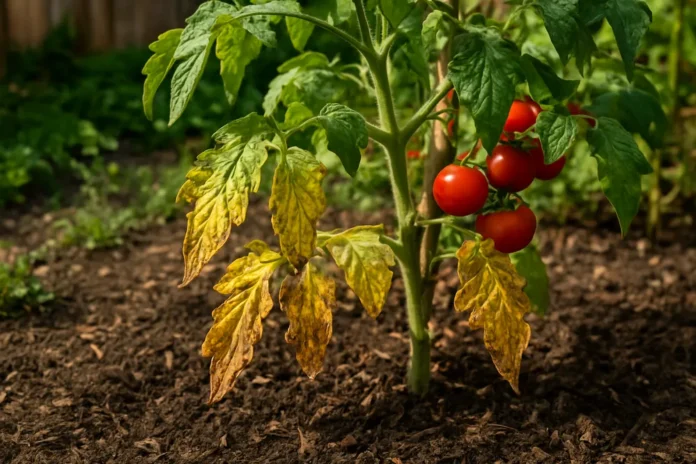
A tomato plant usually dies from the bottom up because the oldest lower leaves are the first to show stress from watering problems, root damage, nutrient deficiency, or fungal disease. In many cases, the trouble starts in the roots or lower stem and then moves upward.
When a tomato plant starts dying from the bottom up, it usually means the oldest, lowest leaves are reacting first to stress. That can look like yellowing, brown spots, wilting, leaf drop, or stems that seem to weaken near the soil line while the upper growth still looks fairly normal at first.
This bottom-up pattern is common because lower leaves are older and closer to soilborne problems. Issues like inconsistent watering, poor drainage, root damage, nutrient shortages, fungal disease, and even normal plant aging often show up there before spreading higher. The good news is that the pattern itself gives you useful clues about what is going wrong.
What Bottom-up Decline Usually Means in Tomatoes
A tomato that declines from the bottom up is often dealing with a problem that starts below ground or near the soil surface. Roots, lower stems, and older leaves are the first parts affected when the plant cannot move water and nutrients properly. That is why you may see bottom leaves yellow first, then wilt, dry up, or develop blotches before the top of the plant shows obvious damage.
Not every case means the plant is beyond saving. Tomatoes naturally shed some older lower leaves as they mature, especially once the canopy gets dense and fruit production ramps up. The concern is when the decline moves steadily upward, leaves show spotting or collapse, stems darken, or the whole plant loses vigor.
- Lower leaves turning yellow first often points to water stress, nitrogen deficiency, or natural aging.
- Lower leaves with dark spots, halos, or rapid blighting often suggest fungal or bacterial disease.
- Wilting that begins low on the plant can signal root rot, stem injury, or vascular disease.
- A stem that is pinched, dark, or mushy at the soil line can indicate severe rot or physical damage.
Watering Problems Are One of the Most Common Causes
Overwatering and Poor Drainage
Tomatoes need steady moisture, but they do not do well in soggy soil. When the root zone stays too wet, roots struggle to get oxygen and may start to rot. The first visible symptoms often appear on the oldest leaves near the bottom. They can turn yellow, look limp, and eventually brown out.
This is especially common in heavy clay soil, containers without enough drainage, or beds watered too often with short, shallow sessions. Wet soil also encourages fungal pathogens that attack roots and lower stems.
Underwatering and Inconsistent Moisture
Dry spells can also trigger bottom-up decline. When a tomato plant cannot take up enough water, it may sacrifice older lower leaves first. Those leaves yellow, curl, crisp, and drop while the plant tries to protect newer growth and fruit.
A swing between very dry and very wet soil is even harder on tomatoes than a short dry period. It stresses roots, reduces nutrient uptake, and weakens the plant's ability to resist disease.
- Soil that stays swampy for days after watering points toward overwatering or drainage problems.
- Soil that pulls away from the sides of a pot or feels dry several inches down points toward underwatering.
- Leaves that perk up at night but wilt again quickly during the day often suggest root stress or uneven moisture.
Soilborne Diseases Often Start Low and Move Up
Early Blight
Early blight is one of the classic reasons tomato leaves die from the bottom upward. It usually starts on older lower leaves with brown spots that develop concentric rings, giving them a target-like look. The leaves then yellow around the spots, dry up, and fall off. As the disease progresses, it climbs the plant.
Septoria Leaf Spot
Septoria also begins low on the plant because spores splash up from soil onto lower leaves. It causes many small circular spots with dark edges and lighter centers. A heavy infection can strip the bottom half of the plant and expose fruit to sunscald.
Fusarium Wilt and Verticillium Wilt
These vascular diseases interfere with water movement inside the plant. Lower leaves often yellow first, sometimes only on one side of the plant or on one side of a single leaf. Wilting may happen even when the soil is moist. Once these diseases are advanced, recovery is unlikely.
Southern Blight and Collar Rot
If the lower stem near the soil line becomes brown, rotted, or constricted, a stem or collar disease may be involved. In warm, humid conditions, southern blight can cause sudden collapse. You may even see white fungal growth near the base.
- Leaf spots that start low and spread after rain or overhead watering often indicate fungal disease.
- Yellowing and wilting with no recovery despite moist soil suggest a vascular or root problem.
- Dark lesions or decay at the soil line point to lower stem rot rather than a simple nutrient issue.
Root Damage Can Make the Whole Plant Fail From the Base Upward
Anything that injures roots can trigger a slow decline that starts with lower leaves. Compacted soil, transplant shock, root-knot nematodes, cultivation damage, and container crowding all limit the root system. When roots are compromised, the plant cannot support all of its foliage, so the oldest leaves are the first to fade.
Tomatoes in raised beds and containers can also become rootbound or heat-stressed. Roots pressed against a hot pot wall or circling tightly in a small container lose efficiency. In the garden, deep hoeing too close to the plant can sever feeder roots and lead to sudden yellowing below.
Signs Root Damage May Be Involved
- The plant stays stunted even though it is fertilized and watered.
- Lower leaves decline first, but leaf spots are minimal or absent.
- Wilting happens during warm weather and recovery is weak.
- Roots look brown, sparse, swollen, or knotted when inspected.
Nutrient Deficiencies Can Begin on Older Lower Leaves
Because lower leaves are older, mobile nutrient deficiencies often show there first. The plant moves nutrients from those older leaves into new growth, which can make the bottom of the plant yellow and deteriorate before the top looks affected.
Nitrogen Deficiency
A nitrogen-starved tomato often develops pale green to yellow lower leaves that fade fairly evenly. Growth slows, stems stay thin, and fruit production may suffer. This is especially common in poor soil, heavily watered beds, or containers that have not been fed regularly.
Magnesium Deficiency
Magnesium problems can cause yellowing between the veins on older leaves while the veins stay greener. Over time those leaves may brown and drop. It is more common in containers or soils with nutrient imbalance.
Keep in mind that a deficiency is not always caused by low fertilizer. Cold soil, waterlogged roots, very dry soil, or incorrect pH can all block nutrient uptake and create deficiency-like symptoms.
Some Lower Leaf Loss Is Normal as Tomatoes Mature
Tomatoes do not keep every leaf forever. As plants get taller and denser, the shaded lower leaves receive less light and naturally age out. A few yellowing leaves near the bottom on an otherwise vigorous, green, productive plant are usually not a reason to panic.
This normal aging tends to be gradual and limited. The leaves yellow evenly, then dry and drop without major spotting, stem lesions, or widespread wilt. The upper plant continues growing, flowering, and setting fruit.
- Normal aging affects just a small number of old leaves at a time.
- The rest of the plant remains firm, green, and actively growing.
- There is no rapid upward spread through the canopy.
- Stems near the soil line stay healthy and solid.
How to Tell Which Cause Is Most Likely
The exact pattern matters more than the phrase "dying from the bottom up." Look closely at the lower leaves, stem base, and soil conditions. Different causes leave different fingerprints.
Clues From the Leaves
- Even yellowing on older leaves suggests age, nitrogen shortage, or root stress.
- Small spots with dark margins suggest septoria.
- Larger target-like spots suggest early blight.
- Yellowing on one side or wilting without spotting suggests vascular wilt.
Clues From the Stem and Soil
- Soggy, cool, or sour-smelling soil suggests drainage trouble or root rot.
- A dark, pinched, or mushy stem base suggests stem disease or rot.
- Bone-dry soil and brittle lower leaves suggest drought stress.
- A crowded or undersized container suggests restricted roots and fast moisture swings.
If symptoms are moving quickly and the plant is wilting even after proper watering, disease or severe root damage is more likely than a simple feeding issue.
What to Do Right Now to Help the Plant
Once the lower part of a tomato plant starts failing, the right response depends on the cause. The goal is to reduce stress fast, improve air flow, and stop any disease from spreading higher.
- Remove yellowed, spotted, or dead lower leaves and dispose of them in the trash, not the compost pile if disease is suspected.
- Water deeply but less often, aiming to keep the soil evenly moist rather than constantly wet or dry.
- Switch to watering at the soil line instead of overhead to reduce splash and leaf wetness.
- Add mulch around the base to stabilize moisture and limit soilborne spores from splashing upward.
- Check drainage in beds and containers, and empty saucers so roots do not sit in water.
- Stake or cage the plant so foliage stays off the soil and air can move through the canopy.
- Feed lightly with a balanced tomato fertilizer if the plant looks pale overall and disease is not the main issue.
If the stem base is rotting, the whole plant is collapsing, or wilt keeps progressing despite good care, removal may be the best option. Saving one badly infected plant is usually less important than protecting the rest of the crop.
When a Tomato Plant Can Recover and when It Probably Will Not
Tomatoes can often bounce back from mild underwatering, minor nutrient issues, temporary transplant stress, or a small amount of natural lower leaf loss. If the top growth still looks healthy and new leaves remain green, recovery is realistic once conditions improve.
Recovery is less likely when the decline is caused by fusarium wilt, verticillium wilt, severe root rot, southern blight, or extensive stem cankers. In those cases, the damage interferes with the plant's internal water transport or destroys critical tissue near the roots.
- Good recovery signs include healthy new growth, improved turgor, and no fresh spotting after cleanup.
- Poor recovery signs include ongoing wilt in moist soil, dark stem lesions, and steady upward spread of yellowing or blight.
How to Prevent Bottom-up Decline in Future Tomato Plants
Prevention is usually easier than cure with tomatoes. Most bottom-up problems start with wet leaves, stressed roots, poor spacing, or infected soil. A few basic habits can greatly reduce trouble.
- Plant tomatoes in full sun with good spacing for air movement.
- Use cages, stakes, or trellises to keep foliage off the ground.
- Water at the base early in the day rather than overhead in the evening.
- Mulch after the soil warms to reduce splash and moisture swings.
- Rotate tomatoes and other nightshades to a different bed when possible.
- Choose disease-resistant varieties if wilt diseases are common in your area.
- Clean up fallen leaves and end-of-season plant debris promptly.
- Use containers large enough to support a strong root system and stable moisture.
If you have had recurring wilt or blight problems, fresh soil in containers, longer crop rotation, and resistant varieties can make a major difference the next season.
FAQ
Should I Cut Off the Dying Leaves at the Bottom of My Tomato Plant?
Yes, you can remove yellow, brown, or spotted lower leaves, especially if they are touching the soil or clearly diseased. Use clean pruners and avoid removing too much healthy foliage at once.
Can Overwatering Make a Tomato Plant Die From the Bottom Up?
Yes. Overwatering and poor drainage can suffocate roots, cause yellow lower leaves, and encourage root or stem rot that begins near the soil line.
Why Are Only the Bottom Leaves Yellow but the Top Still Looks Healthy?
That usually means the oldest leaves are reacting first to stress. Common reasons include natural aging, inconsistent watering, nitrogen deficiency, or an early stage of leaf disease.
Can a Tomato Plant Recover After the Bottom Leaves Die?
It can if the cause is mild stress, nutrient shortage, or a limited amount of lower leaf disease. Recovery is less likely if the plant has vascular wilt, severe root rot, or major stem damage.
Is Bottom-up Decline a Sign of Blight?
It can be. Early blight and septoria leaf spot often start on lower leaves because spores splash up from the soil, then move higher if conditions stay wet.
Does Fertilizer Fix a Tomato Plant That Is Dying From the Bottom Up?
Only if nutrient deficiency is the real problem. Fertilizer will not cure fungal disease, root rot, or severe watering issues, and too much can add more stress.
Why Is My Tomato Plant Wilting From the Bottom Even Though the Soil Is Wet?
Wilting in wet soil often points to root damage, root rot, or a vascular disease such as fusarium or verticillium wilt. The plant may be unable to move water even though moisture is present.
Need the right fix fast? Read our tomato disease and treatment guide to match symptoms, choose effective products, and protect the rest of your plants before the problem spreads.
