

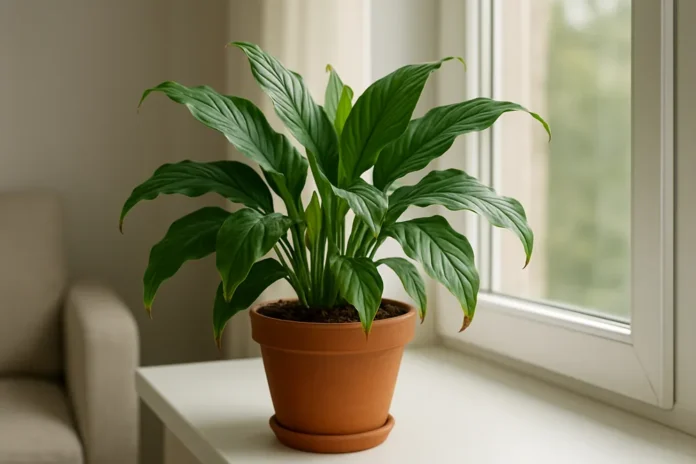
Peace lily leaves usually curl because the plant is stressed by improper watering, dry air, temperature extremes, or too much direct sun. Pests, fertilizer buildup, and root problems can also cause the leaves to roll or twist.
If your peace lily suddenly looks droopy, twisted, or tightly rolled, curling foliage is a sign the plant is under stress. Leaves on a peace lily are meant to stay broad and fairly smooth, so curling usually points to a problem with moisture, light, temperature, roots, or pests.
The good news is that curled leaves do not always mean your plant is dying. Peace lilies often react quickly to environmental changes, and that makes the symptoms noticeable early. Once you match the leaf curl pattern with the most likely cause, the plant can often recover and produce healthy new growth.
What Curling Leaves Usually Mean on a Peace Lily
Curled peace lily leaves are a protective response. When the plant cannot move water properly, loses moisture too fast, or gets damaged by heat, salts, or pests, the leaves may fold inward to reduce stress. Curling can happen with crispy edges, yellowing, limp stems, brown tips, or spotting, depending on the root cause.
- Tight inward curling often points to dryness, heat, or low humidity.
- Soft curled leaves with drooping can suggest underwatering or overwatering.
- Curling with yellow leaves may indicate root stress, drainage problems, or nutrient imbalance.
- Curling with stippling, sticky residue, or distorted new growth often means pests.
- Curling on the sun-facing side can be linked to too much direct light.
Watering Stress Is the Most Common Cause
Underwatering Can Make Leaves Curl and Collapse
Peace lilies are famous for dramatic wilting when they get too dry. Before the whole plant flops, the leaves may start curling inward or developing a slightly taco-like shape. Dry potting mix, lightweight pots, and brown crispy tips are common clues. If the plant is repeatedly allowed to go bone dry, the roots become less efficient and the leaf curl can become more frequent.
Overwatering Can Look Similar at First
Too much water can also cause curling because suffocated roots cannot absorb moisture well. In that case, the plant may look wet and thirsty at the same time. Leaves may curl but stay soft, lower leaves may yellow, and the potting mix may smell sour or stay soggy for days. Constantly saturated soil raises the risk of root rot, which makes the symptoms worse.
How to Tell Which Watering Problem You Have
- If the soil feels dry several inches down and the pot feels light, underwatering is more likely.
- If the soil stays wet, the pot is heavy, and leaves are yellowing or mushy near the base, overwatering is more likely.
- If symptoms swing between limp and stressed after long dry spells followed by heavy watering, the issue may be inconsistent watering.
The best correction is steady moisture, not extremes. Water thoroughly when the top inch or two of soil feels dry, then let extra water drain completely. Do not leave the inner pot sitting in a saucer full of water.
Low Humidity and Dry Indoor Air Can Curl the Leaf Edges
Peace lilies are tropical plants, so they prefer moderate to high humidity. In many U.S. homes, especially during winter heating season or in air-conditioned rooms, indoor air is much drier than the plant likes. When moisture loss from the leaves outpaces what the roots can replace, the edges begin to curl, wrinkle, or crisp.
- Leaf edges curl first while the center of the leaf still looks green
- Brown, papery tips or margins develop over time
- Symptoms may be worse near heaters, vents, fireplaces, or drafty windows
- New leaves may emerge smaller than normal
Dry air rarely kills a peace lily by itself, but it creates chronic stress that makes the plant more sensitive to watering mistakes and spider mites. Grouping plants together, using a pebble tray, or running a humidifier nearby can help reduce repeat curling.
Too Much Sun or Heat Can Make Leaves Fold Inward
Peace lilies grow best in bright, indirect light. Direct afternoon sun, a hot south-facing window, or intense reflected heat can cause leaves to curl as a defense against water loss and sun injury. This is especially common after moving a plant outdoors for summer or placing it near glass that gets hot during the day.
- Curling is strongest on leaves facing the light source
- Bleached, faded, or yellow patches appear on exposed leaves
- Brown scorch marks may form on broad areas of the leaf
- The plant dries out much faster than usual
Move the plant to a spot with filtered light or a few feet back from a bright window. Morning sun is gentler than afternoon sun, but peace lilies still do best when harsh rays are softened by a curtain or distance from the glass.
Temperature Swings and Drafts Stress Peace Lilies Fast
Peace lilies prefer stable indoor temperatures, generally between 65 and 80 degrees Fahrenheit. Cold drafts, sudden blasts from HVAC vents, or hot dry air can all cause curling, drooping, and tip burn. Even if the room feels comfortable to you, the microclimate right next to a window or vent may be much harsher.
Cold damage often causes leaves to curl and then turn limp or darken. Heat stress usually leads to tighter curling with dry edges. If the problem started right after a move, a seasonal temperature shift, or a vent turning on, the environment is a strong suspect.
Poor Water Quality and Fertilizer Salt Buildup Can Distort Leaves
Peace lilies can be sensitive to excess salts, chlorine, fluoride, and overfertilizing. When minerals build up in the soil, the roots struggle to take up water normally. That stress can show up as curled leaves, brown tips, and a white crust on the soil surface or pot rim.
Signs Salt Buildup May Be Involved
- Leaf tips brown first, then margins curl
- Symptoms appear after frequent feeding
- Potting mix dries with a crusty residue
- The plant worsens even though watering seems correct
If this fits your plant, flush the potting mix with clean water until it runs freely from the drainage holes. Then cut back fertilizer to a light feeding schedule during active growth only. In areas with very hard tap water, filtered, distilled, or rainwater may reduce recurring damage.
Root Problems Can Trigger Persistent Curling
Root Rot Keeps Leaves From Getting Enough Water
When roots sit in soggy soil too long, they can rot and stop functioning. Even though the soil is wet, the leaves act drought-stressed because damaged roots cannot move water upward. Curling, yellowing, wilting, and a foul smell from the pot are classic warning signs.
Rootbound Plants Can Also Curl
A peace lily packed tightly with roots may dry out too fast and become difficult to re-wet evenly. The leaves may curl between waterings even when you are attentive. If roots circle densely around the root ball or poke from drainage holes, the plant may need repotting into a container one size larger.
When repotting, choose a pot with drainage holes and a loose indoor plant mix that holds moisture without staying swampy. Oversized pots can keep soil wet too long, so only move up modestly.
Pests Can Cause Curling, Twisting, and Misshapen Growth
Sap-sucking pests damage tender tissue and interfere with normal leaf expansion. On peace lilies, spider mites, aphids, mealybugs, and thrips are the most likely culprits. Pest damage is especially common when the plant is already stressed by dry air or inconsistent watering.
What Pest-related Curling Looks Like
- New leaves emerge curled, twisted, or deformed
- Tiny speckles or silvery scarring appear on the leaf surface
- Fine webbing may show up with spider mites
- Sticky residue can indicate aphids or other sap feeders
- You may see small insects clustered along stems or undersides of leaves
If pests are present, isolate the plant from others and clean the leaves thoroughly. Insecticidal soap or neem-based products can help, but coverage has to be complete, especially on leaf undersides and in new growth.
Less Common Causes to Keep in Mind
Not every curled leaf points to a major issue. Sometimes a single damaged leaf curls after being bent, rubbed, or squeezed while unfurling. Very old leaves can also lose shape as they age. If the rest of the plant looks healthy and new growth is normal, the problem may be minor and temporary.
- Mechanical damage while a leaf was opening
- Recent shipping or relocation stress
- Sudden transplant shock after repotting
- Natural aging of one or two older leaves
How to Fix Curling Peace Lily Leaves
The best treatment depends on what caused the stress, but most peace lilies improve when care is brought back into balance. Existing curled leaves may not flatten completely, especially if they are damaged, but healthy new growth is the real sign of recovery.
- Adjust watering so the soil stays lightly moist but never soggy for long periods.
- Move the plant into bright, indirect light away from strong afternoon sun.
- Keep it away from heating vents, air conditioners, and chilly drafts.
- Raise humidity if your indoor air is very dry.
- Flush excess salts from the soil and reduce fertilizer if buildup is likely.
- Inspect closely for pests, especially on leaf undersides and new growth.
- Check the roots if the plant stays stressed despite better care.
Trim badly browned or damaged leaves with clean scissors if they spoil the appearance, but avoid removing too much healthy tissue at once. Peace lilies recover better when they still have enough foliage to photosynthesize well.
How to Prevent Leaf Curling in the Future
Prevention is mostly about consistency. Peace lilies do not need perfect conditions, but they respond best when light, moisture, and temperature stay fairly steady.
- Use a pot with drainage holes and a quality indoor plant mix
- Water when the top inch or two of soil feels dry instead of on a rigid calendar
- Place the plant in bright, filtered light
- Keep temperatures stable and avoid cold or hot blasts of air
- Wipe leaves occasionally so you can spot pests early
- Fertilize lightly during spring and summer rather than heavily year-round
- Repot when roots are crowded, but only one pot size up
FAQ
Will Curled Peace Lily Leaves Uncurl Again?
Sometimes mildly stressed leaves relax after conditions improve, especially if the cause was temporary underwatering or heat. Severely damaged leaves usually stay misshapen, so watch the new growth to judge recovery.
Should I Cut Off Curled Peace Lily Leaves?
Only remove leaves that are badly browned, torn, or no longer contributing much to the plant. Slightly curled green leaves can still help the plant recover by producing energy.
Can Overwatering and Underwatering Both Cause Curling?
Yes. Both problems interfere with water movement inside the plant, so both can make leaves curl. The difference is that underwatered soil feels dry, while overwatered soil stays wet and often leads to yellowing.
Do Peace Lily Leaves Curl From Too Much Sun?
Yes. Direct sun and heat can make the leaves fold inward, fade, or develop scorched patches. Peace lilies prefer bright, indirect light rather than intense afternoon sun.
Can Low Humidity Alone Cause Peace Lily Leaves to Curl?
Yes, especially at the edges and tips. Dry air is a common reason peace lily foliage curls slightly and turns crispy, particularly in winter or near forced-air heating.
How Often Should I Water a Peace Lily with Curling Leaves?
Do not water by a fixed schedule alone. Water when the top inch or two of soil feels dry, then water thoroughly and let the excess drain away.
What Pests Make Peace Lily Leaves Curl?
Spider mites, aphids, mealybugs, and thrips can all cause curling or distorted leaves. Pest damage is more likely on stressed plants and often affects new growth first.
Need help choosing the right fix fast? Explore our peace lily care and houseplant pest treatment guides to find the best products, watering tools, and recovery steps for healthier indoor plants.
