

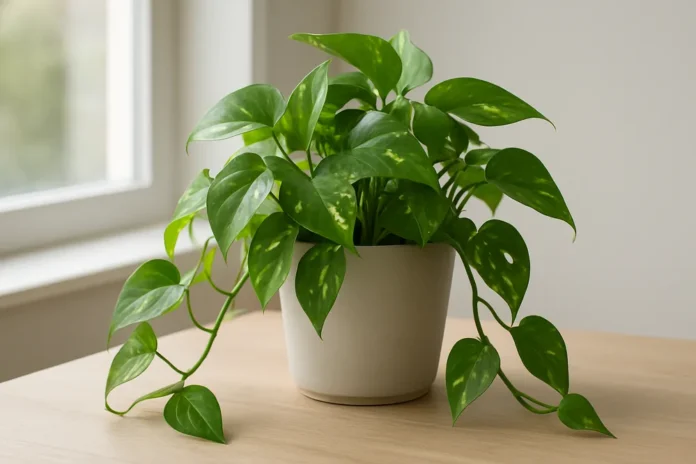
Pothos leaves usually get holes from tearing as new leaves open, physical damage, or pest feeding. Plant stress from dry air, watering issues, or temperature swings can make holes more likely.
Finding pothos damage can be frustrating, especially when otherwise healthy vines suddenly show missing pieces or ragged openings. In many homes, pothos leaves develop holes because a tender new leaf was damaged before or during unfurling, but pests and rough handling can also be responsible.
If you are seeing holes in leaves, the good news is that pothos is usually resilient and the cause is often fixable. The pattern of the damage matters a lot. Clean splits, random tears, tiny chew marks, and holes paired with yellowing or browning can each point to a different problem.
What Holes in Pothos Leaves Usually Mean
A hole in a pothos leaf is not a symptom with just one cause. Unlike yellow leaves, which often point to watering or nutrient issues, holes usually mean the leaf tissue was physically damaged at some point. That damage may have happened while the leaf was still rolled up, after it opened, or from insects feeding on it.
The most common causes are torn leaves during unfurling, accidental bumps or rubbing, and pest damage. Less often, holes show up after environmental stress weakens tender growth. Disease is possible, but it is not the first suspect on indoor pothos unless you also see dark lesions, mushy spots, or a leaf that seems to rot away.
- Random holes with ragged edges often suggest physical tearing or chewing pests.
- Small holes with silvery scarring can point to thrips.
- Holes that seem to appear after a leaf opens often started as damage while the leaf was still curled.
- Brown-edged holes or dead spots may come from scorch, cold injury, or severe dryness.
Common Causes of Holes in Pothos Leaves
Leaves Tearing as They Unfurl
This is one of the most common reasons indoor pothos leaves end up with holes. New leaves are thin, soft, and tightly rolled before they open. If humidity is very low, the plant is dehydrated, or the leaf gets stuck as it unfurls, sections can tear. Once the leaf fully opens, that tear looks like a clean split or a hole in the blade.
This type of damage is especially common in winter when indoor air is dry, near heating vents, or after inconsistent watering. The plant may still look healthy overall, but a few newer leaves come out misshapen or damaged.
Physical Damage From Handling or Rubbing
Pothos is tough, but its leaves can still tear. A leaf may snag on a shelf, scrape against a wall, get pinched during repotting, or fold awkwardly when you move the pot. Pets, kids, and even brushing past the plant regularly can leave holes or splits.
Physical damage often creates larger, irregular holes with no other symptoms. If the rest of the plant looks vigorous and there is no sign of insects, this is a likely explanation.
Pest Feeding
Several pests can damage pothos leaves, but thrips are one of the most likely to create scars that later turn into holes. Thrips scrape plant tissue and suck out contents, leaving silvery streaks, deformed leaves, and tiny black specks of waste. When damaged tissue dries out, it may crack or fall away.
Caterpillars, slugs, or beetles are less likely on an indoor pothos but are possible on plants that spend time outdoors. Spider mites and aphids usually do not create true holes, though they can weaken leaves and cause stippling, curling, or distortion.
- Thrips: silvery patches, tiny black specks, distorted new growth
- Chewing insects: obvious bite marks or missing chunks along the edges
- Slugs or snails: larger irregular holes, often with slime trails on outdoor plants
Low Humidity and Dry Conditions
Pothos tolerates average indoor humidity fairly well, but very dry air can make leaf tissue less flexible. New leaves may stick together, fail to open smoothly, and tear. Dry soil at the same time makes this more likely because the plant cannot keep enough moisture moving into expanding foliage.
Low humidity alone does not usually punch holes in old leaves. It is more often a contributing factor that leads to tears in fresh growth.
Watering Stress
Underwatering can leave new leaves too dry and fragile to unfurl cleanly. Overwatering can stress roots, reducing the plant's ability to support healthy new growth. In both cases, weakened leaves are more likely to emerge thin, damaged, or malformed.
Watering stress usually comes with other symptoms too, such as drooping, yellowing, brown tips, a heavy soggy pot, or a wilted plant that perks up after watering.
Sunburn or Temperature Injury
Strong direct sun can scorch pothos leaves, creating pale or brown patches that later dry and break apart. Cold drafts from windows or air conditioning can also damage leaf tissue. When that dead tissue cracks or falls out, it can look like a true hole.
This kind of damage is usually surrounded by discoloration. If the hole has a crispy brown border or the leaf also has faded patches, environmental injury becomes more likely.
Disease and Rot
Leaf spot diseases are not the most common reason for holes on pothos, but they can happen, especially in crowded, wet conditions. A small dark lesion may expand, die back, and eventually drop out. This can leave a shot-hole effect where dead spots become openings.
When disease is involved, the holes are usually not the only symptom. Watch for yellow halos, soft areas, spreading spots, or multiple leaves declining at once.
How to Tell Which Cause Is Affecting Your Plant
The best clue is the pattern of damage and whether it appears on new leaves, old leaves, or both. Pothos leaves do not repair themselves, so focus on what the newest growth is doing now.
Signs the Damage Happened During Unfurling
- Holes or splits appear mainly on fresh leaves
- Edges look fairly clean rather than chewed
- There is no insect residue or webbing
- The plant has been dry, near heat, or in low humidity
Signs Pests Are Involved
- Tiny black dots, silvery streaks, or distorted new leaves
- Active insects on leaf undersides or near growth tips
- Damage keeps appearing even when the plant is not being moved
- Multiple houseplants nearby show unusual scarring or curling
Signs Physical Damage Is the Main Issue
- Only one or two leaves are affected
- Holes are larger and irregular
- Damage is near the edge of the plant where leaves brush against objects
- The plant was recently moved, repotted, or transported
Signs Stress or Environmental Injury Played a Role
- Brown crispy patches surround the hole
- Leaves face a sunny window with direct afternoon sun
- The plant sits near a vent, draft, or cold glass
- There are other symptoms like wilt, yellowing, or brown tips
How to Fix Pothos Leaves with Holes
Damaged leaves will not fill back in, so the goal is to stop new holes from forming. Your fix should match the likely cause. Start with the simplest issues first: watering, humidity, handling, and pest inspection.
Adjust Watering Habits
Water when the top inch or two of soil feels dry, rather than on a rigid schedule. Pothos likes evenly moist soil that is allowed to dry slightly between waterings. Do not let it stay bone dry for long stretches, but do not keep it constantly soggy either.
If the plant is in a heavy potting mix that stays wet for too long, consider repotting into a well-draining indoor plant mix with perlite or bark added for air flow.
Improve Humidity Around New Growth
If new leaves are tearing as they open, modestly raising humidity can help. Aim for typical comfortable indoor humidity rather than a tropical greenhouse level. Keep the plant away from heating vents, and consider grouping plants together or using a humidifier if your air is very dry.
Misting is not the most reliable long-term solution. It raises humidity only briefly and may do little in a dry room.
Check Carefully for Pests
Look closely at the undersides of leaves, along the midrib, and around tightly packed new growth. If you find thrips or other pests, isolate the plant from other houseplants right away.
- Rinse the foliage gently to remove visible insects.
- Wipe leaves with a soft cloth, especially the undersides.
- Treat with insecticidal soap or neem according to the product label.
- Repeat applications as directed because pests often hatch in cycles.
- Monitor nearby houseplants for similar symptoms.
Prevent More Tearing and Bruising
Give vines enough space so leaves do not constantly rub against walls, baskets, or furniture. When moving the plant, support the vines and avoid bending fresh growth. If your pothos climbs a pole or board, attach stems loosely so new leaves can open without snagging.
Correct Light and Temperature Stress
Move pothos into bright, indirect light if it is getting harsh direct sun. Keep it away from cold drafts, heater blasts, and sudden temperature swings. Pothos generally performs best in stable indoor conditions with moderate warmth.
Remove Badly Damaged Leaves if Needed
A leaf with a few holes can still photosynthesize, so removal is optional. Trim off leaves that are heavily torn, pest-ridden, or visually distracting. Use clean scissors and cut near the base of the leaf stem without injuring the vine.
How to Prevent New Holes From Appearing
Prevention is mostly about steady plant care. Pothos is forgiving, but new growth comes out best when moisture, humidity, and light stay consistent.
- Keep the plant in bright, indirect light.
- Water when the top layer of soil dries, not only when the plant wilts.
- Use a pot with drainage and a loose, well-draining mix.
- Avoid placing the plant near vents, radiators, or cold windows.
- Inspect new growth regularly for thrips and other pests.
- Handle vines gently, especially when repotting or rearranging.
- Rotate the pot occasionally so growth stays balanced and does not press into nearby surfaces.
If your pothos pushes out healthy new leaves after you make a few corrections, the issue was likely temporary. Judge progress by the next round of growth rather than by older leaves that were already damaged.
When Holes Are Not a Serious Problem
Not every hole means your pothos is in trouble. A single torn leaf after a move, a minor split on one new leaf, or a bit of damage from brushing the plant usually does not signal a bigger health problem. If new growth is otherwise normal, color is good, and the plant is actively growing, your pothos is probably fine.
The situation becomes more concerning when holes keep appearing on multiple new leaves, especially alongside pests, discoloration, wilting, or distorted growth. Repeated damage means something in the environment or care routine still needs attention.
FAQ
Will Holes in Pothos Leaves Heal?
No. A damaged pothos leaf will not repair the missing tissue. Focus on preventing damage to future leaves rather than waiting for holes to close.
Should I Cut Off Pothos Leaves with Holes?
Only if they are badly damaged, unattractive, or affected by pests or disease. Leaves with a few holes can still help the plant by photosynthesizing.
Can Low Humidity Cause Holes in Pothos Leaves?
Yes, especially indirectly. Dry air can make tender new leaves stick and tear as they unfurl, which later shows up as holes or splits.
Do Thrips Cause Holes in Pothos Leaves?
They can. Thrips often scar and weaken the leaf surface first, and that damaged tissue may crack or fall away, creating hole-like openings.
Can Too Much Sun Make Holes in Pothos Leaves?
Yes. Direct sun can scorch leaf tissue, and the dead, brittle areas may dry out and break apart, leaving holes with brown edges.
Why Do Only the New Pothos Leaves Have Holes?
That usually points to damage while the leaf was still rolled up. Low humidity, underwatering, rough handling, or pests around the growth tip are common reasons.
Are Holes in Pothos Leaves a Sign of Overwatering?
Not usually by themselves. Overwatering is more likely to cause yellowing, wilting, or root problems, but it can weaken the plant and contribute to misshapen new leaves.
Need help fixing pothos problems fast? Read our guide to the best houseplant pest treatments and indoor plant care tools so you can stop damage and get healthy new growth sooner.
