

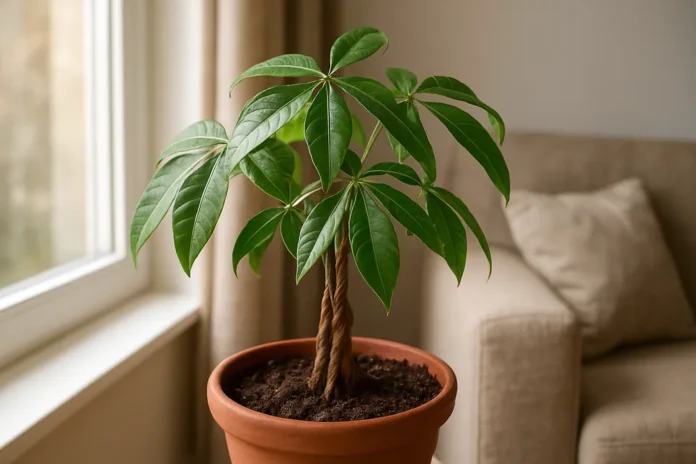
Money tree leaves usually curl when the plant is stressed by watering problems, low humidity, temperature swings, pests, or root trouble. Curling is the plant's way of reducing stress and protecting its leaves.
A money tree with curling leaves is usually telling you that something in its environment is off balance. In most homes, the cause comes down to water, air moisture, light, temperature, or pests rather than a rare disease.
I treat curling as an early warning sign, not a final diagnosis. A money tree can stay attractive for quite a while even while it is stressed, so it helps to look at the leaf shape, soil moisture, and overall growing conditions before the problem turns into yellowing, browning, or leaf drop.
The good news is that curled leaves often improve once the plant is back on a steady routine. The key is figuring out whether the curl is from dehydration, root stress, dry indoor air, or irritation from insects or harsh conditions.
What Curling Leaves Usually Mean on a Money Tree
When a money tree leaf curls, the plant is trying to conserve moisture or respond to stress in its tissues. The leaf may curl inward like a taco, twist slightly, cup upward, or look limp and folded. That shape change is not a disease by itself. It is a symptom.
The pattern matters. If many leaves curl at once, I usually suspect a care issue such as watering, humidity, or temperature. If only a few leaves are affected, especially if they are distorted or sticky, I start thinking about pests or localized root trouble. New leaves that emerge curled can point to insects, dry air, or stress while the plant was actively growing.
- Leaves curling inward and feeling dry often suggest underwatering or low humidity.
- Leaves curling while also turning yellow can point to overwatering or root stress.
- Leaves curling with brown edges often happen in dry air, from missed waterings, or from fertilizer buildup.
- Leaves curling with speckling, webbing, or sticky residue often indicate pests.
When I diagnose a money tree, I look at new growth versus older leaves first. If tender new leaves are the most distorted, I lean toward humidity issues or pests. If mature leaves are curling and the pot feels very dry or very wet, I lean toward root-zone stress.
Watering Problems Are the Most Common Cause
Underwatering and Soil That Dries Too Far
A money tree that stays dry too long often curls its leaflets inward to reduce moisture loss. The leaves may feel thin, papery, or slightly crisp at the edges. The pot may also feel unusually light, and the soil may pull away from the sides of the container.
This is especially common if the plant sits near heat or air conditioning vents, gets strong afternoon sun through glass, or lives in a fast-draining potting mix that dries out quickly. Home gardeners sometimes think money trees like to stay dry all the time, but they actually do best with evenly moist soil that is allowed to dry slightly between waterings.
Overwatering and Stressed Roots
Too much water can cause curling too. When roots stay soggy, they cannot take up oxygen properly, and the leaves may curl even though the soil is wet. This confuses a lot of people because curled leaves can look thirsty, but adding more water only makes the problem worse.
Overwatered money trees often show a mix of symptoms: curling, yellowing, drooping, soft stems, or a musty smell from the pot. If root damage begins, the plant may decline quickly because it can no longer move water through the plant normally.
- Underwatering clues: dry compacted soil, light pot, crispy edges, limp leaves that perk after watering.
- Overwatering clues: wet soil for many days, yellowing leaves, mushy stems, sour smell, fungus gnats.
- Inconsistent watering clues: leaves that curl, then droop, then develop brown edges after repeated swings between dry and soggy conditions.
If the soil has become bone dry and started shrinking away from the pot, I water slowly in stages instead of flooding it once. Dry peat-based mixes can shed water at first, and a slow soak rehydrates the root ball much more evenly.
Low Humidity Can Make Leaf Edges Curl and Crisp
Money trees are more forgiving than some tropical houseplants, but they still prefer moderate humidity. In many U.S. homes, winter air is dry enough to make the leaflets curl at the edges or cup inward. You may also notice brown tips, faint cracking along the margins, or leaves that look smaller than usual.
Dry air tends to affect the newest leaves first because they are softer and more vulnerable while expanding. If your plant is near a furnace vent, radiator, fireplace, or frequently used exterior door, humidity stress becomes even more likely.
- Curling is worse in winter when indoor heat runs often.
- The soil may actually be fine, which makes humidity easy to overlook.
- Brown tips without mushy stems often point to dry air more than root rot.
- Grouped plants, a pebble tray, or a room humidifier can help stabilize moisture in the air.
Temperature Swings and Drafts Can Trigger Curling
Money trees like stable indoor temperatures. Cold drafts from windows, blasts from AC vents, and hot dry air from heaters can all cause leaves to curl. The plant reacts quickly when temperatures swing outside its comfort range, especially if the shift happens overnight.
A stressed money tree may show curling without major color change at first. If cold damage continues, leaves may later darken, become patchy, or drop. Heat stress can lead to curling with pale areas or scorched edges, particularly if the plant is also getting strong direct sun.
- Avoid placing the plant directly in front of heating or cooling vents.
- Keep it away from drafty windows in winter and hot glass in summer.
- Try to maintain temperatures roughly between 65 and 80 degrees Fahrenheit.
- Sudden moves from one extreme environment to another can cause temporary curling.
Light Stress Can Distort Healthy Leaf Growth
Money trees generally prefer bright, indirect light. Too little light weakens growth, while too much direct sun can overheat leaves and cause curling, bleaching, or scorched patches. A plant set in a west-facing window with harsh afternoon sun is more likely to curl than one placed a few feet back from the glass.
Low light alone does not always cause dramatic curling, but it can make the plant less resilient. In dim conditions, the soil may stay wet too long, which creates a second problem in the roots. That is why light and watering often overlap in houseplant troubleshooting.
- Too much direct sun can cause curling with faded or brown patches.
- Very low light can contribute indirectly by slowing water use and increasing overwatering risk.
- Bright, filtered light supports steadier growth and better leaf expansion.
- Rotate the pot occasionally so one side does not stretch or stress unevenly.
Pests Can Curl, Pucker, or Deform the Leaves
Spider mites, aphids, mealybugs, and sometimes thrips can all cause curling on money trees. These pests feed on plant sap, which disrupts normal leaf development and moisture balance. New leaves may emerge twisted, puckered, or curled tighter than older ones.
Spider mites are especially common in dry indoor air. They can be hard to spot at first, but fine webbing, pale stippling, and dull-looking foliage are strong clues. Mealybugs leave cottony clusters, while aphids often gather on tender growth and may leave sticky honeydew.
- Check the undersides of leaves and where leaflets meet the stem.
- Look for webbing, sticky residue, white cottony masses, or tiny moving dots.
- Pest damage often appears on new growth before the whole plant declines.
- A mild infestation can still cause noticeable curling before leaves yellow.
If I see curling plus a dusty, tired look that does not improve after watering, I inspect for spider mites right away. They often show up before gardeners realize the room air is dry enough to invite them.
Potting Mix, Drainage, and Root Crowding Also Matter
A money tree can curl its leaves if the roots are physically stressed. This happens when the pot has poor drainage, the mix has broken down into a dense mass, or the roots have filled the pot so tightly that water runs straight through without soaking in well.
Rootbound plants often dry out too quickly and show recurring curling soon after watering. On the other hand, a heavy, compacted mix can hold too much water around the roots and cause the same symptom from the opposite direction. In both cases, the roots are not functioning normally.
- A pot without drainage holes greatly increases the risk of root stress.
- Compacted soil can stay wet in the center even if the top looks dry.
- A crowded root ball may cause water to run down the edges and miss the middle.
- Repotting into a loose indoor plant mix can help when the soil structure has failed.
Less Common Causes of Curling Leaves
While watering and environment cause most money tree leaf curling, a few other issues can be involved. Fertilizer salts can build up in the soil and burn root tips, leading to curled leaves and brown margins. Recent repotting or relocation can also trigger temporary stress.
Tap water quality may play a role if your water is very hard or heavily chlorinated, though it is usually not the only cause. True disease problems are less common indoors unless roots have already been damaged by chronic overwatering.
- Overfertilizing can create leaf-edge burn and curling.
- Sudden relocation can cause temporary stress while the plant adjusts.
- Poor water quality may worsen tip burn in sensitive plants.
- Root rot from long-term wet soil can lead to severe curling followed by leaf drop.
How to Figure Out Which Cause Fits Your Plant
Start with the soil, because that rules out the most common causes quickly. Push a finger a couple of inches into the mix, or use a wooden skewer to test deeper moisture. If the soil is dry well below the surface, underwatering is likely. If it is still wet several days after watering, look harder at drainage and root health.
Next, examine the leaves closely. Brown crispy edges suggest dryness or salt buildup. Yellowing with soft stems suggests overwatering. Stippled or sticky leaves suggest pests. Then look at the room itself. Dry heated air, a vent, cold window glass, or direct afternoon sun can explain a lot.
- Check soil moisture from the top and deeper in the pot.
- Lift the pot to judge whether it feels unusually light or heavy.
- Inspect leaves, stems, and undersides for pests or residue.
- Review recent changes in location, temperature, light, and watering routine.
- Consider whether the plant is rootbound or sitting in old compacted mix.
How to Fix Curled Money Tree Leaves
The best fix depends on the cause, but the main goal is always to reduce stress and restore a stable routine. Curled leaves that are still mostly green may not flatten perfectly, but healthy new growth should come in normally once conditions improve.
If the Plant Is Too Dry
Water thoroughly until excess drains out, then let the top inch or two dry before watering again. If the root ball has become hard and shrunken, rehydrate it slowly so the mix absorbs water evenly.
If the Plant Is Too Wet
Pause watering and let the soil dry to an appropriate level. Make sure the pot drains fully and never sits in standing water. If the mix stays soggy for too long or smells bad, repot into fresh, airy soil and trim any black mushy roots.
If the Air Is Too Dry
Move the plant away from direct heat, group it with other plants, or use a humidifier nearby. Even a modest increase in humidity can help new leaves expand more normally.
If Pests Are Present
Isolate the plant and wipe or rinse foliage to remove as many pests as possible. Follow up with insecticidal soap or neem-based treatments according to label directions, repeating as needed until new growth looks clean.
If Light or Temperature Is the Issue
Place the plant in bright, indirect light and protect it from drafty windows, heater blasts, and AC vents. Aim for consistency more than perfection.
I try not to change three things at once. If you adjust watering, humidity, light, and fertilizer all in the same weekend, it becomes much harder to tell what actually helped the plant recover.
How to Prevent Curling in the Future
Money trees do best when their care is steady rather than extreme. Most curling problems happen after repeated swings in moisture, air, or temperature. Once you learn your plant's rhythm in your home, prevention gets much easier.
- Water when the top portion of soil has dried slightly, not on a rigid calendar.
- Use a pot with drainage and a loose, well-aerated indoor potting mix.
- Keep the plant in bright, indirect light instead of harsh direct sun.
- Protect it from heater vents, AC blasts, and cold drafts.
- Raise humidity if your indoor air is consistently dry.
- Inspect new growth regularly so pests are caught early.
- Repot when roots are overcrowded or the soil no longer drains evenly.
It also helps to judge recovery by new growth, not just old leaves. Some curled leaves stay slightly misshapen even after the problem is solved, but fresh leaves should gradually emerge smoother and healthier.
FAQ
Will Curled Money Tree Leaves Uncurl?
Sometimes slightly, but not always. Mildly stressed leaves may relax after conditions improve, while badly curled or damaged leaves often stay misshapen. The better sign is healthy new growth.
Should I Cut Off Curled Leaves on My Money Tree?
Only remove them if they are badly damaged, mostly brown, or unattractive to you. If they are still mostly green, they can continue helping the plant photosynthesize while it recovers.
How Often Should I Water a Money Tree with Curling Leaves?
Water based on soil dryness, not a fixed schedule. In many homes that means watering when the top inch or two has dried, but temperature, light, pot size, and season all change the timing.
Can Low Humidity Alone Make Money Tree Leaves Curl?
Yes. Dry indoor air can make leaf edges curl, cup, or develop brown tips even when the watering is otherwise correct.
Do Spider Mites Cause Money Tree Leaves to Curl?
Yes. Spider mites can cause curling, stippling, dull foliage, and fine webbing, especially when indoor air is warm and dry.
Is Direct Sunlight Bad for a Money Tree?
Strong direct sun, especially hot afternoon sun, can stress the leaves and cause curling or scorch. Bright, indirect light is usually the safest choice indoors.
Can Overwatering and Underwatering Both Cause Curling?
Yes. Leaves curl when the plant cannot manage water properly, and that can happen from soil that is too dry or roots that are too wet and oxygen-starved.
Need the right fix fast? Read our money tree care guide and our best houseplant soil picks so you can correct curling leaves and prevent the problem from coming back.
