

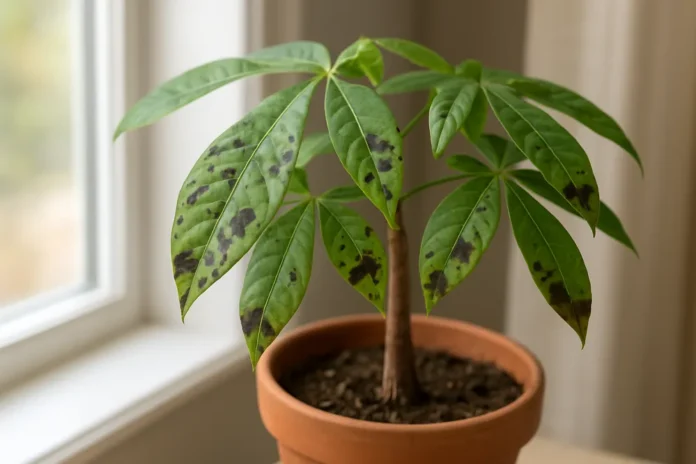
Money tree leaves usually get black spots from overwatering, fungal or bacterial leaf problems, cold damage, or stress that weakens the plant. The exact cause depends on whether the spots are soft, dry, spreading, or paired with yellowing and leaf drop.
Seeing money tree leaves with black spots can be unsettling, especially when the plant looked fine a week earlier. In my experience, this symptom is usually tied to moisture problems first, then to disease, temperature stress, or pest activity that took advantage of a stressed plant.
The good news is that black spots do not always mean your money tree is doomed. If you catch the problem early and pay attention to where the spots started, how they look, and what has changed in the plant's care, you can usually stop the issue and protect the new growth.
What Black Spots Usually Mean on a Money Tree
Black spotting is a symptom, not a single diagnosis. On money tree, it often points to leaf tissue that has died after staying too wet, getting infected, being chilled, or being damaged by pests. Sometimes the spots start as brown, water-soaked, or tan marks and then darken to deep brown or black as the tissue collapses.
The most common triggers are overwatering, poor drainage, water sitting on the leaves, crowded airless conditions, cold drafts, and occasional pest damage. If the plant is also yellowing, dropping leaves, or has soft stems, I start thinking about root stress before anything else.
- Dry, crisp black spots often suggest old stress, sunscald, or tissue that dried after damage.
- Soft, wet-looking black patches are more concerning for overwatering, rot, or infection.
- Tiny pepper-like black dots may appear alongside pest feeding or fungal fruiting bodies.
- Spots with yellow halos can point to leaf spot diseases or stress-related tissue collapse.
When I diagnose a money tree, I do not judge by the worst leaf alone. I compare the newest leaves, middle leaves, and oldest leaves, because the age pattern often tells me whether the problem started at the roots, on the leaf surface, or from a recent cold event.
How to Tell Which Cause Is Most Likely
Before treating anything, look closely at the spotting pattern. A money tree with random black patches after a cold night needs a different fix than a plant with many small circular spots that slowly spread in humid air. The goal is to match the appearance of the spots with the plant's recent care and environment.
Clues From the Leaves
- Spots mostly on older leaves often point to root stress, inconsistent watering, or older disease damage.
- Spots on tender new leaves can happen after cold exposure, sudden sun, or active pest feeding.
- Circular spots with defined edges are more suggestive of leaf spot disease.
- Large irregular blackened areas can come from chilling, soggy roots, or physical damage.
Clues From the Soil and Pot
- A heavy pot that stays wet for many days suggests overwatering or poor drainage.
- A sour smell from the soil can mean roots are breaking down.
- A nursery pot tucked into a decorative cachepot can trap runoff and keep roots too wet.
- Compacted soil that sheds water on top but stays soggy lower down can stress roots in both directions.
Clues From the Room
- Recent exposure to an air conditioner, open winter window, or cold entryway can blacken leaf tissue.
- Low airflow and frequent misting can encourage fungal and bacterial spotting.
- A sudden move into harsh direct afternoon sun can scorch leaves that were used to gentler light.
Common Causes of Black Spots on Money Tree Leaves
Overwatering and Poor Drainage
This is the cause I see most often. Money trees like evenly moist soil, but they do not want to sit in soggy mix for long periods. When roots stay oxygen-starved, they begin to decline, and the leaves may develop dark spots, yellowing, browning edges, or sudden drop. Black spots from root stress are often accompanied by limp foliage and soil that stays wet too long.
Overwatering is not just about frequency. It can also mean a pot without enough drainage, a dense peat-heavy mix, a plant that is oversized for its root ball, or water collecting in a saucer or outer pot.
Fungal Leaf Spot
Fungal spotting often starts as small brown or black lesions that slowly enlarge. Some spots have lighter centers, darker edges, or faint yellow halos. Leaves that stay wet from misting, splashing, or crowded placement are more likely to develop these issues, especially in warm, humid rooms with poor airflow.
A fungal leaf spot problem usually spreads gradually rather than overnight. If you notice new spots appearing leaf by leaf, especially on foliage that often stays damp, disease becomes more likely.
Bacterial Leaf Spot
Bacterial spots tend to look darker and more water-soaked than classic fungal spots. They can spread quickly under humid conditions and may follow veins or merge into larger black patches. If the tissue looks greasy, wet, or translucent before turning black, bacterial involvement is possible.
These problems are harder to reverse on already damaged leaves, so sanitation and keeping foliage dry matter a lot.
Cold Damage
Money tree is tropical and dislikes chills. A brief cold draft, transport in cold weather, or contact with a chilly window can injure leaf cells. The damage may not show up immediately. A day or two later, affected areas can turn dark brown to black, often in larger irregular patches rather than neat circles.
Cold damage is especially common when a healthy-looking plant develops spots soon after being moved, shipped, or placed near an exterior door during winter.
Pest Damage and Secondary Infection
Spider mites, scale, mealybugs, and thrips do not always create black spots directly, but their feeding weakens leaves and opens the door to secondary spotting. Honeydew from sap-sucking pests can also support sooty mold, which looks black on the leaf surface. Sooty mold usually wipes off more easily than true leaf damage.
If you see stippling, sticky residue, fine webbing, or bumps along stems and leaf undersides, inspect for pests before assuming the problem is only fungal.
Sunscald or Physical Injury
A money tree moved from medium indoor light into strong direct sun can scorch. Damaged areas may first look pale, tan, or brown and later darken. Physical bruising during moving, rubbing against walls, or repeated bending can also leave dark patches that eventually dry black.
If you are unsure whether the issue is disease or root stress, change the watering and airflow first, then watch only the new leaves. Old spots rarely disappear, so the real measure of success is whether fresh growth stays clean.
What to Do when You See Black Spots
Treatment depends on the cause, but a few immediate steps are helpful in almost every case. First, isolate the plant from other houseplants until you rule out pests or contagious leaf disease. Then remove the worst damaged leaves if they are heavily spotted, mushy, or clearly declining. Use clean scissors and avoid removing too much healthy foliage at once.
Correct Watering Problems
If the soil is staying wet for a long time, let the upper layer dry before watering again. A money tree generally prefers being watered thoroughly and then allowed to dry somewhat in the top inch or two before the next watering. Empty any runoff from saucers or decorative pots so roots are not sitting in water.
If the potting mix is dense or sour-smelling, repot into a loose, well-draining mix. A blend that includes potting soil plus extra bark, perlite, or coarse amendment usually works better than a heavy water-retentive mix for long-term indoor culture.
Improve Airflow and Keep Leaves Dry
Do not mist a spotted money tree. Wet leaf surfaces encourage disease spread and keep lesions active longer. Space the plant so air can move around the canopy, and avoid crowding it tightly among other plants. If the room is stagnant, gentle airflow from across the room can help, as long as it is not a cold draft.
Check the Roots if the Plant Is Declining Fast
If black spots are paired with yellowing, wilt despite wet soil, stem softness, or a bad smell, slide the plant carefully from the pot and inspect the roots. Healthy roots are firm and pale. Rotting roots are dark, mushy, or slough off their outer layer. Trim away dead roots with sterilized scissors and repot into fresh mix if needed.
Treat Pests if Present
If you find mites, scale, mealybugs, or thrips, treat the infestation directly. Wiping leaves, using insecticidal soap, or applying neem-based or horticultural treatments can help, depending on the pest. Follow product directions closely and test on a small area first because stressed money tree leaves can be sensitive.
Use Fungicide Only when It Fits the Symptoms
A fungicide can help protect healthy leaves from further fungal spread, but it will not restore tissue that is already black. If spotting is clearly circular, slowly spreading, and associated with damp foliage, a houseplant-safe fungicide may be worthwhile. It will not solve black spots caused by cold, root rot, or mechanical injury.
- Remove badly damaged leaves and clean fallen debris from the soil surface.
- Adjust watering so the mix is moist but not constantly wet.
- Move the plant into bright, indirect light away from cold drafts.
- Inspect for pests under leaves, at stems, and around leaf joints.
- Repot if roots are rotting or the soil stays soggy too long.
- Apply a targeted treatment only after you have narrowed down the cause.
When to Repot a Money Tree with Black Spots
Repotting is helpful when the problem starts below the soil line. If the pot has poor drainage, the soil has broken down into a dense mass, or roots are visibly damaged, a repot can stop the cycle that keeps black spots appearing. I do not rush to repot every spotted plant, though, because unnecessary root disturbance can add more stress.
Repot when the mix stays wet for a week or more, the pot smells stale, roots are black or mushy, or the plant is declining despite reduced watering. Choose a container with a drainage hole and only go slightly larger if the root system still fits the current size.
One mistake I see often is moving a stressed money tree into a pot that is much bigger “to give it room.” Extra soil stays wet longer, and on a recovering plant that can restart the same root problem you were trying to fix.
How to Prevent Black Spots From Coming Back
Prevention is mostly about stable care. Money tree likes bright indirect light, moderate humidity, warm temperatures, and a potting mix that drains well. Sudden swings in moisture and temperature are what get many plants into trouble.
- Water only when the top layer of soil has started to dry.
- Always use a pot with drainage and empty excess water promptly.
- Avoid misting if the plant has had spotting issues before.
- Keep the plant away from cold windows, heater blasts, and AC vents.
- Provide bright indirect light instead of harsh afternoon sun.
- Rotate and inspect the plant regularly so you catch pests early.
- Remove fallen leaves and old spotted foliage that can harbor disease.
Also remember that old damage stays visible. Once a leaf has black spots, it usually will not heal. Your goal is clean new growth, steady vigor, and no expansion of the spotting pattern.
When Black Spots Are a Sign of a Bigger Problem
A few isolated black spots on older leaves are usually manageable. A money tree that is losing many leaves, developing stem rot, or blackening rapidly across the canopy is in a more serious state. At that point, the issue may be advanced root rot, severe bacterial infection, or prolonged environmental stress.
Act quickly if you notice blackened stems near the base, persistent soggy soil, foul odor, or collapse of multiple leaflets at once. Those symptoms suggest the roots or crown are involved, and recovery becomes harder the longer the plant stays in that condition.
If the plant still has some healthy roots and firm green stems, it often can recover with corrected care. Be patient, because money tree usually shows improvement in new growth first, not by fixing the old leaves.
FAQ
Should I Cut Off Money Tree Leaves with Black Spots?
Yes, if the leaves are heavily damaged, soft, or clearly declining. If only a small area is affected and the rest of the leaf is functioning, you can leave it for a while and remove it later once the plant is growing steadily again.
Can Black Spots on a Money Tree Spread to Other Plants?
They can if the cause is a contagious fungal or bacterial leaf problem, or if pests are involved. That is why it is smart to separate the plant until you know what you are dealing with.
Will Black Spots on Money Tree Leaves Go Away on Their Own?
No. Damaged leaf tissue does not turn green again. What you are looking for is an end to new spotting and healthy new leaves after you correct the underlying problem.
Do I Need to Use Neem Oil for Black Spots?
Not always. Neem can help in some pest or mild fungal situations, but it will not fix overwatering, cold damage, or advanced root rot. It is best used when the symptoms and inspection actually support that kind of treatment.
Can Misting Cause Black Spots on a Money Tree?
It can contribute, especially when leaves stay wet for long periods in a room with poor airflow. Repeated leaf wetness creates better conditions for leaf spot diseases.
Why Does My Money Tree Have Black Spots and Yellow Leaves at the Same Time?
That combination often points to root stress from overwatering or poor drainage. The yellowing reflects broader water and nutrient disruption, while the black spots show tissue damage on the leaves.
Is Tap Water Causing the Black Spots?
Usually not as the main cause. Very hard water or chemically treated water can contribute to leaf edge issues over time, but true black spotting is more often tied to moisture stress, disease, cold, or pests.
Want to save a struggling plant faster? Read our guide to the best houseplant fungicides, pest treatments, and potting mixes so you can choose the right fix with confidence.
