

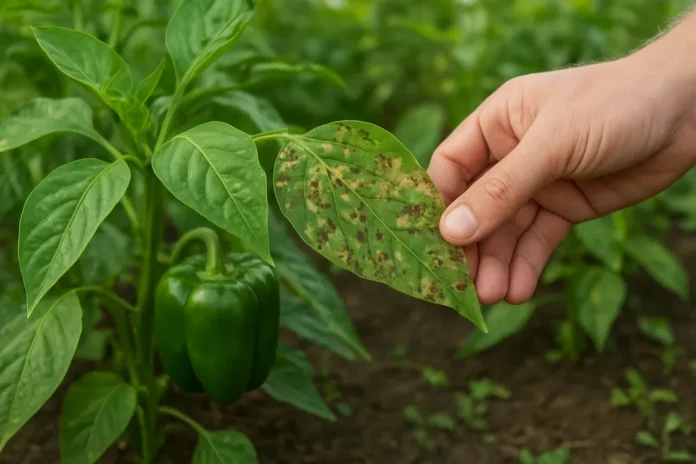
Pepper leaves develop brown spots most often from fungal or bacterial leaf diseases, watering stress, sunscald, pest feeding, or nutrient imbalance. The exact cause usually shows up in the size, color, and spread of the spots.
Seeing pepper leaves with brown spots can be frustrating because the symptom looks simple, but the cause often is not. In my garden, those spots have come from everything from wet weather and leaf disease to fertilizer mistakes, hard sun exposure, and mites hiding on the undersides of leaves.
The good news is that peppers usually give useful clues. Brown spots caused by disease tend to spread in patterns, while sun damage often shows up on exposed leaves, and watering problems usually come with curling, drooping, or yellowing too. If you look closely at where the spots started and what the rest of the plant is doing, you can usually narrow it down fast.
This guide will help you sort out the most common reasons pepper leaves have brown spots, what each one looks like, and what to do next so healthy new growth can take over.
What the Spots Are Telling You
Before treating anything, study the pattern. Brown spots are a symptom, not a diagnosis. On peppers, the biggest clues are whether the spots are dry or water-soaked, whether they stay small or grow into larger dead patches, and whether they appear mostly on older leaves, newer leaves, or only the sunniest side of the plant.
- Small dark spots with yellow halos often suggest bacterial or fungal leaf spot.
- Tan or papery brown patches on exposed leaves often point to sunscald or heat injury.
- Brown margins or crispy edges can suggest inconsistent watering, salt buildup, or fertilizer burn.
- Fine speckling that turns bronze or brown may come from mites or other sap-sucking pests.
- Irregular dead areas after cool, wet weather often fit leaf disease better than nutrient deficiency.
When I diagnose peppers, I look at new growth first. If the newest leaves are coming in clean while older leaves are spotted, the plant often suffered a temporary stress. If fresh leaves are spotting up too, I think ongoing disease, pests, or root trouble.
Leaf Spot Diseases Are One of the Most Common Causes
Bacterial Leaf Spot
Bacterial leaf spot is a frequent reason pepper leaves develop brown or blackish spots. It often starts as tiny, water-soaked lesions that become dark brown, sometimes with a yellow edge around them. In humid weather, the spots can multiply quickly and may also show up on stems and fruit.
This disease spreads easily by splashing water, wet hands, tools, and close plant spacing. Once it is active, overhead watering and frequent rain can keep it moving through the planting.
- Remove the worst infected leaves if the plant is still vigorous.
- Avoid touching plants when foliage is wet.
- Water at the soil line instead of overhead.
- Improve spacing and airflow so leaves dry faster.
- Clean pruners and stakes before moving from plant to plant.
Fungal Leaf Spots
Several fungal problems can create brown spotting on pepper foliage. Cercospora and Alternaria are common examples. These usually create circular to irregular spots that start small and gradually expand. Some develop gray or tan centers with darker borders. In heavy infections, leaves yellow, dry out, and drop.
Fungal issues are most likely when nights are warm, humidity is high, and foliage stays wet for long periods. Mulch can help reduce soil splash, which lowers the chance of spores moving up onto the leaves.
If disease is involved, judge recovery by the plant's new leaves, not by old damaged ones. Spotted tissue rarely turns green again, so the real win is seeing clean growth after you improve watering and airflow.
Watering Stress Can Leave Brown Patches and Crispy Tissue
Peppers dislike extremes. Soil that swings from bone dry to soggy can stress the roots enough to show up as brown spotting, scorched edges, or dry dead patches on leaves. Sometimes the spots are not round at all. They may look more like uneven browning between veins or along tips and margins.
Underwatering tends to cause drooping, dry soil, and crisp browning, especially during hot afternoons. Overwatering can be trickier because the leaves may also droop, but the soil stays wet and roots begin to struggle for oxygen. Once roots are stressed, the leaves can develop mottled yellowing and brown necrotic patches.
- Water deeply rather than lightly and frequently.
- Let the top layer of soil dry slightly before watering again, but do not let containers turn dusty dry.
- Use mulch in beds to keep moisture more even.
- Make sure pots drain freely and never sit in standing water.
- Adjust watering to weather instead of using the exact same schedule every week.
Container peppers are especially vulnerable because potting mix dries fast in heat but can also stay too wet if the container is oversized or drainage is poor. In raised beds, irrigation timers sometimes run more often than peppers actually need, especially during cooler stretches.
Sunscald and Heat Stress Can Mimic Disease
Not every brown spot is an infection. Pepper leaves can burn when plants are suddenly exposed to intense afternoon sun, extreme heat, or reflected heat from walls, stones, or containers. The damage often looks tan to brown, dry, and papery rather than wet or greasy. It usually shows up on the most exposed side of the plant.
This is common after moving seedlings outdoors too quickly, pruning too hard, or transplanting during hot weather. A plant that was growing in filtered light can scorch fast when placed into full sun without a hardening-off period.
- Brown areas appear mostly on upper or outer leaves.
- Spots are larger and more bleached-looking than bacterial specks.
- The damaged tissue feels dry and thin.
- New growth may be normal once the plant adjusts.
If heat is the issue, protect plants during the hottest part of the day for a short period, keep moisture even, and avoid heavy pruning until conditions moderate.
Pests Can Create Tiny Brown Flecks That Spread
Spider Mites
Spider mites are easy to miss at first because they are tiny and usually hide under leaves. Their feeding causes pale stippling that can turn bronze, rusty, or brown as the tissue dies. In dry, hot weather, they can build up fast and make leaves look dusty, speckled, and tired.
Thrips and Other Sap Feeders
Thrips, aphids, and leafhoppers can also contribute to spotting or scarring. Thrips especially can leave silvery patches that later turn brown. Aphids are more likely to cause curling and sticky residue, but stressed tissue may eventually spot and discolor.
- Check the undersides of leaves with a hand lens if you have one.
- Look for fine webbing, tiny moving dots, silvery scars, or black specks of frass.
- Rinse plants with a firm stream of water if the infestation is light.
- Use insecticidal soap or horticultural oil according to label directions when needed.
- Treat early because heavily damaged leaves do not recover well.
If the top of the leaf looks spotted but the underside looks busy, I lean toward pests before disease. Many pepper problems look similar from a few feet away, so flipping leaves over saves a lot of wrong guesses.
Nutrient Imbalance and Fertilizer Burn Can Also Cause Brown Spotting
Peppers need steady nutrition, but too much fertilizer can be as damaging as too little. Excess salts from strong liquid feeding or repeated granular applications can burn roots and show up as brown tips, margins, or scattered dead patches on leaves. This is common in containers where salts build up faster.
Deficiencies can play a role too, though they more often cause yellowing first. Potassium issues may lead to edge browning, while calcium-related stress can distort new growth and contribute to weak tissue. Still, true leaf spotting from nutrients alone is less common than gardeners think. Many people blame fertilizer when the actual issue is watering inconsistency or disease pressure.
- If you recently fed heavily and symptoms appeared soon after, consider fertilizer burn.
- Flush container soil with plain water if salt buildup is likely and drainage is good.
- Use a balanced feeding schedule instead of frequent strong doses.
- Do not add multiple supplements at once unless you know what the plant lacks.
- Keep soil pH in a suitable range so nutrients stay available.
How to Tell Which Cause Is Most Likely
A quick diagnosis usually comes down to matching the spot pattern with recent weather and care. Think about what changed in the last week or two. Did you have long rainy spells, a burst of intense heat, missed waterings, or a recent fertilizer application? Context matters as much as the spots themselves.
- If spots are small, dark, and spreading after wet weather, suspect bacterial or fungal leaf spot.
- If leaves are dry, scorched, and damaged mostly on the sunny side, suspect sunscald or heat stress.
- If the plant is wilting between waterings or sitting in constantly wet soil, suspect root stress from inconsistent moisture.
- If leaves are speckled and the undersides show pests or webbing, suspect mites or thrips.
- If symptoms started right after feeding and edges are burned, suspect fertilizer stress.
Also note whether fruit and stems are affected. Disease is more likely to move across multiple plant parts, while sun or fertilizer damage often stays more limited to exposed or recently stressed foliage.
What to Do Right Now to Help the Plant Recover
Once you have a likely cause, keep your response simple. Peppers recover best when you remove the main stress without piling on extra treatments. A plant already under pressure does not benefit from being sprayed, fertilized, pruned, and repotted all in one afternoon.
- Remove badly damaged leaves if they are heavily spotted or clearly diseased.
- Switch to watering at the base and keep moisture even.
- Improve airflow by spacing plants properly and avoiding crowded foliage.
- Inspect leaf undersides for pests and treat only if you find them.
- Pause fertilizer if you suspect burn or root stress.
- Watch new growth over the next 7 to 14 days for signs of improvement.
If a plant is severely diseased and declining fast, removal may be the best choice to protect nearby peppers and tomatoes. That is especially true when bacterial problems are spreading through a tightly planted bed.
I try hard to change one major variable at a time. If you water differently, fertilize, spray for disease, and spray for pests all at once, you may never learn what actually solved the problem or made it worse.
How to Prevent Brown Spots on Future Pepper Leaves
Prevention is mostly about keeping pepper foliage dry, roots steady, and plants unstressed. Healthy peppers can handle minor damage, but stressed peppers are much more likely to spot, drop leaves, or stall out.
- Start with disease-free seedlings and avoid saving seed from infected plants.
- Space peppers well so leaves dry quickly after rain or irrigation.
- Use mulch to reduce soil splash and conserve moisture.
- Water early in the day and direct water to the soil, not the foliage.
- Harden off transplants gradually before full sun exposure.
- Scout weekly for mites, thrips, and early disease spots.
- Rotate crops when possible instead of planting peppers in the same spot every year.
- Sanitize cages, stakes, and pruners between seasons.
In many home gardens, one small habit change makes the biggest difference. For me, it is consistent watering and resisting the urge to overhead water during hot weather. Wet leaves plus warm nights is a combination that invites trouble on peppers.
FAQ
Should I Cut Off Pepper Leaves with Brown Spots?
If only a few leaves are badly affected, removing them can reduce disease spread and improve airflow. Do not strip the plant heavily, though, because peppers still need enough healthy foliage to keep growing.
Can Brown Spots on Pepper Leaves Go Away on Their Own?
The damaged spots themselves will not turn green again. What you want to see is healthy new growth after the stress or disease issue is corrected.
Are Brown Spots on Pepper Leaves Always a Disease?
No. Brown spotting can also come from sunscald, dry soil, overwatering, fertilizer burn, spider mites, or other stress. The pattern and location of the damage help separate disease from environmental causes.
Can I Still Eat Peppers From a Plant with Spotted Leaves?
Often yes, if the fruit itself is healthy and not rotting or badly blemished. If fruit has soft spots, sunken lesions, or signs of decay, it is better to discard it.
Do Brown Spots Spread From Pepper Plants to Tomatoes?
Some bacterial and fungal problems can affect both peppers and tomatoes, especially when plants are close together and leaves stay wet. Good spacing, clean tools, and watering at the base help reduce spread.
Will Epsom Salt Fix Brown Spots on Pepper Leaves?
Usually not. Brown spots are more commonly caused by disease, watering stress, pests, or fertilizer issues than by magnesium deficiency. Adding Epsom salt without a clear reason can complicate the problem.
Why Are Only the Lower Pepper Leaves Getting Brown Spots?
Lower leaves are often the first hit by soil-splashed disease spores, crowding, and reduced airflow. They also tend to stay damp longer, which makes leaf spot problems more likely.
Need a reliable fix fast? Read our guide to the best fungicides, insecticidal soaps, and pepper care products so you can choose the right treatment with confidence.
