

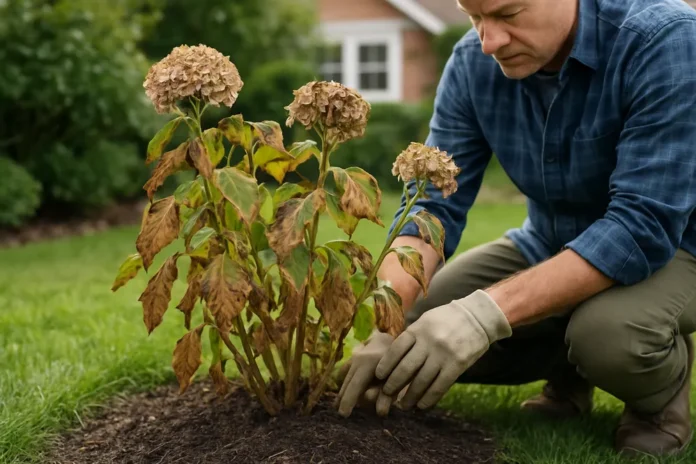
A hydrangea usually looks like it is dying because of water stress, root damage, heat, cold injury, disease, or poor growing conditions. In many cases, the plant is reacting to one major stress or a few smaller problems happening at the same time.
Hydrangeas can go downhill fast, which is why they make gardeners nervous. One week the shrub looks full and leafy, and the next it is drooping, browning, or losing leaves. When a hydrangea looks like it is dying, the cause is usually something practical like moisture stress, root trouble, too much sun, winter injury, or disease rather than the plant simply giving up.
I have found that hydrangeas are dramatic plants. They wilt quickly in heat, sulk when roots stay too wet, and show leaf damage long before some shrubs would. The good news is that many problems are reversible if you figure out whether the damage started in the roots, the leaves, or the stems.
If your hydrangea is dying or seems close to it, start by looking at the whole pattern. Are all leaves limp, or only the outer ones? Are stems green inside, or dry and brown? Is the soil soggy, bone dry, or just compacted? Those clues usually tell you which problem is most likely.
What a Dying Hydrangea Usually Looks Like
Hydrangeas do not all fail in the same way. Some collapse from drought and perk back up by evening watering. Others develop yellow leaves, black spots, crispy edges, or whole dead canes from winter damage. Before you treat anything, match the symptom to the most likely source of stress.
- Wilting with dry soil often points to underwatering, root competition, or too much afternoon sun.
- Wilting with wet soil often suggests root rot, poor drainage, or damaged roots.
- Crispy brown edges usually come from heat, drought, fertilizer burn, or salt buildup.
- Yellow leaves can signal overwatering, nutrient issues, root stress, or natural aging of older foliage.
- Blackened buds or dead stem tips often follow late frost or winter injury.
- Spotted, blotchy, or mildewed leaves are more likely to be a disease issue than a watering issue.
- A whole plant that declines over weeks may be dealing with root problems, crown rot, severe drought, or a poor planting site.
When I inspect a failing hydrangea, I look at the newest growth first. If the newest leaves are small, limp, or distorted, I usually suspect root or moisture stress. If only older leaves are spotting or yellowing, the plant often has enough life left to recover once the main stress is corrected.
Water Stress Is the Most Common Cause
Underwatering and Drought Stress
Hydrangeas are thirsty shrubs, especially bigleaf and smooth hydrangeas with large soft leaves. In hot weather they lose moisture quickly, and a plant that was fine in spring can suddenly wilt once summer heat arrives. Dry soil, drooping leaves, scorched edges, and flower heads that crisp up early all point toward drought stress.
Newly planted hydrangeas are especially vulnerable because their roots have not spread into surrounding soil yet. A shrub planted near trees, under roof overhangs, or beside a foundation may also stay drier than you expect. If the soil feels dry several inches down and the wilt improves after deep watering, lack of moisture is a strong suspect.
Overwatering and Waterlogged Roots
Too much water can look surprisingly similar to too little. A hydrangea with constantly soggy soil may wilt, turn yellow, drop leaves, and eventually develop root rot. The difference is that the soil stays wet, heavy, and sometimes sour-smelling. In severe cases stems soften near the base and the plant declines even though it is getting plenty of water.
This is common in clay soil, low spots, or containers without good drainage. If a hydrangea is watered daily on a schedule rather than when it actually needs it, roots can suffocate. Once roots are damaged, the top of the plant behaves as if it is drought-stressed because it can no longer take up water properly.
- Dry, crumbly soil plus wilting usually means the plant needs deeper watering.
- Wet, sticky soil plus wilting often means roots are stressed from lack of oxygen.
- Yellowing that starts broadly across the plant is often more consistent with overwatering than simple thirst.
- A hydrangea that wilts every afternoon but recovers overnight may be coping with heat and temporary moisture loss rather than dying outright.
Too Much Sun and Heat Can Make a Healthy Plant Look Half Dead
Many hydrangeas prefer morning sun and afternoon shade, especially in hotter parts of the U.S. A plant set in strong western sun can scorch badly in midsummer. Leaves may droop by midday, turn tan or white in patches, then crisp brown around the edges. Blooms may fade fast or shrivel before they fully develop.
Sun stress is especially common after a hydrangea is transplanted, when a nearby tree is removed, or when a nursery-grown shrub used to protected conditions is planted into an exposed spot. Even well-watered hydrangeas can burn if the site is too hot. If damage is worse on the sun-facing side and the inner leaves stay healthier, excessive exposure is a likely factor.
I do not judge a hydrangea's water needs by wilting alone during a heat wave. Some plants droop in the afternoon even when the soil is adequately moist. I check the soil first, because adding more water to already damp soil can turn a heat problem into a root problem.
Root Problems After Planting or Transplanting
A hydrangea that declines soon after planting often has root stress. The shrub may have been planted too deeply, set into compacted soil, allowed to dry out in the nursery pot, or installed with circling roots that were never loosened. In each case, the top growth suffers because the roots are not expanding and functioning normally.
Planting depth matters more than many gardeners realize. If the crown sits too low and mulch is piled against the stems, moisture can collect around the base and encourage rot. On the other hand, a root ball planted too high dries out faster than the surrounding bed. Either mistake can make a hydrangea look weak, sparse, and wilt-prone.
Transplant shock can also show up as limp leaves, flower drop, and stalled growth for several weeks. That does not always mean the plant is dying. It means root loss and top growth are temporarily out of balance. Recovery depends on consistent moisture, moderate light, and time.
- Check whether the root flare or crown is buried under soil or thick mulch.
- Think back to planting day and whether the root ball was dry, pot-bound, or hard as a brick.
- Notice whether decline began right after transplanting or after a weather swing.
- Watch for one-sided decline if roots were damaged during digging or by construction nearby.
Poor Drainage and Root Rot Can Quietly Kill a Hydrangea
Hydrangeas like moisture, but they do not want to sit in stagnant soil. When drainage is poor, roots stay deprived of oxygen and disease organisms can move in. The plant may start with pale leaves and chronic wilt, then progress to stem dieback and overall collapse. By the time the top looks terrible, the trouble has often been developing underground for a while.
Signs of root rot include soil that stays wet long after rain, a plant that never perks up despite watering, and lower stems that darken or soften. In severe cases the shrub may pull up more easily than it should because the roots have deteriorated. Container hydrangeas can rot too if drainage holes are blocked or saucers stay full.
If the site is naturally soggy, the long-term fix is usually improving drainage or moving the plant rather than simply adjusting irrigation. No fertilizer or fungicide makes up for roots living in waterlogged ground.
Cold Damage, Frost, and Winter Injury Often Get Blamed on Disease
Hydrangeas can look dead after winter even when the roots are alive. Late spring frosts may blacken tender shoots and flower buds. Harsh winter wind can dry out exposed stems, leaving canes brittle and brown while the base later pushes new growth. Gardeners often mistake this kind of dieback for a disease outbreak.
Bigleaf hydrangeas are especially prone to losing buds in cold climates because many bloom on old wood. A shrub may leaf out poorly, fail to flower, and show dead tips after a rough winter. Panicle hydrangeas are generally tougher, but even they can suffer in exposed sites with freeze-thaw cycles.
- Black or mushy new shoots after a cold night usually point to frost damage.
- Brown, dry upper stems with green growth from the base often indicate winter dieback.
- Missing blooms on an otherwise leafy plant may mean flower buds were killed, not the whole shrub.
- Damage concentrated on exposed sides often comes from winter wind or sudden temperature swings.
Diseases That Make Hydrangeas Decline
Leaf Spot and Foliar Diseases
Hydrangea leaves commonly develop fungal or bacterial spotting, especially in humid weather. Cercospora leaf spot is one of the most common, showing up as small purple, brown, or tan spots that may spread and cause early leaf drop. A light case rarely kills an established shrub, but heavy spotting weakens the plant and adds stress.
Powdery Mildew
Powdery mildew leaves a dusty white or gray coating on foliage and can reduce vigor over time. It tends to be worse where air circulation is poor and plants are crowded. While it is ugly, it usually is not the main reason a hydrangea is dying unless the shrub is already stressed.
Stem and Root Rots
The more serious disease issues are rots at the crown, stems, or roots. These problems often start in overly wet conditions and can cause sudden collapse, blackened stem bases, or canes that wilt one by one. If stems near the soil line are soft, dark, or decayed, disease may be attacking the plant from below.
Leaf spot gets blamed for a lot of hydrangea problems, but in my experience it is often a secondary issue. When a shrub has severe spotting plus major wilting, I usually look for a moisture or root problem first because that is what commonly pushes the plant into real decline.
Nutrient Issues, Fertilizer Burn, and Soil Problems
Hydrangeas do not need heavy feeding, and overfertilizing can do more harm than good. Too much fertilizer, especially quick-release products, can burn roots and leaf edges. The result may look like drought stress, with brown margins, wilting, and weak growth even when soil moisture seems adequate.
Poor soil can also contribute to decline. Very sandy soil dries out too fast, while hard clay may stay wet too long. In some cases nutrient lockout or pH-related deficiencies lead to pale leaves and reduced vigor. That said, nutrient problems alone are less likely to make a hydrangea look suddenly half dead than watering or root problems are.
- Crispy leaf edges soon after feeding can suggest fertilizer burn.
- White crust on the soil surface in containers may indicate salt buildup.
- Pale leaves with slow growth may point to a feeding issue, but only after moisture and drainage are ruled out.
- Fresh manure or overly rich amendments around roots can stress young hydrangeas.
Pests and Animal Damage
Pests are not usually the main reason a mature hydrangea appears to be dying, but they can add enough stress to push a struggling plant further downhill. Aphids, spider mites, and scale may cause curling, stippling, sticky residue, or weakened growth. Deer and rabbits can strip foliage or chew stems, leaving the plant unable to support itself well.
If the damage looks ragged, missing, or chewed, think animals first. If leaves are speckled or bronzed with fine webbing, spider mites are more likely, especially in hot dry weather. Pest problems tend to be easier to identify because the feeding pattern is visible, unlike many root issues.
How to Tell if Your Hydrangea Is Still Alive
A hydrangea that looks awful is not always dead. Before removing it, test the stems and crown. Scratch a small bit of bark with your fingernail on several canes, starting at the tips and moving downward. Green tissue underneath means that section is alive. Brown, dry tissue means that part is dead.
Also check the base of the plant. Many hydrangeas lose upper stems yet send out healthy shoots from lower buds or the crown. If the root area is firm and you see swelling buds or green near the base, there is still a good chance of recovery. A completely dry crown, hollow brittle stems from top to bottom, and no live tissue at the base suggest the plant may truly be gone.
- Scratch-test several stems, not just one.
- Look for green tissue near the crown or lower nodes.
- Wait until the weather has warmed before judging winter-damaged plants.
- Do not assume a bloomless hydrangea is dead if leaves or basal shoots are still emerging.
What to Do First when a Hydrangea Is Declining
The best first move is to stabilize the plant rather than throw multiple treatments at it. Check soil moisture a few inches down, inspect the planting depth, and look at where the damage is concentrated. If the shrub is newly planted, focus on root-zone conditions before worrying about fertilizer or pruning.
Remove clearly dead stems, but avoid hard pruning until you know whether your hydrangea blooms on old wood or new wood. On some types, aggressive pruning removes flower buds that survived just fine. Improve watering habits by aiming for deep, thorough soaking when needed instead of frequent shallow watering. Refresh mulch to moderate soil temperature, but keep it pulled back from the stems.
If the site is baking hot in the afternoon, temporary shade can help reduce stress. If the soil is constantly wet, hold off on more irrigation and think about drainage. If you suspect disease, remove badly infected fallen leaves and improve air flow. One clear correction is usually more effective than several guesswork treatments all at once.
When a Hydrangea Can Recover and when It Is Time to Replace It
Hydrangeas recover surprisingly well from heat stress, temporary drought, light leaf disease, and even some winter dieback. If roots are still healthy and the crown is alive, a rough-looking plant may rebound over the rest of the season or the following spring. New leaves and strong shoots are good signs that the shrub is rebuilding.
Replacement becomes more reasonable when the crown has rotted, the roots are extensively damaged, or the site is fundamentally wrong for the plant. If you keep fighting the same problem every season, such as deep shade with poor flowering or soggy clay with chronic rot, replacing the hydrangea without fixing the location just repeats the cycle.
I usually give an established hydrangea some time unless the base is clearly dead. These shrubs can look miserable and still come back. But if there is no live tissue, no new growth, and the root zone smells rotten or stays saturated, starting over in a better spot may save you a lot of frustration.
FAQ
Can a Wilted Hydrangea Come Back?
Yes, many wilted hydrangeas recover if the cause is temporary heat or mild drought. They are less likely to bounce back quickly when wilting is caused by root rot or chronic overwatering.
Why Did My Hydrangea Suddenly Turn Brown?
Sudden browning is often caused by hot afternoon sun, dry soil, wind exposure, fertilizer burn, or frost damage to tender growth. The pattern of browning on leaf edges, tips, or one side of the plant can help narrow it down.
How Do I Know if I Am Overwatering My Hydrangea?
If the soil stays wet for long periods, leaves turn yellow, and the plant wilts without improving, overwatering is a strong possibility. Soggy soil and soft or dark lower stems are bigger warning signs than surface appearance alone.
Will Dead Hydrangea Stems Grow Leaves Again?
No, truly dead stems will not leaf out again. However, the plant may still push new growth from lower buds or the crown even if the upper canes are dead.
Should I Cut Back a Dying Hydrangea?
Remove obviously dead wood, but avoid heavy pruning until you know the hydrangea type. Some hydrangeas bloom on old wood, and cutting too much can remove healthy buds and delay recovery.
Can Too Much Sun Kill a Hydrangea?
Yes, especially bigleaf hydrangeas in hot climates or exposed afternoon sun. Repeated leaf scorch and heat stress can weaken the plant enough to cause severe decline.
Why Is My Potted Hydrangea Dying Faster than One in the Ground?
Container hydrangeas dry out faster, heat up faster, and can also stay waterlogged if drainage is poor. Their roots have less soil buffer, so watering mistakes show up much sooner.
Is My Hydrangea Dead if It Has No Blooms?
Not necessarily. A hydrangea can be alive and healthy enough to leaf out but still fail to bloom because of winter bud loss, improper pruning, or too much shade.
Need help choosing the right fix fast? Read our hydrangea care and troubleshooting guides to compare treatments, watering tools, and disease-control options that actually match the symptoms you are seeing.
