

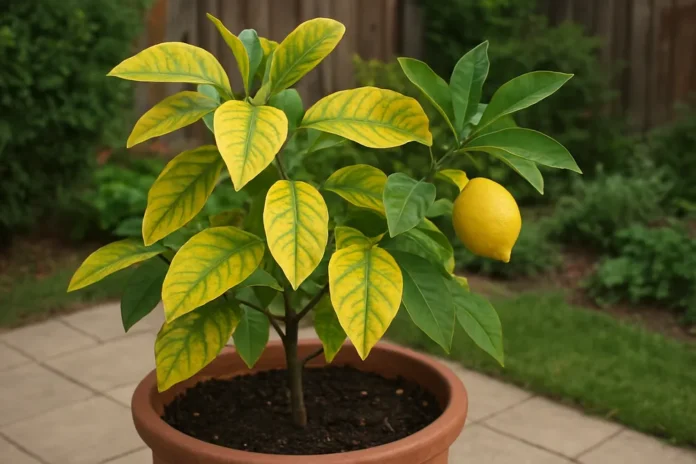
Chlorosis in lemon trees is most often caused by iron, magnesium, or nitrogen becoming unavailable to the plant, especially in alkaline or poorly drained soil. Root damage, overwatering, cold stress, and pests can also lead to yellowing leaves.
When a lemon tree starts losing its rich green color, chlorosis is usually the first visible warning sign that something deeper is off. In simple terms, chlorosis means the leaves are turning yellow because the tree is not making or holding enough chlorophyll. On lemon trees, that yellowing can show up between the veins, across the whole leaf, or mostly on older or newer growth depending on the cause.
I have found that chlorosis is rarely just a random cosmetic issue. It usually points to a problem with root function, soil conditions, watering habits, or nutrient availability. Yellow leaves on lemon trees often tempt gardeners to grab fertilizer right away, but the real cause is not always a lack of nutrients in the soil. Very often, the nutrients are there and the tree simply cannot access them.
What Chlorosis Looks Like on Lemon Trees
Chlorosis is a symptom, not a disease by itself. On lemon trees, it typically appears as yellow leaves with some amount of green still left in the veins or on parts of the leaf. The exact pattern matters because it can help you separate iron problems from magnesium issues, nitrogen shortage, root stress, or general decline.
- If new leaves are yellow but the veins stay greener, iron deficiency or iron lockout is a common suspect.
- If older leaves yellow first, especially with a green triangle near the leaf base, magnesium deficiency is more likely.
- If the whole tree looks pale or washed out, nitrogen deficiency, root damage, or chronic watering problems may be involved.
- If yellowing is patchy and paired with leaf drop, wilt, or dieback, the issue may be broader than simple nutrition.
When I diagnose citrus chlorosis, I look at the age of the affected leaves before I look at anything else. New growth points me toward iron or manganese problems, while older leaves usually push me toward magnesium, nitrogen, or root stress.
Because lemon trees are heavy feeders and also sensitive to wet roots, chlorosis often has more than one cause at the same time. A tree growing in alkaline soil, for example, may also be overwatered, which makes nutrient uptake even worse. That is why pattern recognition matters more than treating every yellow leaf the same way.
The Most Common Causes of Chlorosis
Iron Deficiency and Iron Lockout
Iron-related chlorosis is one of the most common lemon tree problems, especially in parts of the U.S. with alkaline soil or hard irrigation water. Iron is essential for chlorophyll production, but citrus often struggles not because the soil has zero iron, but because the iron becomes chemically unavailable. When soil pH rises too high, the tree cannot take up enough iron through the roots.
This usually shows up on the youngest leaves first. The leaf tissue turns yellow while the veins stay greener, creating a distinct interveinal pattern. If it gets worse, the leaves may become almost cream colored and new growth can be weak or undersized.
Magnesium Deficiency
Magnesium deficiency tends to affect older leaves first because the tree can move magnesium from old tissue into new growth. On lemon trees, a classic sign is yellowing along the outer parts of older leaves while the center near the midrib stays greener for longer. It can make the tree look tired or faded even when the newest leaves seem fairly normal.
Sandy soil, frequent watering, and heavy fruiting can all increase the chance of magnesium shortage. Container-grown lemon trees also run into this problem because nutrients leach out faster with regular irrigation.
Nitrogen Deficiency
Nitrogen deficiency creates a more even, general yellowing rather than sharp green veins against yellow tissue. Older leaves usually pale first, and the whole tree may look weak or slow growing. If the tree has not been fertilized in a long time, or if it is growing in a pot with exhausted mix, nitrogen may be part of the problem.
Still, true nitrogen deficiency is not always the full story. If roots are unhealthy or the soil stays cold and soggy, a lemon tree can behave as if it lacks nitrogen even when fertilizer has been applied.
Manganese and Zinc Deficiencies
Manganese and zinc deficiencies can also cause chlorosis, especially in high-pH soils. These micronutrient issues often affect younger leaves and may come with smaller leaves, distorted growth, or rosetted tips. They are less commonly recognized by home gardeners because the symptoms overlap with iron problems, but the root cause is often similar: the nutrients are present, yet locked out by soil chemistry.
Soil and Root Problems That Trigger Yellow Leaves
Alkaline Soil
Lemon trees prefer slightly acidic to neutral soil. When the pH climbs too high, especially above about 7.0 to 7.5, iron, manganese, and zinc become harder for the roots to absorb. This is one of the biggest reasons chlorosis shows up in citrus planted in the ground in the Southwest, parts of California, and other regions with naturally alkaline soils.
Hard tap water can make this worse over time. Even if your original soil was acceptable, repeated irrigation with alkaline water can gradually raise the root zone pH and push the tree into chronic yellowing.
Poor Drainage and Overwatering
Wet feet are a major chlorosis trigger in lemon trees. When the soil stays saturated, roots lose access to oxygen and begin to function poorly. Once that happens, the tree struggles to take up nutrients even if they are abundant in the soil. The leaves may yellow, curl slightly, or drop, and new growth often slows down.
This is especially common in heavy clay soil, low spots in the yard, and containers without excellent drainage. Many gardeners assume yellow leaves mean drought, but with citrus, overwatering is often just as likely.
If a lemon tree is yellowing and the soil still feels damp several inches down, I do not rush to feed it. Correcting oxygen-starved roots usually matters more than adding more fertilizer to already soggy soil.
Root Damage and Compaction
Anything that damages roots can lead to chlorosis. Construction near the tree, trenching, digging, circling roots in an old pot, compacted soil, or root rot can all interfere with uptake. Because roots are the supply line, leaf color often changes before gardeners notice any obvious root problem.
A tree with root stress may yellow unevenly and also show reduced vigor, sparse canopy growth, flower drop, or smaller fruit. If the decline seems to involve the whole tree rather than a few branches, the root zone deserves close attention.
Environmental and Pest-related Causes
Cold Weather Stress
Lemon trees are more cold-sensitive than some other citrus. Cool soil and sudden temperature drops can temporarily reduce nutrient uptake, leading to pale or yellow new growth. Sometimes the tree greens back up once warmer weather returns and the roots become active again.
Cold damage can also weaken roots or foliage enough to make existing nutrient issues look worse. That is why chlorosis often seems more dramatic in late winter or early spring.
Pests That Drain Plant Energy
Sap-sucking pests such as spider mites, scale, aphids, and whiteflies can contribute to chlorosis by stressing the tree and interfering with healthy photosynthesis. Their feeding rarely creates the clean nutrient-pattern yellowing seen with iron or magnesium problems, but it can make foliage look stippled, dull, or generally chlorotic.
If you see sticky residue, fine webbing, bumpy shells on stems, or distorted tender growth, inspect closely before assuming the issue is purely nutritional. Citrus leaf miners can also distort new leaves, though they are less often the main reason for broad chlorosis.
Container Stress
Potted lemon trees are especially prone to chlorosis because every factor changes faster in a container. Potting mix can break down, salts can build up, roots can become cramped, and water swings from too dry to too wet can happen quickly. A lemon tree that looked healthy for months may suddenly yellow once the roots fill the pot or the mix stops draining well.
How to Tell Which Cause Is Most Likely
The fastest way to narrow down chlorosis is to compare leaf age, yellowing pattern, and root-zone conditions. You do not need a lab test to make a good first diagnosis, but you do need to slow down and notice whether the symptom starts on new leaves, old leaves, or across the whole canopy.
- Yellow new leaves with greener veins usually point toward iron, manganese, or zinc issues.
- Yellow older leaves first often suggest magnesium or nitrogen deficiency.
- A tree in wet, dense soil may be dealing with nutrient lockout caused by poor roots rather than a true lack of fertilizer.
- A tree in a pot that dries fast and has not been fed regularly may genuinely be low on nutrients.
- Patchy yellowing with pests, distortion, or residue means insects may be part of the picture.
I try not to judge citrus chlorosis from a single leaf. I compare several leaves from different parts of the canopy because one damaged or aging leaf can be misleading, while a repeated pattern across the tree usually tells the real story.
A soil pH test is especially useful if you garden where alkaline soil is common. If the pH is high, repeated fertilizing may only give short-lived results until the pH problem and root environment are addressed. In containers, it also helps to consider whether the potting mix has become compacted or salty from long-term watering and feeding.
What Helps Lemon Trees Recover From Chlorosis
Recovery depends on fixing the underlying cause, not just greening up the current leaves. In many cases, the yellow leaves already affected will not turn deep green again, but healthy new growth should improve once conditions are corrected.
- Use a citrus fertilizer that includes micronutrients if the tree has not been fed appropriately.
- Apply chelated iron when iron chlorosis is likely, especially in alkaline soils where ordinary iron products may be ineffective.
- Improve drainage by watering less often, raising the planting area, or repotting into a faster-draining mix.
- Test soil pH if chlorosis keeps returning despite fertilizing.
- Water deeply but only when the root zone needs it, rather than on a rigid daily schedule.
- Inspect for mites, scale, aphids, and other sap feeders if leaf yellowing is paired with visible pest damage.
For container lemon trees, repotting can make a dramatic difference if roots are crowded or the mix has degraded. Choose a pot with strong drainage and a coarse citrus-friendly mix. For in-ground trees in stubbornly alkaline soil, long-term management often means using chelated micronutrients, mulching well, avoiding overwatering, and being realistic that some sites need ongoing correction.
The most important thing is not to stack several drastic treatments all at once. If you change watering, repot, fertilize heavily, and spray at the same time, it becomes much harder to tell what actually helped and what may have added stress.
FAQ
Can Chlorotic Lemon Leaves Turn Green Again?
Sometimes mildly affected leaves improve, but often the better sign is that new growth comes in greener after the problem is corrected. Older yellow leaves may stay pale or eventually drop.
Is Epsom Salt Good for Chlorosis in Lemon Trees?
Epsom salt can help if the tree truly has a magnesium deficiency, but it will not fix iron chlorosis, high soil pH, or waterlogged roots. It is best used when the symptom pattern actually fits magnesium shortage.
Why Are the Veins Green but the Leaf Is Yellow on My Lemon Tree?
That pattern is classic interveinal chlorosis and often points to iron deficiency or iron lockout, especially on young leaves. High pH soil and poor drainage are common reasons this happens.
Does Hard Water Cause Chlorosis in Citrus?
It can. Hard or alkaline irrigation water may gradually raise soil pH, which makes iron and other micronutrients harder for lemon tree roots to absorb.
Should I Remove Yellow Leaves From a Lemon Tree?
Do not strip them off just because they are yellow. If leaves are badly damaged, dead, or pest-ridden, remove them, but otherwise let the tree keep them while you correct the underlying issue.
Why Is My Potted Lemon Tree More Chlorotic than My In-ground Citrus?
Containers dry out faster, accumulate salts more easily, and can become root-bound or poorly drained over time. All of those conditions can trigger chlorosis much faster than in-ground soil.
Can Overwatering Really Cause Nutrient Deficiency Symptoms?
Yes. When roots stay too wet, they cannot function properly, so the tree may show deficiency-like yellowing even if nutrients are present in the soil.
Need help choosing the right citrus fertilizer, iron supplement, or potting mix? Read our lemon tree care and treatment guides to fix yellow leaves faster and keep new growth deep green.
