

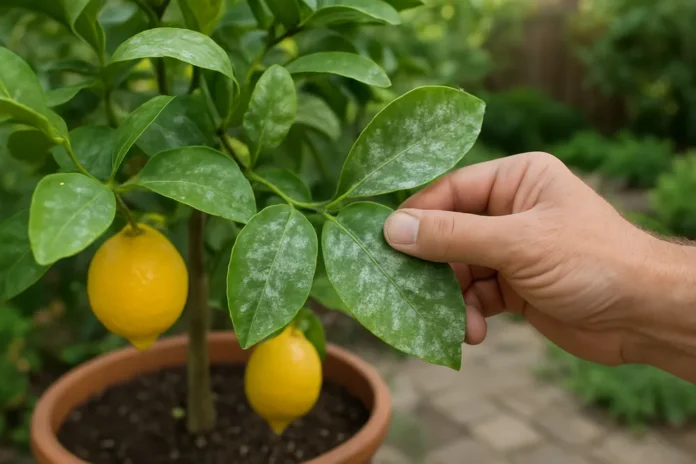
White powder on lemon tree leaves is usually powdery mildew, a fungal disease that coats leaves with a dusty white film. In some cases, it can also be leftover spray residue or a pest problem that only looks powdery at first glance.
Seeing a dusty coating on your citrus can be unsettling, especially when a lemon tree that looked healthy a week ago suddenly has pale, chalky leaves. In most home gardens, that white powder is powdery mildew, a fungal disease that sits on the leaf surface and spreads fastest when air circulation is poor and foliage stays in humid conditions.
That said, not every white film is a fungus. I have also seen gardeners mistake dried foliar spray, hard water residue, and clusters of small pests for white powder on leaves. The fastest way to fix the problem is to identify what you are actually looking at, because mildew treatment is different from pest control or simple cleanup.
Once you know the likely cause, lemon trees usually respond well to a few practical changes. Better airflow, smarter watering, careful pruning, and timely treatment can stop the spread and help new growth come in clean.
What the White Powder Usually Is
The most common cause of a white powdery coating on lemon tree leaves is powdery mildew. This fungus creates a soft, dusty layer that can appear on the top of leaves, the undersides, tender stems, flower buds, and even young fruit. Early on, it may look like someone dusted the tree with flour. As it spreads, leaves can curl, distort, yellow, or drop.
Powdery mildew is a little unusual because it does not need soaking wet leaves to get started the way many fungal diseases do. It often shows up when days are warm, nights are cool, and the air around the plant stays humid. Lemon trees that are crowded, shaded, or pushed into dense corners of patios and sunrooms are especially prone to it.
- It looks dusty or talc-like rather than sticky or cottony.
- It often appears first on newer, softer growth.
- Affected leaves may twist, pucker, or curl as the coating thickens.
- The white material sits on the surface and can sometimes rub off onto your fingers.
When I am deciding whether it is mildew, I look at several leaves from different parts of the tree. If the youngest leaves have the heaviest dusty coating and the surface looks evenly filmed rather than clumped, I usually suspect powdery mildew first.
If the problem is mild and caught early, the tree may only have cosmetic damage. If it is ignored, the fungus can reduce photosynthesis, weaken fresh growth, and interfere with flowering and fruit set. That matters more on a lemon tree than on a purely ornamental plant, because you want strong new growth to support blooming and fruit production.
Other Problems That Can Look Like White Powder
Although powdery mildew is the usual answer, it is not the only one. A few other issues can mimic that dusty white look, especially if you recently sprayed the tree, water with hard water, or have an insect problem starting on new growth.
Spray Residue
If you applied neem oil, insecticidal soap, foliar fertilizer, or a homemade baking soda mixture, dried residue can leave a pale film on the leaves. This tends to look patchier than mildew and may be concentrated where spray droplets dried. It usually does not cause the same twisted, stunted new growth that fungus often does.
Hard Water or Mineral Deposits
Outdoor potted lemon trees sometimes collect mineral deposits from overhead watering, especially in areas with alkaline or mineral-heavy water. The residue can appear as a whitish haze or spotting. It is usually most obvious on upper leaf surfaces and does not spread from leaf to leaf the way a disease does.
Mealybugs and Scale
Mealybugs are soft-bodied insects covered with a white waxy coating, and scale insects can also leave whitish residue around stems and leaf joints. These pests usually appear as clusters, fuzzy patches, or bumps rather than an even dusting. They often gather where leaves meet stems or on the undersides of leaves.
Salt or Dust Buildup
In dry climates, plain environmental dust can settle on sticky leaves, and fertilizer salts can sometimes leave pale traces on nearby foliage. This wipes off easily and does not come back in the same spreading pattern unless the underlying source continues.
- A uniform dusty coating points more toward powdery mildew.
- White fuzz concentrated in leaf joints points more toward mealybugs.
- Patchy spots after spraying often suggest residue.
- A chalky film after overhead watering may be mineral buildup.
How to Tell Powdery Mildew From Residue or Pests
A close look usually reveals the difference. Start by checking both sides of the leaf, the youngest growth, and the stems near the tips. Mildew behaves like a coating. Pests behave like insects or waxy colonies. Residue behaves like dried droplets or a film left behind by water or spray.
Signs That Point to Powdery Mildew
- The white material looks like flour or baby powder on the surface.
- Leaves may curl, wrinkle, or grow unevenly.
- New growth is often affected first.
- The coating expands over time to nearby leaves and shoots.
Signs That Point to Pests
- You see fluffy clumps, cottony masses, or oval insects.
- There may be sticky honeydew on leaves or nearby surfaces.
- Ants are often present because they feed on honeydew from sap-sucking insects.
- The white material is concentrated around stems, nodes, or leaf undersides.
Signs That Point to Residue
- The coating matches the spray pattern or water droplet pattern.
- Leaves are otherwise healthy and not distorted.
- The film may wipe away cleanly and not return unless you spray again.
- Only the exposed upper surfaces are affected.
If you wipe a small test area with a damp cloth, residue usually comes off cleanly while mildew often smears and leaves the surface looking dull or slightly damaged underneath. I also pay attention to whether new leaves emerge already affected, because that strongly suggests an active disease rather than old residue.
If you are still unsure, consider recent conditions. A tree that has been crowded in a humid spot after a flush of new growth is a classic mildew candidate. A tree that was recently sprayed or watered from overhead may simply have residue. A tree with sticky leaves and ants likely has pests in the mix.
Why Lemon Trees Get This Problem
Lemon trees are vigorous, but they can produce dense leafy growth that traps humidity. When fresh growth stays shaded and air cannot move freely through the canopy, powdery mildew gets a much easier foothold. This is especially common on potted citrus placed near walls, fences, enclosed patios, or indoors near windows with limited airflow.
Heavy nitrogen feeding can also contribute. Fertilizer pushes lush, tender growth, and that soft new tissue is exactly what powdery mildew prefers. I see this often when a tree is fertilized aggressively in spring and then left to grow into a crowded canopy without a little thinning.
Conditions That Favor Powdery Mildew on Lemon Trees
- Poor air circulation around the canopy
- Crowded branches with dense new growth
- Warm days and cool, humid nights
- Partial shade or filtered light that keeps foliage damp and cool
- Overfeeding with nitrogen-rich fertilizer
- Indoor overwintering with stagnant air
Container-grown lemon trees are often more vulnerable than those planted in the ground because they are moved around, tucked into corners, or brought indoors seasonally. That change in environment can create the exact humidity and airflow problems mildew likes. On the other hand, trees outdoors in full sun with decent spacing usually recover faster once conditions improve.
One pattern I notice with citrus is that mildew often flares after a strong burst of soft growth, not when the tree is just sitting still. When a lemon tree is pushing tender leaves fast, I watch the interior canopy closely because that is where the first dusty patches tend to hide.
How to Treat White Powder on Lemon Tree Leaves
Treatment depends on the cause, but if this is powdery mildew, the goal is to slow spread, improve growing conditions, and protect clean new growth. You do not need to panic if the tree is otherwise healthy. Mild cases are very manageable, especially when caught early.
Remove the Worst Affected Leaves
Clip off badly coated, curled, or distorted leaves and any heavily affected shoot tips. Do not strip the tree bare. Just remove the worst material so the tree has better airflow and less active fungal growth on it. Dispose of infected leaves rather than composting them if your compost pile does not heat up well.
Open Up the Canopy
Prune lightly to improve circulation, especially if branches are crossing or packed tightly in the center. Lemon trees do not need severe pruning for this. A few strategic cuts can make a noticeable difference. You want light and air to reach the interior without shocking the tree.
Use a Suitable Fungicidal Product
For active powdery mildew, home gardeners often use sulfur, horticultural oils labeled for citrus, potassium bicarbonate products, or other fungicides specifically labeled for powdery mildew on edible plants. Always follow the product label carefully, including temperature restrictions, application timing, and safety around harvest.
Be especially careful with oil-based products on citrus in hot weather. Applying them during high heat can burn leaves. Also do not combine sulfur and oil products too closely together unless the label clearly allows it.
Adjust Watering Practices
Water the soil, not the leaves. If your tree is in a pot, water deeply until excess drains out, then let the top layer begin to dry before watering again. Avoid repeatedly misting the foliage or placing the tree where humidity stays trapped around it.
If It Is Residue or Pests Instead
Residue can often be cleaned with a gentle rinse or wiped off with a damp cloth. Mealybugs or scale need pest treatment, not fungicide. For those, insecticidal soap, horticultural oil, and physical removal are common options, but always make sure the product is labeled for citrus and for the specific pest.
- Remove the worst infected foliage.
- Improve airflow with light pruning and better spacing.
- Treat active mildew with a labeled product if the problem is spreading.
- Avoid excess fertilizer that pushes tender new growth too fast.
- Monitor new leaves to judge whether the problem is improving.
Judge success by what the next flush of growth looks like, not by whether every old leaf returns to perfect condition. On citrus, damaged leaves may stay marked, but clean new growth tells you the treatment and cultural changes are working.
How to Prevent It From Coming Back
Prevention matters because powdery mildew often returns when the tree produces another wave of soft growth under the same conditions. Once you have had it once, it is worth making a few long-term adjustments so the problem does not keep repeating every season.
Give the Tree Better Light and Air
Place potted lemon trees where they get strong sun and room around the canopy. If the tree is indoors for winter, keep it near the brightest possible window and use a fan nearby if air is stagnant. Do not cram it tightly against curtains, walls, or other plants.
Fertilize Steadily, Not Heavily
Use a citrus fertilizer on a regular schedule instead of occasional heavy feeding. Strong but balanced growth is less trouble-prone than repeated bursts of lush, tender growth. Follow label rates and avoid overdoing nitrogen.
Prune for Structure, Not Just Size
A lemon tree with an open structure is easier to inspect and less likely to trap humid air. Remove dead twigs, crowded interior shoots, and weak crossing growth as part of routine care. You do not have to make it sparse, just breathable.
Keep the Tree Clean and Monitored
Check new growth often during spring and early summer. Catching a few early patches is much easier than dealing with a whole canopy coated later. Also clean up fallen leaves and keep surrounding weeds or clutter from reducing airflow around the pot or trunk.
- Give the tree full sun whenever possible.
- Avoid crowding the plant against walls or other containers.
- Water at the soil level rather than overhead.
- Feed consistently but moderately.
- Inspect fresh growth after humid weather or rapid flushing.
When the Problem Is Serious Enough to Act Quickly
A light dusting on a few leaves is not an emergency, but widespread coating on new growth deserves prompt attention. If the leaves are badly curled, flower buds are affected, or the tree seems to stop pushing healthy growth, you should treat the problem more aggressively and correct the conditions that allowed it to spread.
You should also move faster if the tree is young, recently stressed, or growing in a container that dries unevenly and swings between stress and lush regrowth. Young citrus has less canopy to spare, so repeated disease pressure can slow establishment.
Signs the Issue Is Escalating
- Most new leaves are emerging white-coated or distorted.
- Flower buds or tiny fruit show signs of infection.
- Leaf drop is increasing.
- The canopy is dense and the problem returns after brief improvement.
- You also notice pests, sticky residue, or significant overall decline.
If the white material does not match mildew, does not respond to cleanup, or appears alongside severe pest activity, consider taking a sample to a local cooperative extension office or an experienced independent garden center. A correct diagnosis saves time and prevents unnecessary sprays.
FAQ
Can I Eat Lemons From a Tree with Powdery Mildew?
Usually yes, as long as the fruit itself is sound and you wash it well. The bigger concern is any treatment product you use, so always follow the label for pre-harvest intervals and edible-crop safety.
Will Powdery Mildew Kill a Lemon Tree?
It rarely kills an established lemon tree by itself, but it can weaken new growth, reduce flowering, and stress the plant if it becomes chronic. Young or already stressed trees are more vulnerable.
Should I Wash the White Powder Off the Leaves?
If you suspect residue, a gentle rinse can help. If it is powdery mildew, washing alone usually is not enough and may just be a temporary cosmetic fix unless you also improve airflow and use an appropriate treatment.
Is Neem Oil Good for White Powder on Lemon Tree Leaves?
Neem oil can help in some cases if the product is labeled for powdery mildew on citrus, but it must be used carefully. Citrus leaves can burn in high heat, so timing and label directions matter.
Why Does the Problem Keep Coming Back After I Treat It?
Recurring mildew usually means the growing conditions still favor it. Dense growth, humid air, low airflow, repeated soft new growth, or indoor overwintering can trigger repeat outbreaks even after a spray knocks it back.
Can Powdery Mildew Spread to My Other Plants?
It can spread, though many powdery mildew fungi have preferred host ranges. Even so, crowded conditions and poor airflow can encourage similar fungal problems on nearby plants, so it is wise to isolate and improve conditions around the infected tree.
What if the White Material Is Sticky Instead of Dusty?
Sticky residue points more toward pests like mealybugs, scale, or aphids than powdery mildew. Check for insects on stems, leaf undersides, and branch joints, especially if you also see ants.
Need a fix that actually works? Read our guide to the best citrus-safe fungicides and pest treatments so you can choose the right product for your lemon tree fast.
