

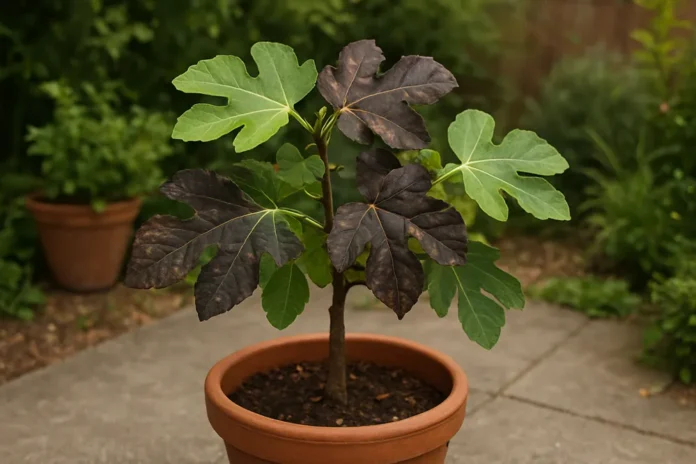
Fig tree leaves usually turn black because of cold injury, excess moisture around the roots, fungal leaf problems, or tissue damage from sudden stress. Sometimes older leaves simply darken and die off as the tree redirects energy.
Black leaves on a fig tree can look alarming fast. One day the foliage looks healthy, and the next you may see dark blotches, black edges, or entire leaves collapsing into a soft, dark mess. In my experience, fig tree leaves turning black is usually a stress signal rather than a mystery disease that appeared out of nowhere.
The tricky part is that several problems can create a similar look. A potted fig left out through a cold snap, an in-ground tree sitting in soggy soil, and a plant with fungal spotting can all develop dark foliage, but the pattern is different in each case. If you look closely at where the blackening starts, how fast it spreads, and what the weather has been doing, the cause usually becomes much clearer.
The good news is that many figs recover well once the underlying issue is corrected. Fig tree leaves are fairly expressive, so if you read the symptoms carefully, you can usually stop the damage and help the tree push cleaner growth.
What Black Leaves Usually Mean on a Fig Tree
Blackening on fig leaves is most often damaged tissue. The leaf may have been injured by cold, suffocated by excess moisture at the roots, weakened by fungal infection, or burned after a sudden shift in conditions. Once tissue dies, it often turns dark brown to black, especially around the edges, veins, or water-soaked spots.
This symptom is different from simple yellowing. Yellow leaves usually suggest nutrient imbalance, watering inconsistency, or seasonal leaf drop. Black leaves mean the damage has gone farther. The question is not just why the leaf changed color, but what stressed it enough to kill part of the tissue.
- Cold or frost injury after a chilly night
- Overwatering or poor drainage that stresses roots
- Fungal leaf spot or blight in humid conditions
- Sun scorch after a plant is moved into stronger light too quickly
- Physical damage from wind, rubbing, or chemical spray injury
- Normal decline of older leaves late in the season
When I diagnose black fig leaves, I look at the newest leaves first. If the fresh growth is still clean and firm, the problem is often a past stress event like cold, transplant shock, or a brief watering mistake rather than an active disease spreading through the whole tree.
The Most Common Causes of Black Fig Leaves
Cold Damage and Late Frost
Cold injury is one of the most common reasons fig leaves suddenly turn black, especially in spring or fall. Tender leaves can darken almost overnight after frost or even after exposure to temperatures that are not quite freezing but are cold enough to damage soft new tissue. The leaves may look water-soaked at first, then limp, then blackened.
This often happens to container figs moved outside too early, young trees with tender flushes of growth, or in-ground figs during an unexpected late cold snap. If the damage is limited to exposed leaves while stems remain green, the tree often recovers with time.
Overwatering and Soggy Roots
Figs like steady moisture, but they do not like constantly wet roots. If the soil stays soggy, roots cannot get enough oxygen. That stress can show up above ground as drooping, yellowing, and eventually blackening leaves. In severe cases, leaves may soften, collapse, and fall off.
This is especially common in pots without excellent drainage, in heavy clay soil, or during long rainy periods. If the potting mix smells sour, the soil stays wet for days, or the tree looks wilted even though the soil is damp, root stress is high on the list.
Fungal Leaf Spot and Blight
Fungal problems can also turn fig leaves black, though they often begin as brown, purple, or tan spots that enlarge and darken. In humid weather, spots may merge into larger dead patches. Some leaves develop blackened margins or irregular lesions, especially if airflow is poor and the canopy stays wet.
Disease is more likely when black areas appear as distinct spots rather than a uniform collapse of the whole leaf. If leaves are crowded, overhead watering is frequent, and weather has been warm and damp, fungal issues become more likely.
Sun Scorch After a Sudden Light Change
A fig moved from indoors, a greenhouse, or a shaded patio into intense direct sun can develop scorched patches. These often start as pale, bleached, or papery areas that later turn dark brown or black as the tissue dies. The damage is usually worst on the most exposed side of the plant.
Sun scorch can look dramatic, but it usually does not mean the entire tree is in danger. It means the leaves were not acclimated to the stronger light.
Chemical or Spray Injury
Leaf tissue can blacken after exposure to too-strong foliar sprays, horticultural oils applied in heat, fertilizer splashes, or herbicide drift. The pattern is often sudden and fairly even across the sprayed surfaces. You may see black edges, spotting, or crisp dark patches where droplets dried.
Natural Aging and Seasonal Decline
Not every blackening leaf points to a serious problem. Older fig leaves near the bottom or interior of the tree may yellow, spot, darken, and drop as the season changes or as the plant redirects energy. This is more common late in the growing season and is less concerning when only a few older leaves are involved.
How to Tell Which Problem You Have
The pattern on the leaves matters as much as the color. Black leaves caused by cold, root stress, or disease do not usually look exactly the same. A careful look at timing, texture, and location will help you narrow it down.
- If leaves turned dark right after a cold night, frost injury is likely.
- If leaves are soft, droopy, and the soil stays wet, overwatering or root stress is a strong possibility.
- If black areas started as spots with halos or irregular blotches, suspect fungal leaf disease.
- If damage is concentrated on the sunniest side after moving the plant, sun scorch fits better.
- If only a few older lower leaves are affected while new growth looks healthy, normal leaf aging may be the cause.
- If the pattern appeared right after spraying, think chemical injury first.
Also check stems and buds. If leaves are black but stems remain green and flexible, the problem is often limited to foliage. If stems are blackened, mushy, or shriveled too, the stress was more severe and may have reached woody tissue or roots.
I try not to judge a fig by its worst-looking old leaves. The most useful clue is whether the plant can still make healthy new growth after the stress passes. That tells you much more than one badly damaged leaf ever will.
What to Do Right Now
Remove Badly Damaged Leaves Selectively
You can trim off leaves that are mostly black, mushy, or clearly diseased. Use clean pruners or pinch them off by hand if they come away easily. Leave lightly damaged leaves alone if they still have enough green tissue to photosynthesize, especially when the tree is already stressed.
Correct Watering Before Doing Anything Else
If the soil is soggy, hold off on watering and make sure the plant can drain freely. Empty saucers under pots, check drainage holes, and avoid keeping the root zone constantly wet. If the tree is in the ground and drainage is poor, reduce supplemental irrigation and consider improving the soil structure around future plantings rather than digging aggressively around an already stressed root ball.
If the soil is bone dry and leaves are crisp rather than soft, water deeply and evenly. Figs respond better to a thorough soaking followed by partial drying than to frequent shallow sips.
Protect From More Cold if Frost Was the Trigger
For a potted fig, move it to a protected spot during cold nights. For an in-ground tree, use frost cloth, blankets, or another breathable cover when temperatures threaten tender new growth. Do not panic-prune immediately after a frost. Wait until the tree starts growing again so you can tell what tissue is truly dead.
Improve Airflow if Disease Looks Likely
If spotting and dark lesions suggest fungal trouble, remove the worst affected leaves that have already fallen or are easy to take off. Avoid overhead watering. Thin crowded growth lightly if needed so leaves dry faster after rain or irrigation. Keep fallen leaves cleaned up, since they can harbor spores.
Pause Fertilizer Until the Tree Stabilizes
A stressed fig does not need a heavy feeding right away. Fertilizing a plant with damaged roots or foliage can make things worse. Wait until you see active, healthy recovery growth before resuming a balanced feeding routine.
When a fig is struggling, I change one thing at a time, usually watering first. If you prune hard, fertilize, move the plant, and spray fungicide all in the same week, it becomes much harder to tell what actually helped or hurt.
When Black Leaves Mean Root Rot or a More Serious Issue
Sometimes black leaves are only the visible part of a deeper root problem. If the tree stays wilted no matter what, drops large numbers of leaves, or shows blackening along stems and petioles, you may be dealing with root rot or severe crown stress. Container figs are especially vulnerable if they sit in dense, compacted mix or in decorative pots that trap water.
Signs that root trouble may be advanced include a sour smell from the soil, roots that look brown and mushy instead of firm and pale, and no sign of recovery even after watering is corrected. In that case, the tree may need repotting into a fast-draining mix once conditions are dry enough and the plant is stable enough to handle the disturbance.
- Persistent wilting with wet soil
- Blackening that spreads beyond leaves into stems
- Leaf drop accelerating over several days
- Rotten odor from the root zone
- No fresh growth during the active season
In-ground trees can also struggle if planted too deep or in a low spot that stays saturated. If that sounds like your site, the long-term fix may be drainage improvement or replanting in a better location during the proper season.
How to Prevent Fig Leaves From Turning Black Again
Once a fig has recovered, prevention mostly comes down to reducing sudden stress. Figs are productive trees, but their leaves respond quickly when roots, temperature, or light conditions swing too hard.
- Plant figs in well-drained soil or use a potting mix that drains quickly.
- Water deeply, then let the upper soil layer dry slightly before watering again.
- Use containers with generous drainage holes and never let pots sit in standing water.
- Acclimate indoor or sheltered figs gradually before moving them into full sun.
- Protect tender spring growth from late frost when temperatures dip unexpectedly.
- Prune lightly for airflow if the canopy becomes dense and humid inside.
- Avoid spraying oils, soaps, or other treatments during hot bright conditions unless the label specifically allows it.
- Clean up fallen diseased leaves so fungal problems have fewer places to persist.
I also like to keep a simple seasonal record. If black leaves show up at the same time each year, the cause is often predictable, such as a recurring frost window, a rainy period, or a habit of moving container figs into full sun too fast.
What Recovery Looks Like
Damaged fig leaves rarely turn green again. Recovery means the blackening stops spreading, leaf drop slows down, and new leaves emerge normally. If the growing tips stay alive and the roots are healthy, figs often bounce back better than worried gardeners expect.
Give the tree a little time before making big decisions. After a cold snap or brief watering issue, it may take a couple of weeks for the plant to show you what parts are still viable. If new growth comes in clean, your job is mostly to keep conditions steady.
If the tree keeps declining despite corrected care, then it makes sense to investigate roots, drainage, disease pressure, or environmental exposure more aggressively. But in many cases, a fig with a handful of black leaves is stressed, not doomed.
FAQ
Should I Cut Off All Black Fig Leaves?
No. Remove leaves that are mostly black, mushy, or clearly diseased, but leave lightly damaged leaves if they still have useful green tissue. Taking too much foliage off at once can slow recovery.
Can a Fig Tree Recover After Frost Turns the Leaves Black?
Yes, if the stems and buds are still alive. Figs often replace frost-damaged leaves once warm weather returns, especially if the cold event was brief and did not damage woody growth.
Do Black Leaves Always Mean My Fig Tree Has a Disease?
No. Cold injury, overwatering, sun scorch, and chemical burn can all blacken leaves without any pathogen being involved. Look at the pattern before assuming disease.
How Do I Know if Overwatering Is the Reason?
Check whether the soil stays wet for days, the leaves droop while the root zone is damp, and the pot or planting area drains poorly. Soft darkening and leaf collapse often point to excess moisture stress.
Is It Safe to Fertilize a Fig Tree with Black Leaves?
Usually not right away. Wait until the tree shows active recovery and healthy new growth. Fertilizing a stressed fig, especially one with root issues, can add more pressure.
Can Too Much Sun Make Fig Leaves Turn Black?
Yes, especially when a fig is moved suddenly from shade or indoor conditions into intense direct sun. The leaves may first bleach or scorch, then darken as the damaged tissue dies.
Why Are Only the Lower Leaves Turning Black?
If only a few older lower leaves are affected, the cause may be normal aging, splash-related fungal spotting, or localized stress from poor airflow near the base. It is less concerning when upper new growth stays healthy.
Need help choosing the right treatment or figuring out whether your fig has disease, root stress, or cold damage? Read our fig tree care and treatment guides to get the exact fix faster and avoid losing this season's growth.
