

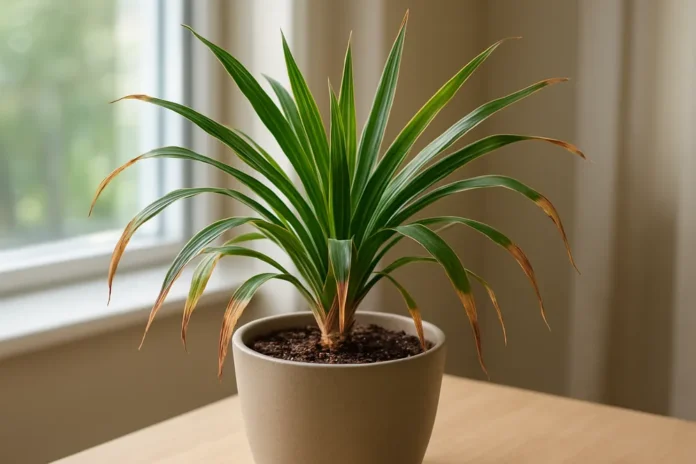
Dracaena leaf tips usually turn brown because the plant is reacting to dry air, inconsistent watering, mineral or fluoride buildup, or excess fertilizer. In many homes, tap water quality and low humidity are the biggest triggers.
Brown tips are one of the most common complaints with dracaena leaf tips turning brown, and the frustrating part is that the rest of the plant can still look mostly healthy. You may see crisp tan points, a thin brown edge, or a larger dry patch starting at the tip and slowly creeping down the leaf.
In my experience, this symptom is usually less about a dramatic disease issue and more about the plant reacting to its environment over time. Dracaena tends to be forgiving in many ways, but it is surprisingly fussy about water quality, dry indoor air, and uneven moisture. The good news is that once you narrow down the cause, new growth often improves steadily.
What Brown Tips Usually Mean on Dracaena
When only the tips are browning, the plant is usually dealing with stress rather than rot or a spreading infection. The tip is the farthest point from the plant's water supply, so it is often the first area to dry out or react to minerals and salts. That is why dracaena can keep producing green leaves while older leaves develop tan or dark brown ends.
Tip browning often develops gradually. You might first notice a tiny yellow cast at the point of the leaf, then a dry brown triangle, and eventually a larger crispy section. If the damage is dry and papery, the cause is usually tied to moisture, humidity, fertilizer, or water quality. If the leaf base is yellowing or the stem feels soft, that points more toward a root problem than a simple brown-tip issue.
When I diagnose dracaena, I look at where the damage starts. If the very ends of many leaves brown at roughly the same time, I suspect air dryness, salts, or tap water. If a few whole leaves collapse from the base, I start thinking about roots.
The Most Common Causes of Brown Leaf Tips
Dry Indoor Air
Dracaena tolerates average household conditions, but very dry air can still push the leaf tips over the edge. This is especially common in winter when heating systems run constantly. The plant may lose moisture from its leaves faster than the roots can replace it, and the delicate ends dry first.
Low humidity often causes fine, crisp, light-brown tips while the rest of the leaf stays green. You may notice the problem gets worse near heating vents, radiators, fireplaces, or in rooms with lots of moving air.
Inconsistent Watering
Dracaena likes the soil to dry somewhat between waterings, but not to the point that the root ball stays bone dry for too long. If the plant regularly swings from very dry soil to a heavy soak, the roots and leaves experience stress. The tips often brown before you see full wilting.
This does not always mean you are watering too little. Sometimes the schedule is just irregular. A plant that is watered late several times in a row, then drenched, can show the same kind of tip damage as a plant that is chronically dry.
Tap Water Minerals and Fluoride
This is a big one for dracaena. Many species are sensitive to fluoride, chlorine, and dissolved salts found in tap water. Over time, those compounds accumulate in the potting mix and stress the leaf edges and tips. Even when your watering routine is otherwise fine, the plant may respond with brown points and margins.
If your dracaena sits in a bright room, gets moderate water, and still produces brown tips on newer and older leaves alike, water quality jumps high on the suspect list. Homes with hard water often see this issue more often.
Too Much Fertilizer or Salt Buildup
Fertilizer salts can accumulate in the soil, especially if you feed often or water lightly without thoroughly flushing the pot. Those salts draw moisture away from the roots and can burn leaf tips. The result can look a lot like dry air or poor water quality.
This is common in houseplants that have been in the same pot for a long time. White crust on the soil surface or around the rim of the pot is a clue that salts may be building up.
Root Stress From Overwatering
Although overwatering is better known for causing yellow leaves, it can also lead to brown tips. If roots stay too wet, they cannot move water effectively, and the leaves may dry at the ends even though the soil feels damp. This confuses many gardeners because the plant looks thirsty and overwatered at the same time.
Poor drainage, dense soil, or a pot without drainage holes can all contribute. If the lower leaves yellow, the canes soften, or the pot stays wet for many days, root stress should move near the top of your list.
Less Common but Possible Reasons
Sun Scorch
Most dracaena varieties prefer bright, indirect light. Intense direct sun, especially from a hot west or south window, can dry and scorch the leaf tips and edges. In that case, the damage may appear bleached, tan, or sharply crispy on the side facing the window.
Cold Drafts or Heat Blasts
Sudden exposure to cold windows, exterior doors, air conditioning vents, or heating vents can desiccate leaves. Dracaena prefers stable indoor temperatures. Repeated drafts often damage the most exposed leaves first.
Root Crowding
A slightly snug pot is fine, but when roots become very crowded, water may either run through too quickly or become difficult to distribute evenly. That can make the plant swing between drought stress and salt concentration, both of which show up as brown tips.
Natural Aging on Older Leaves
Occasionally, a few older lower leaves will develop brown ends simply because they are aging. This is normal if it happens slowly and only affects an occasional leaf. It becomes a problem when many leaves show the same symptom at once.
How to Tell Which Cause Is Most Likely
Brown tips can look similar, so the best clue is often the pattern around the symptom. Instead of focusing on one damaged leaf, look at several leaves, the soil, the pot, and the room conditions together. A few small observations usually narrow the problem down fast.
- If the tips are dry and crisp but the plant otherwise looks healthy, think low humidity, inconsistent watering, or tap water minerals.
- If the tips are brown and the leaf edges are also burning, fertilizer salt buildup or poor-quality water is more likely.
- If the soil stays wet for a long time and lower leaves are yellowing, overwatering or root trouble is a stronger possibility.
- If only the window-facing side is damaged, direct sun or heat exposure may be the trigger.
- If the problem got worse after feeding, fertilizer burn moves higher on the list.
- If white residue is visible on the soil or pot, mineral or salt accumulation is likely involved.
I try not to fix everything at once with dracaena. If you change the water source, watering rhythm, humidity, and fertilizer all in one weekend, you will not know what actually solved the problem.
How to Fix Brown Tips on Dracaena
Use Better Water if Tap Water Is the Issue
If you suspect fluoride, chlorine, or mineral sensitivity, switch to distilled water, rainwater, or filtered water if your filter is rated to reduce dissolved contaminants. This is often one of the most effective changes for dracaena. It will not turn old brown tips green again, but it can prevent damage on new leaves.
Water Thoroughly, Then Let the Soil Partially Dry
A healthy pattern is to water deeply until excess drains out, then wait until the top portion of the potting mix dries before watering again. Exactly how much to let it dry depends on the pot size, light level, and season, but dracaena generally prefers moderate dryness between waterings rather than constant moisture.
Avoid tiny sips of water that only moisten the surface. That encourages uneven moisture and can worsen salt concentration in the root zone.
Flush the Soil if Salts May Be Building Up
If the plant has been fertilized regularly or watered with hard tap water for a long time, flush the pot thoroughly. Run plenty of water through the soil and allow it to drain fully. This helps wash out accumulated salts. If the potting mix is old and compacted, repotting may be a better long-term solution.
Cut Back on Fertilizer
Dracaena does not need heavy feeding. Use a diluted houseplant fertilizer during the active growing season and avoid overdoing it. If the plant is stressed, recently repotted, or growing slowly in low light, reduce feeding or pause until you see healthier new growth.
Improve Humidity Around the Plant
If your home air is very dry, move the plant away from heat vents and consider grouping it with other plants or using a humidifier nearby. Pebble trays can help a little in small spaces, but a room humidifier has a more noticeable effect in very dry homes.
Check Drainage and Roots
Make sure the pot has drainage holes and the mix does not stay soggy for long periods. If you suspect overwatering, inspect the roots when possible. Healthy roots are firm and light in color. Mushy, dark, or foul-smelling roots suggest rot and mean the plant needs fresh mix and less frequent watering.
Should You Trim the Brown Tips
Yes, you can trim brown tips for appearance, but do it carefully. Use clean scissors and follow the natural shape of the leaf, removing only the dead brown tissue and leaving a very thin line of brown if needed. Cutting into healthy green tissue can create a fresh wound that browns again.
If a leaf is more than half damaged, it often looks better to remove the whole leaf rather than trying to shape it. Cosmetic trimming does not solve the cause, though, so only expect improvement on future leaves after you correct the underlying stress.
How to Prevent Brown Tips From Coming Back
Once dracaena starts producing healthy new leaves, prevention is mostly about consistency. These plants do best when the environment stays fairly stable and the potting mix is not pushed to extremes of drought or constant wetness.
- Use distilled, rain, or suitable filtered water if your tap water is hard or fluoridated.
- Water deeply and evenly instead of giving frequent shallow drinks.
- Empty saucers after watering so roots do not sit in runoff.
- Keep the plant in bright, indirect light rather than hot direct sun.
- Avoid placing it beside vents, drafty windows, or doors that open often.
- Fertilize lightly during active growth and flush the soil occasionally.
- Repot if the soil has become compacted or the roots are severely crowded.
With dracaena, I judge success by the newest leaves, not the old damage. Existing brown tips are permanent, so the real sign that you fixed the issue is fresh growth that stays clean and green.
When Brown Tips Are a Sign of a Bigger Problem
Brown tips alone are often manageable, but a few companion symptoms suggest a broader issue. If your dracaena also has yellowing leaves, black stems, a bad smell from the pot, fungus gnats, or mushy roots, the plant may be dealing with chronic overwatering or root rot.
Likewise, if the leaves show stippling, sticky residue, webbing, or distorted new growth, inspect for pests such as spider mites, mealybugs, or scale. Pests do not usually cause classic brown-tip burn by themselves, but they can weaken the plant and make leaf damage worse.
If the problem spreads rapidly despite good care, the plant may need a root check, fresh soil, or a move to a more suitable location. Dracaena usually declines slowly, so a sudden crash means something more significant is going on.
FAQ
Will Brown Dracaena Tips Turn Green Again?
No. Once a tip has turned brown, that tissue is dead and will not recover. Improvement shows up in new growth after the underlying cause is corrected.
Is Tap Water Bad for Dracaena?
It can be. Dracaena is often sensitive to fluoride, chlorine, and mineral-heavy water, which can contribute to brown tips over time.
How Often Should I Water a Dracaena with Brown Tips?
There is no perfect calendar schedule. Water when the upper portion of the soil has dried, then soak thoroughly and let excess drain away.
Should I Mist My Dracaena to Stop Brown Tips?
Misting gives only brief humidity and usually does not solve persistent tip browning. A humidifier, better placement, and more consistent watering are usually more effective.
Can Too Much Fertilizer Cause Brown Leaf Tips on Dracaena?
Yes. Excess fertilizer leaves salts in the potting mix, and those salts can burn the tips and edges of the leaves.
Do I Need to Repot My Dracaena if the Tips Are Brown?
Not always. Repotting helps if the soil is compacted, salts have built up badly, drainage is poor, or the roots are severely crowded.
Why Are Only the Older Leaves Getting Brown Tips?
Older leaves are often the first to show stress from dry air, irregular watering, or natural aging. If only an occasional lower leaf is affected, it may not be a major concern.
Can Low Light Cause Brown Tips on Dracaena?
Low light is not usually the direct cause, but it can slow growth and keep soil wet longer, which may contribute to root stress and secondary leaf problems.
Need the right fix fast? Read our dracaena care guide and recommended watering tools to prevent brown tips, root problems, and repeat stress before your plant declines further.
