

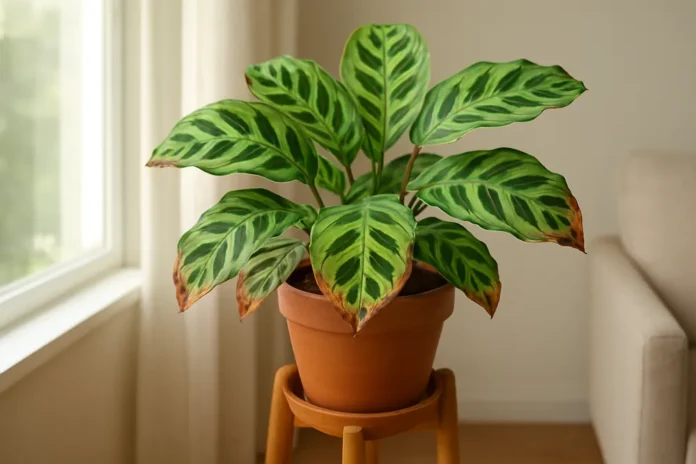
Calathea leaf tips usually turn brown because the plant is reacting to dry air, inconsistent moisture, or mineral buildup from tap water and fertilizer. This plant shows stress quickly, especially at the leaf edges.
Few houseplants are more dramatic about their care than calathea leaf tips turning brown. When the edges start crisping, the plant is usually telling you that something in its environment is off, even if the rest of the leaf still looks healthy.
In my experience, brown tips on calatheas are most often tied to a handful of repeat offenders: dry indoor air, watering that swings between too dry and too wet, tap water minerals, or stress below the soil line. The good news is that this symptom is common, and once you match the pattern to the cause, it is usually manageable.
What Brown Tips Usually Mean on Calathea
Brown tips are a classic stress signal on calathea. The leaf edges are often the first part to dry out because they are thin, exposed, and sensitive to changes in moisture and humidity. A small brown point at the very tip does not always mean the plant is in serious danger, but when the damage spreads along the edges or appears on many leaves at once, something in the care routine needs adjustment.
Unlike yellowing, which can have many overlapping causes, browning at the tips tends to point toward moisture imbalance or buildup of irritants. Calatheas prefer evenly moist soil, fairly high humidity, and water that is not loaded with salts or chlorine. When one of those conditions slips, the leaves often show it before the roots or stems give you any obvious warning.
When I diagnose a calathea, I look at both old and new leaves before changing anything. If the newest leaves are emerging with brown tips, I suspect current environmental stress. If only older leaves are affected, the plant may be reacting to a past watering or humidity issue that has already improved.
Dry Air Is One of the Most Common Causes
Calatheas come from humid tropical environments, so they often struggle in homes with dry heat or air conditioning. When humidity drops too low, the leaves lose moisture faster than the roots can replace it. That usually shows up as brown, crisp tips first, especially in winter or in rooms with forced air.
This is especially common if your plant sits near a heating vent, a drafty window, or a sunny spot that warms the leaves during the day. The damage may start small and then slowly widen. Even if you water on time, low humidity can still cause the margins to dry out.
- Tips turn brown but the center of the leaf still looks green
- Leaf edges feel dry or papery rather than soft
- Damage gets worse during winter heating season
- The plant is close to a vent, radiator, fireplace, or AC airflow
- Several humidity-loving plants in the same room show similar browning
A humidity tray can help a little, but it rarely changes room humidity enough to fully satisfy a calathea on its own. Grouping plants together helps more, and a small humidifier is usually the most effective fix if your home air is consistently dry.
Inconsistent Watering Can Brown the Tips Fast
Calatheas do not like to dry out completely, but they also do not want soggy soil. If the potting mix swings from very dry to very wet, the roots struggle to keep moisture moving steadily to the leaves. That inconsistency often shows up as brown tips and edges, sometimes with slight curling.
Underwatering causes the plant to conserve moisture, and the leaf tips are usually the first tissue to suffer. Overwatering can create a similar look because stressed roots cannot absorb water properly, even when the pot is wet. That is why the symptom can be confusing if you focus only on the leaves.
Signs the Plant Is Staying Too Dry
- Soil pulls away from the sides of the pot
- Leaves droop, curl, or fold more tightly than usual
- The pot feels unusually light
- Browning starts at the very tip and slowly creeps inward
Signs the Plant May Be Overwatered
- Soil stays wet for many days after watering
- Lower leaves yellow as well as brown at the tips
- The pot feels heavy all the time
- There is a sour smell or signs of root stress
I have better luck judging calatheas by soil feel than by a strict calendar. If the top inch is just starting to dry but the root zone below still feels lightly moist, that is usually a good watering window.
Tap Water Minerals and Chemicals Can Irritate Leaf Edges
Many calatheas are sensitive to what is in the water as much as how often they get it. Fluoride, chlorine, dissolved salts, and other minerals in tap water can accumulate in the soil over time. Once that buildup reaches a certain point, the leaf tips may brown even if your watering schedule is otherwise good.
This tends to happen gradually. The plant may look fine for a while, then new leaves begin to emerge with slight browning or older leaves start crisping at the tips despite stable care. If you also see a white crust on the soil surface or around the pot rim, mineral buildup becomes even more likely.
- Brown tips keep appearing even after humidity improves
- A white residue is visible on the soil or planter
- You use hard tap water regularly
- The damage is worse on a calathea than on tougher houseplants nearby
Using filtered water, distilled water, or rainwater often reduces new tip damage over time. Existing brown tissue will not turn green again, but healthier future growth is the real sign that you fixed the issue.
Fertilizer Buildup Can Mimic Watering Problems
Calatheas are not heavy feeders, and too much fertilizer can burn their roots and leaf tips. When excess salts collect in the potting mix, the roots have a harder time taking up water properly. The result can look a lot like dry air or underwatering: crispy brown tips, marginal browning, and stalled growth.
This often happens when a plant is fertilized too often, fertilized in winter when it is growing slowly, or fed at full strength every time. A sensitive calathea can react to perfectly normal feeding rates that a pothos or philodendron would barely notice.
- Browning began after recent feeding
- The soil has not been flushed in a long time
- Growth has slowed but fertilizer continued anyway
- Leaf tips are brown while the rest of the plant looks stressed but not wilted
If fertilizer is the main problem, new damage usually slows after the soil is flushed and feeding is reduced. During the active growing season, a diluted houseplant fertilizer used sparingly is usually enough.
Root Stress and Poor Drainage Can Be Part of the Problem
Healthy roots are what keep leaf moisture balanced. If your calathea is sitting in compacted soil, a pot without proper drainage, or a mix that stays dense and airless, the roots may begin to weaken. Once roots are stressed, the foliage often develops brown tips because water uptake is uneven.
Root issues can come from overwatering, but they can also come from old exhausted potting mix that no longer drains well. A rootbound plant may also dry too quickly between waterings, which creates another kind of stress. In either case, the leaves respond at the edges first.
Clues That Point Below the Soil Line
- Water runs through instantly because roots fill most of the pot
- Or the opposite, water sits on top because the mix is compacted
- The plant wilts quickly after watering or stays limp in wet soil
- There is a musty odor or visible root rot when you inspect the pot
- Brown tips are paired with slowed growth and general decline
I do not rush to repot every calathea with brown tips, because moving them can add stress. But if the potting mix has turned dense and spongy or the roots are circling hard, fixing the root environment often does more than any humidity tweak.
Light, Temperature, and Drafts Can Worsen Browning
Calatheas prefer bright, indirect light. Too much direct sun can scorch the leaves, often starting at the tips and edges. Harsh afternoon sun is especially likely to cause browning, fading, or a washed-out look in patterned varieties.
Temperature swings can also push a calathea over the edge. Cold drafts, hot dry air, and abrupt changes between day and night temperatures all increase stress. A plant near an exterior door, single-pane window, or vent may show browning even if watering is fairly consistent.
- Browning is worse on the side facing a window
- Leaves show fading or patchy scorch along with crisp tips
- The plant sits where hot or cold air moves across it regularly
- Symptoms appeared after moving the plant to a brighter room
Steady warmth and filtered light usually produce the cleanest foliage. If you can read comfortably in the room without the plant sitting in direct rays, the light level is often about right.
Pests Are Less Common but Still Possible
Brown tips are usually a care issue, but pests can make the problem worse. Spider mites are the pest I watch for most closely on calatheas because they thrive in dry conditions and damage leaf tissue by feeding on sap. Their feeding often causes stippling, dullness, and edge decline that can blend into tip browning.
Thrips and mealybugs can also stress the plant, though they are less likely to cause isolated tip browning by themselves. If the plant has browning plus tiny specks, sticky residue, webbing, or distorted new leaves, inspect it carefully.
- Fine webbing on the undersides of leaves
- Tiny moving dots near the veins or margins
- Silvery scarring or pale stippled patches
- New growth emerging misshapen or weakened
If pests are involved, you will usually need to address both the insects and the dry conditions that allowed them to thrive. Otherwise the plant tends to cycle right back into stress.
How to Tell Which Cause Is Most Likely
The key with calathea brown tips is to read the full pattern instead of reacting to one damaged leaf. One crisp tip after a dry spell is very different from widespread browning on fresh new growth. The timing, the feel of the soil, and the plant's location usually narrow the answer quickly.
Patterns That Suggest Dry Air
- Tips are crisp and dry
- Soil moisture seems fairly consistent
- The problem worsens during heating or AC season
- Other tropical plants nearby also show dry edges
Patterns That Suggest Watering Stress
- Leaves curl or droop along with browning
- The pot alternates between bone dry and soggy
- Browning appears after missed waterings or prolonged wetness
- The plant's overall posture looks inconsistent week to week
Patterns That Suggest Mineral or Fertilizer Buildup
- New tips brown despite decent humidity
- Residue is visible on the soil or pot
- You regularly use hard tap water or fertilize often
- The decline has been gradual rather than sudden
If more than one pattern fits, that is normal. Calatheas often react to a combination of moderate problems rather than one dramatic mistake.
What to Do Next to Stop New Brown Tips
Once a leaf tip has turned brown, that tissue will not recover. The goal is to stop the next leaves from developing the same damage. Small corrections made consistently work better than big swings in care.
- Move the plant away from vents, radiators, and direct afternoon sun.
- Keep the soil evenly moist, not soaked and not fully dry.
- Use filtered, distilled, or rainwater if your tap water is hard or heavily treated.
- Flush the potting mix occasionally to reduce salt buildup.
- Raise humidity with a humidifier or by grouping plants together.
- Check the pot for drainage and inspect roots if the soil stays wet too long or dries out too fast.
- Fertilize lightly only during active growth.
If the appearance bothers you, you can trim the brown tissue off with clean scissors by following the natural shape of the leaf tip. Just avoid cutting into a lot of healthy green tissue, because that can create a harsher look than the original damage.
Can Brown Tips Be Reversed
No, the brown parts will not turn green again. Think of them as scar tissue. What improvement looks like on a calathea is cleaner new growth, slower spread of browning, and leaves that stay supple instead of crisping at the margins.
That is why patience matters with this symptom. A plant may need several weeks of steadier care before the results are obvious. Judge your progress by the newest leaves and by whether the browning continues to advance, not by expecting damaged tips to heal.
FAQ
Should I Cut the Brown Tips Off My Calathea?
Yes, if you want a tidier look. Use clean scissors and trim along the natural shape of the leaf, leaving a thin brown margin if needed so you do not cut into healthy tissue.
Will Misting Stop Calathea Leaf Tips From Turning Brown?
Misting may provide very temporary relief, but it usually does not raise humidity enough to solve ongoing browning. A humidifier or a better room location works much better.
Can Tap Water Alone Cause Brown Tips on Calathea?
Yes, especially if your tap water is hard or contains higher levels of dissolved minerals or treatment chemicals. Sensitive calatheas often respond better to filtered, distilled, or rainwater.
Do Brown Tips Mean My Calathea Is Dying?
Not usually. Brown tips are often an early stress sign, not a death sentence. If the rest of the plant is still producing healthy leaves, you can usually turn it around by improving the growing conditions.
How Often Should I Water a Calathea with Brown Tips?
There is no perfect fixed schedule because temperature, pot size, and light affect how fast the soil dries. In general, water when the top inch starts to dry while the lower root zone still feels lightly moist.
Can Too Much Sun Cause Brown Tips on Calathea?
Yes. Direct sun can scorch the leaf edges and tips, especially on thin-leaved varieties. Calatheas do best in bright, indirect light.
Why Do Only the New Leaves Have Brown Tips?
Browning on fresh leaves often points to a current issue such as low humidity, mineral-heavy water, fertilizer buildup, or ongoing root stress. New growth usually reflects the plant's present conditions more clearly than older foliage.
Still troubleshooting a fussy prayer plant? Read our calathea care guide and top humidifier picks to stop recurring browning and keep new growth looking clean.
